
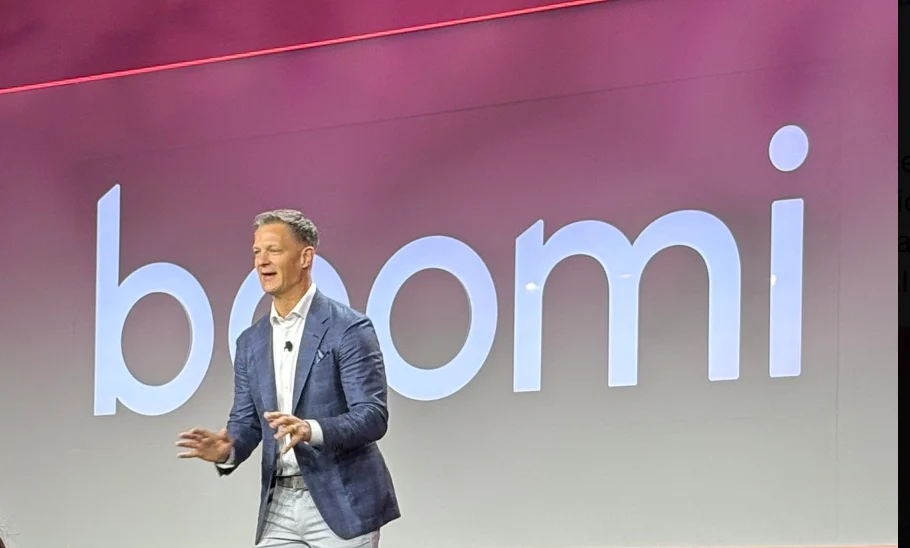

The enterprise artificial intelligence landscape is currently defined by a state of significant fragmentation and operational friction, a reality characterized by Boomi Chief Executive Officer Steve Lucas during his opening keynote at Boomi World 2026 as a "sh*t show." Addressing an audience of more than 1,700 customers and partners in Chicago, the executive leadership of the integration platform as a service (iPaaS) leader laid out a comprehensive roadmap designed to move organizations past the "pilot purgatory" of AI experimentation and toward a state of functional, data-driven execution. The event served as the backdrop for a series of high-stakes product launches, strategic acquisitions, and foundational shifts in how the company defines its role in the modern tech stack, transitioning from a focus on integration and automation to what Lucas terms "data activation."
The Crisis of Static Data and the Shift to Activation
At the heart of the current enterprise struggle is a fundamental disconnect between the massive volumes of data stored by corporations and the small fraction of that data that is actually utilized for real-time decision-making. According to data shared during the summit, Boomi currently facilitates the movement of twice the volume of data per second for its 30,000-plus global customers than Visa processes in transactions worldwide. Despite this massive throughput, Lucas revealed a startling industry statistic: only 7% of enterprise data is currently "in motion."
The remaining 93% of data resides in static silos, largely inaccessible to the generative AI models and autonomous agents that businesses are currently attempting to deploy. Lucas argued that the industry has historically focused too heavily on the "destination" of data—the databases and warehouses where information is stored—rather than the "journey" of the data. To solve this, Boomi is repositioning itself to ensure that information reaches the right agents and people in real-time, with the necessary quality and context to be actionable. This shift toward "data activation" represents a strategic pivot intended to provide the infrastructure necessary to ground AI agents in enterprise-specific context, ensuring that every automated action is governed with precision.
Chronology of Strategic Announcements at Boomi World 2026
The conference unfolded with a series of announcements aimed at creating a cohesive ecosystem for agentic AI. The timeline of these reveals followed a logical progression from connectivity and governance to development and orchestration.
Day One: Governance and Connectivity
The first major technical pillar introduced was Boomi Connect. Ed Macosky, Boomi’s Chief Product and Technology Officer, identified this as the most critical announcement of the event. Boomi Connect serves as a security and governance layer designed to make enterprise AI production-ready. It acts as a bridge between leading large language model (LLM) interfaces—including Anthropic’s Claude, Google’s Gemini, OpenAI’s ChatGPT Enterprise, and Microsoft Copilot—and over 1,000 enterprise tools.
The service utilizes a managed Model Context Protocol (MCP) to provide secure, authenticated, and metered execution. By building these capabilities directly into the tools that teams already use, Boomi aims to simplify the management of connectivity between disparate AI data sources and legacy enterprise applications.
Day Two: Agentic Engineering and Natural Language Integration
On the second day, the focus shifted toward "Boomi Companion," a tool that utilizes agentic engineering to allow users to design, build, test, and diagnose integrations using natural language. Unlike traditional integration tools that require manual mapping and coding, Companion can be embedded into coding environments like Claude Code or OpenAI Codex. This allows the AI agent to leverage Boomi’s platform knowledge to manage the entire integration lifecycle, effectively democratizing the ability to create complex data workflows across the business.
Macosky noted that customer feedback was most enthusiastic regarding Companion, as it directly addresses the talent gap in IT departments by allowing non-technical users to "supercharge" their projects through natural language prompts.
Strategic Acquisition of Lunar.dev and the Role of MCP
To bolster the capabilities of Boomi Connect, the company announced its intent to acquire Lunar.dev, a specialized innovator in AI and MCP gateway technology. The acquisition is intended to provide Boomi with a differentiated advantage in how it manages the flow of information between AI models and internal APIs.
The integration of Lunar.dev’s technology is expected to add a "gateway" layer that provides deeper visibility and control over AI traffic. As enterprises scale their use of LLMs, the cost and performance of API calls become significant concerns. The Lunar.dev technology allows for the metering and optimization of these calls, ensuring that AI agents do not overwhelm enterprise systems or incur runaway costs. Macosky emphasized that the addition of the Lunar.dev team would bring critical expertise in handling the "extreme" demands of high-velocity AI data traffic.
Collaboration with Red Hat: Localized and Scalable AI
In a significant move toward infrastructure flexibility, Boomi announced a strategic collaboration with Red Hat. The partnership is designed to deliver a single, integrated stack for deploying agentic AI at scale. By combining Boomi’s "Agentstudio" with enterprise-grade Red Hat AI, the two companies are offering a solution for organizations that need to run AI models locally.
This "autonomous runtime" is scheduled for launch in the coming months. It addresses a growing demand among enterprises to avoid the latency and security risks associated with sending sensitive data to public cloud AI providers. By allowing models to run within a localized environment (such as on-premise servers or private clouds), Boomi and Red Hat are providing a path for highly regulated industries—such as finance and healthcare—to adopt agentic workflows without compromising data sovereignty.
Technical Innovations: Knowledge Hub and Meta Hub
Beyond the flagship products, several other innovations were introduced to address the "hallucination" and accuracy problems inherent in generative AI:
- Boomi Knowledge Hub: This tool is designed to eliminate knowledge silos by creating a unified context layer. It ensures that when an AI agent queries enterprise data, it has access to the most recent and relevant information across the entire organization.
- Boomi Meta Hub: This platform promises to improve agent accuracy by ensuring consistent business logic at scale. It prevents fragmented interpretations of data by providing a centralized repository for metadata and business rules, ensuring that different agents across the company "understand" data in the same way.
- Boomi Orchestrate: This feature allows teams to combine agents, APIs, integrations, and event streams into a single universal orchestration. Using natural language, users can map out complex business processes that involve both human and autonomous participants.
Analysis of Market Implications and Industry Reaction
The shift in Boomi’s strategy reflects a broader trend in the enterprise software market where the "plumbing" of the internet—integration—is being reinvented as the "nervous system" of the AI-enabled corporation. Industry analysts suggest that Boomi’s focus on the Model Context Protocol (MCP) is a savvy move, as MCP is rapidly becoming the standard for how AI models interact with external data sources.
By positioning itself as a "data activation" company, Boomi is attempting to solve the primary bottleneck in AI adoption: the fact that most AI models are "data hungry but context poor." Without the ability to securely and accurately pull data from an ERP like SAP or a CRM like Salesforce, an AI agent is of limited utility. Boomi’s new stack aims to provide that missing link.
Furthermore, the emphasis on governance and "action-ready data" serves as a direct response to the "sh*t show" described by Lucas. Many enterprises have spent the last 18 months deploying internal chatbots that, while impressive in demos, fail in production because they lack access to real-time, governed data. Boomi’s suite of tools is designed to provide the guardrails necessary for these agents to move from simple conversation to actual task execution—such as processing a refund, updating an inventory record, or rescheduling a shipment.
Conclusion and Future Outlook
The evolution of Boomi from an integration company in 2024 to a data activation company in 2026 marks a significant milestone in the maturity of the enterprise AI market. The announcements at Boomi World 26 suggest a future where the complexity of IT environments is masked by natural language interfaces and autonomous agents, provided the underlying data infrastructure is robust enough to support them.
As organizations look to move beyond the experimental phase of AI, the success of Boomi’s new offerings—particularly Boomi Connect and Boomi Companion—will likely be measured by how effectively they can move that "7% of data in motion" closer to 100%. For now, the company has provided a clear roadmap for navigating the "sh*t show" of the current landscape, focusing on the simplicity of governance and the power of localized, context-aware intelligence. With the integration of Lunar.dev and the partnership with Red Hat, Boomi has positioned itself not just as a tool for connecting applications, but as the foundational layer for the next generation of autonomous enterprise operations.
