
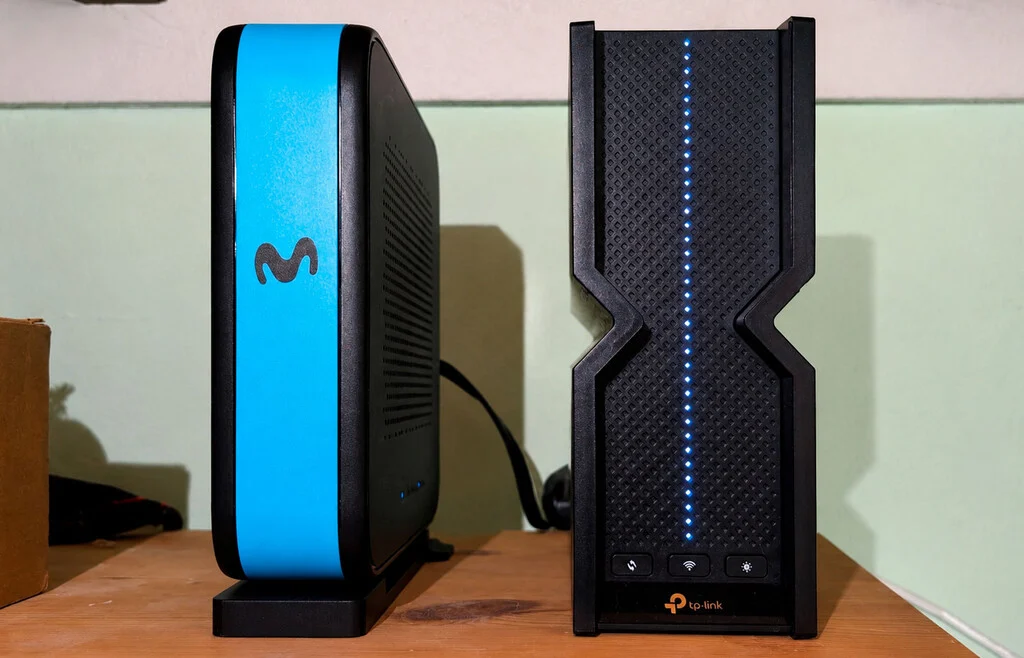

The ubiquitous provision of an Internet router with integrated WiFi by internet service providers (ISPs) has become a standard expectation for consumers subscribing to broadband services. While regulatory frameworks, such as those outlined in the European Union (EU) and specifically referenced in Spanish legislation (e.g., BOE-L-2018-82056), specify that ISPs are not strictly mandated to supply such equipment, the practice is widely adopted. This strategy often serves as an added value proposition, simplifying installation and ensuring basic connectivity for the vast majority of subscribers. However, a recent experience with Movistar’s new WiFi 7 router, accompanying their 10 Gbps fiber optic service, has highlighted a significant gap between standard ISP provisions and the full potential of cutting-edge networking technology, particularly for prosumers seeking uncompromised performance. This individual case study underscores a growing trend where advanced users are opting for neutral, third-party routers to fully harness their high-speed internet connections, an investment that, while costly, demonstrably enhances network stability, coverage, and speed.
The Evolution of Home Networking: From Basic Access to Multi-Gigabit Demands
The landscape of home internet connectivity has undergone a dramatic transformation over the past two decades. From dial-up modems to ADSL, and then the widespread adoption of fiber optics, each technological leap has promised faster speeds and greater bandwidth. Concurrently, wireless networking standards have evolved, with WiFi becoming the primary mode of access for a proliferation of devices, from smartphones and laptops to smart home appliances and streaming media players. The latest iteration, WiFi 7 (802.11be), also known as Extremely High Throughput (EHT), represents a significant leap forward. Building upon WiFi 6E, it introduces several key innovations designed to handle the burgeoning demand for data and low-latency applications. These include Multi-Link Operation (MLO), which allows devices to transmit and receive data simultaneously over multiple frequency bands (2.4 GHz, 5 GHz, and 6 GHz); 4096-QAM (Quadrature Amplitude Modulation), increasing data density per signal; and 320 MHz channels in the 6 GHz band, doubling the bandwidth available in WiFi 6E. These advancements collectively promise theoretical speeds of up to 46 Gbps, significantly reducing latency and improving efficiency in dense network environments.
The availability of multi-gigabit fiber optic services, such as Movistar’s 10 Gbps offering, positions consumers at the forefront of this technological curve. Such speeds are no longer merely theoretical but are increasingly accessible in metropolitan and well-developed suburban areas. However, translating these raw speeds from the fiber optic line to a wireless network within a home environment presents a complex challenge. The ISP-provided router, while often advanced for its generation, typically represents a compromise between cost-effectiveness, ease of use for the average customer, and advanced features desired by power users.
Movistar’s WiFi 7 Offering: Innovation with Strategic Limitations
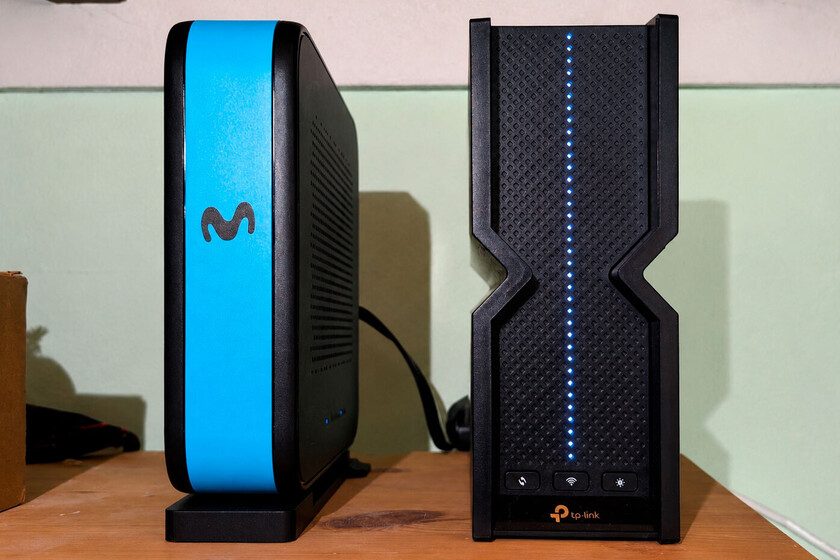
Upon upgrading to Movistar’s 10 Gbps fiber service, the author received the company’s new WiFi 7 router. This device, characterized by its compact, rounded design and prominent blue logo, represents Movistar’s commitment to offering contemporary technology. Its specifications include a detachable base, four Gigabit Ethernet ports, and one 10 Gigabit Ethernet port, catering to high-speed wired connections. For wireless connectivity, the router supports dual-band operation across the 2.4 GHz and 5 GHz frequencies.
However, a critical omission in Movistar’s WiFi 7 router is the lack of support for the 6 GHz band. This specific frequency band is one of the most significant advancements introduced with WiFi 6E and fully leveraged by WiFi 7. The 6 GHz band offers a substantial block of clear, uncongested spectrum, providing numerous wide channels (up to 320 MHz in WiFi 7) that are free from interference common in the older 2.4 GHz and 5 GHz bands. This translates directly into higher speeds, lower latency, and significantly improved performance, especially in environments with many neighboring WiFi networks. Its absence in the Movistar router means that users, despite having a "WiFi 7" device, are unable to access one of the standard’s most impactful features. This strategic decision by the ISP, likely driven by cost considerations and the current prevalence of 6 GHz-compatible client devices, effectively limits the router’s true WiFi 7 capabilities to the older 2.4 GHz and 5 GHz bands, where features like MLO and 4096-QAM can still offer improvements but are bottlenecked by spectrum availability and interference.
The User’s Journey: A Quest for Uncompromised Performance
Driven by a desire to fully capitalize on the newly acquired 10 Gbps fiber connection, the author quickly recognized the limitations of the ISP-provided equipment. The initial experience with the Movistar WiFi 7 router, while providing basic connectivity, fell short of delivering the anticipated multi-gigabit wireless speeds and stability across the entire home. This realization prompted a deeper investigation into alternative solutions, specifically focusing on neutral, third-party routers that could unlock the full potential of WiFi 7, including the crucial 6 GHz band.
The decision to invest in a neutral router stems from a common challenge faced by power users: ISP-provided routers are designed for a broad customer base, prioritizing ease of installation and basic functionality over advanced features, customization, and raw performance. While sufficient for general browsing, streaming, and light gaming, they often struggle under heavy loads, with numerous connected devices, or in scenarios demanding ultra-low latency and maximum throughput. The author’s proactive approach reflects a growing segment of consumers who are willing to invest in additional hardware to tailor their home network to their specific, high-performance needs.
Introducing the Neutral Solution: A Deep Dive into Tri-Band WiFi 7
To address the identified shortcomings, the author selected the TP-Link Archer BE700, a high-end tri-band WiFi 7 router. This choice represents a significant upgrade in terms of hardware capabilities and feature set. The BE700, like other premium neutral routers, is engineered to deliver peak performance across all three WiFi bands: 2.4 GHz, 5 GHz, and critically, 6 GHz.
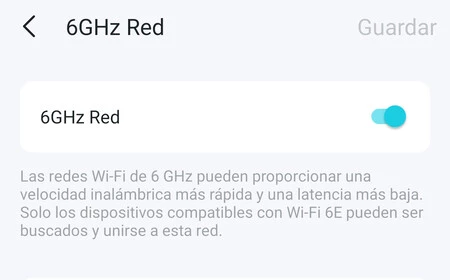
The inclusion of the 6 GHz band is the "game-changing" aspect, as the author noted. This band operates on a much wider, less congested spectrum, providing up to 1200 MHz of clean airwaves in some regions. This translates into significantly higher throughput and lower latency, especially for devices that are compatible with WiFi 6E or WiFi 7 and support the 6 GHz band. Unlike the 2.4 GHz band, which is prone to interference from other household devices (microwaves, cordless phones) and crowded with older WiFi networks, and the 5 GHz band, which is also becoming increasingly congested, the 6 GHz band offers a pristine environment for high-speed data transfer. Furthermore, the BE700 likely incorporates advanced antenna arrays, powerful processors, and sophisticated firmware to manage network traffic, optimize signal strength, and provide granular control over network settings—features often limited or absent in ISP-provided hardware. These capabilities enable features like dynamic frequency selection (DFS) for radar avoidance, advanced Quality of Service (QoS) for prioritizing traffic, and robust security protocols, all configurable through an intuitive mobile application.
Installation and Initial Impressions: Seamless Integration, Immediate Impact
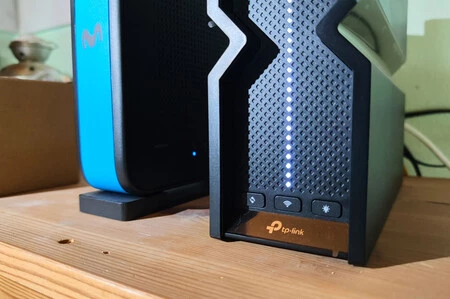
The physical installation involved placing both the Movistar router and the new TP-Link Archer BE700 side-by-side on a cabinet, connected via a Cat 6A Ethernet cable. The Cat 6A standard is crucial for multi-gigabit connections, supporting speeds up to 10 Gbps over distances up to 100 meters, ensuring that the wired link between the two routers does not become a bottleneck. The setup process for the neutral router in "bridge mode" was reported as remarkably straightforward, taking only a couple of minutes to configure and activate the new WiFi network. Bridge mode allows the ISP router to function primarily as a modem, passing the internet connection directly to the neutral router, which then handles all routing, WiFi broadcasting, and network management. This method bypasses the Movistar router’s internal WiFi and routing capabilities, allowing the TP-Link BE700 to take full control.
The immediate impact of this setup was a "radical" improvement in WiFi coverage and performance compared to the Movistar router. This rapid and noticeable enhancement underscores the significant difference that dedicated, high-performance networking hardware can make, particularly when paired with a high-speed fiber connection.
Performance Metrics and Real-World Impact: Unlocking True Potential
Over a two-week testing period, the TP-Link Archer BE700 delivered substantial improvements across multiple critical performance indicators:
- Speed: Near the router, speed tests recorded peaks of up to 5 Gbps wirelessly. While these speeds naturally attenuated with distance, they remained impressive, with speeds of up to 1.5 Gbps still achievable in rooms further away. This represents a substantial leap from what the Movistar router could deliver, particularly over WiFi.
- Stability: The new setup drastically reduced device disconnections, a common frustration with less robust routers. This enhanced stability is vital for uninterrupted streaming, online gaming, video conferencing, and general productivity, especially in homes with numerous active devices.
- Coverage: The overall WiFi coverage throughout the house improved, with a more consistent signal strength and better penetration into previously weaker signal areas. While the 6 GHz signal, by its nature, exhibits shorter range and less wall penetration compared to 2.4 GHz, its superior speed in closer proximity provides a net gain in overall network performance.
- Upload Speed: A notable improvement in upload speeds was observed. This is particularly beneficial for tasks such as cloud backups, large file uploads, and high-quality video conferencing, which often suffer on less capable networks.
- Bandwidth Management: The ability to manage the entire network via a dedicated mobile app provided an invaluable layer of control and insight. This includes features like device prioritization, parental controls, guest network management, and real-time network monitoring, which are typically more advanced and user-friendly on neutral routers than on ISP-provided equipment.
It is crucial to note that to fully leverage the 6 GHz band and WiFi 7 speeds, client devices must also be compatible with both WiFi 7 and the 6 GHz frequency. Without such compatible devices (e.g., newer smartphones, laptops, and networking cards), the benefits of the tri-band router would be limited to the older 2.4 GHz and 5 GHz bands, still offering improvements but not the full "game-changing" experience.
Cost-Benefit Analysis: Is the Investment Justified?

The decision to purchase a high-end tri-band WiFi 7 router like the TP-Link Archer BE700 comes with a significant financial outlay. These routers are currently expensive, reflecting their advanced technology and cutting-edge features. This leads to a critical question: is the added expense justified?
For the average internet user with a standard fiber connection (e.g., 300 Mbps or 600 Mbps) and a moderate number of devices, the ISP-provided router is likely more than sufficient. These users typically do not push their network to its limits, and the incremental performance gains from a neutral router might not be noticeable enough to warrant the cost.
However, for a specific demographic—the "power user" or "prosumer"—the investment can be highly beneficial. This group includes:
- Users with multi-gigabit fiber connections (e.g., 10 Gbps): To truly utilize these speeds wirelessly, a router capable of handling such throughput across multiple bands, especially 6 GHz, is essential.
- Households with a high density of connected devices: Smart homes, multiple users streaming 4K content, online gaming, and numerous IoT devices place significant strain on a network. A robust neutral router can manage this traffic more efficiently, preventing slowdowns and disconnections.
- Users with WiFi 7/6E compatible client devices: Without these devices, the 6 GHz band cannot be utilized. As more devices adopt these standards, the value of a tri-band router will only increase.
- Individuals requiring stable, low-latency connections: For professional work, competitive gaming, or critical applications, network stability and minimal latency are paramount.
- Users desiring advanced network control and customization: Features like comprehensive QoS, advanced security settings, VPN server/client functionality, and detailed network analytics are often only available on high-end neutral routers.
The author’s experience clearly demonstrates that for this specific user profile, the investment in a neutral tri-band WiFi 7 router has paid off in tangible improvements in stability, speed, and overall network experience.
Advantages and Disadvantages of the Upgrade
The detailed analysis by the author provides a clear breakdown of the pros and cons of this advanced networking upgrade:
| Advantages | Disadvantages |
|---|---|
| Unlocks the 6 GHz band, absent in Movistar’s router. | Tri-band WiFi 7 routers remain expensive. |
| Broader and more stable coverage throughout the home. | Requires WiFi 7 devices compatible with 6 GHz for full benefit. |
| Reduced disconnections and increased bandwidth for devices. | 6 GHz signal strength can diminish significantly with distance. |
| Notable improvement in upload speeds. | Requires two routers, occupying more physical space. |
| Peak WiFi speeds of up to 5 Gbps near the router. | Adds to electricity consumption (two active devices). |
| Comprehensive management via the manufacturer’s mobile app. | Requires configuring the ISP router in bridge mode. |
These points further solidify the argument that while the benefits are substantial for specific users, the drawbacks, primarily cost and device compatibility, make it a niche solution rather than a universal recommendation.
Broader Market Implications and Future Outlook
This individual case study reflects broader trends in the telecommunications and networking industries. As fiber optic infrastructure continues to expand and multi-gigabit internet plans become more common, the demand for high-performance home networking equipment will inevitably rise. ISPs face a delicate balance: providing "good enough" routers for the majority of their customer base to minimize costs and support complexity, while potentially alienating a segment of advanced users who seek maximum performance.
The continued evolution of WiFi standards, with WiFi 7 pushing the boundaries of wireless speed and efficiency, will further highlight these discrepancies. As more devices enter the market with 6 GHz and WiFi 7 capabilities, the pressure on ISPs to provide more advanced equipment, or at least facilitate seamless integration with third-party solutions, will increase. The regulatory environment also plays a role, with some jurisdictions advocating for greater consumer freedom in choosing their own networking equipment, further empowering users to customize their setups.
In the long term, we might see a divergence in ISP offerings: a basic router for general users and premium options (either directly from the ISP or through recommended third-party partnerships) for those subscribing to top-tier fiber plans. The trend towards Mesh WiFi systems, which can seamlessly extend coverage and often incorporate advanced features, also presents an alternative for improving home WiFi without necessarily replacing the primary ISP router entirely, though often at the cost of sacrificing some advanced control.
Conclusion
The journey from a standard ISP-provided WiFi 7 router to a high-performance neutral tri-band WiFi 7 router, as detailed in this experience, unequivocally demonstrates that for users with multi-gigabit fiber connections and compatible client devices, the investment in a dedicated networking solution significantly enhances the home internet experience. The Movistar WiFi 7 router, while offering modern connectivity, strategically omits the critical 6 GHz band, thereby limiting its true WiFi 7 potential. The adoption of a neutral router like the TP-Link Archer BE700 successfully bridges this gap, delivering unparalleled stability, speed, and coverage.
However, this upgrade is not a universal panacea. The substantial cost, the requirement for 6 GHz-compatible client devices, and the slightly more complex setup make it a niche solution for the discerning power user. For the vast majority of internet subscribers, the convenience and adequate performance of an ISP-provided router will continue to suffice. Yet, for those committed to extracting every ounce of performance from their premium fiber connections, the choice to invest in a neutral tri-band WiFi 7 router is a justified and transformative one, marking a clear distinction between standard connectivity and optimal, future-proofed home networking.
