

The ongoing "Campaña de la Renta 2025" (2025 Income Tax Campaign) in Spain has become a fertile ground for highly sophisticated phishing attacks, with cybercriminals leveraging advanced tactics to deceive citizens. A recent incident highlights the alarming evolution of these scams, where an SMS impersonating the Agencia Española de Administración Tributaria (AEAT), Spain’s tax agency, was so convincing it nearly misled an experienced internet user. This event underscores a critical cybersecurity challenge, revealing how fraudsters are meticulously crafting digital deceptions that mimic official communications with unprecedented accuracy, posing significant risks to unsuspecting taxpayers.
The Anatomy of a Near-Miss: A Case Study in Advanced Smishing
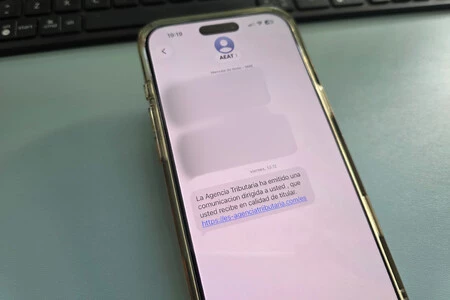
The recent incident began with an SMS received by a Spanish citizen, seemingly from the AEAT. What made this particular attempt stand out was its immediate appearance within an existing thread of legitimate communications from the tax agency on the recipient’s mobile phone. This technical maneuver, known as SMS spoofing or sender ID manipulation, is a significant escalation from typical phishing attempts, as it exploits the trust users place in their device’s organization of messages. For many, seeing a new message nestled among previous, verified communications from the AEAT would instantly lend it an air of authenticity, bypassing initial skepticism often triggered by unfamiliar sender IDs.
Upon receiving the message, which hinted at a pending tax refund, the recipient, despite being cyber-aware, felt a moment of doubt regarding its legitimacy. The standard first step for any informed user is to independently verify such claims. The recipient navigated directly to the official AEAT website using a known, trusted URL and their digital certificate to check for any outstanding communications or notifications. Finding none, a red flag was raised. However, the initial impression of legitimacy, fostered by the message’s integration into the existing AEAT SMS thread, persisted, prompting a cautious click on the link provided in the suspicious SMS.
The destination website was an almost perfect replica of the official AEAT portal. It featured impeccable Spanish, devoid of the grammatical errors or awkward phrasing often indicative of foreign-originated scams. This level of linguistic precision is achieved by directly copying content from the legitimate AEAT website, making the fraudulent page visually and textually indistinguishable from the real one at first glance. The site’s narrative centered on a tax refund, a common hook during the Renta campaign, designed to exploit the natural anticipation many taxpayers feel regarding potential reimbursements.
Unmasking the Deception: Identifying Subtle Anomalies
Despite the convincing façade, several crucial details eventually exposed the scam. The first critical inconsistency for the recipient was personal: not only had they not yet filed their Renta 2025 declaration, but they also anticipated owing taxes rather than receiving a refund this year. This personal context immediately heightened suspicion, shifting the interaction from potential legitimacy to active investigation.
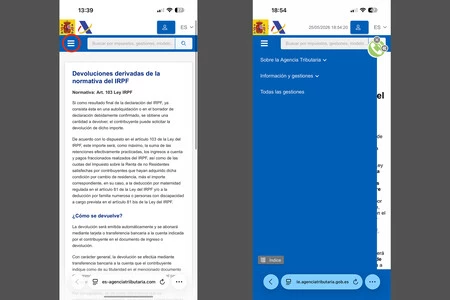
Further scrutiny revealed more technical flaws. The most glaring was a subtle but significant misspelling in the URL: "https://es-agenciatriibutaria.com/es" instead of "https://es-agenciatributaria.com/es". The duplication of the "i" in "tributaria" is a classic phishing tactic, relying on users’ tendency to skim URLs rather than scrutinize every character. While seemingly minor, this single character alteration redirects users to a fraudulent domain under the control of the attackers.
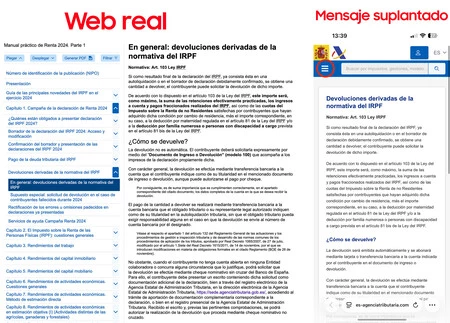
Beyond the URL, functional discrepancies became apparent. On the fake website, the typical "hamburger menu" icon, commonly used on mobile interfaces to expand navigation options, was non-responsive. It was a mere static image, indicating a lack of underlying functionality. In stark contrast, a quick check of the real AEAT website on a mobile device confirmed that its menu system was fully operational, providing dynamic interaction. This difference highlighted that the fraudulent site was a superficial imitation, lacking the interactive depth of its legitimate counterpart.
Finally, a reverse text search of the content from the fake site revealed it was indeed lifted directly from the official AEAT portal. However, comparing the full pages revealed missing elements on the fraudulent version, such as specific introductory phrases ("En general") and an entire right-hand column of options present on the authentic site. The ultimate objective of this elaborate setup became clear at the bottom of the fraudulent page: a prominent input field requesting the user’s DNI (Documento Nacional de Identidad – National Identity Document). This is the crucial data point cybercriminals seek, which can be used for a myriad of identity theft schemes, ranging from opening fraudulent accounts to applying for loans or accessing other personal information.
The Renta Campaign: A Magnet for Cybercrime
The annual Renta campaign is a critical period for Spanish citizens, involving the declaration of income and assets to the AEAT. Each year, millions of Spaniards engage with the tax agency, either online, via phone, or in person, to fulfill their fiscal obligations. For many, this process culminates in a tax refund, a significant financial event that can range from a few euros to several thousands. The anticipation of these refunds, combined with the complexity of tax procedures, creates an ideal environment for cybercriminals to launch targeted attacks.
The 2025 campaign, like its predecessors, is expected to see millions of declarations filed, with a substantial portion resulting in refunds. For example, in the 2023 campaign (referring to the 2022 tax year), over 23 million declarations were filed, with more than 14 million resulting in refunds totaling over 11 billion euros. This vast financial flow and high volume of interactions make the AEAT a prime target for impersonation, as fraudsters can cast a wide net with a high probability of ensnaring individuals expecting money back.
Criminals time their attacks to coincide with key phases of the campaign: the initial period for draft consultation, the filing deadlines, and particularly, the period when refunds are typically processed and disbursed. Messages promising "urgent refunds" or demanding "verification" to process payments prey on taxpayers’ eagerness and sometimes, their anxiety about navigating the tax system.
The Escalation of Phishing Sophistication in Spain
This recent incident is not an isolated event but rather indicative of a broader trend: the increasing sophistication of cybercrime, particularly phishing and smishing, targeting Spanish citizens. Cybersecurity agencies, such as the Instituto Nacional de Ciberseguridad (INCIBE), consistently report a rising number of incidents, with phishing remaining one of the most prevalent attack vectors.
Historically, phishing emails and SMS messages were often identifiable by obvious errors: poor grammar, low-resolution logos, or generic salutations. However, cybercriminals have refined their techniques significantly. They now employ:
- Highly Realistic Impersonations: Cloning official websites with pixel-perfect accuracy.
- Social Engineering Expertise: Crafting messages that induce urgency, fear, or excitement (e.g., "your account is blocked," "you have a package delivery," "urgent tax refund").
- Sender ID Spoofing: Manipulating the sender information to make messages appear to come from trusted entities, as seen in the AEAT case. This exploits the way mobile devices group messages, making it harder for users to discern fraudulent communications.
- Domain Squatting and Typosquatting: Registering domain names that are slight variations of legitimate ones (e.g.,
agenciatriibutaria.cominstead ofagenciatributaria.com) to trick users who overlook minor details.
Data from INCIBE consistently shows that government agencies, financial institutions, and utility companies are among the most impersonated entities in Spain. The financial implications are substantial, with millions of euros lost annually to these scams, alongside the less quantifiable costs of identity theft and data breaches. In 2023, INCIBE handled over 300,000 cybersecurity incidents, a significant portion of which were related to phishing and fraudulent websites.
Official Responses and Proactive Prevention Strategies
In response to the persistent threat, both the AEAT and INCIBE regularly issue warnings and guidance to the public. The core message from the AEAT is unequivocal:
- No Requests for Sensitive Information via Unsolicited Links: The AEAT will never request personal banking details, DNI, or other sensitive information via SMS, email, or unverified phone calls that direct users to external links.
- Official Channels Only: All tax procedures, consultations, and communications should be initiated directly through the official AEAT website (
agenciatributaria.gob.es), the official AEAT mobile app, or by contacting their official phone lines. - Verification is Key: If in doubt, always independently verify any communication by accessing official portals directly, rather than clicking on links provided in suspicious messages.
INCIBE complements these warnings with broader cybersecurity education, providing resources on how to identify phishing attempts, secure personal devices, and report fraudulent activity. Their recommendations include:
- Check the Sender: Verify the sender’s email address or phone number for any inconsistencies.
- Examine the URL: Hover over links (on a desktop) or long-press (on mobile) to preview the URL before clicking. Look for misspellings, unusual characters, or non-standard domains.
- Beware of Urgency: Messages demanding immediate action or threatening consequences are often hallmarks of scams.
- Review Content for Errors: While improving, grammatical errors or awkward phrasing can still be indicators of fraudulent messages.
- Never Share Sensitive Information: Be extremely cautious about providing personal data, especially DNI, bank details, or passwords, through unsolicited channels.
- Use Strong, Unique Passwords and Multi-Factor Authentication (MFA): MFA adds an extra layer of security, making it significantly harder for attackers to access accounts even if they obtain credentials.
- Keep Software Updated: Operating systems, browsers, and security software should always be kept up-to-date to patch known vulnerabilities.
- Report Incidents: Reporting suspicious messages or websites to INCIBE or the police helps authorities track and combat cybercrime.
Vulnerability and Broader Impact
The increasing sophistication of these attacks significantly raises the risk for all segments of the population, but particularly for more vulnerable groups. Elderly individuals, those with limited digital literacy, or simply anyone experiencing a moment of distraction can easily fall victim. The psychological impact on victims can be severe, ranging from stress and anxiety to financial ruin and the arduous process of recovering from identity theft.
The consequences of falling for a DNI-collecting scam can be far-reaching. With a DNI, criminals can attempt to:
- Open Bank Accounts: Facilitating money laundering or further fraudulent activities.
- Apply for Loans or Credit Cards: Leading to significant debt in the victim’s name.
- Register for Services: Such as phone contracts or utility services, leaving the victim liable for bills.
- Access Other Personal Data: If the DNI is combined with other leaked information.
Beyond individual harm, these scams erode public trust in digital communications and official government services. They place a greater burden on public agencies to constantly innovate their cybersecurity measures and communicate effectively with citizens.
The Ongoing Battle and Future Outlook
The fight against cybercrime is a continuous, evolving battle. As authorities and cybersecurity experts develop new defenses and raise public awareness, criminals adapt their methods. This cat-and-mouse game necessitates constant vigilance and a multi-faceted approach involving:
- Technological Safeguards: Enhanced filtering systems, AI-driven threat detection, and secure communication protocols.
- Legislative Measures: Robust laws against cybercrime and identity theft, with severe penalties.
- International Cooperation: Since cybercriminals often operate across borders, international collaboration is essential to track and apprehend them.
- Continuous Public Education: Empowering citizens with the knowledge and tools to protect themselves remains paramount. Campaigns during critical periods like the Renta season are vital.
As the Renta 2025 campaign progresses, the incident serves as a potent reminder of the need for extreme caution. The era of easily discernible phishing attempts is largely over. Today’s digital threats are subtle, sophisticated, and designed to exploit trust and human psychology. Taxpayers must adopt a mindset of skepticism towards any unsolicited communication, always prioritizing independent verification through official channels. Only through collective awareness and proactive measures can the public hope to navigate the treacherous waters of online fraud and protect their personal and financial security. The vigilance demonstrated in this case, albeit after an initial moment of doubt, offers a blueprint for how individuals can empower themselves against these increasingly perfect deceptions.
