
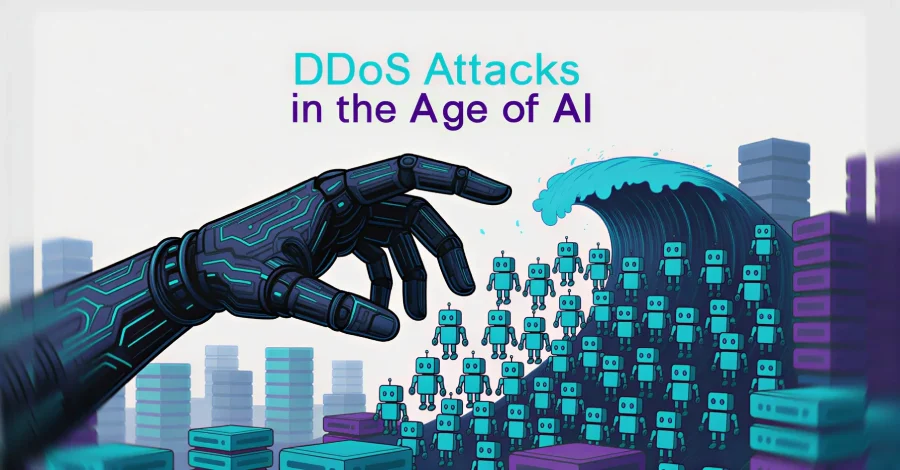

The digital battleground is undergoing a profound transformation, with threat actors increasingly leveraging the power of Artificial Intelligence (AI) to launch sophisticated cyberattacks that are faster, stronger, and significantly more challenging to mitigate. A recent report from The Hacker News, published on May 26, 2026, highlights a critical shift: the era of individual hackers working in isolation is rapidly being superseded by highly automated, AI-augmented offensive capabilities. This evolution is particularly evident in the realm of Distributed Denial of Service (DDoS) attacks, which are now capable of crippling businesses and government entities with unprecedented speed and precision.
The Escalation of the DDoS Threat Landscape
For years, DDoS attacks have been a persistent menace, designed to overwhelm target systems, servers, or networks with a flood of illegitimate traffic, rendering them inaccessible to legitimate users. These attacks can range from simple volumetric floods to more intricate application-layer assaults. Historically, mitigating DDoS involved identifying attack patterns, blocking malicious IP addresses, and scaling up network capacity. However, the integration of AI into these attack methodologies has fundamentally altered the defensive calculus.
AI’s role in modern DDoS operations is multifaceted. It enables threat actors to automate reconnaissance, dynamically identify vulnerabilities in targeted systems, and orchestrate massive attack campaigns with minimal human intervention. Unlike traditional botnets that often rely on static command-and-control structures, AI-powered botnets can adapt their tactics in real-time, mimic legitimate user behavior to evade detection, and switch attack vectors to bypass conventional security measures. This adaptive nature makes them significantly harder to detect and neutralize, often taking down critical online services in mere seconds or minutes, leading to substantial financial losses, severe reputational damage, and erosion of customer trust.
Industry reports consistently underscore the escalating severity of this threat. Cybersecurity firm Akamai’s latest State of the Internet report indicated a year-over-year increase of over 15% in DDoS attack volume globally, with a significant surge in multi-vector attacks that combine volumetric, protocol, and application-layer tactics. Furthermore, research by Cloudflare revealed that application-layer DDoS attacks, which are particularly insidious as they target specific software vulnerabilities and are harder to distinguish from legitimate traffic, saw a 50% rise in the past year. These statistics paint a stark picture of a threat landscape where the volume, sophistication, and adaptive capabilities of attacks are on an upward trajectory, largely fueled by advancements in AI and machine learning accessible to malicious actors.
A Chronology of DDoS Evolution and AI’s Emergence
The evolution of denial-of-service attacks traces a clear path of increasing sophistication, culminating in the current AI-driven paradigm.
- Early Days (Late 1990s – Early 2000s): Initial DoS attacks were rudimentary, often executed by single individuals or small groups using simple tools to flood a target with traffic. The infamous "MafiaBoy" attacks in 2000, which took down major websites like Amazon, CNN, and eBay, marked an early turning point, demonstrating the potential for coordinated disruption.
- Rise of Botnets (Mid-2000s – Early 2010s): The proliferation of malware led to the creation of vast botnets – networks of compromised computers controlled remotely by attackers. These botnets enabled distributed denial-of-service (DDoS) attacks, leveraging the combined bandwidth and processing power of thousands or millions of machines. Volumetric attacks, aiming to saturate network bandwidth, became prevalent, exemplified by the Conficker worm and subsequent large-scale botnets.
- Application-Layer Attacks and IoT Botnets (Mid-2010s – Present): As network infrastructure improved and volumetric attacks became somewhat easier to mitigate with higher bandwidth and specialized hardware, attackers shifted focus to application-layer attacks (Layer 7 of the OSI model). These attacks consume server resources by targeting specific application vulnerabilities or making legitimate-looking but resource-intensive requests, making them harder to filter. The emergence of the Mirai botnet in 2016, which harnessed vulnerable IoT devices, demonstrated the immense power of newly formed, massive botnets comprising insecure smart devices, leading to some of the largest DDoS attacks recorded.
- The AI Inflection Point (Late 2010s – May 2026): The advent of readily available AI and machine learning tools marked a significant inflection point. Initially, AI was primarily explored for defensive purposes. However, it quickly became a potent weapon in the hands of attackers. By 2020, security researchers began to demonstrate theoretical AI-driven attack capabilities. Fast forward to May 2026, and these theoretical concepts have materialized into practical, deployable tools used by malicious actors. AI algorithms can now analyze target network topologies, identify optimal attack vectors, learn from defensive responses to adapt attack patterns in real-time, and even generate polymorphic attack traffic that constantly changes to evade signature-based detection. This dynamic adaptability is what distinguishes the current wave of AI-powered attacks from previous iterations, rendering traditional, static defenses increasingly ineffective.
The Obsolescence of Traditional Cybersecurity Paradigms
The established methods of cybersecurity, once considered robust, are struggling to contend with this new generation of AI-assisted threats. For years, organizations relied on a layered security approach involving firewalls, intrusion detection/prevention systems (IDS/IPS), and regular software updates. These tools were effective against known threats and predictable attack patterns.
![[THN Webinar] New AI DDoS Attacks Are Smarter. Learn How to Fight Back](https://blogger.googleusercontent.com/img/b/R29vZ2xl/AVvXsEiphaRoHMD4mkIzApkJZumEOEdIR0c_RxQrvmjv5qM6Kgo8MBnKrIAxicsojC-CdXhcOfRR9t0DxQeyEMXjXtER-bkSqe97zvFr7mfz3HjwA-79JjLWg0IwhZFTulr__kB02fXgX09tOpLWUjqy-fFmQbfvCZG-2uLLAhJpFAFrPo5d9H0PVZHEaSvmZKFE/s1700-e365/ddossss.jpg)
However, AI-assisted attacks introduce capabilities that bypass these conventional safeguards:
- Adaptive Learning: Unlike static attack scripts, AI can learn from a system’s defensive responses. If a firewall blocks one type of traffic, the AI can quickly pivot to another vector, identify new entry points, or alter its traffic signature to appear legitimate.
- Dynamic Targeting: AI can perform lightning-fast reconnaissance, scanning vast networks and cloud configurations in minutes to pinpoint hidden APIs, misconfigured services, and subtle vulnerabilities that would take human hackers weeks to uncover. It doesn’t just hit the "front door"; it systematically probes every potential weak link.
- Mimicry and Evasion: AI can generate traffic that closely mimics legitimate user behavior, making it exceedingly difficult for traditional IDS/IPS systems, which often rely on signature matching, to differentiate between benign and malicious requests. This allows attacks to slip past defenses unnoticed until the system is already overwhelmed.
- Orchestration of Complex Campaigns: AI can coordinate multi-vector attacks across various layers of the network stack simultaneously, overwhelming different security controls at once. This complexity makes manual threat analysis and response almost impossible within the critical timeframes required to prevent disruption.
Cybersecurity experts universally agree that businesses relying solely on these outdated security habits are leaving their digital infrastructure dangerously exposed. The static, rule-based nature of older systems is no match for the dynamic, intelligent, and adaptive capabilities of AI-driven cyber weaponry.
The Imperative for AI-Driven Countermeasures
In this rapidly evolving cyber landscape, the adage "fight fire with fire" has never been more pertinent. The only viable strategy against AI-powered attacks is the deployment of equally sophisticated AI-driven defensive mechanisms. Cybersecurity analysts and industry leaders are united in their call for organizations to pivot towards proactive, intelligent security solutions.
Next-generation security platforms leverage AI and machine learning to:
- Real-time Behavioral Analytics: Continuously monitor network traffic and user behavior to establish baselines of normal activity. Deviations from these baselines, even subtle ones, can trigger alerts, enabling detection of novel attack patterns that signature-based systems would miss.
- Predictive Threat Intelligence: Analyze vast datasets of global threat intelligence to identify emerging attack trends, actor methodologies, and potential vulnerabilities before they are actively exploited. AI can correlate seemingly disparate pieces of information to foresee potential threats.
- Automated Incident Response: Upon detection of an anomaly or attack, AI can initiate automated response protocols, such as dynamically blocking malicious IP ranges, rerouting traffic, isolating compromised systems, or applying temporary patches, significantly reducing response times from minutes or hours to mere seconds.
- Adaptive Learning for Defense: Defensive AI systems can learn from every attack attempt, successful or failed, continuously refining their models and improving their ability to detect and mitigate future threats. This creates a self-improving security posture that evolves alongside the threat landscape.
- Anomaly Detection and Zero-Day Exploitation Prevention: By understanding normal system behavior, AI can identify anomalous processes or network requests that might indicate an attempted zero-day exploit or a novel attack technique, offering protection against previously unknown threats.
- Enhanced API Security: With AI targeting smart APIs, defensive AI can specifically monitor API traffic for unusual request volumes, unauthorized access attempts, or malformed queries, providing specialized protection for these critical interfaces.
Organizations that fail to adopt these advanced, AI-powered defensive strategies risk falling victim to attacks that can bypass traditional defenses with alarming ease. The investment in AI security is no longer a luxury but a fundamental necessity for business continuity and resilience in the digital age.
Broader Implications and the Future of Digital Resilience
The rise of AI-powered cyberattacks carries far-reaching implications across economic, regulatory, and societal spheres.
- Economic Disruption: Beyond immediate financial losses from downtime and remediation, businesses face long-term economic consequences. Supply chain disruptions triggered by attacks on a single entity can cascade through entire industries. The cost of data breaches, often a secondary outcome of initial DDoS attacks designed as a diversion, continues to climb, with IBM Security reporting an average cost of $4.45 million per breach in 2023.
- Erosion of Trust and Reputation: Repeated outages or security incidents can severely damage a company’s reputation, leading to customer churn, investor distrust, and a diminished brand image that can take years to rebuild. For public sector entities, this can erode public confidence in essential services.
- Regulatory Scrutiny and Compliance Burden: Governments and regulatory bodies are increasingly demanding higher standards of cybersecurity. Incidents stemming from inadequate defenses against AI-powered threats will likely trigger stricter penalties under regulations like GDPR, CCPA, and upcoming cybersecurity resilience acts, placing a heavier compliance burden on organizations.
- The Cybersecurity Talent Gap: The need for professionals skilled in AI, machine learning, and advanced cybersecurity is becoming more acute. Training and retaining talent capable of deploying, managing, and evolving AI-driven defenses will be a significant challenge for many organizations.
- The AI Arms Race: The current scenario points to an escalating "AI arms race" where advancements in offensive AI are met by corresponding developments in defensive AI. This continuous cycle demands constant innovation and investment from both solution providers and end-users, ensuring that cybersecurity remains a top-tier operational priority.
- National Security Implications: Critical infrastructure, government services, and defense systems are prime targets for AI-augmented state-sponsored attacks. The ability of AI to disrupt these vital services poses a significant threat to national security and societal stability.
In light of these pressing developments, the need for immediate action is paramount. Businesses must move beyond reactive postures and embrace a proactive, AI-centric approach to cybersecurity. This includes not only investing in cutting-edge AI-powered security solutions but also fostering a culture of continuous learning, employee training, and robust incident response planning. Educational resources, such as specialized webinars and online courses, are becoming vital tools for businesses to understand these evolving threats and the strategies required to counter them. Many organizations now offer on-demand access to such valuable content, ensuring that crucial knowledge is accessible even if live attendance is not possible.
The digital future hinges on the ability of organizations to adapt and innovate faster than their adversaries. The battle against AI-powered cyberattacks is not merely a technical challenge; it is a strategic imperative that will determine the resilience and trustworthiness of the global digital economy. Ignoring this shift is no longer an option; proactive engagement with AI-driven security is the only path to safeguarding digital assets and ensuring business continuity in an increasingly hostile cyber landscape.
