
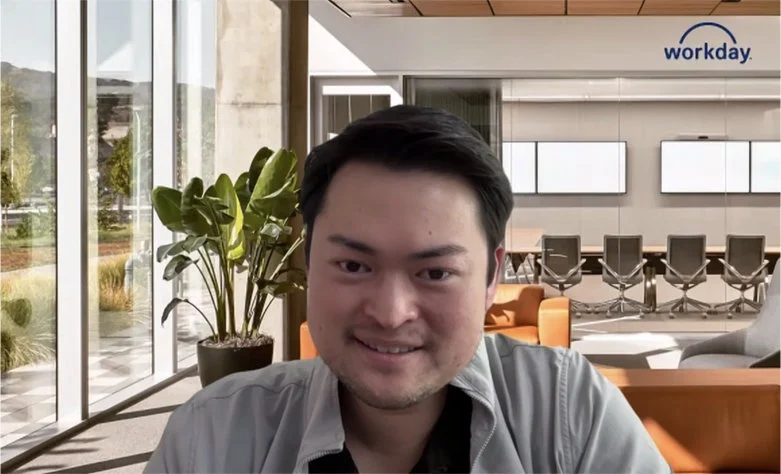

The enterprise software landscape is undergoing a fundamental shift from static platforms to dynamic, agentic ecosystems. In a significant move toward this future, Workday recently unveiled two sophisticated AI agents designed to automate complex, multi-step workflows in IT Service Management (ITSM) and travel management. These tools, spearheaded by Jerry Ting, General Manager of Workday AI Agents, represent a departure from traditional automation by focusing on cross-application orchestration rather than siloed task completion. By integrating deep-level actions across human resources, finance, and external third-party applications, Workday aims to eliminate the "app-switching" friction that has long hindered corporate productivity.
The Evolution of Enterprise Orchestration
The announcement of these agents follows a broader industry trend where generative AI is evolving from simple chatbots into "agentic" systems capable of executing autonomous workflows. For years, enterprises have struggled with fragmented software environments where a single business process—such as onboarding an employee or booking a business trip—requires navigating five or six different platforms. Workday’s new strategy positions its AI not just as a feature within its own suite, but as a central orchestrator capable of reaching into external systems like Microsoft Outlook, Slack, and dedicated ITSM tools.
Jerry Ting, who joined Workday following the acquisition of his AI-driven legal tech firm Evisort, emphasizes that the goal is to align software behavior with human intent. In a recent discussion regarding these capabilities, Ting highlighted that the traditional boundaries between departments—IT, HR, and Finance—are often artificial barriers to efficiency. By using AI to bridge these gaps, Workday is attempting to solve the "last mile" of digital transformation: the seamless execution of complex administrative tasks.
The Travel Agent: Redefining Corporate Logistics
The first of the two major releases is the Workday Travel Agent. Currently in use by early adopter customers, this agent is designed to manage the entirety of a business trip’s lifecycle. Unlike traditional travel booking tools that require manual entry and constant cross-referencing of calendars, the AI Travel Agent acts as a proactive personal assistant.
The agent begins by analyzing the calendars of all participants to find optimal meeting times. It then proposes itineraries that align with individual preferences—such as preferred airlines or hotel chains—while strictly adhering to corporate travel policies. Once a selection is made, the agent confirms the bookings, updates the participants’ calendars, and sends out necessary notifications.
The most significant innovation, however, occurs post-trip. The agent automatically generates and codes expense reports by pulling data from the itinerary and travel booking applications. This eliminates the manual reconciliation process that often takes employees hours to complete. As Ting noted, having an agent that understands both the expense side and the booking side creates a logical, unified flow. This integration ensures that "out-of-band" expenses—such as an extra day added for personal reasons—are flagged or managed according to specific company governance, reducing the compliance burden on finance departments.
Sana for ITSM: The End of the Helpdesk Ticket
Set for a broader rollout later this year, the "Sana" agent for ITSM aims to revolutionize how employees interact with IT infrastructure. The primary showcase for this technology is the employee onboarding process, a historically cumbersome workflow involving multiple stakeholders and manual approvals.
When a new hire is added to the system, Sana can automatically set up their single sign-on (SSO) profile, configure application access based on their specific role, and requisition necessary hardware. Beyond basic provisioning, the agent can enroll the employee in relevant modules within a Learning Management System (LMS), draft introductory emails, and even schedule initial "meet-and-greet" sessions with key team members.
This approach addresses what many call "IT gridlock." Traditionally, each of these steps would require a separate IT ticket, leading to delays that prevent new hires from being productive on their first day. Workday’s vision is to make the "ticket" itself an obsolete concept. By focusing on the outcome—a productive employee—rather than the administrative steps, the agent automates policy checks and seeks necessary approvals in the background, only involving human intervention when an exception occurs.
Strategic Market Positioning and Industry Context
Workday’s entry into the ITSM space is a calculated move. Rather than competing directly with comprehensive asset management platforms like ServiceNow for every facet of IT operations, Workday is focusing on the intersection of IT and the employee experience. This "lane-keeping" strategy ensures that Workday remains the system of record for people and money while leveraging its data to streamline tasks that are frequently "HR-adjacent."
Market data suggests there is a massive appetite for this type of consolidation. According to industry reports, the average enterprise uses over 300 SaaS applications, with employees switching between them thousands of times per day. This "toggle tax" is estimated to cost companies significantly in lost productivity and cognitive load. By acting as an orchestration layer, Workday’s agents can call upon external apps like ServiceNow for specialized tasks while maintaining a unified interface for the user. This "orchestration on top" model allows enterprises to keep their existing tech stack while benefiting from a more streamlined user experience.
Implementation Challenges: The Role of Policy and Documentation
The transition to agentic AI is not without its hurdles. For these agents to function effectively, they require clear, consistent, and digitized policy documentation. Many organizations still rely on "tribal knowledge" or fragmented PDF documents to govern things like spend limits, access permissions, and onboarding flows.
Workday is addressing this by building flexibility into its platform. Managers can tailor onboarding flows or travel rules on a per-department basis without needing deep technical support. This configurability allows for a more agile approach to business processes. Unlike traditional software, which often requires rigid, long-term configurations, agentic AI can be updated by simply refining the policy documents or "prompting" the agent with new instructions.
To support this transition, Workday has established a Forward Deployed Engineering (FDE) function. This team of technical specialists works directly with customers to map out their work processes in an "AI-forward" world. This involves more than just API connections; it requires a fundamental rethink of how work is structured to ensure that the AI is optimizing the right outcomes.
Chronology of Workday’s AI Development
The release of these agents is the latest milestone in a multi-year AI roadmap for Workday:
- 2022-2023: Workday integrated machine learning into core modules for tasks like anomaly detection in payroll and skills gap analysis in HR.
- Early 2024: The acquisition of HiredScore and the integration of the Sana AI technology provided the foundation for more advanced agentic workflows.
- September 2024: At the Workday Rising conference, the company announced "Workday Illuminate," the next-generation AI platform designed to power these specific agents.
- Late 2024: Limited release of the Travel Agent and pilot programs for Sana for ITSM.
- 2025 Projection: Full commercial availability of the ITSM agent and expansion of the agentic portfolio into procurement and financial planning.
Analysis: Implications for the Future of Work
The broader implication of Workday’s new AI agents is the potential for a "Frictionless Enterprise." By blurring the boundaries between functional applications, Workday is moving toward a world where software is invisible, and the focus is entirely on the result.
However, this shift also demands a new level of discipline from corporate leaders. As agents take over the execution of policy, the quality of that policy becomes paramount. Organizations will need to move away from ambiguous guidelines and toward structured, machine-readable governance. Furthermore, the role of the IT helpdesk and administrative staff will likely shift from manual task execution to "exception management" and system oversight.
In the long term, the success of these agents will depend on their ability to maintain trust and transparency. Workday has committed to a "human-in-the-loop" philosophy, ensuring that while the agent can perform the heavy lifting, the final decision-making power remains with the user or manager. As Jerry Ting noted, the technology is beginning to coalesce, but its transformative effect on the enterprise is only just beginning. The "death of the ticket" may be the first step in a much larger evolution of how business is conducted in the age of AI.
