
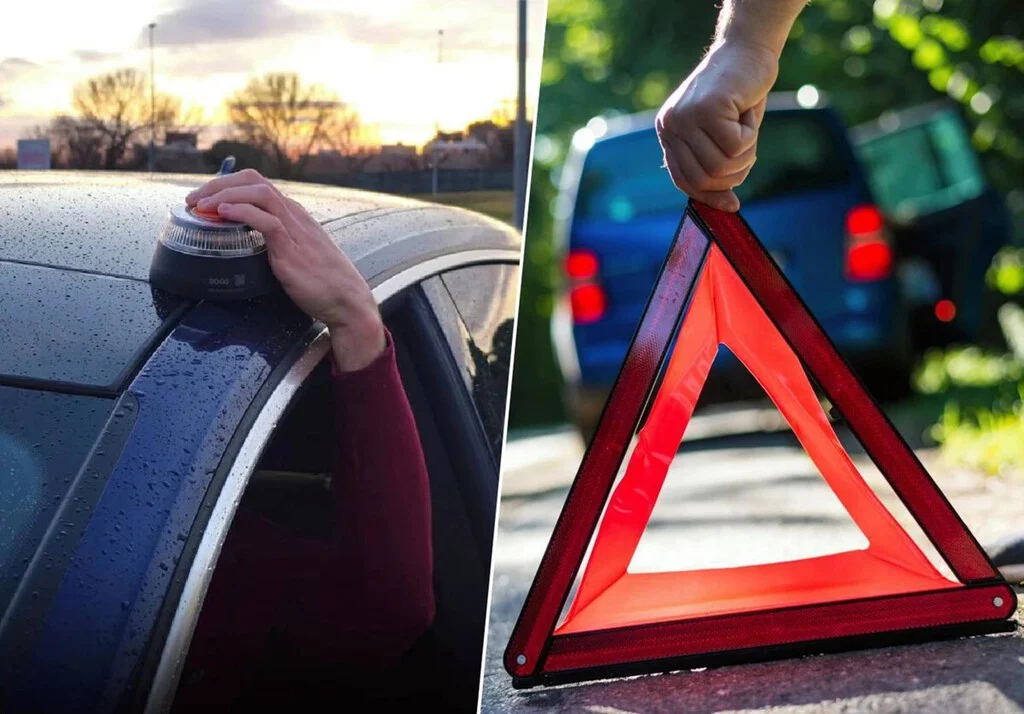

Almost four months have elapsed since the mandatory use of V16 beacons for roadside pre-signaling became effective in Spain, a period widely considered sufficient by many observers and manufacturers to begin assessing their real-world efficacy, yet the Directorate-General for Traffic (DGT) holds a different view, advocating for additional time before rendering a definitive judgment on the system’s success. This divergence in opinion underscores the ongoing complexities and challenges surrounding the implementation of this pivotal road safety innovation, which aims to modernize incident management on Spanish roads.
The Genesis of the V16 Beacon: A Shift in Roadside Safety
The introduction of V16 beacons marked a significant paradigm shift in Spain’s approach to roadside safety, moving away from the traditional reflective warning triangles that had been a staple for decades. The primary motivation behind this change was to enhance the safety of drivers and occupants involved in roadside incidents, particularly by minimizing the need for individuals to exit their vehicles and place warning devices in potentially hazardous traffic conditions. The V16 device, a small, magnetic, amber-flashing light, is designed to be easily deployed from within the vehicle, adhering to the highest part of the car, typically the roof. Its elevated position and powerful omnidirectional light aim to provide greater visibility to approaching traffic, especially in low-light conditions or adverse weather.
The regulatory framework stipulated a gradual transition. Initially, drivers could choose between the V16 beacon and the traditional triangles. However, the mandate for V16 devices with integrated connectivity came into full effect, requiring these units to communicate their location to the DGT 3.0 platform, thereby alerting emergency services and other road users in real-time. This connectivity aspect is crucial, as it transforms a simple warning light into a data-transmitting device, promising a more efficient and coordinated response to roadside emergencies. The grace period for non-connected V16 devices allowed for a phased adoption, but the ultimate goal was always the fully connected version, designed to integrate seamlessly into Spain’s intelligent transport systems.
DGT’s Candid Admission and Justification for Patience
In a recent forum organized by Abertis, a leading global infrastructure company, Pere Navarro, the Director-General of the DGT, publicly acknowledged shortcomings in the rollout and communication strategy surrounding the V16 beacons. Navarro candidly admitted that "information about the advantages of the V16 beacon could have been better communicated," a "mea culpa" that resonates with many users who have expressed confusion and frustration. This admission highlights a critical aspect of implementing new technologies in public safety: the importance of clear, consistent, and comprehensive public education campaigns.
Among the most prevalent complaints from users, the perceived "lack of visibility during the day" stands out. Drivers have reported that, in bright daylight, the amber flashing light of the V16 beacon does not always offer the distinct visual warning they expected, especially when compared to the highly reflective surfaces of the traditional triangles. Responding to these criticisms, Navarro offered a pragmatic defense, pointing out that "the triangle did not carry light" and that "it is impossible to please everyone." While factually correct regarding the triangles’ lack of illumination, this response did not fully quell the debate, as the expectation for a modern, technologically advanced device is often higher than for its low-tech predecessor.
Navarro’s plea for "a little more time" before a definitive evaluation of the V16’s results underscores the DGT’s belief that four months is an insufficient period to gather comprehensive data and observe long-term trends. He emphasized that "the beacon is slowly making its way," suggesting a gradual integration into the public consciousness and routine safety practices. This perspective implies that the full benefits of the V16 system, particularly its connected features, will only become apparent once a critical mass of users are familiar with and consistently employ the devices, and once the DGT 3.0 platform has accumulated a substantial volume of incident data for analysis.
Manufacturers’ Stance: Readiness and Data Availability
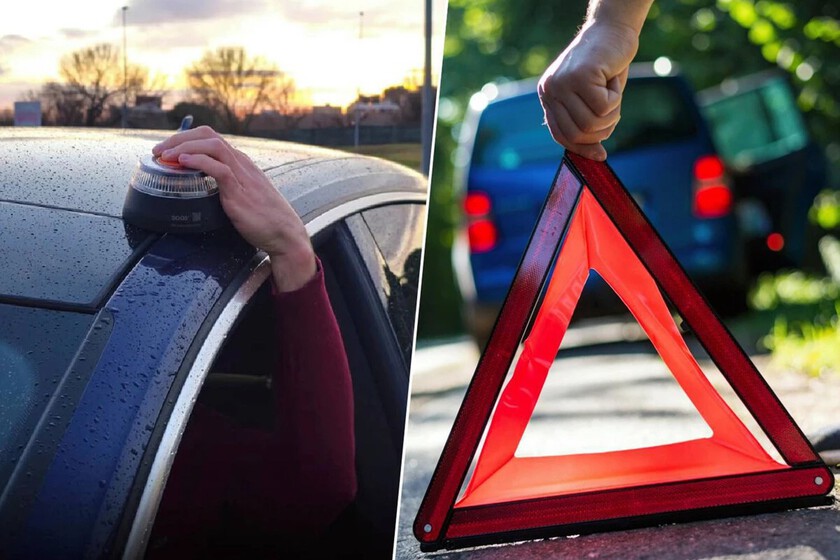
In stark contrast to the DGT’s call for patience, V16 beacon manufacturers reportedly disagree, believing that sufficient time has indeed passed to begin assessing the system’s effectiveness. This position is understandable from an industry perspective; manufacturers have invested heavily in research, development, and production to meet the DGT’s specifications and market demand. Their products are on the market, and they likely possess internal data or anecdotal evidence suggesting the devices are performing as intended.
The sheer volume of V16 beacons sold in Spain provides a strong basis for the manufacturers’ argument. DGT estimates indicate that nearly 20 million devices have been sold across the country, with approximately 3,000 units being activated daily. These figures suggest widespread adoption and a constant stream of operational data being fed into the DGT 3.0 platform. From a statistical standpoint, such a large dataset should, in theory, offer robust insights into deployment rates, incident locations, and potentially, correlations with accident reduction or emergency response times. Manufacturers would likely argue that waiting longer delays crucial feedback loops that could inform product improvements or refine public safety protocols. Moreover, prolonged uncertainty regarding the system’s "effectiveness" could negatively impact future sales and innovation within the sector.
The Shadow of Semana Santa: A Test of Efficacy
The debate over the V16’s effectiveness gained particular urgency following the grim statistics from the past Semana Santa (Easter Week) period. Spain recorded its worst figures for fatal pedestrian run-overs in 10 years during this time, a statistic that immediately raised questions about the V16’s role in preventing such tragedies. The DGT has publicly stated that it is "studying the real reasons" behind this alarming increase, seeking to understand whether these incidents are a consequence of drivers still needing to exit their vehicles to place traditional warning triangles, or if other behavioral factors are at play.
This period was a critical litmus test for the V16 beacons, as it typically sees a significant increase in road travel and, consequently, roadside incidents. The very purpose of the V16 is to prevent drivers from placing themselves in harm’s way when their vehicle breaks down or is involved in an accident. If a substantial number of these fatal run-overs still involved drivers attempting to deploy triangles, it would severely undermine the V16’s primary safety premise. The DGT’s investigation is therefore crucial, not only to understand the direct causes of these accidents but also to ascertain the extent to which V16 adoption (or lack thereof, or improper use) contributed to the outcomes. The results of this analysis will be pivotal in shaping public perception and future policy regarding the devices. The gravity of the situation has even led to legal challenges, with one report indicating that "the courts will now have to decide its future," suggesting that the V16’s efficacy and implementation are under judicial scrutiny.
Connectivity, Data, and Privacy Concerns
Beyond the physical visibility, the connected aspect of the V16 beacon is a cornerstone of its innovative design. Each connected V16 device, upon activation, transmits its precise geographical location to the DGT 3.0 platform. This real-time data is then used to inform emergency services, roadside assistance providers, and other road users via variable message signs and navigation apps. This system promises a more rapid and targeted response to incidents, potentially reducing secondary accidents caused by sudden obstructions.
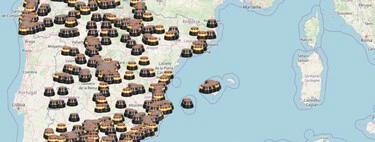
The wealth of data generated by these activations is substantial. As mentioned, approximately 3,000 beacons are activated daily, feeding a continuous stream of incident locations into the DGT’s system. This information is not entirely private; a public map exists where users can see in real-time all active V16 beacons in Spain. While this transparency can be beneficial for situational awareness, it also raises legitimate privacy concerns. Drivers might question the extent to which their location data is shared and whether their privacy is adequately protected when their vehicle’s breakdown location becomes publicly visible. The DGT has clarified that there is "no way to prevent your beacon from appearing on a public map," advising users to take "other precautions," which suggests an ongoing dialogue is needed regarding data governance and user privacy within this connected ecosystem.
Furthermore, the effectiveness of the connected V16 hinges entirely on robust telecommunications coverage. Reports, such as those highlighting "a single V16 beacon, two different networks," underscore the importance for consumers to "check carefully who provides the coverage" before purchasing. In a country with varying network infrastructures, particularly in rural or mountainous regions, inconsistent coverage could compromise the beacon’s ability to transmit data, thereby nullifying a key safety feature. This technical dependency adds another layer of complexity to the system’s overall reliability and effectiveness, requiring continuous monitoring and potentially, multi-network solutions to ensure universal functionality.
Regulatory Compliance and the Threat of Fines
Despite the ongoing debate about efficacy and communication, the mandatory nature of the V16 beacon means non-compliance carries a penalty. Drivers who fail to carry or use an approved V16 device in an emergency situation risk a fine. Reports of the "first fine for not carrying the V16 beacon having been issued in Valencia" indicate that the "grace period" for enforcement, if it ever truly existed in the public’s mind, has certainly ended. This immediate enforcement, even as the DGT seeks more time for evaluation, places drivers in a precarious position, requiring them to comply with a system whose full benefits are still under official review. The imposition of fines, therefore, serves as a powerful incentive for adoption, irrespective of individual perceptions of the device’s current performance.
International Endorsement and the Future Outlook
Adding another dimension to the V16 narrative, the European Commission has not only approved its use but has also reportedly "lavished praise on Spain" for its implementation. This international endorsement highlights the V16’s "improved options in physical and virtual visibility," suggesting that from a broader European perspective, Spain is leading the way in modernizing roadside safety. This positive reception from a supra-national body provides significant validation for the DGT’s initiative and could potentially pave the way for similar systems in other EU member states. Such approval often implies a robust technical assessment and alignment with broader European road safety strategies.
Looking ahead, the V16 beacon appears to be firmly entrenched in Spain’s road safety landscape. Pere Navarro’s assertion that "the beacon is slowly making its way" suggests a long-term commitment to the technology. The DGT will undoubtedly continue to gather data, analyze incident reports, and potentially refine its communication strategies. Future developments could include enhanced connectivity features, improved battery life, or even integration with advanced driver-assistance systems (ADAS) in newer vehicles.
However, the journey is far from over. The DGT faces the critical task of reconciling user feedback and accident statistics with its long-term vision. Ensuring effective daytime visibility, addressing privacy concerns related to the public map, guaranteeing ubiquitous connectivity, and transparently communicating the findings of its efficacy studies will be crucial for building public trust and maximizing the V16’s life-saving potential. Unless there is an unforeseen "plot twist," the V16 beacon, despite its initial teething problems and ongoing scrutiny, is here to stay, representing a significant, albeit evolving, component of Spain’s commitment to road safety in the digital age. The coming months will be critical in determining whether these innovative devices truly deliver on their promise to make Spanish roads safer for everyone.
