
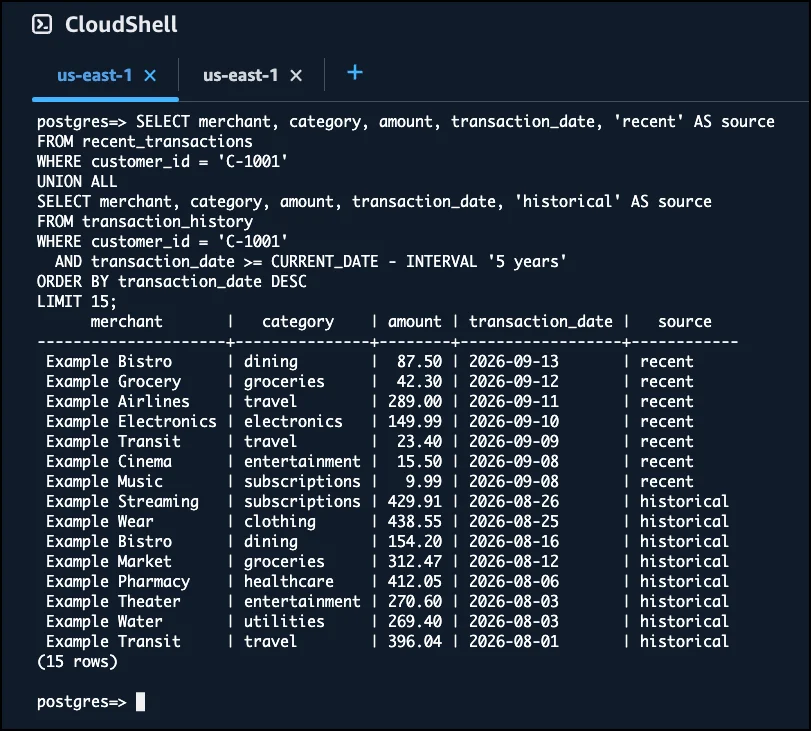

The landscape of enterprise data management experienced a significant shift today as Amazon Web Services (AWS) announced a powerful new capability for Amazon Aurora PostgreSQL, allowing organizations to directly query operational databases alongside large-scale data lakes. By embedding the high-performance DuckDB query engine—following the integration of the DuckLabs team into Amazon—AWS has effectively bridged the long-standing divide between transactional operational systems and analytical data repositories. This development allows developers and database administrators to execute unified queries across live transactional data and archived formats like Apache Iceberg and Apache Parquet stored in Amazon S3, all without building or maintaining complex, costly Extract, Transform, and Load (ETL) pipelines.
The elimination of data duplication is expected to drastically alter how modern applications handle historical context and real-time analytics. Previously, enterprises looking to blend recent operational metrics with long-term trends had to rely on reverse ETL processes. These pipelines frequently introduced latency, inflated cloud infrastructure expenditures, and demanded continuous engineering hours to ensure data synchronization. Furthermore, the rapid rise of autonomous AI agents—which often require unpredictable access to both live system states and deep historical archives—made traditional pre-replication models entirely obsolete. The new architecture directly addresses these friction points by processing analytical scans natively inside Aurora, keeping data movement to an absolute minimum.
Evolution of the Integration: The Road to Embedded DuckDB
The integration of DuckDB technology into AWS relational database services represents a strategic evolution in how cloud providers handle hybrid transactional and analytical processing (HTAP). For years, the architectural boundary between fast, row-based operational databases and columnar analytical data lakes required distinct system borders. Organizations routinely maintained separate infrastructure silos for PostgreSQL and object storage systems like Amazon S3, bridged together by fragile integration scripts.
The groundwork for this announcement was laid when the DuckLabs engineering team—the primary maintainers of the open-source DuckDB project—joined Amazon. Rather than forcing developers to transition data across disparate ecosystems, AWS engineers focused on embedding the analytical engine directly into the core runtime of Aurora PostgreSQL. This strategic move leverages DuckDB’s renowned vectorized query execution engine, allowing it to operate seamlessly within the PostgreSQL memory space.

By embedding the engine, Aurora can now handle analytical table scans of Parquet and Iceberg datasets locally, while the native PostgreSQL engine processes active operational transactions, including uncommitted writes. Because the processing stays entirely within the Aurora node, queries execute without unnecessary network hops or intermediate staging steps. Moreover, because the feature is built around the open-source DuckDB ecosystem, future updates and performance optimizations developed by the broader open-source community will naturally flow into AWS services, ensuring long-term technological alignment.
Technical Architecture and Implementation Mechanics
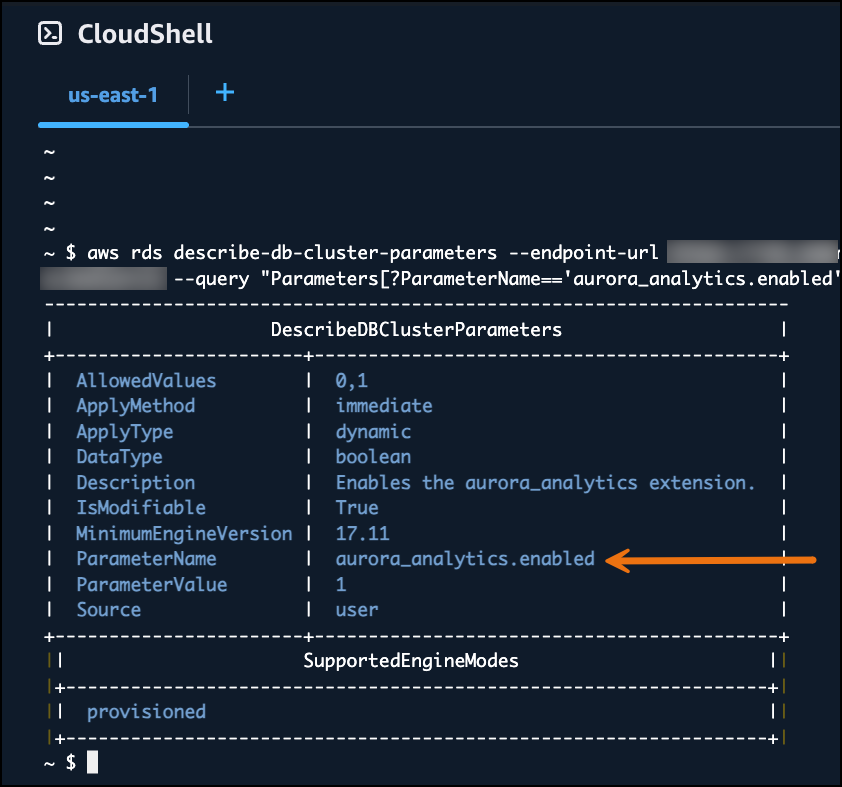
The new functionality is officially supported across two major releases of the database management system: Amazon Aurora PostgreSQL version 17 (starting with release 17.11) and version 18 (starting with release 18.6). Activating the capability requires a straightforward provisioning sequence that integrates seamlessly with existing AWS identity and security frameworks.
Administrators begin by attaching an appropriate AWS Identity and Access Management (IAM) role to their Aurora PostgreSQL cluster, configured with the necessary permissions to access targeted buckets in Amazon S3 and metadata within the AWS Glue Data Catalog. Once the infrastructure permissions are established, database administrators enable the native extension using a simple SQL command:
CREATE EXTENSION aurora_analytics;Following the extension installation, users can define foreign tables that point directly to external storage locations. One of the notable engineering advantages of this integration is automated schema inference. When defining a foreign table pointing to a Parquet file or an Apache Iceberg table, administrators can supply empty parentheses in the SQL definition. Aurora automatically interrogates the underlying file metadata to construct the schema dynamically, removing the need for manual column mapping. For large enterprise environments housing thousands of data lake assets, a single IMPORT FOREIGN SCHEMA command can bulk-create foreign tables for an entire AWS Glue Data Catalog database.
CREATE FOREIGN TABLE transaction_history ()
SERVER aurora_analytics_server
OPTIONS (
    location 's3://my-bucket/finance/transaction_history.parquet',
    format 'parquet'
);
Beyond native AWS Glue catalogs, the system supports external Iceberg REST Catalog (IRC)-compatible repositories through AWS Glue Data Catalog federation. Enterprises can register an external catalog once within Glue and immediately construct foreign tables against it. This capability enables multi-catalog queries where a single SQL statement can perform joins across live transactional tables in Aurora and distributed Iceberg tables residing in multiple external data stores.

Optimization, Caching, and Query Performance
Executing complex queries across petabyte-scale data lakes from within an operational database presents obvious performance hurdles. To mitigate latency and resource contention, AWS implemented several core optimizations directly into the Aurora analytics engine.
Chief among these are predicate pushdown and column pruning. When a user submits a query that filters data by specific parameters—such as a date range or a customer identification number—the engine pushes those filtering conditions down to the storage layer. Consequently, only the relevant subset of bytes is read from Amazon S3, rather than scanning entire file partitions.
Furthermore, frequently accessed analytical blocks are intelligently cached within the local memory of the Aurora instance. Subsequent queries targeting identical or overlapping data leverage these cached blocks to deliver significantly accelerated response times. Database administrators can audit these performance metrics on a per-query basis by calling the aurora_analytics_stat_statements() function, which yields granular data regarding scanned rows, bytes read from object storage, and cache-hit ratios.
For workloads requiring predictable, single-digit-millisecond latency, the integration also provides clear pathways for data materialization. Using standard PostgreSQL commands such as CREATE TABLE AS SELECT, INSERT INTO ... SELECT, or MERGE INTO, operators can copy data from the external data lake into native Aurora PostgreSQL tables. These materialized tables can subsequently be queried by any node in the cluster—including read replicas—effectively offloading heavy analytical scans from primary writer instances without necessitating external orchestration tools.
Industry Implications and Market Impact
Market analysts suggest that this capability significantly lowers the barrier to entry for hybrid data architectures, particularly for mid-market enterprises that lacked the dedicated engineering staff required to maintain complex data lakehouse pipelines. By unifying operational databases and analytical stores under a single SQL dialect, development teams can build sophisticated applications—such as real-time fraud detection systems, contextual recommendation engines, and context-aware AI agents—with substantially reduced codebase complexity.
The financial model of the feature is equally notable. AWS has announced that the direct querying capability carries no additional software licensing fees; customers incur charges only for the incremental Aurora compute utilized during query execution and standard Amazon S3 request and data transfer costs. This consumption-based pricing model aligns infrastructure costs directly with analytical activity, preventing the idle overhead often associated with always-on cluster solutions.
As organizations increasingly look toward generative artificial intelligence and autonomous data agents to drive operational workflows, the ability to seamlessly blend real-time transaction states with multi-year historical archives through a standard PostgreSQL interface marks a defining milestone in cloud database architecture.
