

Twenty years ago, a modest announcement on a corporate blog quietly altered the trajectory of modern information technology, introducing a concept that would eventually dismantle the capital-intensive barriers of traditional physical data centers. When Amazon Web Services (AWS) launched the Amazon EC2 Beta on August 25, 2006, engineered by a team spearheaded by principal evangelist Jeff Barr, the offering consisted of little more than a single virtual server instance type known as m1.small, operating out of a solitary geographic region in the eastern United States. Billed strictly by the hour and granting developers on-demand access to resizable Linux environments, this foundational product was deceptively simple. Yet, it sowed the seeds for an unprecedented paradigm shift: the era of cloud computing.
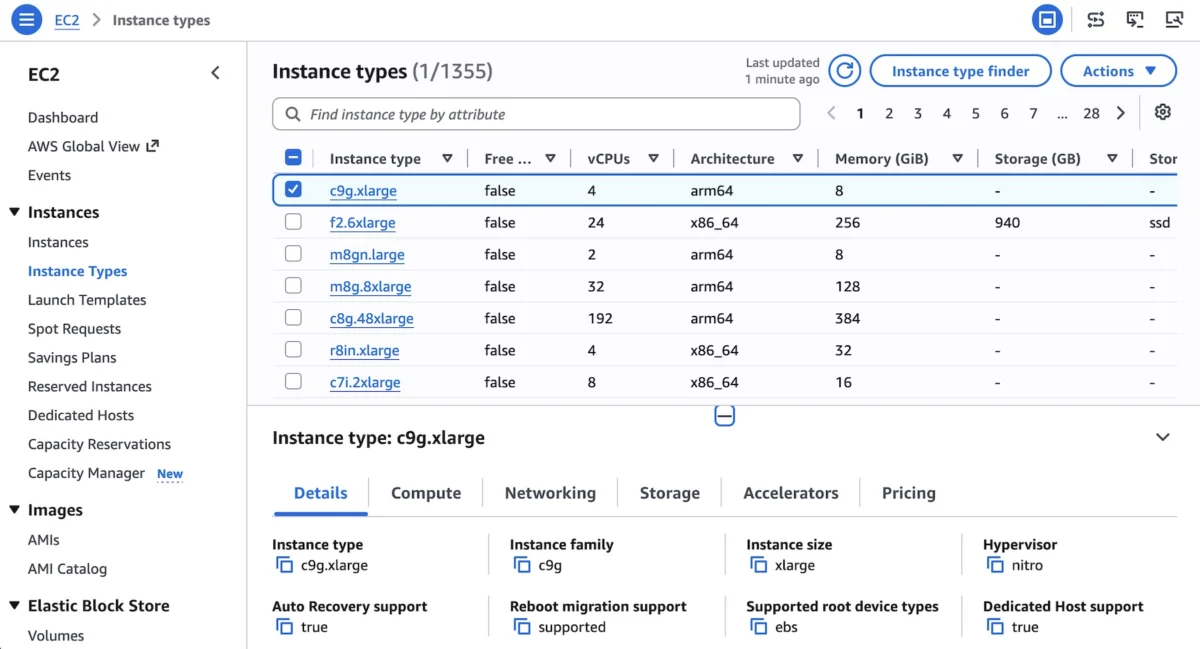
Today, as industry analysts, software engineers, and enterprise architects reflect on a twenty-year journey of continuous technological evolution, Amazon EC2 stands as the bedrock of the modern digital economy. What began as a single-region experiment has matured into a globally distributed compute fabric comprising more than 1,200 distinct instance types. These specialized virtual machines span general-purpose, compute-optimized, memory-optimized, storage-optimized, and accelerated computing families, catering to everything from lightweight microservices to massive high-performance computing clusters and generative artificial intelligence workloads.
The Genesis and Historical Chronology of EC2
To understand the magnitude of EC2’s two-decade milestone, one must examine the technological landscape of the mid-2000s. Prior to the widespread adoption of virtualization in enterprise settings, provisioning compute capacity meant purchasing physical hardware, rack-mounting servers, configuring networking gear, and managing physical datacenters—a process that routinely took weeks or months. Capital expenditure requirements stifled innovation, particularly for early-stage startups and independent developers who lacked enterprise budgets.

The introduction of the Amazon EC2 Beta in 2006 democratized access to raw computing power. However, the service did not achieve mass enterprise adoption overnight; rather, its growth was propelled by a methodical sequence of infrastructure milestones that transformed a basic virtual machine rental service into an enterprise-grade utility.
In 2008, AWS addressed the critical challenge of data persistence with the release of Amazon Elastic Block Store (EBS), allowing users to attach durable, block-level storage volumes to running instances. This decoupled compute capacity from storage persistence, alleviating fears of data loss upon instance termination. The following year, 2009, marked a massive leap forward in architectural resilience and security with the simultaneous introduction of Elastic Load Balancing, Auto Scaling, Amazon CloudWatch, and Amazon Virtual Private Cloud (VPC). These services granted organizations the ability to distribute incoming traffic seamlessly, scale infrastructure dynamically based on demand, monitor system health in real time, and isolate their cloud resources within secure, logically bounded virtual networks.
As enterprise adoption accelerated through the 2010s, hardware-level bottlenecks emerged as a primary constraint for cloud providers. AWS confronted this challenge head-on in 2017 with the commercial debut of the AWS Nitro System. By offloading virtualization functions from the host CPU to dedicated custom-built hardware and software components, Nitro delivered near bare-metal performance, enhanced security isolation, and accelerated the pace at which new instance types could be developed and deployed.
Building upon this hardware innovation, AWS introduced its custom-designed ARM-based processors, AWS Graviton, in 2018. Tailored specifically for cost-sensitive scale-out workloads, the Graviton processor family introduced an era of superior price-to-performance ratios in the cloud. Concurrently, AWS began pushing the boundaries of physical geography. Recognizing that certain low-latency applications could not tolerate the round-trip times associated with centralized cloud regions, the company expanded the reach of EC2 through AWS Outposts, AWS Local Zones, and AWS Wavelength, embedding compute capacity directly into local on-premises datacenters, metropolitan centers, and 5G telecommunications carrier networks globally.
The Data-Driven Expansion of Compute Infrastructure

Quantifying the growth of Amazon EC2 over the past twenty years reveals a staggering scale of industrial expansion. From its single-region origins, EC2 infrastructure now powers workloads across 39 geographic regions spanning the globe, supported by an intricate network of Availability Zones designed to ensure fault tolerance and high availability.
The expansion of instance types mirrors the diversification of modern computing requirements. While the original m1.small instance catered to basic web-hosting needs, contemporary EC2 fleets include accelerated computing instances equipped with advanced Graphics Processing Units (GPUs) and specialized machine learning accelerators. These specialized architectures have become the primary engines driving the current artificial intelligence boom, training trillion-parameter foundation models and executing complex inferencing tasks at speeds previously thought impossible.
Furthermore, EC2 has evolved from a standalone Infrastructure-as-a-Service (IaaS) offering into the foundational substrate upon which virtually all higher-level AWS services are constructed. Whether enterprises deploy containerized applications via Amazon Elastic Container Service (ECS) and Amazon Elastic Kubernetes Service (EKS), execute serverless functions through AWS Lambda, manage distributed data processing with Amazon EMR, or train generative AI models via Amazon SageMaker and Amazon Bedrock, the underlying compute cycles are ultimately provisioned on EC2 capacity. Every modern architectural pattern, from stateless web applications to massive distributed data lakes, traces its lineage back to the fundamental decision to launch an EC2 instance.
Industry Implications and the Strategic Philosophy of AWS
The enduring success of Amazon EC2 offers critical insights into product development strategies within the technology sector. Industry analysts frequently point to the foundational philosophy articulated by AWS leadership: launching minimalist, highly functional services quickly, and iterating rapidly based on rigorous customer feedback. By prioritizing core utility—secure, resizable compute capacity available on demand with zero long-term commitments—AWS established a pricing and consumption model that fundamentally disrupted traditional enterprise procurement cycles.

The economic implications of this model cannot be overstated. By converting capital expenditure (CapEx) into flexible operating expenditure (OpEx), EC2 enabled a generation of technology startups to scale operations dynamically alongside user growth, effectively removing financial friction from the entrepreneurial ecosystem. In the enterprise sector, the flexibility of EC2 forced legacy hardware vendors and traditional IT service providers to restructure their business models around cloud-native architectures, hybrid cloud deployments, and subscription-based service delivery.
As cloud computing enters its third decade, the technological demands placed upon infrastructure are shifting dramatically. The rapid ascent of generative artificial intelligence, the proliferation of Internet of Things (IoT) devices, and the increasing stringency of global data residency and security regulations present complex new challenges for infrastructure architects.
Despite these shifting demands, the core value proposition established twenty years ago remains steadfast. As AWS continues to pioneer advancements in custom silicon, quantum computing integration, and sustainable data center operations, Amazon EC2 remains the indispensable engine driving digital transformation across industries. The architectural decisions made in a small conference room two decades ago laid a resilient groundwork that not only survived the explosive growth of the internet era but continues to define the outer limits of what is possible in enterprise technology.
