
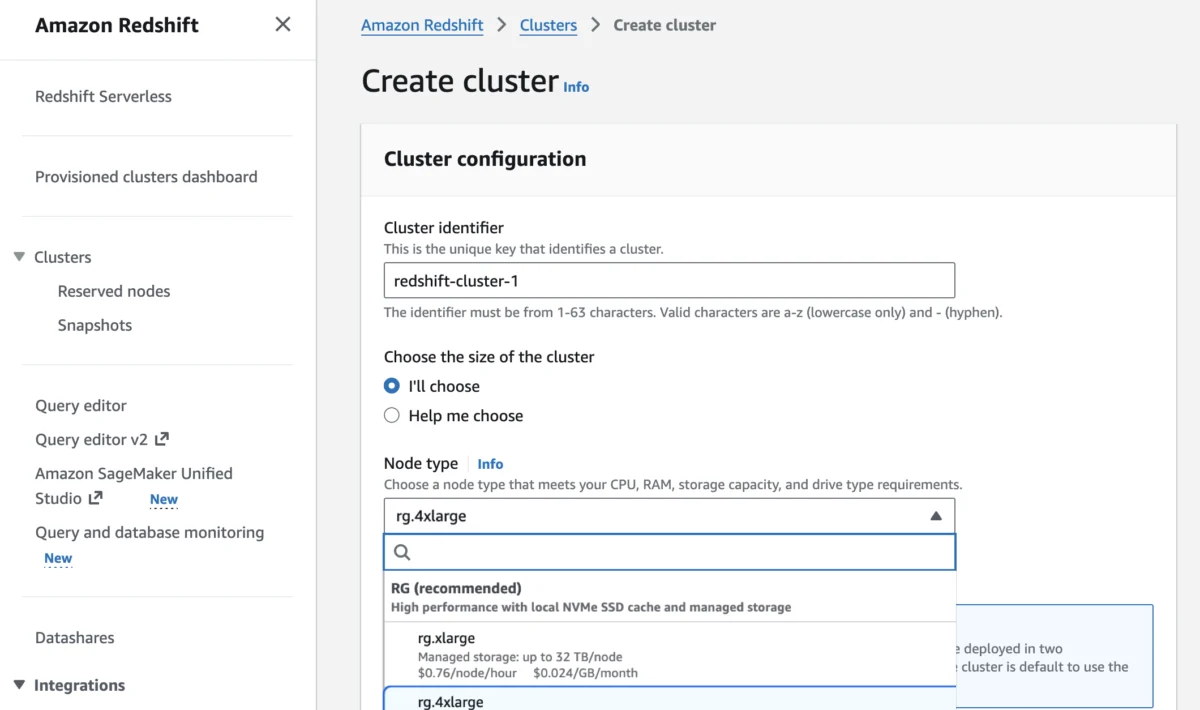

Amazon Web Services (AWS) today announced the general availability of Amazon Redshift RG instances, a new instance family designed to significantly enhance performance and reduce operational costs for cloud data warehousing, particularly for modern workloads driven by human analysts and rapidly scaling artificial intelligence (AI) agents. Powered by AWS Graviton processors, these new instances promise up to 2.2 times faster data warehouse query execution compared to previous-generation RA3 instances, alongside a 30% reduction in price per vCPU. This strategic release further integrates data warehouse and data lake analytics, offering up to 2.4 times faster performance for Apache Iceberg and 1.5 times faster for Apache Parquet queries, while simultaneously eliminating Redshift Spectrum scanning fees.
The Evolving Landscape of Data Analytics and the Rise of AI
Since its inception in 2013, Amazon Redshift has been a foundational service in the cloud data warehousing domain, offering enterprises a scalable, high-performance, and cost-effective alternative to traditional on-premises data solutions. Over the past decade, Redshift has consistently evolved, adapting to the dynamic needs of data-driven organizations. Early architectural generations focused on dense compute, providing robust processing power for structured data. This was followed by the introduction of Amazon RA3 instances, which decoupled compute and storage, enabling independent scaling and introducing managed analytics-optimized storage for greater flexibility and efficiency. More recently, Amazon Redshift Serverless emerged, simplifying operations further by providing an on-demand, pay-per-use model that eliminates the need for cluster management. Each iteration has aimed to make data queries cheaper, faster, and more efficient, responding to the ever-growing volumes of data and the increasing complexity of analytical demands.
The contemporary data landscape is characterized by a dual approach to data storage and analysis. Organizations increasingly leverage traditional data warehouse tables for frequently accessed, structured data requiring high-speed querying, while simultaneously utilizing data lakes for cost-effective storage of vast, diverse, and often unstructured datasets. This bifurcated strategy, while offering flexibility, often presents challenges in terms of data integration, query performance across different data types, and overall operational complexity.
A pivotal shift in recent years has been the accelerated integration of AI and machine learning into business operations. AI agents, designed for autonomous data exploration, pattern recognition, and decision-making, are now querying data warehouses at scales that dwarf typical human usage patterns. These agentic AI workloads demand not only exceptional processing speed and low latency but also highly optimized cost structures, as their continuous, high-volume queries can lead to spiraling operational expenses if not managed efficiently. Recognizing this paradigm shift, Amazon Redshift has strategically enhanced its core capabilities to meet these unprecedented demands, whether originating from traditional human-driven business intelligence (BI) needs or sophisticated AI-powered applications. For instance, in March 2026, Amazon Redshift significantly boosted the performance of BI dashboards and Extract, Transform, Load (ETL) workloads by speeding up new queries by up to seven times. This critical improvement directly addressed the need for faster response times in low-latency SQL queries, vital for near-real-time analytics, BI applications, ETL pipelines, and the autonomous operations of goal-seeking AI agents.
Introducing the Graviton-Powered RG Instances: A New Era of Performance and Efficiency
The launch of Amazon Redshift RG instances represents a significant leap forward in addressing these converged analytics requirements. At the heart of this new instance family are AWS Graviton processors. These custom-designed, ARM-based processors are engineered by AWS to deliver superior price-performance for a wide range of cloud workloads, including databases, analytics, and high-performance computing. By leveraging Graviton, RG instances are designed to achieve a new benchmark in efficiency for data warehousing.
The performance gains are substantial: data warehouse workloads on RG instances can run up to 2.2 times faster than on RA3 instances. This acceleration translates directly into quicker insights, improved responsiveness for critical business applications, and the ability to process larger datasets in shorter timeframes. Beyond raw speed, the cost efficiency is equally compelling, with a 30% lower price per vCPU compared to RA3 instances. This combination of enhanced performance and reduced cost per unit of compute power significantly lowers the total cost of ownership for Redshift users, making advanced analytics more accessible and sustainable, especially for high-volume AI-driven operations.
A cornerstone feature of RG instances is their integrated data lake query engine. This innovation allows users to execute SQL analytics across both their structured data warehouse tables and the diverse datasets residing in Amazon Simple Storage Service (Amazon S3) data lakes, all from a single, unified engine. This integration is crucial for breaking down data silos and simplifying complex analytical workflows that span different data storage paradigms. The performance benefits for data lake queries are noteworthy: RG instances deliver up to 2.4 times faster query execution for Apache Iceberg and up to 1.5 times faster for Apache Parquet formats compared to RA3 instances. Apache Iceberg and Parquet are open table and columnar storage formats widely adopted in data lakes for their efficiency, schema evolution capabilities, and robust support for large-scale analytical processing. The improved performance for these formats underscores Redshift’s commitment to supporting modern data lake architectures.
Moreover, this integrated approach fundamentally redefines how data lake queries are processed within Redshift. Previously, Redshift Spectrum was utilized to query data in S3, incurring separate per-terabyte scanning charges (typically $5/TB). With RG instances, data lake queries are now executed directly on the cluster nodes, leveraging the same compute resources that process data warehouse workloads. This eliminates the need for Redshift Spectrum as a separate component, thereby removing the associated scanning fees. This change not only reduces total analytics costs but also simplifies the operational model, as data lake queries remain within the customer’s Virtual Private Cloud (VPC) boundary, adhering to existing AWS Identity and Access Management (IAM) roles for enhanced security and governance.
Comparative Instance Specifications and Economic Impact
To facilitate migration and adoption, AWS has provided a clear comparison between current RA3 instances and the recommended RG counterparts:
| Current RA3 Instance | Recommended RG Instance | vCPU | Memory (GB) | Primary Use Case |
|---|---|---|---|---|
ra3.xlplus |
rg.xlarge |
4 | 32 | Small cluster departmental analytics |
ra3.4xlarge |
rg.4xlarge |
12 – 16 (1.33:1 ratio) | 96 GB – 128 GB (1.33:1) | Standard production workloads, medium data volumes |
This table illustrates a thoughtful transition path, where customers can identify equivalent or superior RG instances for their existing RA3 workloads. The increased vCPU and memory ratios in the rg.4xlarge instance, for example, indicate a more powerful and efficient compute unit, capable of handling more demanding analytical tasks. The combined benefits of enhanced speed, cost efficiency, and the integrated data lake query engine position Redshift RG instances as an ideal solution for organizations grappling with high query volumes and stringent low-latency requirements, especially those driven by sophisticated analytics and agentic AI workloads.
The economic implications for customers running combined data warehouse and data lake workloads are substantial. By unifying these environments and optimizing query execution, AWS aims to significantly reduce total analytics costs while streamlining operations through a single system. AWS encourages customers to utilize the AWS Pricing Calculator with their specific workload patterns to accurately estimate potential savings, which can vary based on data volume, query complexity, and usage patterns.
Seamless Adoption and Operational Advantages
Getting started with Amazon Redshift RG instances is designed to be straightforward. Customers can launch new clusters or migrate existing ones through the AWS Management Console, AWS Command Line Interface (CLI), or AWS API. The integrated data lake query engine is enabled by default, ensuring immediate access to its benefits without additional configuration.
For existing Redshift users, the migration process is engineered for minimal disruption. AWS provides optimal paths based on current cluster configurations, offering tools to estimate costs, validate compatibility, and automate execution. Crucially, external tables, schemas, and existing query syntax—including previous Redshift Spectrum queries—remain unchanged. This means there is no need for customers to recreate external tables or modify their application code, ensuring a smooth transition and preserving existing investments in data infrastructure and application development. The Redshift Management Guide offers comprehensive documentation for managing clusters and navigating the migration process.

Chronology of Redshift Innovation and Broader Industry Impact
The introduction of RG instances is not an isolated event but rather the latest milestone in Amazon Redshift’s continuous trajectory of innovation. Following significant performance enhancements in March 2026, which saw up to seven-fold speed improvements for new low-latency SQL queries vital for BI and ETL, the RG instances further solidify Redshift’s position as a leading analytics platform. These consistent updates underscore AWS’s commitment to evolving Redshift in anticipation of customer needs and emerging technological trends, particularly the exponential growth of AI and machine learning applications.
From an industry perspective, this development positions Amazon Redshift competitively against other major cloud data warehousing and data lake platforms. The emphasis on Graviton processors highlights AWS’s strategic investment in custom silicon to deliver differentiated price-performance, a trend observed across various cloud services. The integrated data lake capability directly addresses the prevalent challenge of managing disparate data environments, offering a cohesive solution that simplifies governance, enhances security (by keeping data within the VPC boundary), and significantly reduces costs by eliminating external scanning fees. This approach not only caters to traditional enterprise analytics but also provides a robust foundation for the burgeoning field of generative AI and large language models, which require immense computational power and seamless access to vast, diverse datasets.
The sustainability aspect, while not explicitly highlighted in the original announcement, is also a subtle yet important implication. Graviton processors are known for their energy efficiency, meaning RG instances could contribute to a lower carbon footprint for data operations, aligning with the growing corporate focus on environmental, social, and governance (ESG) initiatives.
Availability and Flexible Pricing
Amazon Redshift RG instances are now broadly available across numerous AWS Regions, including US East (N. Virginia, Ohio), US West (N. California, Oregon), Asia Pacific (Hong Kong, Hyderabad, Jakarta, Malaysia, Melbourne, Mumbai, Osaka, Seoul, Singapore, Sydney, Taiwan, Tokyo), Canada (Central), Europe (Frankfurt, Ireland, Milan, London, Paris, Spain, Stockholm), and South America (São Paulo). AWS maintains a detailed "Capabilities by Region" page for the latest availability and future roadmap information.
For Redshift Provisioned instances, customers have flexible pricing options. On-Demand Instances offer hourly billing with no upfront commitments, providing agility for fluctuating workloads. Alternatively, Reserved Instances allow customers to commit to a specific instance configuration for a 1-year or 3-year term, resulting in significant cost savings for predictable, long-running workloads. Detailed pricing information is available on the Amazon Redshift Pricing page, enabling organizations to select the model that best aligns with their budgetary and operational requirements.
AWS encourages customers to explore the capabilities of RG instances through the Redshift console and provide feedback via AWS re:Post for Amazon Redshift or their designated AWS Support contacts. This iterative feedback mechanism is a hallmark of AWS’s development philosophy, ensuring that new features and services continue to meet the evolving needs of its global customer base. The introduction of RG instances marks a pivotal moment for Amazon Redshift, underscoring its commitment to delivering high-performance, cost-effective, and operationally simple analytics solutions for the increasingly complex and AI-driven data landscape.
Updated May 12, 2026: Middle East (UAE) removed from available regions.
