


Amazon Web Services recently advanced its global infrastructure footprint and regional developer engagement strategy, highlighted by the official launch of a new Local Zone in Athens, Greece, and a landmark technical gathering of Latin American builders in São Paulo. These developments underscore the cloud computing leader’s dual focus on shrinking network latency for end users and cultivating localized ecosystems of technical talent capable of driving enterprise cloud adoption. The strategic rollout of the Athens facility addresses strict European data residency mandates while providing high-performance computing capabilities to historically underserved metropolitan centers across the EMEA region.
The Athens Local Zone Launch and Technical Specifications
The newly operational AWS Local Zone in Athens represents a significant milestone for enterprise architecture in southeastern Europe. By positioning compute, storage, and database services directly within the Greek capital, AWS aims to serve industries requiring ultra-low, single-digit millisecond latency—such as real-time financial trading platforms, healthcare data management systems, high-volume media production pipelines, and interactive gaming networks.
Significantly, the Athens facility marks the second Local Zone in the Europe, Middle East, and Africa region to incorporate native support for Amazon Simple Storage Service and Amazon Elastic Block Store Local Snapshots. This integration allows organizations to execute both data processing and long-term storage workflows entirely within national borders. Compliance officers and IT directors managing sensitive operations under regional regulatory frameworks can now satisfy strict data sovereignty requirements without the capital expenditure of constructing and maintaining proprietary data center infrastructure.
The infrastructural architecture of the Athens Local Zone supports a robust suite of core AWS services. Organizations can immediately deploy Amazon Elastic Compute Cloud instances powered by advanced processors, including the high-performance C7i, M7i, and R7i instance families. Furthermore, the facility supports Amazon S3 utilizing the One Zone-Infrequent Access storage class, alongside Amazon Elastic Container Service to facilitate modern microservices deployments and containerized application management.
Industry analysts observe that this geographic expansion aligns with a broader industry trend toward decentralized cloud architectures. Rather than relying solely on centralized AWS Regions—such as those operating in Frankfurt, Ireland, or Paris—hyperscale cloud providers are increasingly deploying edge infrastructure to population centers. This shift mitigates bandwidth bottlenecks, reduces transit costs, and guarantees that regional businesses can compete globally without compromising on data localization obligations.

São Paulo Developer Summit and Regional Community Dynamics
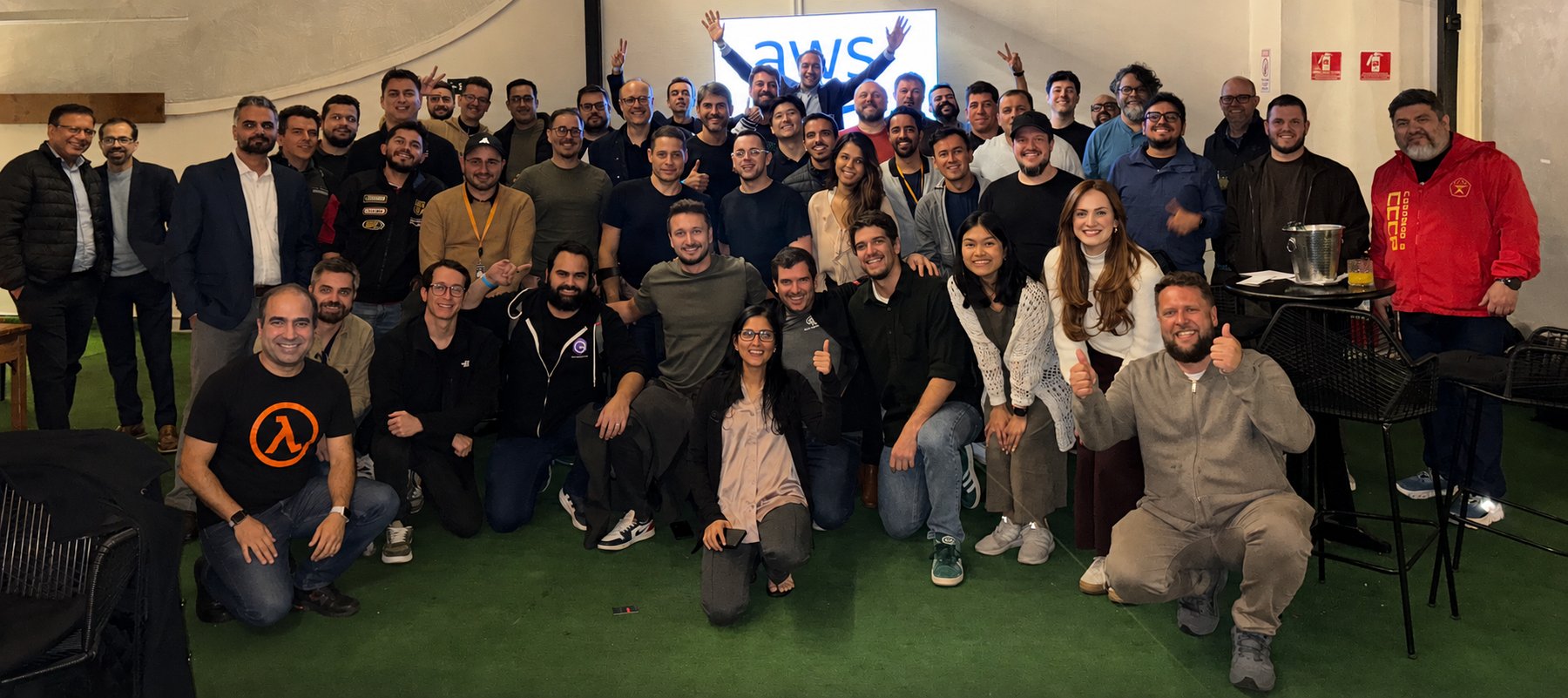
Simultaneously, AWS leadership turned its attention to the Southern Hemisphere, hosting a three-day technical immersion event in São Paulo, Brazil. The gathering brought together hundreds of software engineers, systems architects, and technical builders from across Latin America for an intensive curriculum of deep-dive technical sessions, hands-on architectural workshops, and collaborative troubleshooting forums.
The event served as a critical nexus for a technology community that frequently operates across vast geographic distances and fragmented markets. Observers noted that the value of the summit extended far beyond the scheduled presentations, providing an invaluable physical space for regional practitioners to debate cloud migration strategies, whiteboard complex distributed systems, and exchange localized insights regarding enterprise digital transformation.
Latin America represents one of the fastest-growing digital economies globally, characterized by rapid modernization in the fintech, retail, and telecommunications sectors. By facilitating direct collaboration between regional builders and AWS engineering specialists, the summit aimed to accelerate cloud adoption maturity. Industry experts emphasize that robust developer communities are vital catalysts for sustained platform utilization, as peer-to-peer knowledge sharing often bridges the gap between theoretical cloud capabilities and complex, real-world enterprise execution.
Background Context and Global Infrastructure Strategy
The dual focus on Athens and São Paulo illustrates the sophisticated, two-pronged strategy governing modern cloud infrastructure deployment: pairing hyper-localized physical presence with vibrant developer ecosystems.
Over the past decade, AWS has systematically expanded its global infrastructure network, evolving from a centralized collection of availability zones into a sprawling, multi-tiered hierarchy of regions, local zones, wavelength zones, and outpost installations. Local Zones, in particular, were conceived to bridge the gap between centralized cloud power and the physical limitations of network latency. For metropolitan areas like Athens—which serve as commercial hubs for surrounding regions but lack the hyperscale footprint of traditional cloud hubs—Local Zones provide an optimal compromise, delivering localized performance backed by the full security and feature set of the broader AWS ecosystem.
Concurrently, the company’s investment in regional developer summits reflects a long-standing corporate philosophy centered on community enablement. From early meetup groups to massive annual re:Invent conferences, AWS has maintained that the stickiness of its platform relies heavily on the empowerment of the builders who design systems upon it. The Latin American technical summit underscores how this playbook is continually adapted to emerging technology markets, where regional compliance, localized talent development, and community networking are paramount.
Industry Implications and Economic Impact
The launch of the Athens Local Zone carries distinct commercial implications for businesses operating within Greece and the broader Balkan region. Historically, Greek enterprises seeking enterprise-grade cloud capabilities had to route traffic through infrastructure situated in Western Europe, introducing latency penalties that rendered real-time applications impractical. With the new Local Zone, local enterprises can re-architecture their applications for edge processing, unlocking new capabilities in telemedicine, automated manufacturing, and algorithmic financial trading.
Moreover, the timing of the facility aligns with ongoing national digital transformation initiatives in Greece, which aim to modernize public sector administration and stimulate private sector innovation through cloud adoption. By providing a secure, compliant in-country pathway for sensitive government and enterprise data, AWS positions itself as a foundational partner in the nation’s digital economy.
From a macroeconomic perspective, the convergence of infrastructure investments and developer community engagement highlights the intensifying competition among hyperscale cloud providers. As global markets mature, differentiation increasingly stems from localized compliance capabilities and the depth of regional developer engagement rather than raw computing scale alone.
Outlook and Future Developments
As AWS continues to execute its global expansion roadmap, industry stakeholders anticipate further rollouts of edge infrastructure nodes in strategic commercial centers worldwide. The successful integration of data residency features—such as S3 and EBS Local Snapshot support—within the Athens facility signals a template that AWS is likely to replicate in other regulatory-sensitive jurisdictions.
Simultaneously, the momentum generated by the São Paulo technical summit is expected to reverberate across Latin America’s digital landscape, fostering a more interconnected cohort of cloud architects equipped to tackle complex scalability challenges. As these technical communities mature, their collective feedback will undoubtedly influence the evolutionary trajectory of AWS products, ensuring that cloud infrastructure remains closely attuned to the operational realities of builders on the ground.
The dual announcements from Athens and São Paulo reinforce a fundamental truth of modern enterprise technology: while physical infrastructure provides the raw power required to process the world’s data, it is the active, engaged community of builders connecting across borders and whiteboards that ultimately animates the digital ecosystem.
