
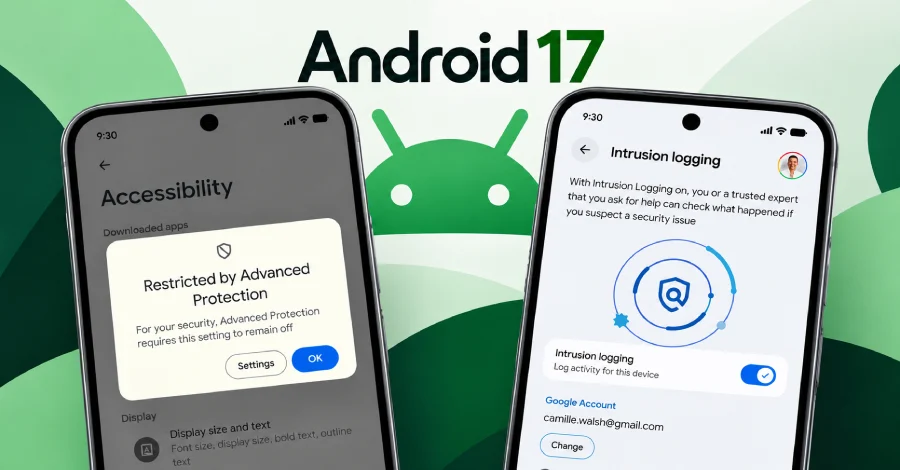

Google has unveiled a significant security enhancement within Android 17, designed to neutralize one of the most pervasive attack vectors currently threatening the mobile ecosystem. By restricting access to the Android Accessibility Service API exclusively to verified, categorized accessibility tools when the Advanced Protection program is active, the tech giant is effectively closing a loophole that has long been exploited by banking trojans, spyware, and sophisticated financial fraud syndicates. This structural change marks a pivotal shift in Google’s strategy to balance the functional requirements of assistive technology with the imperative of modern cybersecurity.
The Accessibility Service API was originally engineered with the noble intention of enabling developers to create powerful tools for users with disabilities. These tools, such as screen readers, voice control systems, and automated navigation assistants, require deep, systemic access to the user interface to perform actions on behalf of the user. However, this same level of privilege—the ability to intercept touch events, read screen contents, and manipulate UI elements—has become a primary target for cybercriminals. Once a user is manipulated through social engineering tactics into granting accessibility permissions, a malicious application effectively gains "god-mode" control over the device.
The Evolution of the Accessibility Exploitation Crisis
The history of Android malware is inextricably linked to the abuse of the Accessibility Service. Over the past decade, the landscape of mobile threats has shifted from simple adware to complex, multi-stage financial theft campaigns. Malware authors have weaponized these APIs to bypass two-factor authentication, perform unauthorized bank transfers, and exfiltrate sensitive data without the need for root-level access.
In 2026, the prevalence of such attacks reached a critical juncture. Investigations into various malware families, including those that target major financial institutions and digital wallets, revealed a consistent pattern: the exploitation of accessibility services as the primary conduit for payload execution. By drawing fake login overlays, logging keystrokes, and programmatically clicking buttons, these applications have bypassed traditional sandboxing, effectively rendering standard permissions insufficient.
Google’s decision to implement these restrictions in Android 17 is the culmination of years of iterative policy changes. Historically, the company has attempted to mitigate this threat through stricter Play Store policies, requiring developers to justify the use of accessibility services. Despite these efforts, the rise of sideloading and the proliferation of third-party app stores have meant that malicious actors continued to find ways to trick users into granting permissions, necessitating the hard-coded, system-level restriction introduced in this latest update.
Anatomy of an Accessibility Attack
To understand the necessity of this new security measure, it is essential to examine how threat actors have historically weaponized these APIs. The process typically follows a standard kill chain:
- Infection and Social Engineering: The user is deceived into installing a malicious application, often masquerading as a legitimate tool, a system update, or a financial service app.
- Permission Escalation: Upon launch, the app employs psychological manipulation—often claiming that "security" or "accessibility" features need to be enabled—to guide the user to the device settings menu.
- API Hijacking: Once the Accessibility Service is granted, the malware initiates its background operations. It can then read the contents of the screen, detect when a banking app is opened, and launch a transparent "overlay" window.
- Data Exfiltration and Fraud: The malware logs keystrokes to capture credentials, waits for the user to authenticate, and then uses the Accessibility Service to initiate fraudulent transactions in the background, often hiding notification alerts from the user to maintain the facade of normalcy.
The introduction of the "Advanced Protection" restriction in Android 17 effectively breaks this chain. By verifying the classification of the application before granting access to the API, the operating system ensures that only software with a legitimate, verified purpose can interact with the user interface at a systemic level.
Broader Implications for the Ecosystem
The move by Google carries significant implications for both developers and the security landscape. By requiring that applications be categorized as "Accessibility Tools" to gain this access, the tech giant is shifting the burden of trust from the user to the platform.

For developers of legitimate accessibility apps, this transition may require a re-evaluation of their application’s metadata and verification status within the Google ecosystem. Google has noted that developers will be notified when Advanced Protection is enabled on a user’s device, allowing them to optimize their features accordingly. This collaboration between the platform and the developer community is intended to ensure that the security tightening does not come at the cost of usability for those who rely on these tools daily.
Furthermore, the integration of "Intrusion Logging" in Android 17 represents a proactive approach to forensic analysis. By enabling this feature, users can gain visibility into how apps are interacting with their system, providing a layer of transparency that was previously unavailable to the average consumer. This capability is expected to assist security researchers and incident response teams in identifying emerging threats more rapidly.
Analysis: A Necessary Trade-off
The restriction of accessibility services is not without controversy. Critics have historically argued that limiting these APIs could stifle innovation and restrict the reach of apps that provide crucial accessibility features to underserved populations. However, the current security climate suggests that the risk of total device compromise outweighs the inconvenience of a verification process.
From a cybersecurity perspective, this is a "defense-in-depth" maneuver. By limiting the attack surface, Google is forcing threat actors to find more complex, and therefore more expensive, ways to compromise a device. This increases the cost of development for attackers, potentially deterring smaller, less-resourced cybercriminal groups from pursuing accessibility-based exploits.
The move also underscores the growing importance of the "Advanced Protection" program. While previously seen as a niche tool for high-risk users—such as journalists, activists, and corporate executives—this update positions it as a vital standard for all users who wish to secure their digital lives against evolving mobile threats.
Chronology of Google’s Security Efforts
The path to Android 17’s security architecture has been marked by several key developments:
- Pre-2022: The rise of banking trojans using Accessibility Services for screen scraping. Google begins implementing manual review processes for Play Store apps using these APIs.
- 2023-2024: Increased scrutiny on sideloaded apps. Google introduces "Play Protect" enhancements to detect malicious behavior in real-time, even for apps installed outside the Play Store.
- 2025: Introduction of on-device AI-based threat detection to identify anomalous app behavior.
- 2026 (October): Official announcement of Android 17, featuring the restriction of Accessibility Service access under Advanced Protection as a cornerstone security feature.
Looking Ahead
As mobile devices become the primary computing platforms for the global population, the pressure to secure them against increasingly sophisticated threats will only intensify. The measures introduced in Android 17 reflect a maturing understanding of the mobile threat landscape.
While no security feature is ever truly "unbreakable," the restriction of the Accessibility Service API is a substantial step toward creating a more resilient operating system. By categorizing and verifying the tools that have the highest level of access to user data, Google is prioritizing the integrity of the user experience over the convenience of unrestricted API access.
For the end user, the path forward is clear: enabling Advanced Protection is no longer an optional luxury for high-profile targets, but a necessary step for anyone looking to secure their personal information in an era of rampant mobile fraud. As these features roll out to devices globally, the long-term impact on the success rates of banking trojans and spyware will serve as the ultimate metric of this strategy’s efficacy.
