
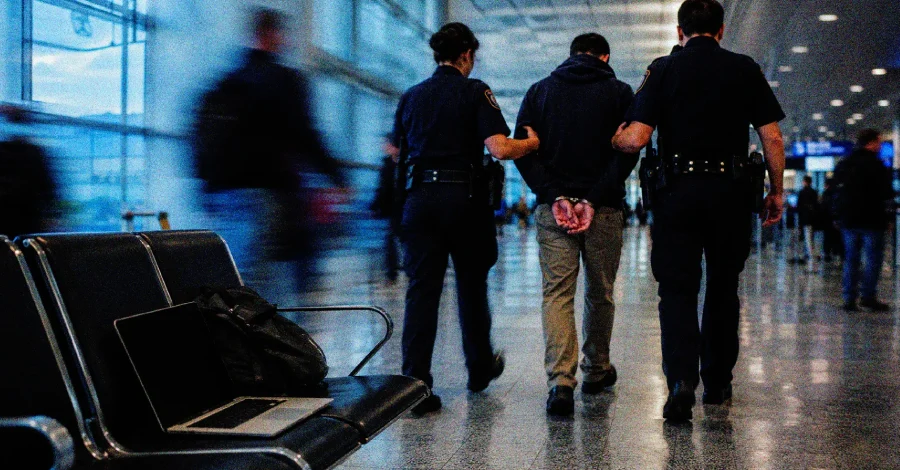

A perplexing case of alleged mistaken identity has unfolded in Armenia, where Russian tourist Aleksandr Ermakov has been held in a detention center since June 28, 2024, based on a U.S. extradition request. Washington seeks a notorious REvil ransomware suspect, also named Aleksandr Ermakov, but lawyers for the detained man assert that American authorities have apprehended the wrong individual, sparking an international legal and diplomatic conundrum. The incident underscores the intricate challenges of attributing cybercrimes and the complexities of international law enforcement cooperation in an era where digital footprints can be deceptive.
The Detention and Defense’s Claims
The sequence of events leading to the detention of Aleksandr Yuryevich Ermakov, a former prison-service lawyer from Omsk, Russia, began abruptly at Yerevan’s Zvartnots airport. His wife, Maria Yurova, recounted to REN TV that border officers intercepted her husband in the departure hall. They reportedly showed him a photograph from his VKontakte social media page before escorting him to a side room for questioning and subsequent detention. Lawyers representing Ermakov in Armenia quickly moved to challenge the U.S. request, arguing that their client, who reportedly does not speak English, bears only a superficial resemblance in name to the cybercriminal sought by American and allied intelligence agencies. They contend that the U.S. extradition paperwork, likely relying solely on a given name and surname, led to an automated, and ultimately erroneous, identification.
The Sought-After Cybercriminal: Aleksandr Gennadievich Ermakov
The individual the U.S. government, alongside its international partners, is actively pursuing is Aleksandr Gennadievich Ermakov. This Ermakov is a high-profile figure in the world of cybercrime, specifically linked to the infamous REvil (also known as Sodinokibi) ransomware group. His activities drew the attention of global law enforcement, culminating in him being sanctioned by Australia, the United States, and the United Kingdom in January 2024. These sanctions were a direct response to his alleged involvement in the devastating October 2022 cyberattack on Medibank Private, one of Australia’s largest private health insurers. The breach resulted in the theft of an estimated 9.7 million customer records, a significant portion of which were subsequently dumped onto the dark web, exposing sensitive personal and medical information.
Beyond the Medibank incident, Aleksandr Gennadievich Ermakov is accused of participating in Sodinokibi/REvil attacks from approximately April 2019 to July 12, 2021. The U.S. charging document, reportedly held by RIA Novosti, details a campaign of digital extortion that victimized over 1,000 entities, including private companies, law enforcement agencies, government offices, schools, and hospitals, with some targets located within the Northern District of Texas. Interpol’s notice, which Izvestia claims to possess, further specifies that this Ermakov was believed to be one of the REvil platform’s administrators, personally profiting over $13.7 million from the illicit operations. The U.S. warrant for his arrest was reportedly issued by a federal court in the Northern District of Texas on June 26, 2024, just two days prior to the arrest in Yerevan.
A Crucial Distinction: Patronymics and the Challenge of Attribution
A critical element in distinguishing between the two individuals lies in their patronymics—a middle name derived from the father’s first name, common in Russian naming conventions. Russian passports carry this patronymic, offering a vital identifier. Australia’s consolidated sanctions list, for instance, clearly identifies the wanted individual as Aleksandr Gennadievich Ermakov, born on May 16, 1990. The UK’s entry echoes this specificity. However, the U.S. Treasury’s Office of Foreign Assets Control (OFAC) designation, while listing "ERMAKOV, Aleksandr, Moscow, DOB 16 May 1990," along with multiple aliases such as "blade_runner," "GistaveDore," "GustaveDore," and "JimJones," notably omits the patronymic. This omission, according to defense lawyer Dylan Rajavi, is the likely source of the confusion. Rajavi posited that the U.S. paperwork, lacking this crucial detail, facilitated an automated identification error. He further emphasized that standard verification methods, such as fingerprints or full passport data, had not been utilized in the Armenian detention process, with only the arrest warrant being presented.

REvil’s Modus Operandi and Global Impact
REvil, or Sodinokibi, emerged as one of the most prolific and damaging ransomware-as-a-service (RaaS) operations, active primarily from 2019 until its apparent dismantling in early 2022. The group’s strategy involved sophisticated phishing and exploitation of vulnerabilities to gain initial access to victim networks, followed by lateral movement, data exfiltration, and encryption of critical systems. They operated on a RaaS model, developing the ransomware code and infrastructure, then leasing it to affiliates who executed the attacks. REvil was notorious for demanding multi-million dollar ransoms, often paid in cryptocurrency, and for threatening to publish stolen data if victims refused to pay.
The group’s victim roster was extensive and diverse, impacting sectors from manufacturing and healthcare to finance and government. Notable attacks attributed to REvil include the 2021 Kaseya supply chain attack, which affected thousands of businesses globally, and incidents targeting JBS Foods, one of the world’s largest meatpackers. The economic fallout from REvil’s activities was immense, with estimated damages running into hundreds of millions, if not billions, of dollars globally, encompassing direct ransom payments, recovery costs, reputational damage, and business interruption. The U.S. Department of Justice (DOJ) had previously charged Yevgeniy Polyanin in 2021, also in the Northern District of Texas, for his alleged role in Sodinokibi/REvil attacks on Texas businesses, demonstrating a consistent effort by American authorities to pursue members of the group.
The Medibank Breach and International Response
The Medibank Private cyberattack in October 2022 was a watershed moment for cybersecurity in Australia. The breach exposed the highly sensitive data of millions of current and former customers, including names, dates of birth, addresses, phone numbers, email addresses, Medicare numbers, and for a subset, details of medical procedures. The public outcry was significant, leading to calls for stronger data protection laws and increased international cooperation against cybercriminals. The Australian government, through its signals directorate and federal police, launched "Operation Aquila," an 18-month investigation that culminated in the naming of Aleksandr Gennadievich Ermakov as a key perpetrator. This detailed investigation, rather than Russian state media, was the primary source linking him to the attack. The subsequent sanctions by Australia, the U.S., and the UK represented a coordinated international effort to impose consequences on individuals involved in state-sponsored or globally impactful cybercrimes.
The SugarLocker Connection and Russian Conviction
Further complicating the narrative is the revelation of Aleksandr Gennadievich Ermakov’s prior legal entanglements in Russia. According to TASS and other Russian media outlets, he was already serving a two-year sentence of "restriction of freedom" at the time of the Armenian detention. This sentence was reportedly handed down by a Moscow court in October 2023 (adjusting the year for chronological consistency, as the original article’s "October 2024" appears to be a forward-looking statement or typo given the June 28 arrest). The conviction was under Article 273(2) of Russia’s malware statute, for co-writing the SugarLocker ransomware and selling it with a Tor control panel.
Intel 471, a cybersecurity intelligence firm, played a crucial role in connecting the sanctioned Ermakov to the SugarLocker operation. After Australia published the nicknames associated with the Medibank attacker, Intel 471 delved into years of collected forum data. They identified "SHTAZI" and "shtaziIT" as among Ermakov’s handles, noting that his alias "JimJones" had been active on the Exploit forum in 2019 and 2020, offering malware development services and promoting a "dev shop" called Shtazi-IT. A month later, Russian police announced they had dismantled the SugarLocker ransomware crew, which operated under the Shtazi-IT banner, with the handle "@GustaveDore" appearing in their developer job advertisements—a handle also linked to the sanctioned Ermakov. This convergence of intelligence, with a U.S. vendor and Russia’s interior ministry independently arriving at the same digital storefront, strengthens the case against Aleksandr Gennadievich Ermakov, the cybercriminal. He reportedly pleaded guilty in Russia, leading to a summary procedure conviction.
Official Silence and Geopolitical Undercurrents

As of now, Armenian authorities have remained publicly silent on the detention, offering no official statements regarding the extradition request or the ongoing identification dispute. Similarly, the U.S. Justice Department has not announced any charges related to the Medibank attack against Ermakov, nor has it publicly commented on the Armenian detention. The Russian outlets reporting on the case — Izvestia, REN TV, and Channel Five, all under the umbrella of National Media Group — have not disclosed how they obtained access to the U.S. charging documents or Interpol notices.
The case takes on broader geopolitical significance given Armenia’s historical ties to Russia and its delicate position between Western and Russian spheres of influence. U.S. extradition requests in former Soviet states can be politically sensitive, especially when involving Russian citizens. Moscow has reportedly requested consular access to the detained Aleksandr Yuryevich Ermakov, indicating its involvement in protecting its citizen abroad. The current detention is under a 30-day Interpol order, during which Armenia’s legal system must decide whether to proceed with the extradition to the United States.
Implications and The Road Ahead
This incident highlights several critical implications for international law enforcement and cybersecurity. Firstly, it underscores the persistent challenge of accurate attribution in cybercrime, particularly when common names, incomplete identification data, and reliance on digital aliases can lead to unintended consequences, such as mistaken identity. The absence of patronymics in key international databases like OFAC’s, despite their presence in others, creates a significant vulnerability in cross-border investigations.
Secondly, it tests the limits and nuances of international legal cooperation, particularly concerning extradition processes. The defense’s argument that standard identification protocols were bypassed raises concerns about due process and the potential for wrongful detention based on imperfect intelligence. The Armenian court faces a complex decision, balancing its international obligations under extradition treaties with the compelling arguments of a defense claiming a case of mistaken identity.
Finally, the case illuminates the ongoing global effort to combat ransomware groups like REvil. Despite the apparent disruption of REvil’s infrastructure and the prosecution of some of its members, the pursuit of individuals involved remains a high priority for nations affected by their devastating attacks. However, this pursuit must be meticulously accurate to maintain the integrity of international justice.
The fate of Aleksandr Yuryevich Ermakov now rests with the Armenian judiciary. His family, according to his brother who spoke to RIA, anticipates that the extradition will proceed, despite the defense’s vigorous claims. This situation presents a stark contrast: two and a half years of international sanctions, an 18-month intelligence operation, and a fresh U.S. warrant have culminated in the detention of one Aleksandr Ermakov, while his lawyers firmly maintain it is the wrong one, a former prison service lawyer now held in a cell, while the cybercriminal he is mistaken for is reportedly serving a sentence in Russia. The global fight against cybercrime demands precision, and this case serves as a poignant reminder of the potential human cost when that precision is called into question.
