

The global landscape of artificial intelligence is witnessing an unprecedented acceleration, with Amazon Web Services (AWS) positioned at the forefront of this transformative wave. Recent strategic announcements, underscored by a pivotal internal gathering of specialists, highlight AWS’s aggressive push to dominate the generative AI space through deep partnerships, proprietary hardware innovation, and a robust platform ecosystem. This proactive stance is designed to empower enterprises and developers with cutting-edge AI capabilities, reinforcing AWS’s role as a foundational infrastructure provider for the future of intelligent computing.
The Specialist Tech Conference: A Catalyst for Innovation
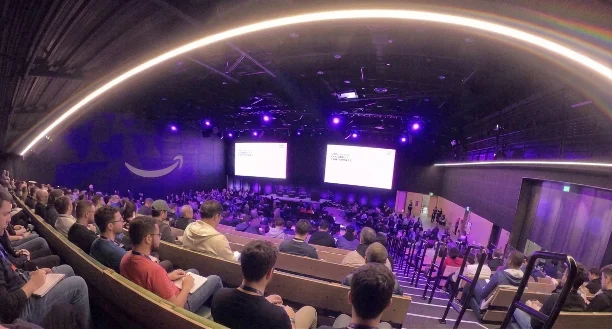
Late March saw a critical assembly in Seattle: the Specialist Tech Conference. This annual gathering serves as an invaluable nexus for AWS specialists worldwide, fostering a collaborative environment crucial for navigating the fast-evolving domain of artificial intelligence. The 2024 iteration placed a significant emphasis on Generative AI and Amazon Bedrock, AWS’s managed service for foundation models. Attendees engaged in deep technical discussions, explored complex edge cases, and co-created solutions, demonstrating the profound impact of internal community and shared expertise in a highly competitive and dynamic technological arena. The conference served not merely as a knowledge exchange but as a powerful reminder of the strategic advantage derived from challenging conventional wisdom and collectively pushing the boundaries of what is possible in AI development. The insights and energy generated at such events often translate directly into the innovative solutions and partnerships that AWS brings to market, setting the stage for the significant announcements that followed.
Deepening the Anthropic Partnership: Claude on Custom AWS Silicon and Expanded Enterprise Capabilities
A cornerstone of AWS’s recent strategic moves is the substantial deepening of its product collaboration with Anthropic, a leading AI safety and research company renowned for its advanced large language model (LLM), Claude. This partnership is multifaceted, spanning hardware optimization, enterprise-grade deployment, and a unified developer experience.
Hardware-Level Integration: Claude on AWS Trainium and Graviton
In a move that signals a significant commitment to optimizing AI performance from the ground up, Anthropic has announced it will now train its most advanced foundation models on AWS Trainium and Graviton infrastructure. This is not merely a matter of using AWS cloud services; it represents a co-engineering effort at the silicon level with Annapurna Labs, AWS’s custom chip design subsidiary.
- AWS Trainium: This is AWS’s second-generation machine learning accelerator, purpose-built for high-performance deep learning training. By leveraging Trainium, Anthropic can significantly reduce the cost and time required to train its increasingly sophisticated Claude models. The co-engineering aspect ensures that Anthropic’s models are optimized to extract maximum computational efficiency from Trainium, leading to faster iteration cycles and potentially more powerful AI.
- AWS Graviton: These are AWS-designed, Arm-based processors that offer superior price-performance and energy efficiency for a wide range of workloads, including AI inference. Utilizing Graviton for certain aspects of Claude’s operation, particularly for inference at scale, allows Anthropic to deliver its capabilities more cost-effectively and sustainably.
This hardware-software co-design approach is a strategic differentiator for AWS. By offering custom silicon tailored for AI workloads, AWS provides partners like Anthropic with a distinct advantage in terms of performance, cost, and efficiency, which are critical factors in the resource-intensive world of large-scale AI model development. Industry analysts suggest that this direct collaboration at the hardware level could lead to proprietary optimizations that provide a competitive edge over models trained on more generic infrastructure, ultimately benefiting end-users with more powerful and efficient AI applications.
Claude Cowork: Collaborative AI for the Enterprise within Amazon Bedrock
Complementing the hardware integration, Anthropic’s collaborative AI capabilities, known as Claude Cowork, are now directly available to enterprise builders within the AWS ecosystem via Amazon Bedrock. This integration transforms Claude from a mere tool into a true collaborator, designed to facilitate team-based AI workflows securely and efficiently.
Amazon Bedrock, launched in 2023, has rapidly become a pivotal service for enterprises seeking to build and scale generative AI applications. It provides a fully managed service that makes foundation models from AWS and leading AI companies accessible via an API, abstracting away the complexities of infrastructure management. By integrating Claude Cowork into Bedrock, AWS addresses critical enterprise concerns around data security and privacy. Teams can deploy Claude Cowork within their existing Amazon Bedrock environment, ensuring that sensitive data remains secure within AWS’s robust security framework while leveraging Claude’s full power for tasks such as content generation, code assistance, data analysis, and complex problem-solving. This secure, integrated environment is crucial for industries with stringent regulatory requirements, enabling them to explore and adopt generative AI without compromising compliance or data governance.
The availability of Claude Cowork signifies AWS’s commitment to moving beyond individual AI prompts to truly collaborative, enterprise-scale AI solutions. It facilitates a paradigm shift where AI assists human teams in iterative, complex projects, enhancing productivity and fostering innovation across departments.
Claude Platform on AWS: A Unified Developer Experience on the Horizon
Looking ahead, AWS has announced the forthcoming "Claude Platform on AWS," promising a unified developer experience for building, deploying, and scaling Claude-powered applications directly within the AWS environment. This initiative aims to streamline the development lifecycle for generative AI applications, eliminating the need for developers to switch between platforms or manage disparate toolchains.
The Claude Platform on AWS will simplify access to Claude’s capabilities through Amazon Bedrock, providing a comprehensive suite of tools and services designed to accelerate the development process. This includes easier access to model customization, fine-tuning capabilities, and seamless integration with other AWS services such for data storage, compute, and analytics. For developers already building with generative AI on AWS, this represents a significant advancement, promising to reduce complexity, accelerate time-to-market, and foster a more vibrant ecosystem of Claude-powered applications. This strategic move aims to create a sticky environment for developers, encouraging them to build and innovate exclusively within the AWS cloud, thereby cementing AWS’s position as the preferred platform for generative AI development.
Meta’s Landmark Agreement: Powering Agentic AI with AWS Graviton Processors
Further solidifying AWS’s strategic advantage in custom silicon, Meta has signed a monumental agreement to deploy AWS Graviton processors at scale. This partnership involves the deployment of tens of millions of Graviton cores, specifically earmarked to power CPU-intensive agentic AI workloads. This is a significant validation of AWS’s long-term investment in its custom silicon strategy.

- Meta’s AI Ambitions: Meta, a titan in the social media and metaverse space, has made massive investments in AI research and development, particularly with its open-source Llama models and its pursuit of advanced agentic AI. Agentic AI refers to AI systems capable of autonomous reasoning, planning, and execution of multi-step tasks, often requiring real-time interaction and adaptation. Examples include advanced code generation, sophisticated search algorithms, and complex multi-step task orchestration. These workloads are inherently CPU-intensive, demanding vast computational resources for processing logic, managing memory, and coordinating various AI components.
- Graviton’s Role: The decision by Meta to leverage Graviton processors at such an unprecedented scale underscores the compelling advantages offered by AWS’s Arm-based chips. Graviton processors are engineered for superior price-performance and energy efficiency compared to traditional x86 processors, making them ideal for large-scale, cost-sensitive workloads. For Meta, deploying millions of Graviton cores translates into substantial operational cost savings, reduced energy consumption, and optimized performance for its complex agentic AI infrastructure. This partnership highlights a growing trend among major technology companies to move towards specialized, custom-designed hardware to meet the unique demands of modern AI.
- Implications: This agreement is a massive win for AWS, validating its Graviton strategy and demonstrating its capability to serve the infrastructure needs of the world’s largest AI innovators. It not only represents a significant revenue stream but also positions AWS as a critical enabler for the next generation of AI applications. For the broader industry, Meta’s endorsement of Graviton signals a potential shift in the foundational hardware landscape for AI, challenging the long-standing dominance of x86 architecture in certain compute-intensive domains. It underscores the strategic imperative for cloud providers to offer diverse and optimized hardware options to cater to the evolving needs of AI workloads.
Broader Impact and Strategic Implications
These recent developments collectively paint a clear picture of AWS’s multi-pronged strategy to maintain and expand its leadership in the cloud and AI sectors.
Democratizing AI and Fostering Innovation: By integrating advanced models like Claude into Amazon Bedrock and offering a unified developer platform, AWS is effectively democratizing access to cutting-edge generative AI. This lowers the barrier to entry for businesses of all sizes, enabling them to experiment, build, and deploy AI-powered applications without the prohibitive costs and complexities of managing underlying infrastructure or training models from scratch. This fosters a vibrant ecosystem of innovation, where developers can focus on application logic and business value rather than infrastructure management.
Strengthening the AI Ecosystem and Competitive Positioning: The strategic partnerships with Anthropic and Meta are critical for AWS’s competitive positioning against rivals like Microsoft Azure (with its deep integration with OpenAI) and Google Cloud (with its Gemini models). By offering a diverse portfolio of leading foundation models alongside its own proprietary solutions (like Amazon Titan), and backing them with optimized custom hardware, AWS presents a compelling and flexible choice for customers. This strategy reduces reliance on a single model provider, offering enterprises the freedom to choose the best-fit model for their specific use cases while ensuring data security and privacy within the AWS environment.
The Role of Custom Silicon in the AI Race: The massive adoption of Graviton by Meta and the deep integration of Trainium with Anthropic’s training efforts underscore the increasing importance of custom silicon in the AI race. As AI models grow in complexity and demand more computational power, specialized hardware designed for specific AI workloads offers unparalleled advantages in terms of performance, cost-efficiency, and energy consumption. AWS’s early and sustained investment in custom silicon through Annapurna Labs is now yielding significant strategic dividends, differentiating its offerings and attracting major AI players.
Future Outlook: The AI-Powered Enterprise
The ongoing advancements and strategic collaborations signify a pivotal moment for enterprise AI adoption. The availability of secure, scalable, and powerful generative AI capabilities through platforms like Amazon Bedrock, combined with the underlying strength of custom AWS hardware, will empower businesses to revolutionize their operations, enhance customer experiences, and unlock new revenue streams. From automating complex business processes and accelerating product development to personalizing customer interactions and generating novel insights from vast datasets, the potential applications are virtually limitless.
As AWS continues to build out its generative AI capabilities, with upcoming offerings like the unified Claude Platform, the focus remains on providing a comprehensive, secure, and developer-friendly environment. This holistic approach, encompassing cutting-edge models, optimized infrastructure, and a vibrant developer community, positions AWS as a critical enabler for the widespread adoption of artificial intelligence across industries. The journey of AI transformation is just beginning, and AWS, through its strategic partnerships and relentless innovation, is poised to lead the charge into an increasingly intelligent future.
