

The Aircraft Interiors Expo (AIX) has once again served as the primary stage for the intersection of aerospace engineering and satellite telecommunications, signaling a paradigm shift in how passengers experience the "connected cabin." As airlines face increasing pressure to provide seamless, high-speed internet comparable to home fiber connections, the 2026 edition of the expo saw a flurry of strategic partnerships and technological breakthroughs. Satellite operators, hardware manufacturers, and service providers utilized the event to demonstrate that the future of in-flight connectivity (IFC) is no longer confined to a single orbital layer but is instead evolving into a resilient, multi-orbit ecosystem. From the implementation of electronically steered antennas (ESA) to the integration of artificial intelligence in content delivery, the announcements made at AIX underscore a broader industry trend: the transition of Wi-Fi from a luxury amenity to a standard, high-performance utility.
SES and Japan Airlines Forge a Multi-Orbit Future
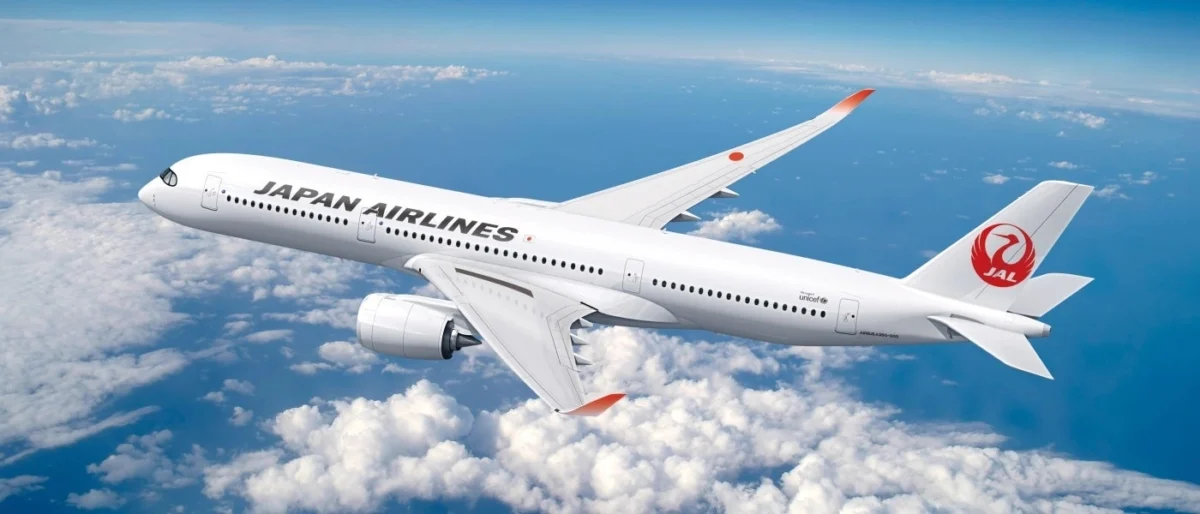
One of the most significant developments at the expo was the multi-year contract awarded to SES by Japan Airlines (JAL). This agreement marks a milestone for JAL’s long-haul fleet, as the carrier moves to integrate SES’s multi-orbit IFC solution across both Airbus and Boeing platforms. The scope of the project is extensive, involving the installation of SES’s multi-orbit electronically steered antenna (ESA) systems on 20 Airbus A350-900 aircraft and 10 Boeing 787-9 aircraft via linefit—meaning the systems will be installed during the manufacturing process. Additionally, JAL will retrofit 11 of its existing Boeing 787-9 aircraft with the same technology.
Linefit deliveries for this new generation of connected aircraft are scheduled to commence in 2028. For JAL, this move is the culmination of over a decade of investment in digital services. By leveraging a multi-orbit approach—utilizing both Geostationary (GEO) and Medium Earth Orbit (MEO) satellites—JAL aims to eliminate the latency issues that have historically plagued transoceanic flights. Industry analysts suggest that JAL’s commitment to ESA technology reflects a growing preference among tier-one carriers for hardware that can switch between satellite constellations seamlessly, ensuring consistent coverage even in high-traffic air corridors.
Air India and Hughes Network Systems Standardize the Widebody Experience
As Air India continues its aggressive transformation under the ownership of the Tata Group, the airline has selected Hughes Network Systems to spearhead its IFC overhaul. The partnership aims to deliver a unified Wi-Fi experience across Air India’s diverse widebody fleet, addressing the technical challenges of managing a mixed inventory of aircraft. Hughes will deploy a common connectivity platform that leverages different hardware configurations tailored to specific airframes.
For the incoming Airbus A350-1000 fleet, Hughes will utilize the Airbus HBCplus (High Bandwidth Connectivity) platform. Meanwhile, the Boeing 787-8 and Boeing 777-300ER aircraft will be equipped with solutions from RAVE Aerospace. This initial tranche of aircraft is part of a larger strategy to modernize the Air India passenger experience, bringing it in line with global competitors. By selecting Hughes, Air India is betting on a service provider capable of aggregating multiple satellite capacities to provide high-throughput service over the Indian subcontinent and international long-haul routes.
Delta Air Lines and the Expansion of Airbus HBCplus
In a move that reinforces the trend toward manufacturer-integrated solutions, Airbus announced it will equip 20 of Delta Air Lines’ upcoming A350-1000 aircraft with a multi-orbit IFC solution. This specific technology was co-developed by Delta and the satellite operator Hughes. The implementation utilizes the Airbus HBCplus catalog option, which allows airlines to choose connectivity providers in a more flexible, "plug-and-play" manner than traditional proprietary systems.
Delta has been a vocal advocate for free, high-speed Wi-Fi, and this latest agreement ensures that its newest long-haul aircraft will meet the bandwidth demands of its "Delta Sync" platform. The collaboration between a major airline and a satellite operator to co-develop hardware highlights a new level of vertical integration in the industry, where carriers are taking a more direct role in the design of the technology they deploy.
Viasat Expands Global Footprint through Strategic Alliances
Viasat used AIX to announce two major initiatives aimed at strengthening its market position in Europe, the Middle East, and Africa. The first is a strategic roaming collaboration involving Viasat Aviation, Türksat, and SkyFive Arabia. This initiative is designed to create a more cohesive connectivity net across these regions, allowing airlines to maintain high-quality service as they cross different territorial borders and satellite footprints. The partnership is expected to provide airlines with more flexible route coverage and stronger service continuity, which is particularly vital for carriers operating between the European and Middle Eastern hubs.
On the operational front, Viasat provided a performance update regarding its partnership with the Spanish low-cost carrier Vueling. Since the introduction of a complimentary Wi-Fi service in October 2025, the airline has recorded over 1 million user sessions across its connected A320 fleet. Utilizing the European Aviation Network (EAN) and Viasat’s digital platform, Vueling has successfully integrated 3D interactive maps and enhanced entertainment options across more than 80 aircraft. The success of the Vueling model serves as a proof-of-concept for other narrowbody operators looking to monetize connectivity through passenger loyalty rather than direct fees.
Saudia and Neo Space Group Bring Free Broadband to the Middle East
The Middle Eastern aviation market is witnessing a surge in connectivity competition, highlighted by the new partnership between Neo Space Group (NSG) and Saudia. Under this agreement, Saudia plans to offer complimentary high-speed internet to all guests, positioning itself as one of the first major airlines in the region to move to a completely free broadband model.
The service will be powered by NSG Skywaves and will utilize SES’s Open Orbits multi-orbit network. By removing the paywall, Saudia is aligning itself with global leaders like JetBlue and Delta, recognizing that in-flight connectivity is now a primary factor in passenger satisfaction. The use of the "Open Orbits" framework suggests a shift toward more interoperable satellite networks, allowing for greater resiliency and capacity management.
Technological Innovations in Hardware and IFE Systems
Beyond the satellite links themselves, AIX saw the debut of several hardware innovations designed to improve the end-user experience.
Thales and Panasonic: The Race for Processing Power
Thales launched its FlytEDGE Aura solution, a "light" In-Flight Entertainment (IFE) system that claims to be six times more powerful than its predecessors. The system’s performance is driven by embedded Qualcomm processors in every display, allowing for the smooth execution of complex applications and high-definition streaming. Similarly, Panasonic Avionics introduced eXNeo, a next-generation seatback monitor solution scheduled for a 2027 release. Panasonic’s focus remains on the "digital experience," aiming to bridge the gap between consumer electronics and cabin hardware.
RAVE Aerospace and Safran: Redefining Premium Travel
In one of the most visually striking announcements of the show, RAVE Aerospace and Safran unveiled "Origin," a vision for the future of premium cabin environments. The centerpiece of this concept is the Immersive Display Concept, which features a U-shaped micro-LED screen. Unlike traditional flat monitors, this curved display wraps around the passenger’s field of vision, allowing for customizable ambiances and "dynamic moods." This technology represents a move toward holistic cabin design, where the IFE system is an architectural element of the suite rather than just a screen.
ThinKom’s Multi-Orbit Antenna
On the infrastructure side, ThinKom Solutions introduced the ThinAir Nexus, a compact antenna designed to support GEO, MEO, and LEO constellations simultaneously. The Nexus antenna is roughly the size of a single-orbit ESA but offers gigabit performance. Its design allows airlines to future-proof their fleets; as new satellite constellations come online, the system can be updated with a simple modem swap rather than a costly hardware overhaul.
AI and Content Management: Anuvu’s Partnership with VidComply
The "soft" side of IFC and IFE—content management—also saw innovation. Anuvu announced a partnership with VidComply to integrate an AI-powered screening platform into its content supply chain. This technology automates the screening of media assets for cultural sensitivity, licensing compliance, and technical quality. As airlines strive to offer larger content libraries, AI-driven automation becomes essential to manage the sheer volume of data and ensure that content is appropriate for the diverse global audiences that airlines serve.
Chronology of Industry Milestones at AIX 2026
- April 13: ThinKom rolls out the ThinAir Nexus antenna, targeting the multi-orbit market.
- April 14: Delta and Airbus announce the Hughes co-developed IFC solution for the A350-1000.
- April 15: SES and Japan Airlines finalize their multi-orbit ESA contract for 41 aircraft.
- April 15: Air India selects Hughes for its widebody fleet modernization.
- April 16: Saudia and Neo Space Group announce free broadband for all guests.
- April 16: RAVE and Safran debut the "Origin" immersive suite concept.
Analysis: The Implications of a Multi-Orbit Standard
The collective announcements at AIX 2026 point toward a decisive conclusion: the "one-satellite-fits-all" era is over. The industry is rapidly gravitating toward multi-orbit solutions that combine the wide-reaching capacity of GEO satellites with the low-latency advantages of LEO and MEO constellations. This hybrid approach is critical for supporting bandwidth-intensive activities like cloud computing, real-time gaming, and 4K video streaming at 35,000 feet.
Furthermore, the shift toward "linefit" installations (where connectivity is built into the aircraft) suggests that Boeing and Airbus are increasingly viewing connectivity as a core component of the airframe, much like the engines or the avionics. This reduces the downtime required for retrofitting and ensures a more aerodynamic and integrated installation.
For the passenger, the most significant impact will be the democratization of high-speed access. As more airlines like Saudia and Vueling move toward free models, the "connected aircraft" is becoming a digital extension of the home or office. The integration of AI in content delivery and the introduction of immersive micro-LED displays further suggest that the cabin of the future will be defined as much by its digital capabilities as by its physical comfort. As these technologies roll out between 2026 and 2028, the aviation industry is poised to enter an era of unprecedented digital integration.
