

Amazon Web Services (AWS) has announced the general availability of the AWS MCP Server, a significant advancement designed to provide AI agents and coding assistants with secure, authenticated, and up-to-date access to the vast array of AWS services. This release addresses a critical challenge faced by developers leveraging artificial intelligence for cloud infrastructure management and application development: how to grant AI agents the necessary permissions without compromising security or relying on outdated information. The AWS MCP Server, a managed remote Model Context Protocol (MCP) server, integrates seamlessly into the Agent Toolkit for AWS, offering a controlled and efficient pathway for AI to interact with the cloud.
The Evolving Landscape of AI-Driven Development and its Challenges
The proliferation of AI agents and sophisticated coding assistants has ushered in a new era of software development, promising unprecedented levels of productivity and automation. From generating code snippets to provisioning complex infrastructure, these AI tools are increasingly becoming indispensable in a developer’s arsenal. However, their utility often encounters significant roadblocks when dealing with the dynamic and security-sensitive environment of cloud platforms like AWS.
A primary concern has been the inherent security risk associated with granting AI agents "keys to the kingdom." Traditional methods of authentication often involve handing over broad IAM credentials, which poses substantial security vulnerabilities. An autonomous agent with overly permissive access could inadvertently misconfigure services, expose sensitive data, or even become an attack vector if compromised.
Beyond security, AI agents have historically struggled with the rapid pace of innovation in the cloud. Their knowledge bases are typically derived from training data with a specific cutoff date, rendering them unaware of new services, features, or best practices introduced after that period. For instance, an agent trained before the launch of services like Amazon S3 Vectors, Amazon Aurora DSQL, or Amazon Bedrock AgentCore would be unable to leverage these cutting-edge capabilities. This deficiency often leads to agents recommending deprecated solutions, inefficient architectures, or insecure configurations.
Furthermore, agents frequently default to less optimal tools, such as the AWS Command Line Interface (AWS CLI), for infrastructure provisioning, rather than more robust, declarative approaches like AWS Cloud Development Kit (AWS CDK) or AWS CloudFormation. This preference often results in the generation of verbose, less maintainable code and, critically, overly broad AWS Identity and Access Management (IAM) policies. Such policies, while functional in a demonstration environment, are far from production-ready, lacking the principle of least privilege essential for enterprise security. The output is often infrastructure that functions but is neither secure nor scalable, requiring significant human oversight and remediation.
AWS MCP Server: A Secure and Intelligent Gateway
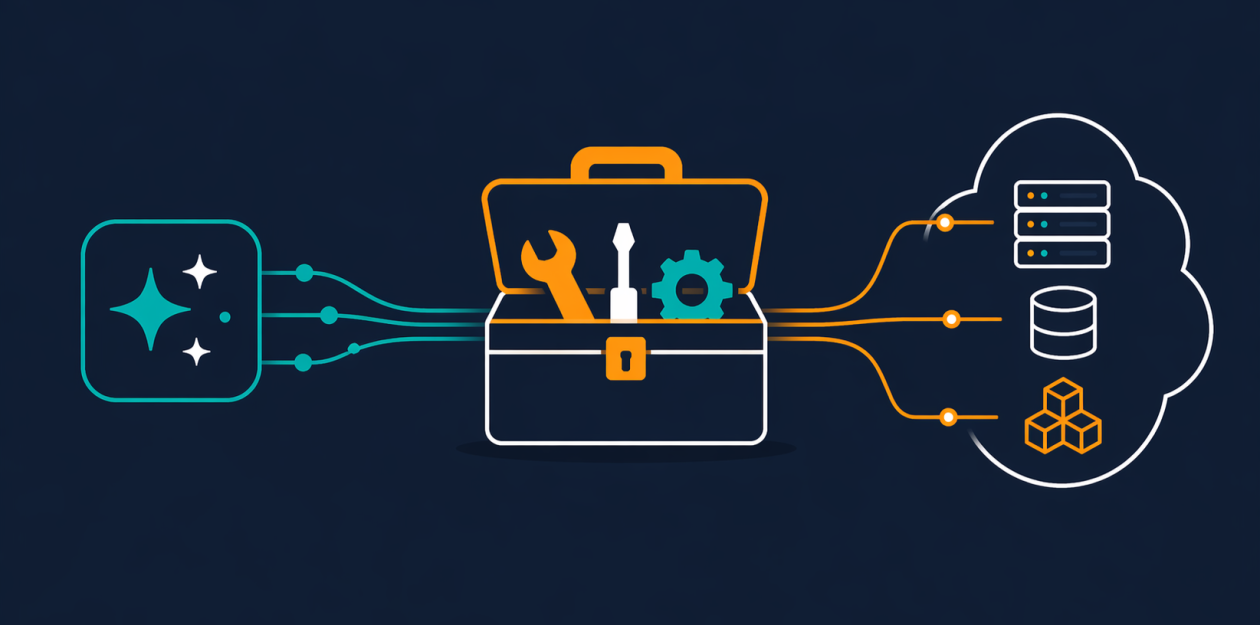
The AWS MCP Server emerges as a direct answer to these multifaceted challenges. It acts as a secure intermediary, providing AI agents with a constrained yet powerful set of tools to interact with AWS services. This design philosophy ensures that agents operate within defined boundaries, minimizing security risks while maximizing operational efficiency.
Central to its architecture is a compact set of tools that do not burden the AI model’s context window, a crucial factor for performance and cost. The server facilitates three core capabilities: authenticated API access, real-time documentation retrieval, and sandboxed script execution.
Key Features and Enhancements at General Availability
The general availability of the AWS MCP Server introduces several pivotal features, significantly enhancing its utility and security posture:
-
call_awsTool for Authenticated API Access: This tool empowers AI agents to execute any of the over 15,000 AWS API operations using the user’s existing IAM credentials. This direct, authenticated access means that as new APIs are launched by AWS, they will typically be supported within days, ensuring the agent’s capabilities remain current. This eliminates the reliance on static training data and provides dynamic interaction with AWS. -
search_documentationandread_documentationTools: To combat the issue of outdated knowledge, these tools allow agents to retrieve current AWS documentation and best practices at query time. This real-time access to the latest information ensures that agents always work from up-to-date guidance, fostering the creation of robust, secure, and efficient cloud architectures. A notable enhancement at GA is that documentation retrieval no longer requires authentication, streamlining the process for agents to gather information.
-
Enhanced IAM Context Keys and Fine-Grained Permissions: A crucial security improvement is the support for IAM context keys. This means developers no longer need a separate IAM permission solely for using the MCP server. Instead, fine-grained access can be expressed directly within standard IAM policies, aligning with existing security frameworks and simplifying permission management. This allows for precise control over what actions an AI agent can perform, down to specific resources and conditions.
-
Reduced Token Consumption: The design has optimized the number of tokens required per interaction. This is a significant advantage for complex, multi-step workflows, as fewer tokens translate to faster processing, lower operational costs, and a more efficient use of the AI model’s context window.
-
run_scriptTool for Sandboxed Execution: This innovative tool allows an AI agent to write and execute short Python scripts server-side within a sandboxed environment. This sandbox inherits the user’s IAM permissions but operates without network access, effectively creating a secure isolated space. This capability is transformative for tasks requiring data processing or chained API calls. Instead of making multiple API calls sequentially and consuming excessive context, agents can now chain API calls, filter responses, and compute results within a single round-trip. This dramatically improves speed, efficiency, and context management, preventing the "context burn" often associated with iterative API interactions. The sandboxed nature ensures that the agent cannot access the local file system or a shell, mitigating potential security risks. -
Transition to Skills for Curated Guidance: Perhaps one of the most significant additions is the evolution from Agent SOPs (Standard Operating Procedures) to "Skills." Skills provide curated guidance and best practices for tasks where agents commonly make mistakes. These are not generic prompts but validated, expert-designed workflows contributed and maintained by AWS service teams. This approach ensures that agents adhere to AWS best practices, reduce errors, and utilize fewer tokens, saving developers time and money. By keeping the tool list short and predictable, Skills also help to reduce "hallucination," a common problem where AI agents generate plausible but incorrect information, keeping the agent focused and accurate.
Enterprise-Grade Security, Auditability, and Compliance
For enterprise customers, the AWS MCP Server is built with security, auditability, and compliance as foundational pillars. It provides a clear separation between human and agent permissions. Organizations can leverage existing IAM policies and Service Control Policies (SCPs) to define granular access. For example, a policy could specify that a human user can perform mutating operations (e.g., create, update, delete resources) while the MCP server, and by extension, the AI agent, is restricted to read-only actions.
Furthermore, the AWS MCP Server publishes detailed metrics under the AWS-MCP namespace to Amazon CloudWatch. These metrics allow security and compliance teams to observe MCP server calls separately from direct human calls, providing an essential audit trail. Every API call made through the MCP server is also captured by Amazon CloudTrail, offering a complete, immutable record of all actions, which is crucial for meeting regulatory compliance requirements and forensic analysis.
A Practical Demonstration: Unlocking Latest AWS Services
The utility of the AWS MCP Server is best illustrated through a real-world scenario. Consider an AI agent like Claude Code, powered by a model such as Anthropic Opus 4.6, which has a knowledge cutoff date, for example, in May 2025. If asked about a service launched after this date, such as Amazon S3 Vectors (preview in July 2025, GA in December 2025), the agent would struggle.
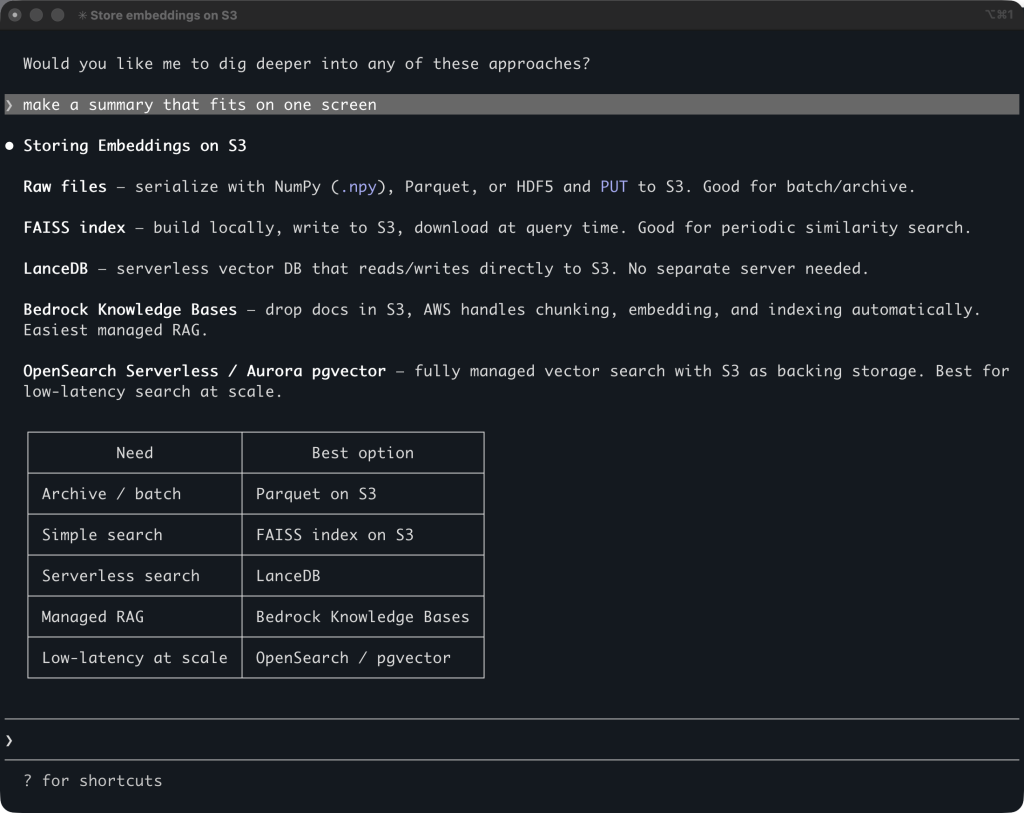
When prompted with "how to store embedding on S3" (embeddings being a type of vector), without the MCP Server, Claude Code would provide accurate but generic solutions based on its outdated training data. It might suggest using S3 for raw file storage combined with external vector databases or custom indexing, but it would not recommend the purpose-built Amazon S3 Vectors. This limitation highlights the agent’s inability to access current information.
However, when configured with the AWS MCP Server, the scenario changes dramatically. To bridge the gap between the AWS MCP Server’s IAM SigV4 authentication and the OAuth 2.1 authentication typically supported by AI coding agents, the open-source MCP Proxy for AWS is used. This proxy runs locally, translating IAM credentials to OAuth, enabling seamless integration.
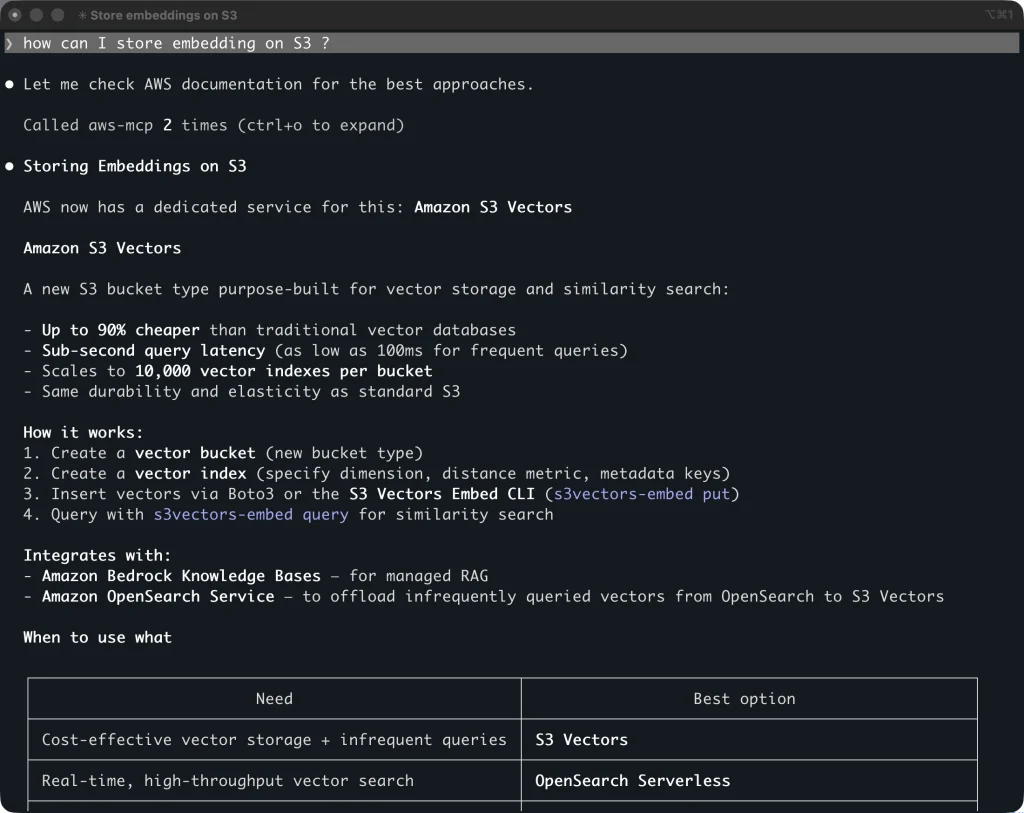
After configuring Claude Code with the MCP Server via a specific JSON command that utilizes mcp-proxy-for-aws, the agent gains access to the new capabilities. When the same question is posed, "how can I store embedding on S3," Claude Code recognizes that it has a tool (aws___search_documentation) capable of providing a more accurate and up-to-date answer. Upon receiving permission to invoke this tool, the agent quickly retrieves current AWS documentation. The response then correctly identifies "AWS now has a dedicated service for this: Amazon S3 Vectors," demonstrating the power of real-time information access. This ability to dynamically query and integrate the latest AWS services is a game-changer for AI agent efficacy.
Availability and Pricing Structure
The AWS MCP Server is currently available in the US East (N. Virginia) and Europe (Frankfurt) AWS Regions. Importantly, it can make API calls to any AWS Region, providing flexibility for global deployments. AWS has adopted a cost-effective pricing model: there is no additional charge for the AWS MCP Server itself. Customers only pay for the AWS resources that their AI agents create or interact with, along with any applicable data transfer costs. This transparent pricing model encourages adoption by allowing developers to focus on innovation without incurring extra fees for the enabling technology.
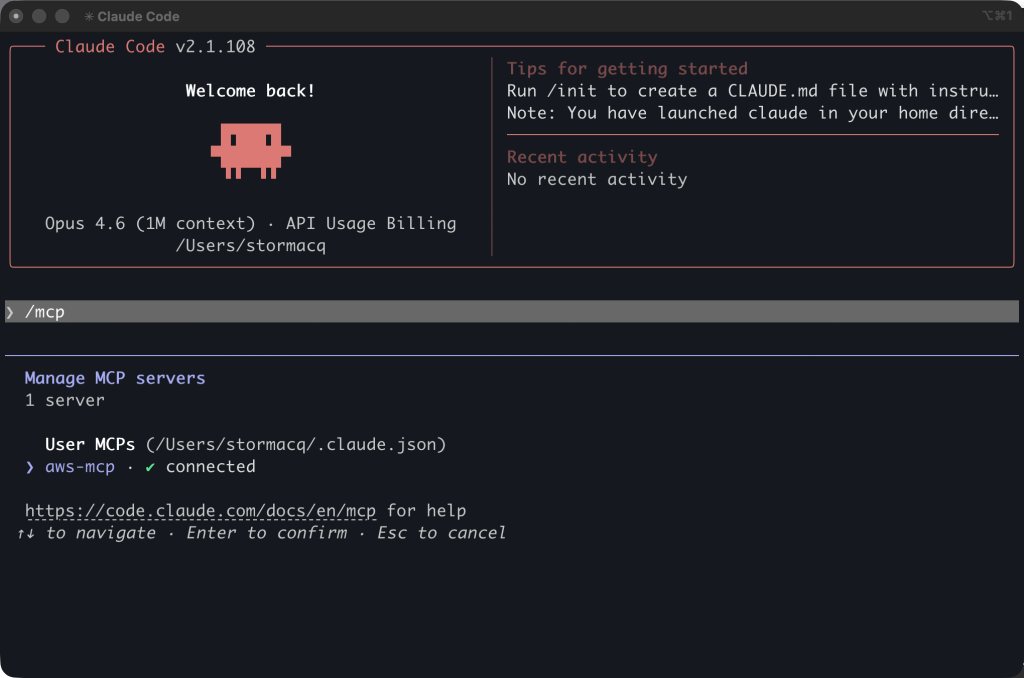
The AWS MCP Server is designed for broad compatibility, working with popular MCP-compatible clients such as Claude Code, Kiro, Cursor, and other tools that adhere to the Model Context Protocol specification. Developers eager to integrate this capability can consult the comprehensive AWS MCP Server User Guide for detailed instructions.
Broader Implications and Future Outlook
The general availability of the AWS MCP Server marks a pivotal moment in the evolution of AI-assisted cloud development. By providing a secure, authenticated, and current pathway for AI agents to interact with AWS, it addresses fundamental limitations that have previously hindered the widespread adoption of AI in enterprise cloud environments.
This release is expected to significantly boost developer productivity. Agents can now perform complex tasks more autonomously, adhering to best practices and leveraging the latest AWS innovations, thereby freeing human developers to focus on higher-level architectural design and problem-solving. It also democratizes access to AWS expertise, allowing developers, regardless of their deep cloud knowledge, to leverage AI to build secure and efficient solutions.
From a security standpoint, the clear separation of permissions, granular access control, and robust audit trails provided by the MCP Server will instill greater confidence in organizations deploying AI agents for critical infrastructure tasks. This will accelerate the integration of AI into regulated industries where compliance and security are paramount.
Industry experts anticipate that this move by AWS will further solidify the Model Context Protocol as a standard for AI agent interaction with external systems. It sets a new benchmark for how AI can be integrated into complex, dynamic environments without compromising security or efficiency. The combination of real-time documentation, authenticated API access, and sandboxed script execution within a single, managed service fundamentally changes what AI agents are capable of accomplishing on AWS. It paves the way for a future where AI agents are not just assistants but trusted, integral components of cloud operations and development workflows. The potential for innovation stemming from this capability is immense, promising more intelligent, secure, and efficient cloud solutions across the board.
