
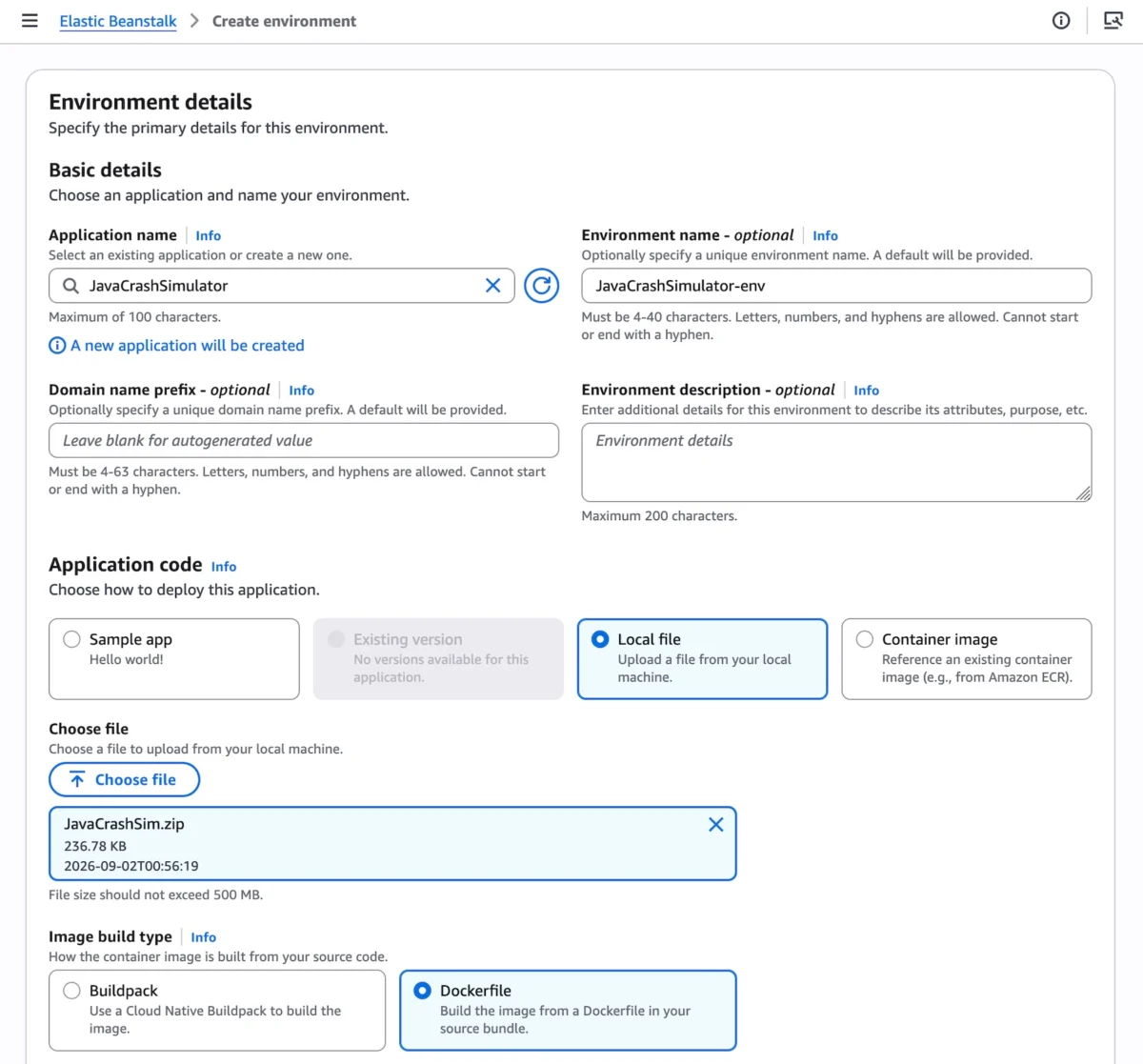

Fifteen years after its initial market introduction in 2011, Amazon Web Services (AWS) has announced a fundamental evolution of its flagship application management service with the launch of a fully managed Cluster Mode for AWS Elastic Beanstalk. Designed to tackle the complexities of managing sprawling modern microservice portfolios, the new deployment mode leverages Amazon Elastic Kubernetes Service (Amazon EKS) to allow engineering teams to run multiple applications across a shared, unified infrastructure baseline. This major architectural milestone aims to combine the simplicity of traditional Platform-as-a-Service (PaaS) deployments with the powerful scaling, orchestration, and density benefits of containerized cloud-native architectures.
A Fifteen-Year Evolution in Application Management
Since its inception, AWS Elastic Beanstalk has served as a cornerstone utility for developers writing applications in languages such as Java, .NET, Python, Node.js, PHP, Ruby, and Go. By abstracting away the underlying provisioning, load balancing, and health monitoring of compute resources, the platform allowed thousands of organizations to focus squarely on business logic rather than infrastructure operations. Over the years, the service has undergone continuous modernization, integrating AI-powered environment analysis to diagnose health anomalies automatically, supporting official GitHub Actions for streamlined CI/CD pipelines, and establishing an infrastructure foundation featuring OpenTelemetry-based observability, traffic-splitting deployments with automatic rollbacks, event-driven autoscaling, native secrets management via AWS Secrets Manager, and HTTPS configuration by default through AWS Certificate Manager.
Despite these advancements, modern software architectures have shifted dramatically toward microservices and containerization. While standalone environments worked well for monolithic or small-scale multi-tier applications, operating dozens or hundreds of isolated environments introduced significant overhead, resource fragmentation, and management friction. The introduction of Cluster Mode directly addresses these structural challenges, shifting the operational paradigm from single-stack isolation to high-density, multi-application resource sharing under a single operational pane of glass.
Core Architecture and Technical Capabilities of Cluster Mode
The newly released Cluster Mode fundamentally re-architects the underlying operational engine of Elastic Beanstalk. Rather than provisioning dedicated virtual machine instances via Amazon Elastic Compute Cloud (Amazon EC2) for every individual application stack, Cluster Mode orchestrates workloads atop Amazon EKS. This integration allows engineering teams to deploy source code, Dockerfiles, or raw container images directly into a managed Kubernetes fabric while retaining the familiar, simplified workflow of the Elastic Beanstalk console, CLI, or SDKs.
Under this model, multiple distinct applications and microservices can share a single underlying EKS cluster. As a portfolio expands—ranging from ten applications to over a hundred—per-application infrastructure costs scale down efficiently. This efficiency is achieved by eliminating the idle resource overhead traditionally associated with maintaining separate infrastructure stacks for every microservice.

Operational responsibilities remain firmly with AWS for the entire lifecycle of the workload. AWS handles continuous deployment, routine patching, security upgrades, infrastructure monitoring, and autoscaling. For teams transitioning their architectures, AWS has confirmed that the legacy Standard Mode powered by Amazon EC2 remains fully supported. Standard and Cluster Mode environments can run concurrently within the exact same Elastic Beanstalk application construct, allowing organizations to migrate workloads iteratively at their own pace backed by automated compatibility validation checks.
Step-by-Step Deployment and Microservice Orchestration
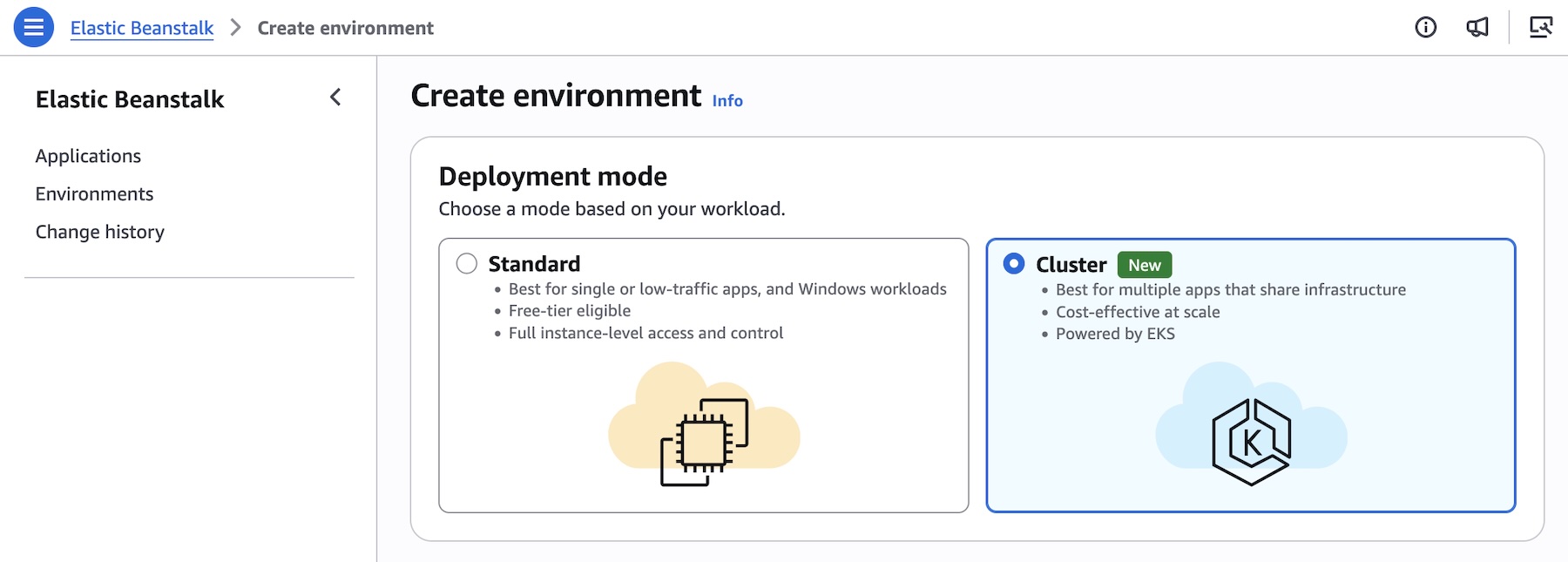
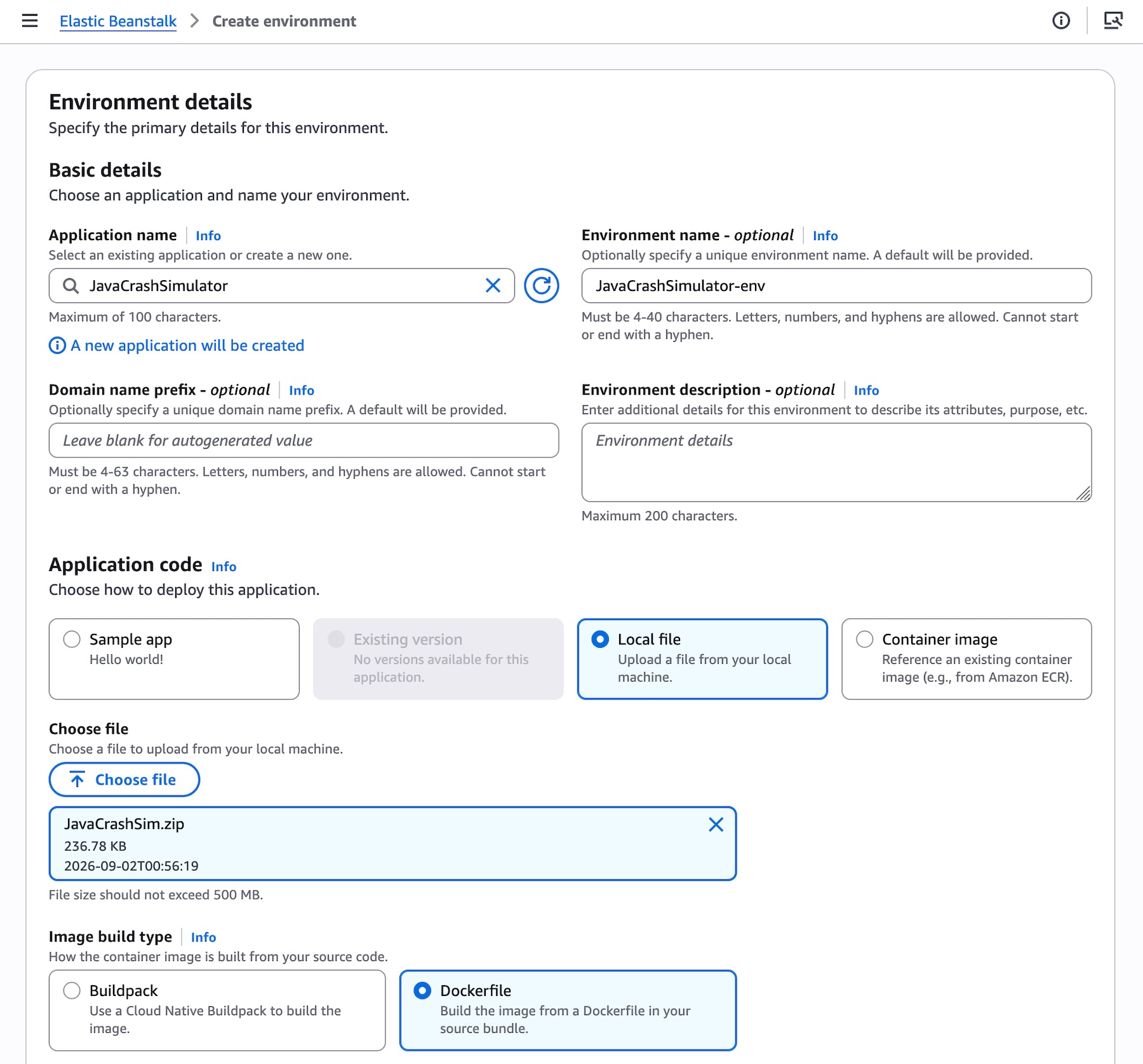
Adopting Cluster Mode requires minimal friction for teams already familiar with the AWS ecosystem. Within the Elastic Beanstalk console, administrators can initiate a new environment and select the "Cluster" option under the deployment type configuration. Developers can upload local source files, specify container image build parameters, or reference pre-built images stored securely within the Amazon Elastic Container Registry (Amazon EKS/ECR).
For automated pipelines and advanced orchestration, developers can interact with the service programmatically via the AWS Command Line Interface (AWS CLI), EB CLI, or standard AWS SDKs. For example, deploying a complex multi-service e-commerce application comprising a frontend, cart service, payment service, and shipping service involves creating an application container, registering specific image versions, and defining configuration namespaces.
Configuration parameters allow granular control over resource allocation. Teams can specify strict CPU limits, memory reservations, and autoscaling replicas down to the individual microservice level. Furthermore, routing and security policies can be tailored specifically to components requiring public exposure—such as tying an Application Load Balancer (ALB) and health check path exclusively to the frontend tier—while keeping internal microservices safely isolated within private cluster subnets.
Financial Model, Regional Availability, and Ecosystem Integration
AWS has structured the pricing model for Elastic Beanstalk Cluster Mode to ensure transparency and cost efficiency. There is no additional software surcharge or management fee specifically levied by Elastic Beanstalk for utilizing Cluster Mode. Instead, customers pay strictly for the underlying AWS resources consumed by their applications. This includes the standard Amazon EKS control plane fee, EKS Auto Mode compute resources, Amazon ECR storage, and Amazon CloudWatch telemetry logs. Because of its reliance on shared infrastructure primitives, Cluster Mode is not eligible for the AWS Free Tier.
At launch, Cluster Mode is generally available across all AWS Regions where Elastic Beanstalk is currently supported. For organizations seeking localized compliance details, API specifications, and regional roadmaps, documentation is accessible via standard AWS developer channels. Additionally, AWS has enabled modern developer tooling integration, allowing engineers to query APIs, search documentation, and troubleshoot deployments using the AWS MCP Server and compatible AI assistant plugins.
Industry Implications and Strategic Outlook
The launch of Cluster Mode represents a strategic convergence between the simplicity of managed PaaS platforms and the industrial-grade flexibility of Kubernetes. For years, organizations faced a binary architectural choice: adopt lightweight PaaS solutions that eventually hit scalability and density ceilings, or invest heavily in bespoke Kubernetes expertise to manage complex microservice portfolios. By bridging this gap, AWS is positioning Elastic Beanstalk as an enterprise-grade control plane capable of governing modern software factories without requiring every development team to become certified Kubernetes administrators.
Industry analysts note that this capability will particularly benefit mid-market enterprises and large development organizations striving to optimize cloud spend. By driving higher compute density through shared EKS clusters and automating the tedious operational burdens of patching, monitoring, and scaling, AWS is significantly lowering the total cost of ownership for microservices. As organizations continue to modernize legacy applications and scale out containerized estates, Elastic Beanstalk Cluster Mode provides a sustainable, long-term pathway for lifecycle workload management.
