

Amazon Web Services (AWS) has announced the general availability of AWS Security Hub Extended, a significant expansion of its existing Security Hub service designed to streamline the procurement, deployment, and integration of comprehensive enterprise security solutions. This new offering aims to address the growing complexity faced by organizations managing a diverse array of security tools across their entire technology estate, from endpoints and identity to cloud and AI environments. By acting as the seller of record for a curated selection of AWS Partner solutions, AWS is now providing a unified experience for acquiring, managing, and consolidating security findings, promising to simplify operations, reduce costs, and enhance overall security posture.
Background: The Evolution of AWS Security Hub
The genesis of this expanded offering traces back to re:Invent 2025, where AWS unveiled a "re-imagined" AWS Security Hub. This initial iteration focused on unifying AWS’s native security services, such as Amazon GuardDuty for threat detection and Amazon Inspector for vulnerability management, into a single, centralized platform. The core promise was to provide near real-time analytics and risk prioritization by automatically and continuously analyzing security findings generated within the AWS ecosystem. This consolidated view aimed to help customers more effectively identify and respond to critical security risks pertaining to their cloud infrastructure and applications.
However, the modern enterprise security landscape extends far beyond the confines of a single cloud provider. Organizations typically operate hybrid and multi-cloud environments, integrating on-premises infrastructure, SaaS applications, and a multitude of specialized security tools. This reality often leads to a fragmented security posture, characterized by disparate data silos, multiple procurement cycles, complex vendor negotiations, and the significant operational overhead of integrating various solutions. Security teams are frequently overwhelmed by the sheer volume of alerts from different systems, struggling to correlate information and prioritize true threats. Industry reports consistently highlight that enterprises leverage an average of 75 security tools, leading to alert fatigue and inefficient response mechanisms. It became clear that while the re-imagined Security Hub was a vital step for AWS-native security, a broader solution was required to tackle the full spectrum of enterprise security challenges.
Addressing Enterprise Complexity: A Holistic Security Vision

AWS Security Hub Extended directly confronts this challenge by extending the "single pane of glass" concept beyond AWS’s own services. The strategic move acknowledges that a truly robust enterprise security solution must encompass all facets of an organization’s digital footprint. Security leaders have long expressed a desire for simplified vendor management and a more cohesive approach to security operations. The traditional model of negotiating separate contracts with numerous security vendors, each with its own billing cycle and support structure, consumes valuable time and resources that could otherwise be dedicated to proactive security measures and innovation.
"Enterprises today are grappling with an increasingly complex threat landscape and a corresponding proliferation of security tools," stated a hypothetical AWS CISO, Dr. Anya Sharma. "Our customers consistently told us that managing multiple procurement cycles, integrating disparate solutions, and correlating findings across a vast vendor ecosystem was a significant pain point. With AWS Security Hub Extended, we are delivering on our commitment to simplify enterprise security, enabling our customers to achieve a more comprehensive security posture without the unnecessary operational burden."
Key Features and Benefits of the Extended Plan
The AWS Security Hub Extended plan introduces several compelling features designed to transform how organizations manage their security portfolios:
-
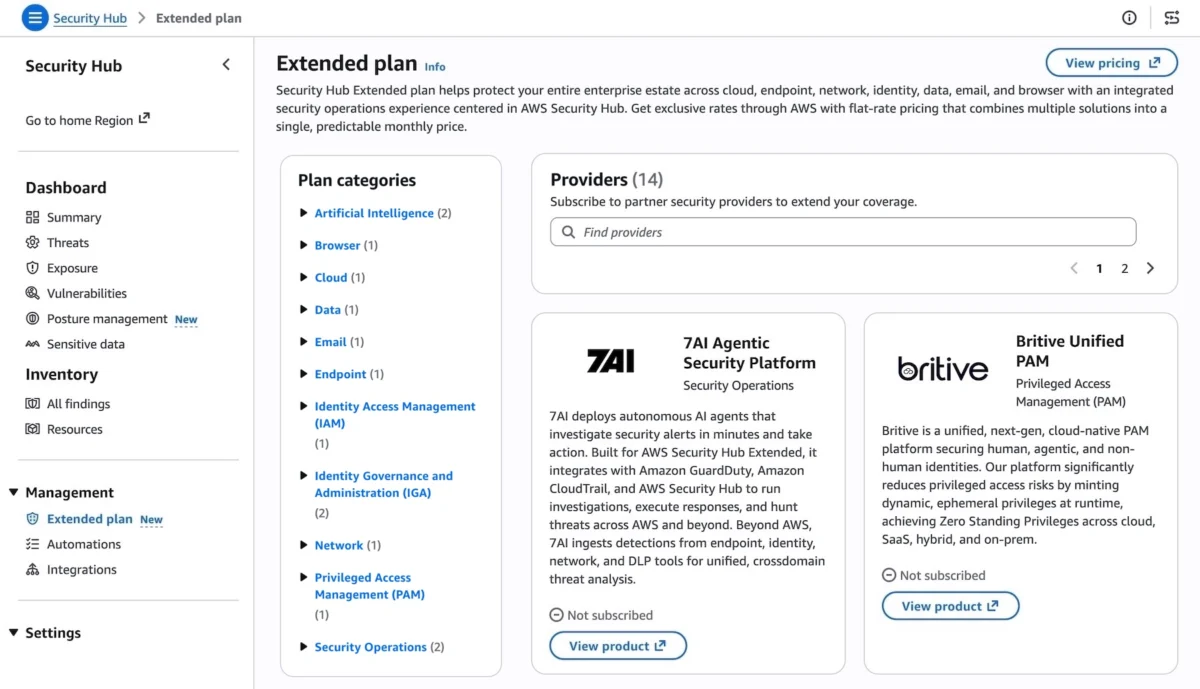
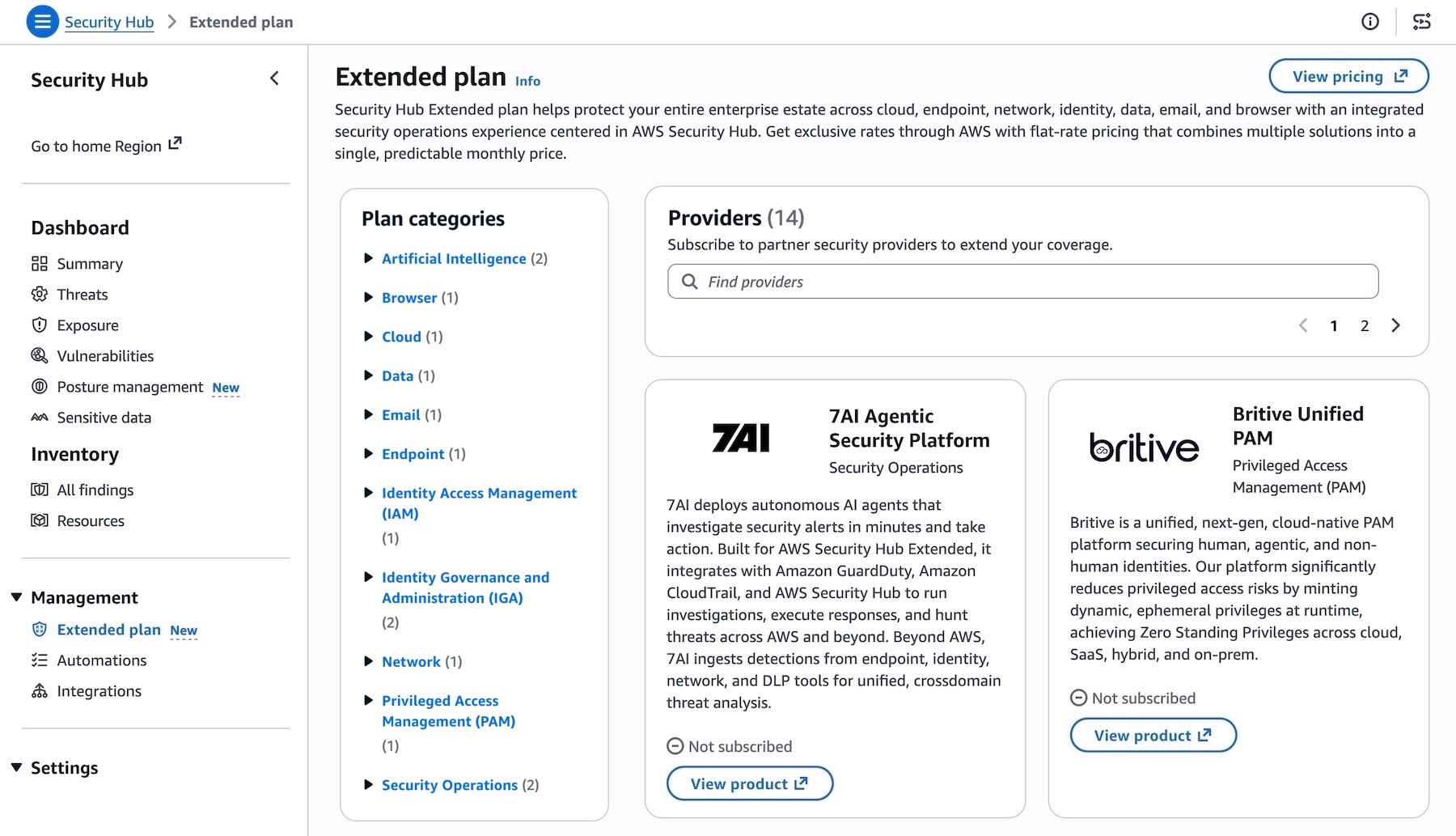
Curated Partner Ecosystem: At the heart of the Extended plan is a carefully selected array of AWS Partner solutions. These partners represent leaders across critical security domains, ensuring comprehensive coverage for enterprise needs. The initial cohort includes:
- Identity and Access Management (IAM): Okta, SailPoint, Britive
- Endpoint Detection and Response (EDR) / Extended Detection and Response (XDR): CrowdStrike
- Email Security: Proofpoint
- Network Security / Secure Web Gateway (SWG): Zscaler
- Data Security Posture Management (DSPM): Cyera
- Browser Security / Enterprise Browsers: Island
- Cloud Native Application Protection Platforms (CNAPP) / Cloud Workload Protection (CWPP): Upwind
- Security Information and Event Management (SIEM) / Security Orchestration, Automation and Response (SOAR): Splunk (a Cisco company)
- Application Security / API Security: Oligo, Noma
- AI Security: 7AI, Opti (implicitly addressing emerging AI-specific threats and vulnerabilities)
This curated selection is designed to provide best-in-class protection across endpoint, identity, email, network, data, browser, cloud, AI, and security operations, eliminating the need for customers to vet an overwhelming number of individual solutions.

-
Simplified Procurement and Financials: A standout feature of the Extended plan is AWS acting as the "seller of record" for these partner solutions. This fundamental shift means customers benefit from:
- Pre-negotiated Pay-as-You-Go Pricing: Eliminates the need for individual contract negotiations with each vendor, often resulting in more favorable terms.
- Single Bill: All services, both AWS-native and partner solutions under the Extended plan, appear on a single, consolidated AWS bill, drastically simplifying financial management and budgeting.
- No Long-Term Commitments: Offers flexibility and agility, allowing organizations to adapt their security posture as needs evolve without being locked into multi-year contracts.
This financial simplification is expected to deliver significant cost efficiencies and reduce the administrative burden associated with managing multiple vendor relationships.
-
Unified Security Operations and Data: Interoperability is a cornerstone of the Extended plan. Security findings from all participating AWS Partner solutions are automatically emitted in the Open Cybersecurity Schema Framework (OCSF) schema. OCSF is an open-source standard designed to normalize security data across different products, making it easier for security teams to ingest, analyze, and act upon information from disparate sources. These normalized findings are then automatically aggregated within AWS Security Hub. This unified data stream provides security analysts with immediate and direct access to a holistic view of risks, enabling them to:
- Quickly Identify and Respond to Risks: Correlate findings that span different security domains and vendor solutions. For instance, an alert from an endpoint protection tool (CrowdStrike) could be correlated with an identity compromise alert (Okta) and a suspicious network activity alert (Zscaler) to paint a complete picture of a multi-stage attack.
- Reduce Alert Fatigue: By consolidating and normalizing alerts, Security Hub can help prioritize the most critical threats, reducing the noise and allowing security teams to focus on actionable intelligence.
- Enhanced Automation: The standardized OCSF format facilitates easier automation of response actions, integrating with SOAR platforms or custom scripts.
Furthermore, AWS Enterprise Support customers benefit from unified Level 1 support for all solutions under the Extended plan, providing a single point of contact for initial troubleshooting and issue resolution, further simplifying operational management.
-
Streamlined Deployment and User Experience: Accessing and deploying these partner solutions is integrated directly into the AWS Security Hub console. Customers navigate to the "Extended plan" section under the "Management" menu, where they can review details for each partner offering and subscribe. Upon subscription, an automated onboarding experience guided by the respective partner facilitates rapid deployment. Consumption-based metering is automatic, and charges are integrated into the monthly Security Hub bill. This seamless experience minimizes the typical friction points associated with introducing new security tools into an enterprise environment.
Implications for Cybersecurity Strategy and the Market
The launch of AWS Security Hub Extended carries significant implications for various stakeholders:
- For Enterprise Customers: The primary beneficiaries are organizations seeking to consolidate their security operations, reduce vendor sprawl, and simplify procurement. It promises a tangible reduction in operational overhead, improved security posture through better visibility and correlation, and potentially significant cost savings due to unified billing and pre-negotiated pricing. This allows security teams to shift their focus from integration and administrative tasks to proactive threat hunting and strategic security initiatives.
- For AWS: This move positions AWS not just as a leading cloud provider, but as an increasingly central orchestrator of enterprise security across hybrid and multi-cloud environments. By becoming the "seller of record," AWS deepens its relationship with customers and expands its ecosystem influence, potentially driving further adoption of its cloud services. It also demonstrates AWS’s commitment to addressing customer pain points beyond its immediate cloud infrastructure offerings.
- For AWS Partners: Participating partners gain broader market reach and simplified access to AWS’s extensive customer base. The partnership model reduces their sales and marketing overhead, as AWS handles much of the procurement and billing complexity. This validates their solutions within a trusted AWS framework, potentially accelerating adoption. The requirement to support OCSF also pushes industry standardization, benefiting the wider security community.
- Broader Market Trends: This initiative reinforces a broader industry trend towards integrated security platforms and vendor consolidation. As threats become more sophisticated and interconnected, the need for holistic, correlated security intelligence from a single, unified platform becomes paramount. The model also highlights the increasing importance of cloud providers as central hubs for managing and securing diverse IT estates. Analysts predict that such integrated offerings will become the preferred model for enterprise security procurement in the coming years, driven by the desire for efficiency and effectiveness.
Mr. David Chen, CISO of a multinational financial services firm, commented on the announcement: "The promise of AWS Security Hub Extended is compelling. For years, we’ve juggled dozens of security vendors, each with their own contracts, integration challenges, and alert formats. A unified platform that simplifies procurement, aggregates findings in a standardized schema, and offers integrated support could be a game-changer for our team, freeing up critical resources to focus on advanced threat analysis and strategic risk management rather than administrative overhead."
A representative from CrowdStrike, a key partner in the Extended plan, added: "Partnering with AWS on Security Hub Extended allows us to deliver our industry-leading endpoint protection directly to a vast customer base with unprecedented ease. The unified billing and OCSF integration mean our customers can seamlessly incorporate CrowdStrike data into their broader security operations, enhancing their overall threat detection and response capabilities."
Availability and Future Outlook
The AWS Security Hub Extended plan is now generally available in all AWS commercial Regions where Security Hub is already offered. Customers can leverage flexible pay-as-you-go or flat-rate pricing models, eliminating the need for upfront investments or long-term commitments, further enhancing financial flexibility. Detailed pricing information is available on the AWS Security Hub pricing page.
Looking ahead, it is plausible that AWS will continue to expand the roster of curated partners, bringing in additional specialized security solutions to meet evolving threat landscapes and customer requirements. Further enhancements could also include deeper AI/ML integration for automated threat analysis and predictive security, as well as more sophisticated orchestration and automation capabilities directly within the Security Hub console. The focus will likely remain on reducing complexity, improving visibility, and accelerating response times for enterprise security teams worldwide.
By offering a unified, simplified approach to full-stack enterprise security, AWS Security Hub Extended represents a significant strategic move, promising to redefine how organizations acquire, deploy, and operate their comprehensive security programs in an increasingly interconnected and threat-laden digital world.
