

Amazon Web Services (AWS) today announced a significant enhancement to its AWS DevOps Agent, introducing new, AI-powered release management capabilities now available in preview. This strategic expansion positions the AWS DevOps Agent as an even more comprehensive and autonomous teammate for development and operations teams, spanning software changes and operations across AWS, multicloud, and on-premises environments. The update specifically addresses critical bottlenecks in the modern software delivery lifecycle, particularly those exacerbated by the rapid adoption of AI coding tools, by offering autonomous release readiness reviews and intelligent, change-specific release testing.
The Evolving Landscape of Software Development and the AI Imperative
The practice of DevOps has long aimed to streamline software delivery, making changes smoother, faster, and increasingly autonomous. Historically, this evolution has seen a progression from manual processes to sophisticated CI/CD pipelines, integrating various tools for build, test, and deployment. However, the advent of generative AI in software development has introduced a new paradigm, dramatically accelerating code creation and, consequently, the volume of code moving through delivery pipelines. While AI coding assistants offer unprecedented productivity gains, they simultaneously present a formidable challenge: the sheer scale of newly generated or modified code can overwhelm traditional human-centric review and testing processes.
Industry reports consistently highlight a surge in developer output attributed to AI tools, with some studies indicating that developers using AI assistants can complete tasks significantly faster and generate more lines of code. This increased velocity, while desirable, often creates a bottleneck at the stages of code review and quality assurance. Teams, pressured to maintain rapid release cycles, may find themselves approving pull requests without thorough examination, or operating with test environments that have drifted dangerously from production configurations. This not only delays the deployment of valuable AI-generated features to end-users but also introduces potential risks related to functionality, security, and compliance. The AWS DevOps Agent’s new capabilities are a direct response to this evolving landscape, aiming to ensure that the promise of AI-driven development is fully realized without compromising quality or safety.
Addressing the AI-Generated Code Deluge: A New Era of Autonomous DevOps
The AWS DevOps Agent, already a robust solution for post-deployment operations—autonomously investigating incidents, providing root cause analysis, and delivering targeted recommendations—now extends its intelligent capabilities "left" into the pre-deployment phase. This marks a pivotal moment in the journey towards truly autonomous DevOps, where AI not only generates code but also takes a proactive role in validating its readiness for production. The new features, release readiness review and autonomous release testing, are designed to verify every change against defined standards and run change-specific tests in production-like environments, effectively bridging the gap between rapid code generation and safe, swift deployment. This integrated approach supports teams from the initial stages of code creation all the way to production, empowering reviewers and testers to keep pace with the accelerating volume of AI-generated code.
Deep Dive into New Capabilities: Autonomous Review and Intelligent Testing

The core of this announcement lies in two distinct yet complementary features that redefine how code changes are validated:
1. Autonomous Release Readiness Review:
This feature acts as an intelligent gatekeeper, evaluating every proposed code change against a comprehensive set of criteria before it even enters the main delivery pipeline. Its evaluation encompasses:
- Production Requirements: Ensuring the change aligns with the operational demands of the production environment.
- Dependency Safety: Crucially, it checks for cross-repository dependency risks, identifying potential impacts on other services within a complex microservices architecture. This is vital in preventing cascading failures that might arise from an unvetted change in a shared component.
- User-Defined Standards and Best Practices: Development teams can provide the DevOps Agent with their internal standards and best practices in natural language. This could include infrastructure and data standards (e.g., encryption requirements, network access rules), observability requirements (e.g., logging best practices), and sensitive data classification rules. In the absence of specific instructions, the agent intelligently applies general industry best practices, such as those derived from the AWS Well-Architected Framework for security, reliability, and operational excellence. This allows for tailored compliance checks that adapt to an organization’s unique regulatory and operational needs.
- Access Control Changes: The agent scrutinizes changes to access controls against established best practices, minimizing security vulnerabilities that could arise from misconfigured permissions.
Beyond static analysis, the release readiness review feature takes a pragmatic approach by running the software in an AWS-managed isolated environment. Within this sandbox, it executes lightweight user journey tests to verify fundamental aspects: ensuring the software builds successfully, runs without immediate errors, and passes basic functional checks. This early-stage validation catches glaring issues long before they consume valuable resources further down the pipeline. Findings from these reviews are conveniently presented in the AWS DevOps Agent console and integrated directly as comments on pull requests in popular version control systems like GitHub and GitLab. Furthermore, developers can invoke these reviews directly from their Integrated Development Environments (IDEs) through plugins such as Kiro power or Claude Code, enabling them to identify and rectify dependency risks, standards violations, and access control issues proactively, even before committing changes to version control. This "shift-left" approach significantly reduces rework and accelerates development cycles.
2. Intelligent Autonomous Release Testing:
Taking validation a step further, the autonomous release testing feature transcends the limitations of static test suites. Instead of merely re-running a pre-defined set of tests, the agent employs sophisticated reasoning to understand the nature of the code change. Based on this understanding, it dynamically generates and executes a change-specific test plan for web and API-based applications. These tests are conducted in customer-provisioned, production-like environments before the code merges into the main branch.
This adaptive testing approach ensures comprehensive coverage across:
- Functional Correctness: Verifying that the new functionality behaves as intended.
- Behavioral Regressions: Detecting any unintended side effects or degradations in existing functionality caused by the change.
- Integration Scenarios: Identifying potential issues in how the change interacts with other components or services, scenarios that a manually maintained, static test plan might easily miss.
Every test run produces a rich set of structured artifacts, including detailed metrics, logs, traces, and an execution summary. This consistent and comprehensive record provides reviewers with irrefutable evidence of what was tested, how it performed, and the conclusive results, fostering transparency and confidence in the release process.
Operationalizing Autonomy: A Practical Guide to Implementation
Getting started with AWS DevOps Agent’s new release management capabilities is designed to be intuitive, leveraging the agent’s existing infrastructure and natural language processing prowess. For development teams eager to harness these new features, the initial steps involve connecting their version control repositories (GitHub or GitLab) to their Agent Space. This connection allows the AWS DevOps Agent to index the codebase and construct a comprehensive knowledge graph of cross-repository and cloud dependencies, forming the intelligent foundation for its analysis.
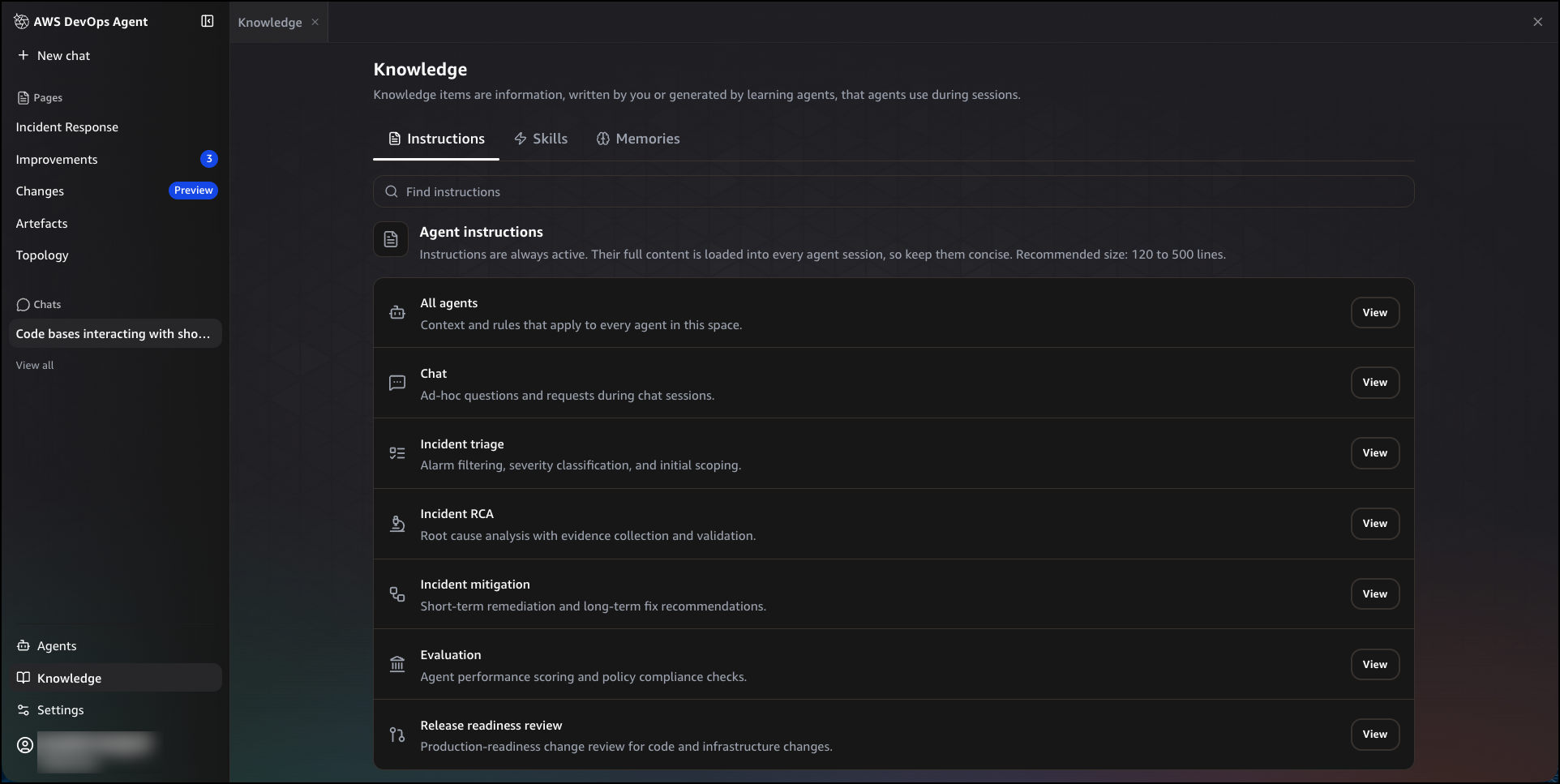
Accessing the features is straightforward through the AWS DevOps Agent console and its web app. Once within the web app, teams can begin to tailor the agent’s behavior to their specific organizational needs. A crucial aspect of this customization is configuring "Instructions" within the Knowledge tab. Here, users can define their internal standards and best practices in plain English. For example, teams can specify infrastructure standards like mandatory encryption protocols for data at rest, or network access rules for specific services. They can also outline best practices for logging and observability, or define sensitive data classification rules that flag applications requiring heightened security measures. This natural language input empowers teams to codify their governance policies directly into the agent’s operational framework.
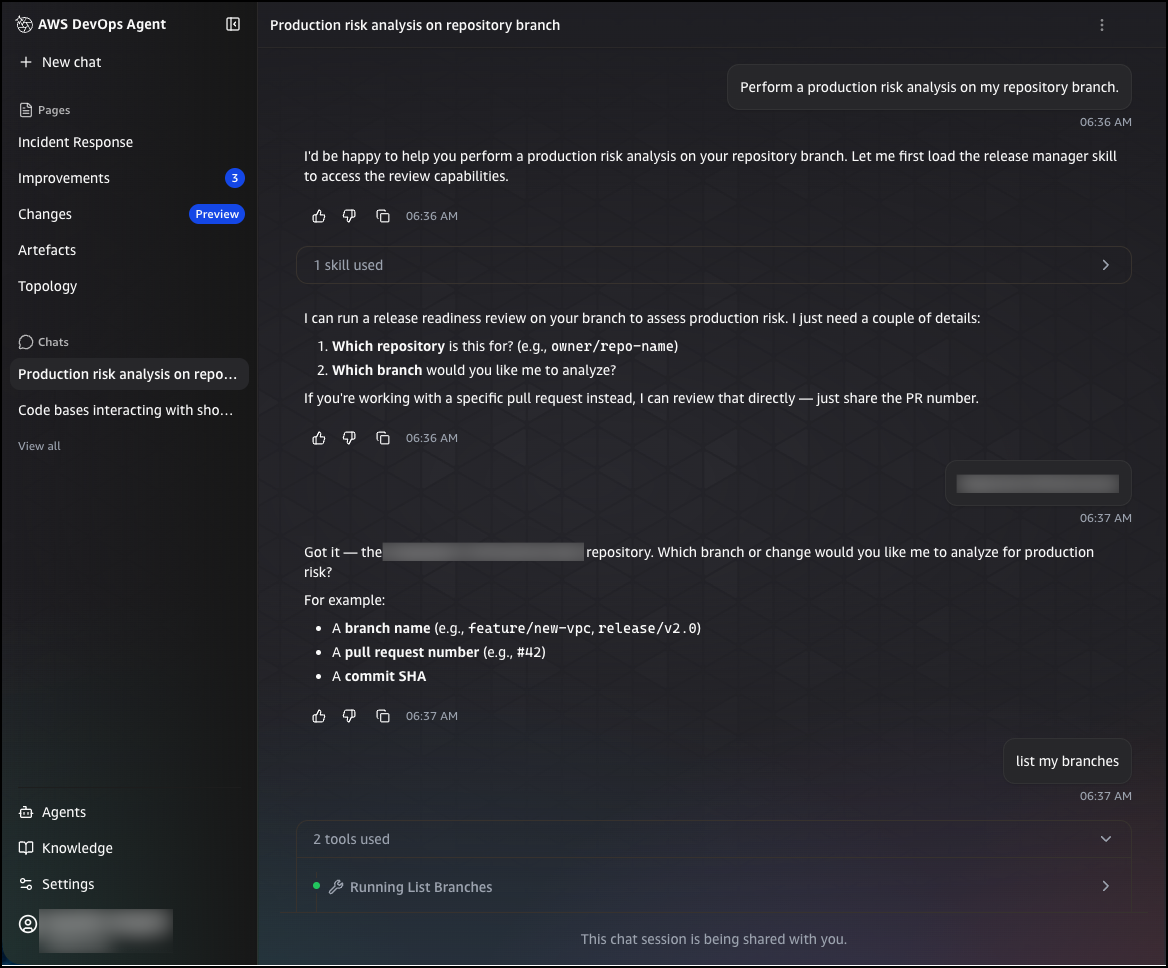
Triggering a release readiness review offers flexibility: it can be initiated automatically upon submission of a pull request to a connected repository, or on-demand via a simple natural language query in the chat interface. A developer might type, "Perform a production risk analysis on my repository branch," prompting the agent to request details like the repository, branch name, pull request number, or commit SHA. Upon confirmation, the agent initiates its comprehensive analysis, scrutinizing infrastructure impacts, configuration changes, and potential issues.
The strength of the chat interface extends beyond initiation; it allows for follow-up questions, enabling developers to delve deeper into the findings. For instance, querying "which downstream consumers a change affects" will yield a structured breakdown of impacted services, specific files and line numbers, and actionable recommendations for resolution before deployment.
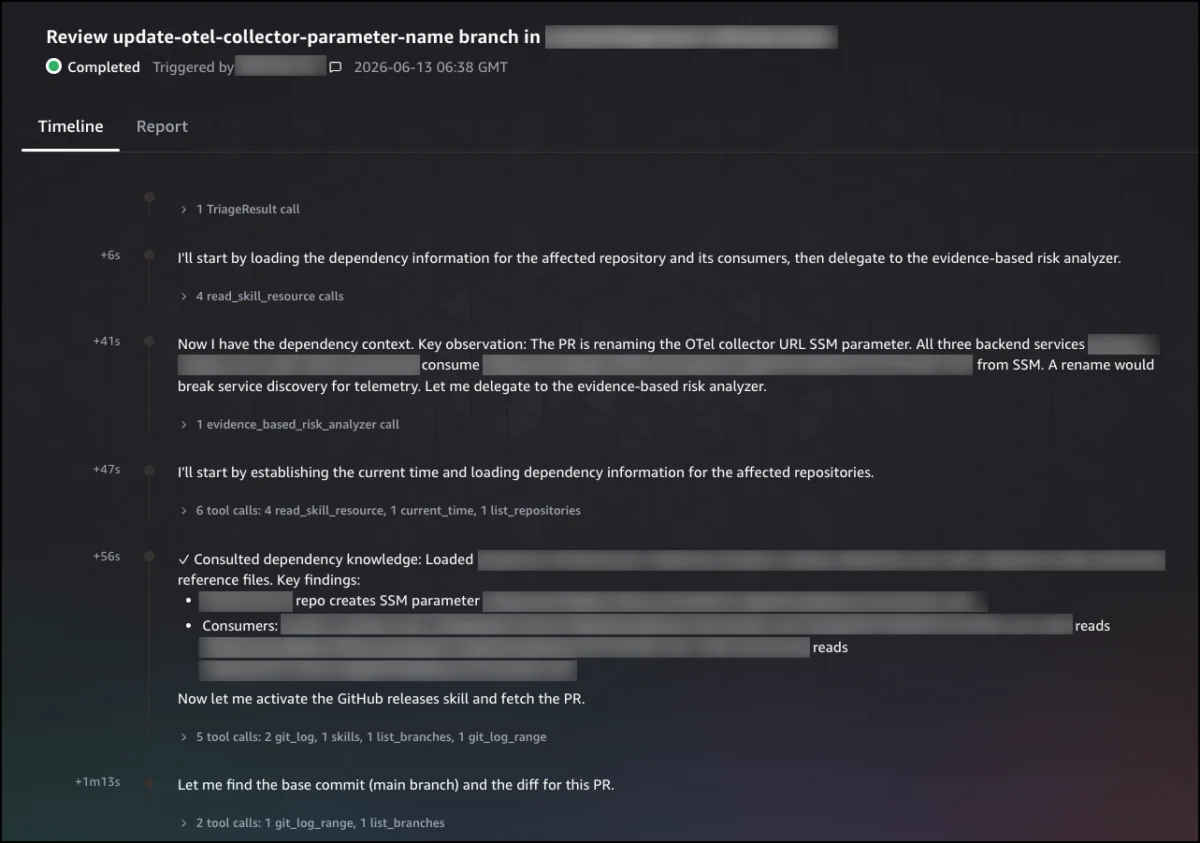
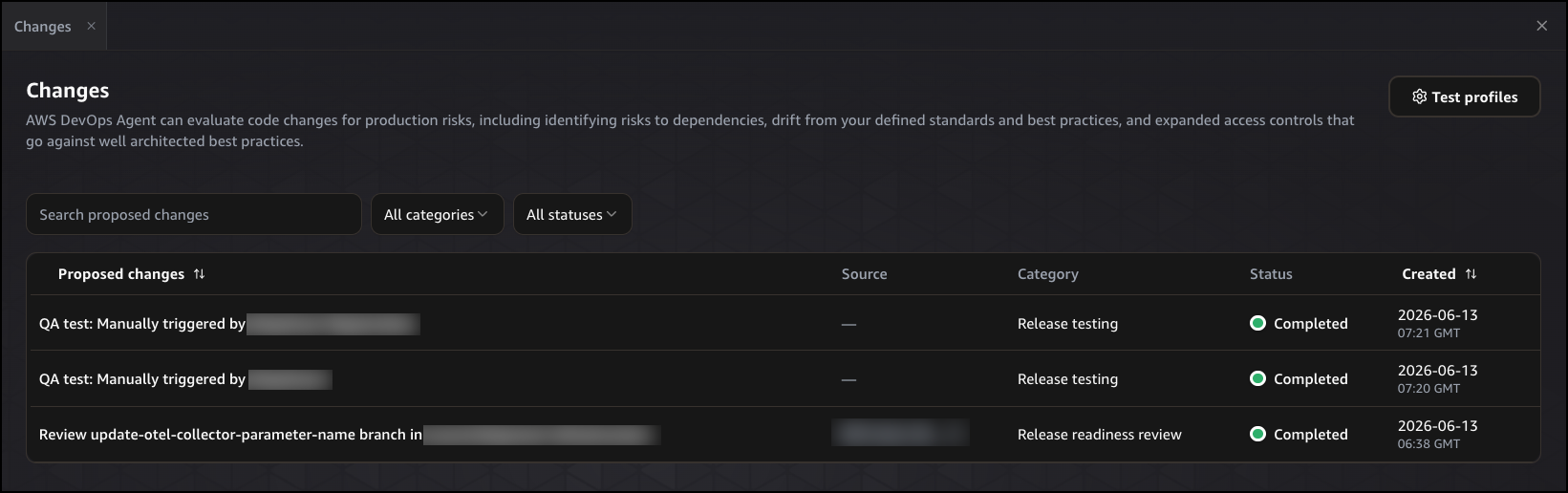
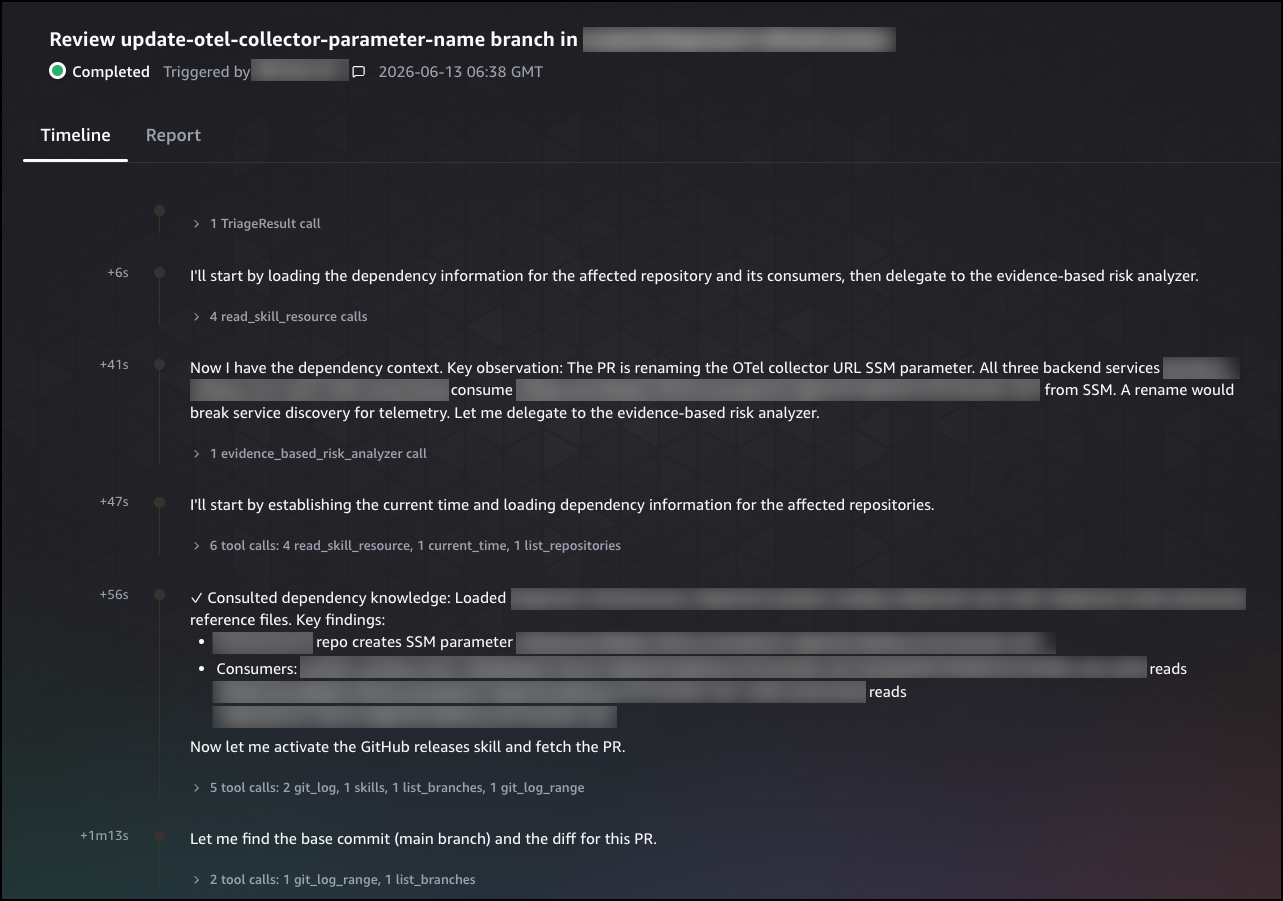
All initiated reviews are meticulously logged and accessible via the "Changes" tab in the left navigation pane of the web app. This table provides an overview of each review, detailing its description, source, category, status, and creation timestamp. Users can filter and search through reviews, with each entry providing a gateway to full execution details. The "Timeline" tab offers a transparent, step-by-step account of the agent’s reasoning process, documenting the tools it invoked, the dependencies it consulted, and its observations at each stage. This timestamped record provides complete auditability of the agent’s decision-making.
The "Report" tab consolidates the agent’s final recommendation, which can be "BLOCK," "Proceed with Caution," or "Safe to Release," alongside a summary of critical issues. The "Analysis" section meticulously explains the rationale behind the recommendation, citing specific risks and supporting evidence. A prioritized "Issues" section highlights findings by severity, while the "Recommendations" section offers concrete, actionable steps for developers to address each concern. Finally, the "Changes" section lists every modified file, its type, category, and a description, providing reviewers with a comprehensive understanding of the proposed change.
For autonomous release testing, the process is equally streamlined. Developers can use the chat interface to request a test run, such as "Run a release test on my application deployed at [application URL]." The agent then dynamically generates and executes a change-specific test plan, with results made available in the "Changes" tab for detailed review.
Strategic Implications for Development Teams and the Broader Industry
The introduction of these AI-powered release management capabilities by AWS is poised to have profound implications across the software development lifecycle:
- Enhanced Developer Productivity: By automating routine yet critical review and testing tasks, developers are freed from repetitive work, allowing them to focus on innovation and more complex problem-solving. The early detection of issues through pre-commit reviews also significantly reduces context switching and rework.
- Accelerated Release Velocity: Overcoming the bottleneck of manual reviews and static testing, organizations can achieve faster, more consistent release cycles, bringing new features and bug fixes to market with unprecedented speed.
- Improved Software Quality and Reliability: The autonomous agent’s ability to conduct thorough, change-specific testing and enforce best practices consistently across the codebase leads to higher quality software with fewer defects. Its understanding of cross-repository dependencies prevents common integration issues.
- Strengthened Security and Compliance Posture: By automatically checking against security best practices (e.g., AWS Well-Architected Framework) and user-defined compliance standards, the agent significantly reduces the risk of security vulnerabilities and compliance breaches, which is increasingly critical in a regulated world.
- Optimized Resource Utilization: Automating these processes reduces the human effort required for extensive reviews and test maintenance, optimizing operational costs and allowing skilled personnel to be deployed more strategically.
- Democratization of Expertise: The agent’s ability to codify and apply best practices, even without explicit instructions, helps democratize operational and security expertise across development teams, ensuring consistent high standards regardless of individual experience levels.
From a broader industry perspective, this move by AWS underscores a clear trend towards intelligent automation and autonomous systems in cloud operations. It further cements AWS’s position as a leader in providing comprehensive, AI-augmented developer tools that evolve with the needs of modern software teams. The integration of natural language processing for defining standards is particularly noteworthy, lowering the barrier to entry for governance and allowing policies to be expressed in a human-friendly format.
Availability and Future Outlook
The release readiness review and autonomous release testing features for AWS DevOps Agent are currently available in preview, offered at no additional cost during this phase in the US East (N. Virginia) Region. This preview period allows organizations to experiment with the new capabilities, provide feedback, and integrate them into their existing workflows. For information on pricing for other AWS DevOps Agent features, interested parties are directed to the official AWS DevOps Agent pricing page. Detailed configuration guidance can be found in the AWS DevOps Agent user guide.
Looking ahead, the evolution of AWS DevOps Agent points towards an increasingly autonomous future for software development and operations. As AI models become more sophisticated, these agents are expected to take on even greater responsibility, potentially moving towards proactive code refactoring suggestions, self-healing production environments, and predictive incident prevention based on historical data. This announcement is not merely an incremental update; it represents a significant leap forward in the journey towards fully autonomous, AI-driven software delivery, promising a future where development teams can innovate faster, safer, and with unparalleled efficiency.
