

Amazon Web Services (AWS) today announced the general availability of AWS Interconnect – multicloud, a groundbreaking managed private connectivity service designed to seamlessly link Amazon Virtual Private Clouds (VPCs) directly with VPCs on other major cloud providers. Alongside this, AWS is introducing AWS Interconnect – last mile, a new capability that dramatically simplifies the establishment of high-speed, private connections between AWS and an enterprise’s branch offices, data centers, and remote locations through their existing network providers. This dual launch marks a significant evolution in enterprise cloud networking, addressing long-standing complexities in hybrid and multicloud environments.
The Multicloud Imperative: Navigating a Complex Digital Landscape
The modern enterprise IT landscape is increasingly characterized by a multicloud strategy. A recent report by Flexera indicates that 89% of enterprises have a multicloud strategy, with 80% employing a hybrid cloud approach combining public and private infrastructure. This paradigm shift is driven by several factors: the need to leverage specialized services offered by different cloud providers, adherence to stringent data residency and compliance regulations across various geographies, and the organizational reality of disparate teams standardizing on different vendor ecosystems. While multicloud offers unparalleled flexibility and avoids vendor lock-in, it has historically presented significant networking challenges.
Connecting these diverse environments reliably and securely has been a complex, resource-intensive undertaking. IT networking teams have traditionally grappled with the manual configuration and management of numerous VPN tunnels, the intricate logistics of working with colocation facilities, and the laborious setup of third-party network fabrics. This "undifferentiated heavy lifting" often diverts valuable engineering talent from strategic initiatives to operational overhead, hindering agility and innovation. The demand for a streamlined, secure, and performant inter-cloud and hybrid-cloud connectivity solution has never been more pressing.
Introducing AWS Interconnect: A Unified, Managed Connectivity Solution

AWS Interconnect emerges as AWS’s comprehensive answer to these intricate networking demands. It is a fully managed connectivity service that abstracts away the underlying infrastructure complexities, allowing enterprises to establish private, high-speed network connections with dedicated bandwidth. This service facilitates robust, end-to-end connectivity across both hybrid and multicloud environments with unprecedented ease. Through the intuitive AWS Console, users can configure resilient connections in just a few clicks, selecting their desired location, partner, cloud provider, preferred AWS Region, and specific bandwidth requirements. This simplified process eliminates the friction of discovering and vetting third-party partners and the burden of manual network configurations, thereby accelerating multicloud deployments.
The service is fundamentally built on two core capabilities:
- Multicloud Connectivity: Enabling direct, private connections between AWS VPCs and VPCs on other cloud providers.
- Last-Mile Connectivity: Providing simplified, high-speed private connections from enterprise on-premises networks to AWS.
Both capabilities share a common design philosophy: delivering a fully managed, turnkey experience that significantly reduces the infrastructure management burden on enterprise networking teams.
Deep Dive: AWS Interconnect – Multicloud
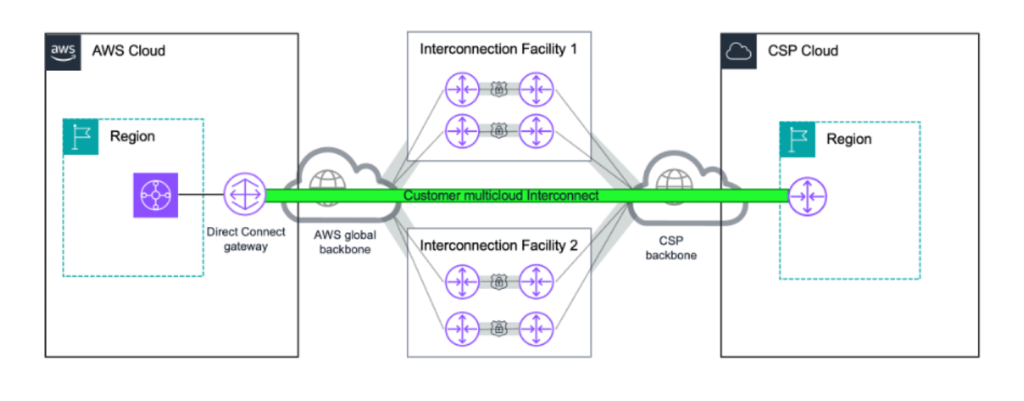
AWS Interconnect – multicloud delivers a private, managed Layer 3 connection, ensuring secure and performant communication between an AWS environment and other cloud providers. At launch, the service supports Google Cloud, with Microsoft Azure support slated for availability later in 2026. A pivotal feature of this service is that traffic flows entirely over the highly secure and performant AWS global backbone and the partner cloud’s private network. This critical design choice means that data never traverses the public internet, mitigating common internet-related issues such as unpredictable latency, inconsistent throughput, and vulnerability to congestion or cyber threats. Customers benefit from predictable performance and enhanced security without the need to manage any physical network infrastructure themselves.
Security is paramount and is deeply embedded within the service architecture. Every connection leverages IEEE 802.1AE MACsec encryption on the physical links between AWS routers and the partner cloud provider’s routers at the interconnection facilities. This hardware-level encryption is automatically enabled and requires no separate configuration by the customer, providing an immediate layer of defense for data in transit. It is important to note that while MACsec secures the direct link, each cloud provider independently manages encryption on its own backbone. Customers are advised to review the specific encryption documentation for their respective cloud deployments to ensure compliance with their unique security and regulatory requirements.
Resiliency is also a built-in attribute of AWS Interconnect. Each connection is designed to span multiple logical links, which are intelligently distributed across at least two distinct physical facilities. This architectural redundancy ensures that a single device failure or even the failure of an entire building does not interrupt connectivity, guaranteeing high availability for mission-critical workloads.
For comprehensive operational visibility, AWS Interconnect – multicloud seamlessly integrates with Amazon CloudWatch. This integration provides customers with a Network Synthetic Monitor, included with each connection, to actively track key performance indicators such as round-trip latency and packet loss. Additionally, bandwidth utilization metrics are provided, offering crucial data points for capacity planning and network optimization.
In a move underscoring its commitment to open standards and ecosystem collaboration, AWS has published the underlying specification for AWS Interconnect on GitHub under the Apache 2.0 license. This open approach invites any cloud service provider to collaborate and integrate with AWS Interconnect – multicloud. To become an official AWS Interconnect partner, cloud providers must implement this technical specification and adhere to stringent AWS operational requirements, encompassing resiliency standards, robust support commitments, and comprehensive service level agreements. This strategy aims to foster a broad and interoperable multicloud ecosystem.
Streamlined Provisioning and Operational Simplicity
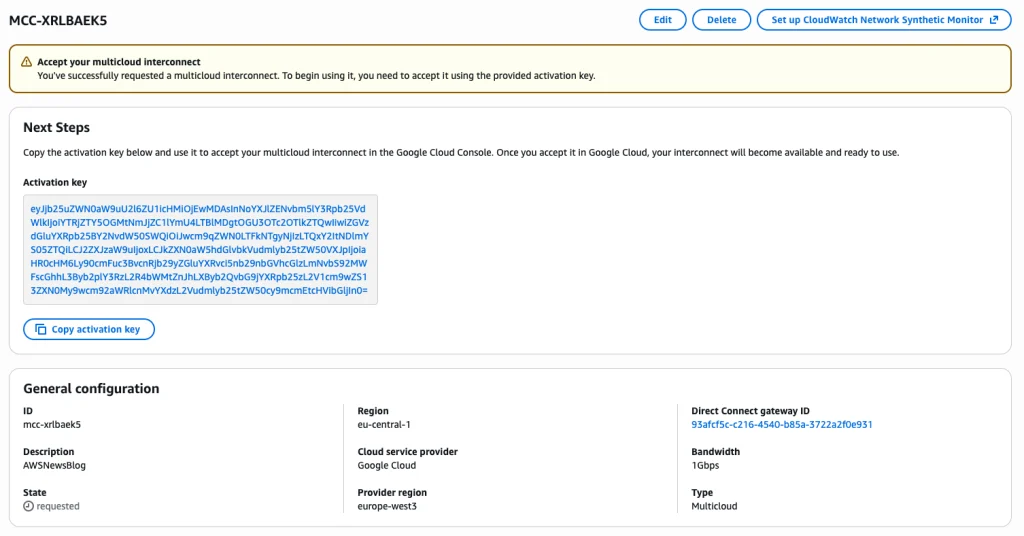
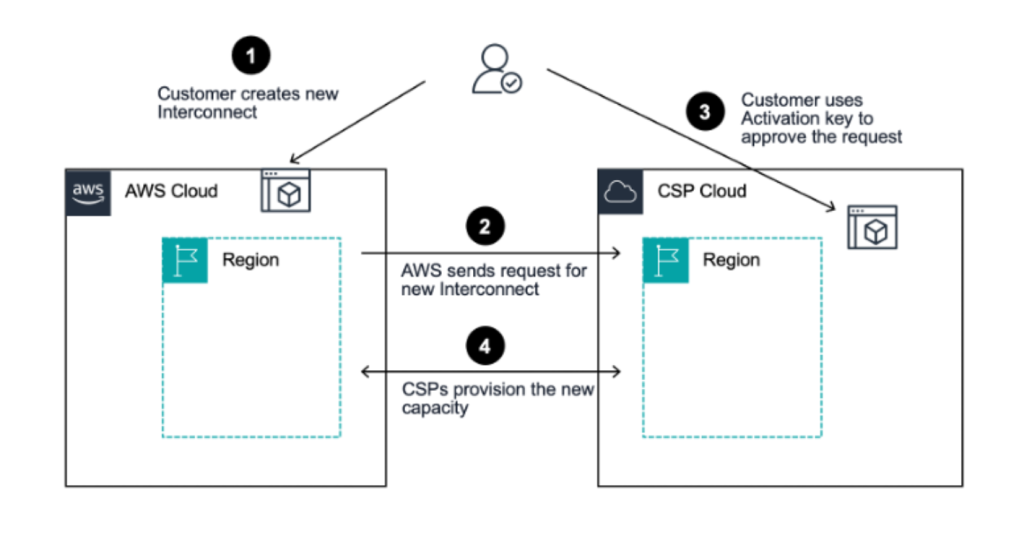
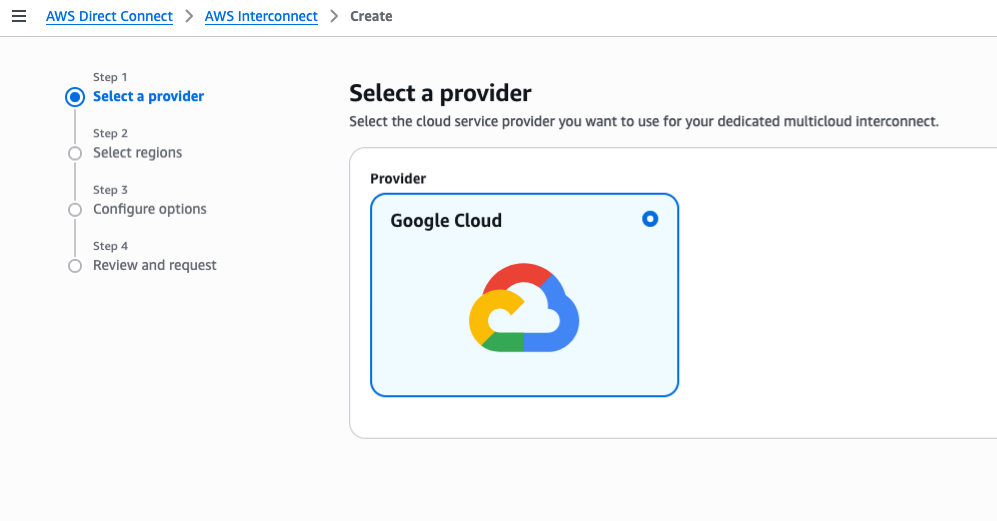
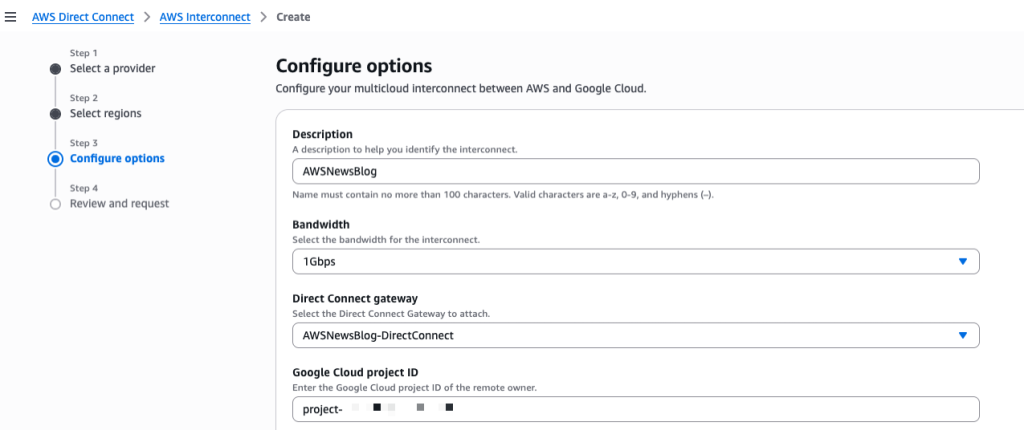
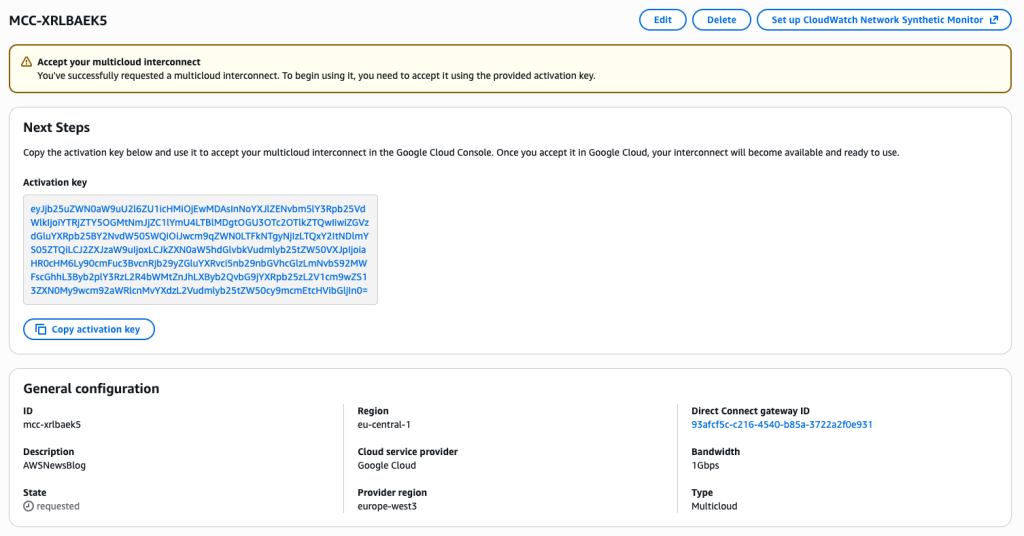
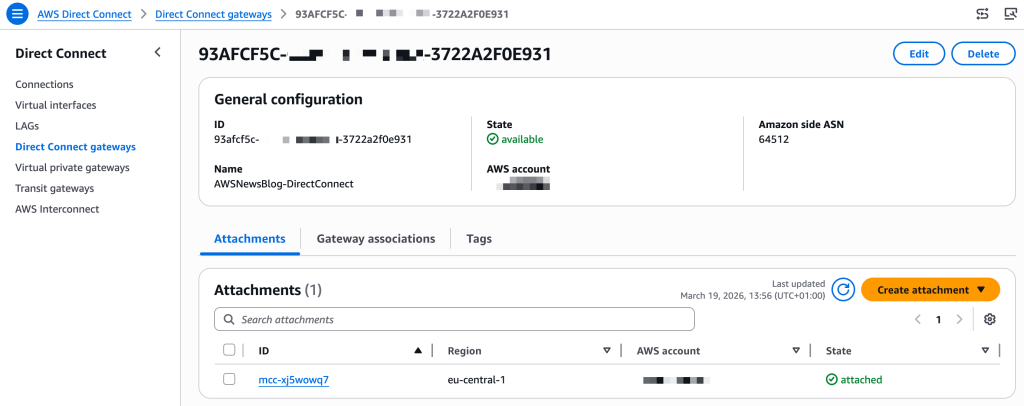
The provisioning process for an AWS Interconnect connection is designed for speed and simplicity, typically taking only minutes. Users initiate the connection from the familiar AWS Direct Connect console, navigating to the AWS Interconnect section. The process involves selecting the desired cloud provider (e.g., Google Cloud), specifying source and destination regions, defining bandwidth requirements, and providing the relevant project ID for the partner cloud. AWS then generates an activation key, which is used on the partner cloud side to finalize the connection. A key benefit of this managed service is the automatic propagation of routes in both directions, enabling workloads to begin exchanging data almost immediately after activation.
For instance, a typical provisioning workflow involves:
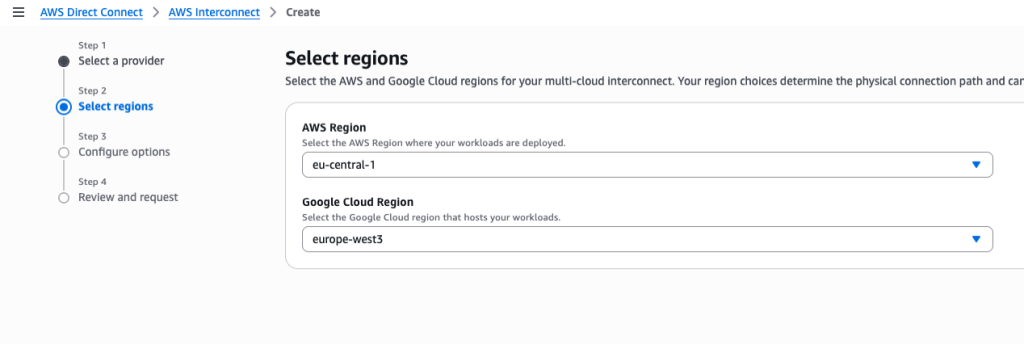
- Requesting an Interconnect in the AWS Management Console: Users navigate to AWS Direct Connect, select AWS Interconnect, and choose "Create." They then select the target cloud provider (e.g., Google Cloud), specify the AWS Region (e.g.,
eu-central-1) and the Google Cloud Region (e.g.,europe-west3). - Configuration Details: Users provide a description, select the desired bandwidth, choose the Direct Connect Gateway to attach, and enter the Google Cloud project ID.
- Activation Key Generation: Upon reviewing and confirming the request, the console provides an activation key.
- Partner Cloud Configuration: This activation key is then used on the Google Cloud Platform (GCP) side to create the necessary transport and VPC Peering resources. While the demo highlights CLI usage (e.g.,
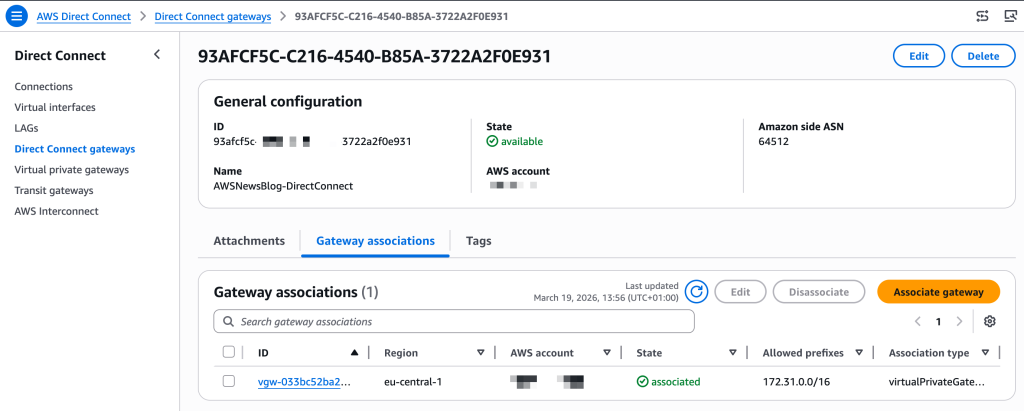
gcloud network-connectivity transports create), the principle remains the same: validate the connection with the key and establish peering. - AWS Gateway Association and Route Configuration: Finally, on the AWS side, the new gateway is associated, and a route entry is added in the AWS VPC Route tables to direct traffic destined for the GCP IP address range through the Virtual Gateway.
Once these steps are completed, a private network route is established, enabling seamless communication between instances in the respective VPCs. This entire process, managed and automated by the cloud providers, drastically reduces the manual effort and potential for configuration errors, empowering IT teams to focus on application logic rather than network plumbing.
Advanced Architectures for Global Scale
As enterprise deployments grow in complexity and scale, AWS Interconnect integrates seamlessly with existing AWS networking services to support advanced architectures. For customers with multiple VPCs within a single AWS Region, AWS Transit Gateway offers a centralized routing hub. This allows all VPCs to connect through a single Interconnect attachment, facilitating traffic segmentation, consistent routing policy application, and integration with services like AWS Network Firewall for granular traffic inspection at the cloud boundary.
For global enterprises operating with workloads spread across multiple AWS Regions and diverse Google Cloud environments, AWS Cloud WAN extends this model across the globe. Cloud WAN provides a unified network management experience, enabling any region in the customer’s network to reach any Interconnect attachment globally. This is achieved through centralized policy management and segment-based routing, ensuring consistent network policies and connectivity wherever an enterprise operates, simplifying the management of vast, geographically distributed multicloud infrastructures. This capability is further detailed in a complementary AWS blog post, "Build resilient and scalable multicloud connectivity architectures with AWS Interconnect – multicloud," by Alexandra and Santiago, offering valuable reference architectures.
AWS Interconnect – Last Mile: Bridging On-Premises to Cloud
Built upon the same robust architecture and design principles as AWS Interconnect – multicloud, AWS Interconnect – last mile offers a streamlined path for connecting on-premises or remote enterprise locations directly to AWS. This is achieved through a participating network provider’s last-mile infrastructure, managed directly from the AWS Management Console.
The onboarding experience for AWS Interconnect – last mile mirrors its multicloud counterpart. Users select a network provider, authenticate, and specify their connection endpoints and desired bandwidth. AWS then generates an activation key, which is provided to the network provider to complete the configuration. The service automatically provisions four redundant connections distributed across two physical locations, configures Border Gateway Protocol (BGP) routing, and activates MACsec encryption and Jumbo Frames by default. This comprehensive automation results in a highly resilient, private connection to AWS that adheres to networking best practices without requiring extensive manual configuration.
AWS Interconnect – last mile supports a wide range of bandwidths, from 1 Gbps up to 100 Gbps, with the flexibility to adjust bandwidth directly from the console without needing to reprovision the entire connection. The service includes a robust 99.99% availability SLA up to the Direct Connect port and bundles a CloudWatch Network Synthetic Monitor for continuous connection health monitoring. Similar to the multicloud offering, AWS Interconnect – last mile attaches to a Direct Connect Gateway, which can then connect to a Virtual Private Gateway (VGW), Transit Gateway, or an AWS Cloud WAN deployment, providing maximum flexibility for integration into existing network architectures. Further details are available in the comprehensive AWS Interconnect User Guide.
Industry Reactions and Strategic Partnerships

The launch of AWS Interconnect has been met with positive industry reception, particularly from key network service providers. Scott Yow, SVP Product at Lumen Technologies, commented on the significance of the new service: "By combining AWS Interconnect – last mile with Lumen fiber network and Cloud Interconnect, we simplify the last-mile complexity that often slows cloud adoption and enable a faster, and more resilient path to AWS for customers." This statement underscores the collaborative potential of AWS Interconnect, leveraging the strengths of AWS’s managed service with established global network infrastructures.
Lumen Technologies is the initial partner for AWS Interconnect – last mile in US East (N. Virginia), with additional major network providers such as AT&T and Megaport already in progress, and further regional expansion planned. This robust partner ecosystem is crucial for the broad adoption and success of the service, ensuring that enterprises can leverage their existing network provider relationships for seamless integration.
Pricing, Availability, and Future Outlook

AWS Interconnect – multicloud and AWS Interconnect – last mile are priced based on a flat hourly rate for the requested capacity, billed pro-rata by the hour. Customers select the bandwidth tier that best fits their workload requirements. Pricing for AWS Interconnect – multicloud varies by region pair, reflecting the underlying network infrastructure costs. For example, a connection between US East (N. Virginia) and Google Cloud N. Virginia will have a different cost profile than a connection to a more geographically distant region. When utilizing AWS Cloud WAN for global any-to-any routing, traffic may traverse multiple regions, which can impact the total cost of deployment. Customers are strongly encouraged to consult the detailed AWS Interconnect pricing page for a full rate card by region pair and capacity tier before sizing their connections.
AWS Interconnect – multicloud is generally available today in five key region pairs: US East (N. Virginia) to Google Cloud N. Virginia, US West (N. California) to Google Cloud Los Angeles, US West (Oregon) to Google Cloud Oregon, Europe (London) to Google Cloud London, and Europe (Frankfurt) to Google Cloud Frankfurt. The anticipated support for Microsoft Azure later in 2026 will significantly expand the multicloud reach of the service.
AWS Interconnect – last mile is launching initially in US East (N. Virginia) with Lumen Technologies as the foundational partner. The planned expansion to include AT&T and Megaport, along with additional regions, will rapidly broaden the geographic coverage and provider choice for customers.
To initiate usage of AWS Interconnect, customers can visit the AWS Direct Connect console and select AWS Interconnect from the navigation menu.
Broader Impact and Market Implications
The launch of AWS Interconnect signifies a pivotal moment in enterprise cloud networking. By offering a fully managed, secure, and resilient solution for both multicloud and hybrid connectivity, AWS is directly addressing some of the most persistent challenges faced by large organizations in their digital transformation journeys. This service is expected to accelerate multicloud adoption by lowering the technical barrier to entry and reducing operational overhead.
For IT networking teams, AWS Interconnect promises a shift from tactical, low-value configuration tasks to more strategic activities focused on optimizing application performance, enhancing security postures, and innovating with cloud-native services. The emphasis on automation, built-in security features like MACsec, and comprehensive monitoring capabilities through CloudWatch will empower teams to deliver more reliable and secure network services with fewer resources.
From a competitive standpoint, AWS Interconnect strengthens AWS’s position as a leading cloud provider by enhancing its core networking capabilities and interoperability with other major cloud ecosystems. The open specification on GitHub further demonstrates a commitment to fostering a collaborative multicloud environment, potentially setting a new standard for inter-cloud connectivity. As enterprises continue to diversify their cloud portfolios, solutions like AWS Interconnect will be indispensable in ensuring that the underlying network infrastructure remains agile, secure, and performant, ultimately unlocking the full potential of multicloud and hybrid cloud strategies. This service is poised to become a critical enabler for the next generation of enterprise cloud architecture.
