

Amazon Web Services (AWS) has announced the immediate availability of the next generation of AWS Resilience Hub, a comprehensive update designed to significantly enhance how organizations manage and prove the resilience of their cloud applications. This major evolution introduces a sophisticated suite of capabilities, including an innovative new application model, advanced dependency discovery and assessment, generative AI-powered failure mode analysis, adaptable modular resilience policies, and robust organization-wide reporting. This release marks a pivotal moment for Site Reliability Engineers (SREs) and development teams grappling with the complexities of maintaining high availability across vast and intricate cloud environments.
The Escalating Imperative for Application Resilience
In today’s digital economy, application availability is not merely a technical metric but a fundamental business imperative. Companies across sectors rely heavily on cloud-native architectures to power their operations, customer interactions, and revenue streams. However, as these architectures grow in complexity, encompassing hundreds or even thousands of microservices, managing their resilience becomes an increasingly daunting challenge. Industry reports consistently highlight the substantial financial and reputational costs associated with downtime. A 2022 Uptime Institute survey, for instance, revealed that over 25% of organizations experienced a "serious" or "severe" outage in the past year, with 60% of these incidents costing over $100,000, and 15% exceeding $1 million. Beyond direct financial losses, outages erode customer trust, damage brand reputation, and can lead to regulatory scrutiny.
The previous generation of AWS Resilience Hub provided a foundational capability for assessing and improving application resilience. It helped customers identify potential disruptions and recommended recovery procedures. However, the rapidly evolving landscape of cloud deployments, characterized by the proliferation of microservices, serverless functions, and interconnected data stores, necessitated a more integrated, intelligent, and scalable approach. The core challenge for many large enterprises remained: how to establish consistent resilience goals, accurately measure progress against these goals, and demonstrably prove compliance across a diverse portfolio of applications, often managed by disparate teams using varied tools and standards. This fragmented approach often resulted in blind spots, inconsistent resilience postures, and difficulties in conveying critical information about an application’s true ability to withstand failures.
A New Era of Proactive Resilience Management
The next generation of AWS Resilience Hub directly addresses these systemic challenges by providing a structured, unified, and intelligent framework. Its primary objective is to bridge the gap between resilience policy expectations and actual application performance, empowering application teams to achieve desired levels of resilience and subsequently demonstrate compliance through rigorous testing and reporting. By integrating deeply with AWS Organizations, the new Resilience Hub enables enterprises to evaluate resilience at an unprecedented scale, identifying subtle failure modes, uncovering previously hidden dependencies, and providing a consolidated view of resilience posture across the entire enterprise from a single delegated administrator account.
The journey towards enhanced resilience with the new Resilience Hub is guided by several foundational concepts built into its architecture, designed to streamline the process from policy definition to actionable insights.

Key Innovations Driving the Next Generation
The expanded experience of AWS Resilience Hub is characterized by several groundbreaking features that collectively redefine cloud resilience management:
-
New Application Model: Shifting from individual applications to a more holistic "system" and "service" model. This allows organizations to group related applications and their components (services) under a unified system, better reflecting real-world business applications that often comprise multiple interconnected microservices or deployable units. This hierarchical structure provides a clearer, more logical representation of complex application landscapes.
-
Advanced Dependency Discovery Assessment: Understanding the intricate web of dependencies between application components and external services is paramount for effective resilience. The new Resilience Hub leverages advanced mechanisms, including the analysis of VPC query logs, to automatically discover and map these dependencies. This capability is critical for identifying potential single points of failure or cascading failure domains that might otherwise go unnoticed, providing a dynamic and accurate topology of the application’s interconnections.
-
Generative AI-Powered Failure Mode Analysis: This is perhaps one of the most significant advancements. Leveraging the power of generative AI, the Resilience Hub can now perform intelligent failure mode assessments. This AI engine analyzes the application’s architecture, dependencies, and configuration to predict potential failure modes and their impact. Unlike traditional rule-based systems, generative AI can identify novel or complex failure scenarios, provide contextual explanations for why a particular mode matters to the architecture, and suggest precise, actionable recommendations for remediation. This capability moves organizations beyond reactive incident response towards a proactive stance, allowing them to fortify their systems against unforeseen issues.
-
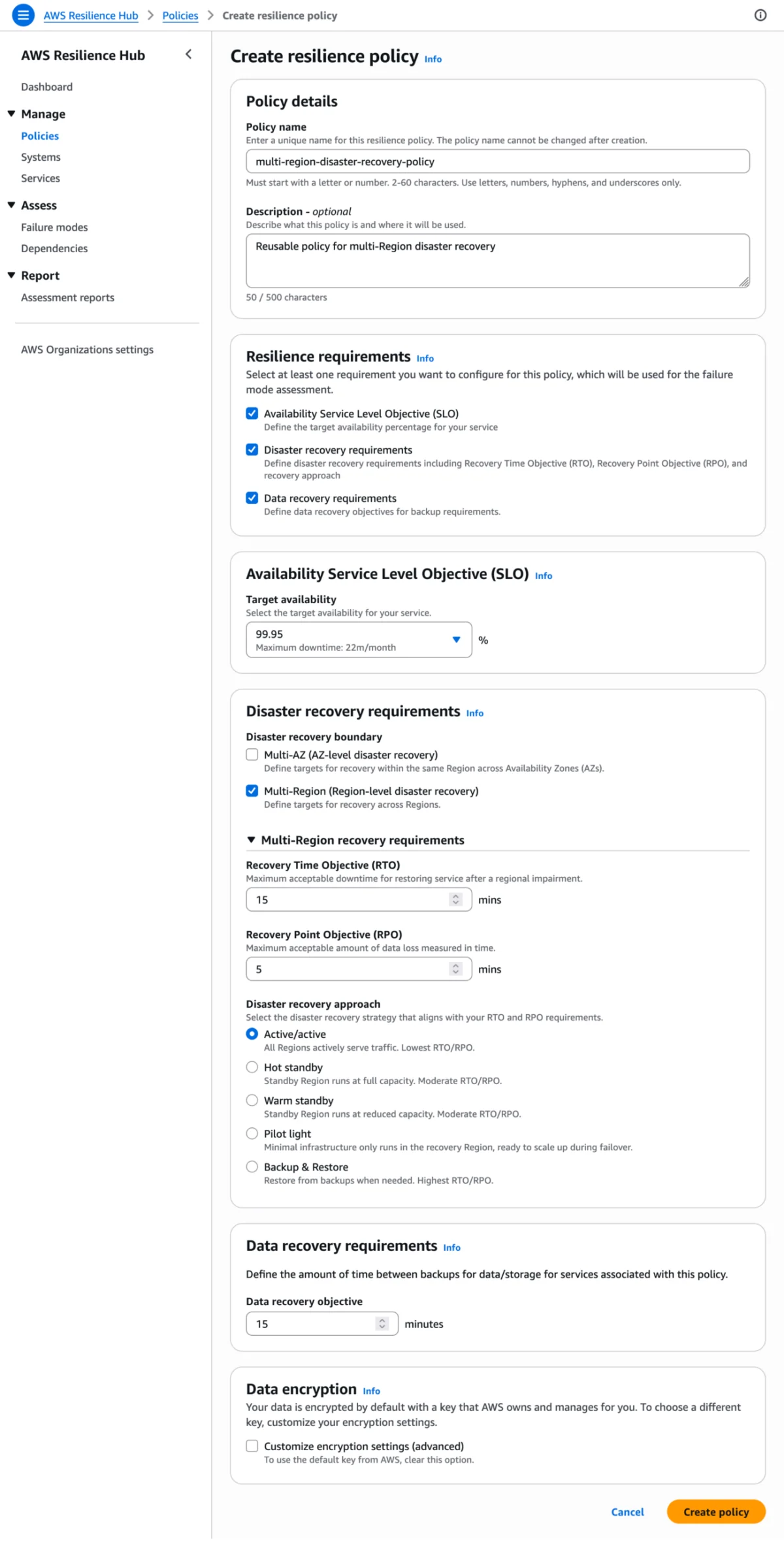
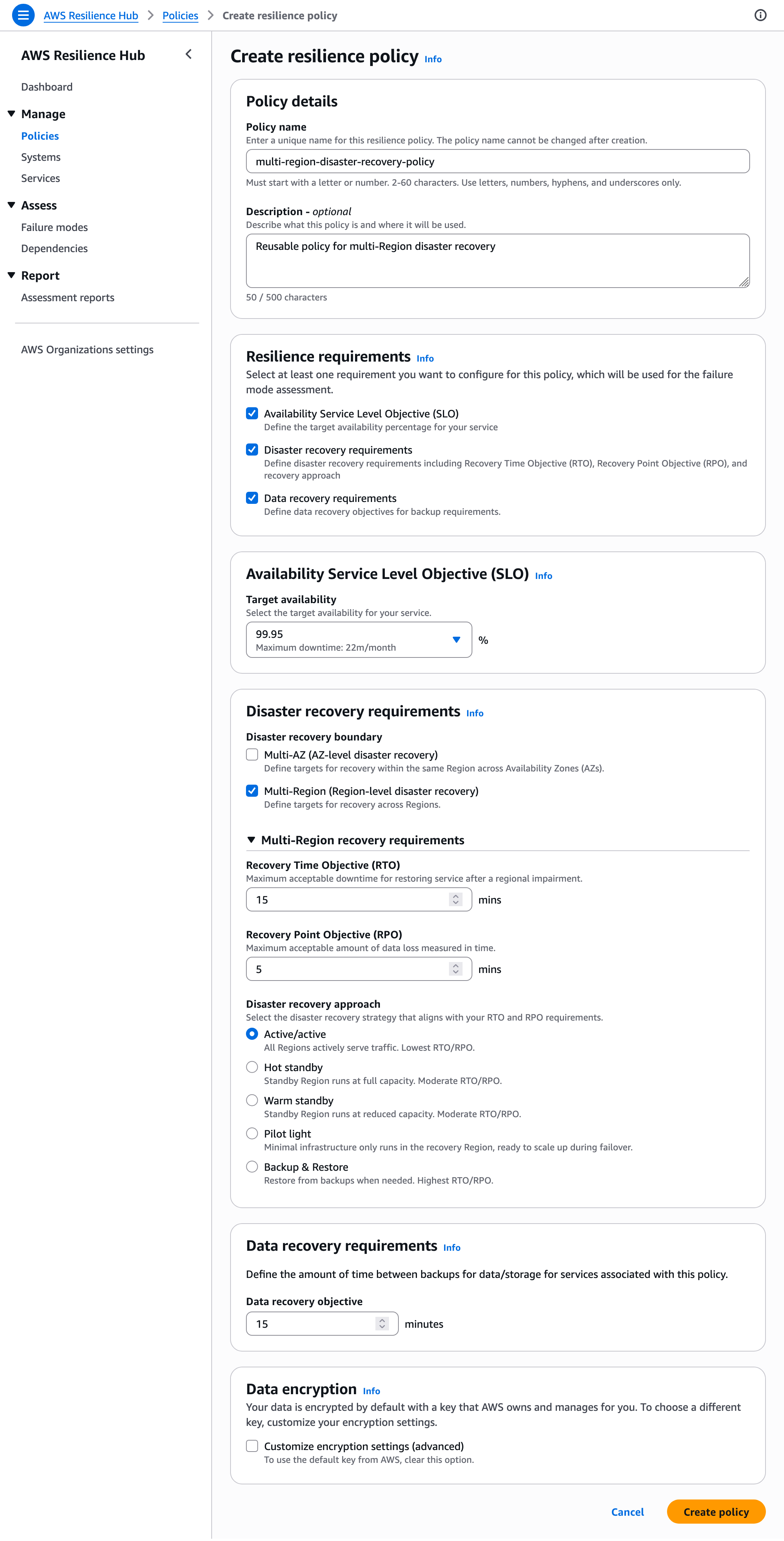
Modular Resilience Policies: Recognizing that different applications have varying resilience requirements, the new hub introduces modular resilience policies. These policies allow organizations to define reusable, granular resilience requirements (e.g., availability Service Level Objectives (SLOs), Recovery Time Objectives (RTOs), and Recovery Point Objectives (RPOs)) that can be tailored and applied consistently across different systems and services. This modularity ensures standardization while offering the flexibility needed for diverse application portfolios. For instance, a critical financial application might require a 99.95% availability SLO with a 15-minute RTO and 5-minute RPO for multi-Region disaster recovery, while a less critical internal tool might have more relaxed targets.
-
Organization-Wide Reporting: For large enterprises, gaining a consolidated view of resilience posture across hundreds or thousands of accounts and applications is a monumental task. The integration with AWS Organizations enables centralized reporting, providing SREs, compliance officers, and leadership with a single pane of glass to monitor resilience progress, identify areas of non-compliance, and demonstrate adherence to internal standards and external regulations. This capability is instrumental for governance, risk management, and strategic decision-making.
Operationalizing Resilience: The Hub in Action
Implementing the next generation of AWS Resilience Hub follows a logical, step-by-step process designed for clarity and efficiency.
1. Setting Up Prerequisites: Before diving into policy creation and system configuration, organizations must configure the invoker IAM role. This role grants Resilience Hub the necessary read-only access to AWS resources across accounts. For enterprises utilizing AWS Organizations, service-linked roles (SLRs) simplify cross-account access, enabling a single delegated administrator account to manage resilience posture across the entire organization without the need for individual account logins. This centralized management greatly streamlines operations for large, multi-account environments. Detailed prerequisite information is available in the AWS Resilience Hub User Guide.
2. Defining Resilience Policies: The first operational step involves configuring a resilience policy. Users navigate to the "Policies" menu within the AWS Resilience Hub console and select "Create policy." Here, they define a policy name, description, and critical resilience requirements. For example, a policy might specify a 99.95% availability SLO, a 15-minute RTO, and a 5-minute RPO for multi-Region disaster recovery, explicitly aligning the disaster recovery approach with these objectives. The policy also allows for the definition of data recovery time objectives (DRTOs) for restoring from backups, ensuring comprehensive data protection strategies are integrated. The modular nature allows for the creation of various reusable policies catering to different business criticality levels.
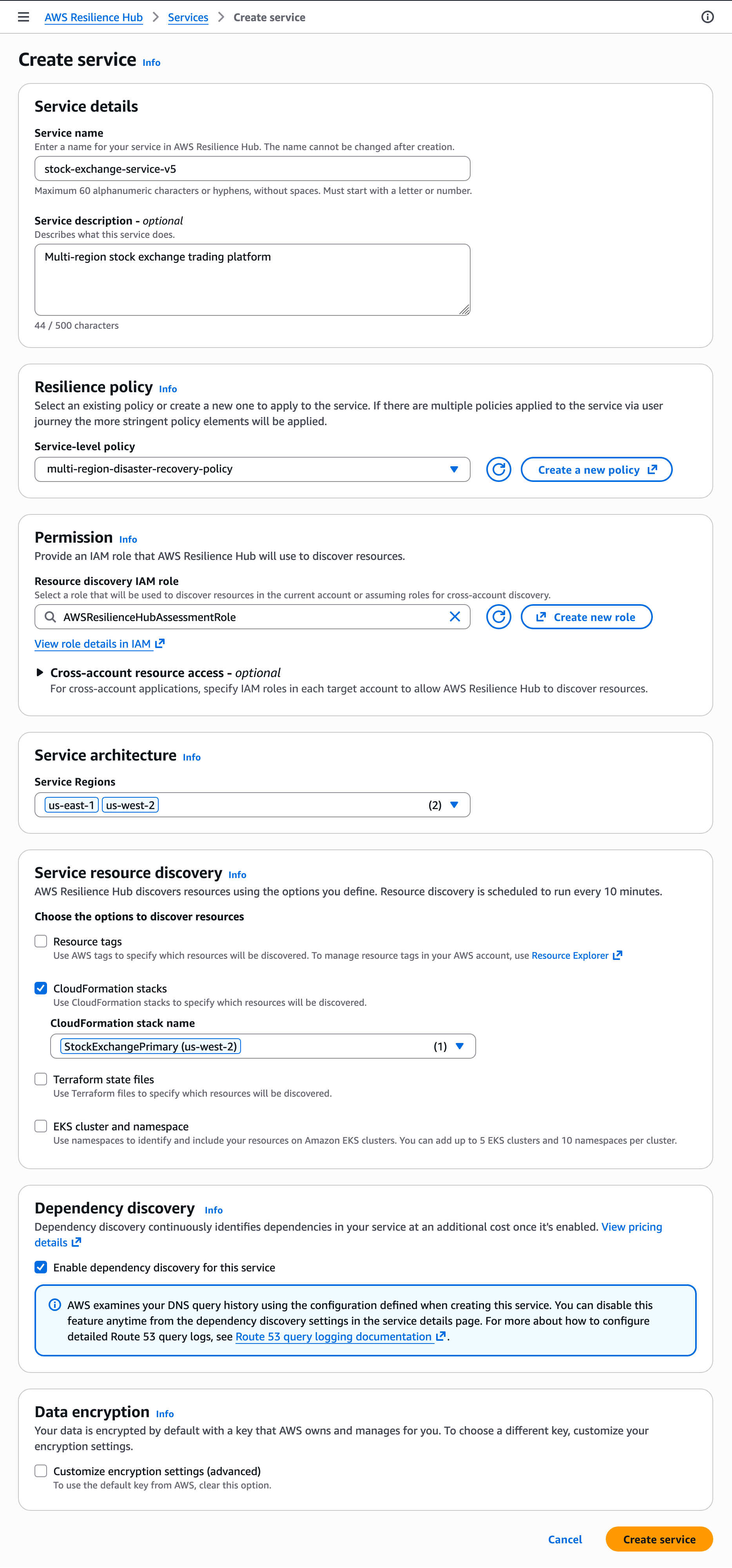
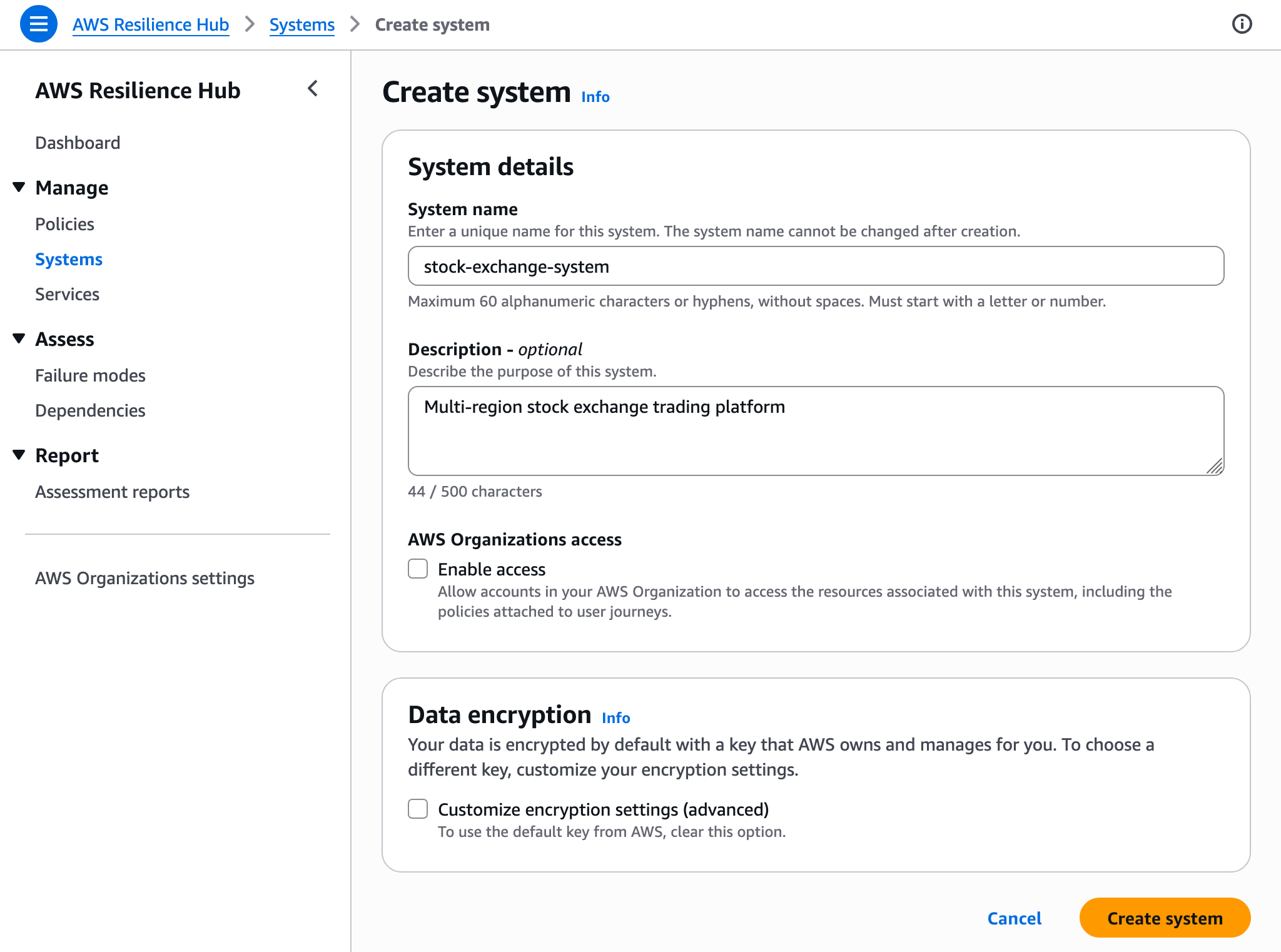
3. Creating Systems and Services: With policies in place, users then create "systems," which represent their business applications. A system can optionally enable AWS Organizations account access for broader management. Within each system, "services" are created. A service represents a deployable unit, such as a microservice or a specific application component. When creating a service, users specify its name (e.g., stock-exchange-service), associate it with a predefined resilience policy, and provide the invoker AWS IAM role name. Critical to this step is defining the service’s resources, which can be identified through resource tags, AWS CloudFormation stacks, Terraform state file locations, or Amazon EKS cluster and namespace configurations.
4. Enabling Dependency Discovery: A crucial feature during service creation is the option to enable dependency discovery. When activated, AWS analyzes VPC query logs associated with the service’s resources. This intelligent analysis helps in automatically mapping external and internal dependencies, providing a dynamic and accurate topology of the service’s interconnections. This feature can be toggled on or off from the service details page at any time, offering flexibility in data collection.
5. Running Failure Mode Assessments: Once a service is created and a policy applied, the next step is to initiate a failure mode assessment from the service page. During this assessment, Resilience Hub assumes the configured invoker role, reads resource configurations from specified input sources, identifies parent-child relationships, and queries the application topology service to map connections between resources. The result is a comprehensive topology illustrating data flow, containment, and permissions within the service.
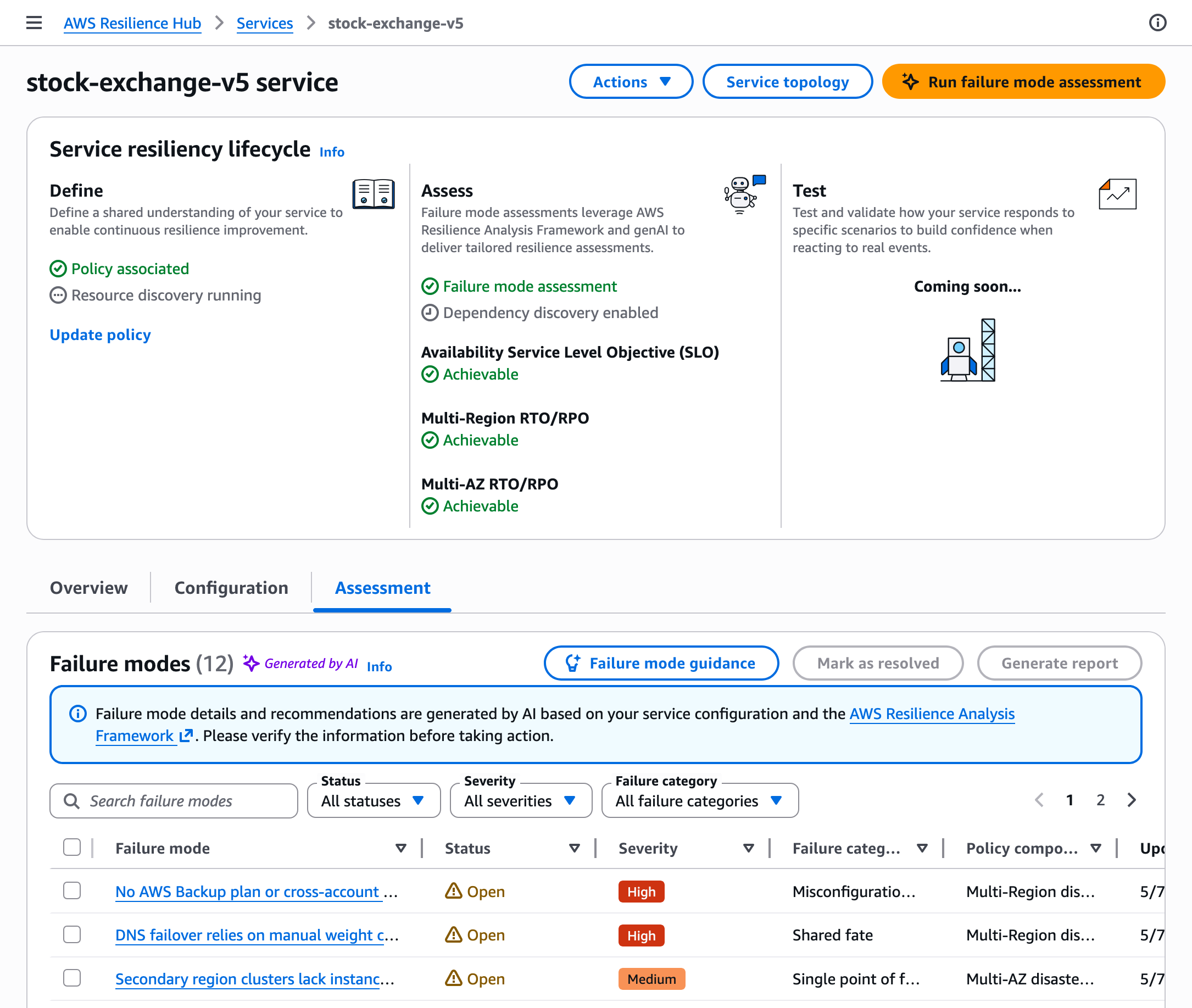
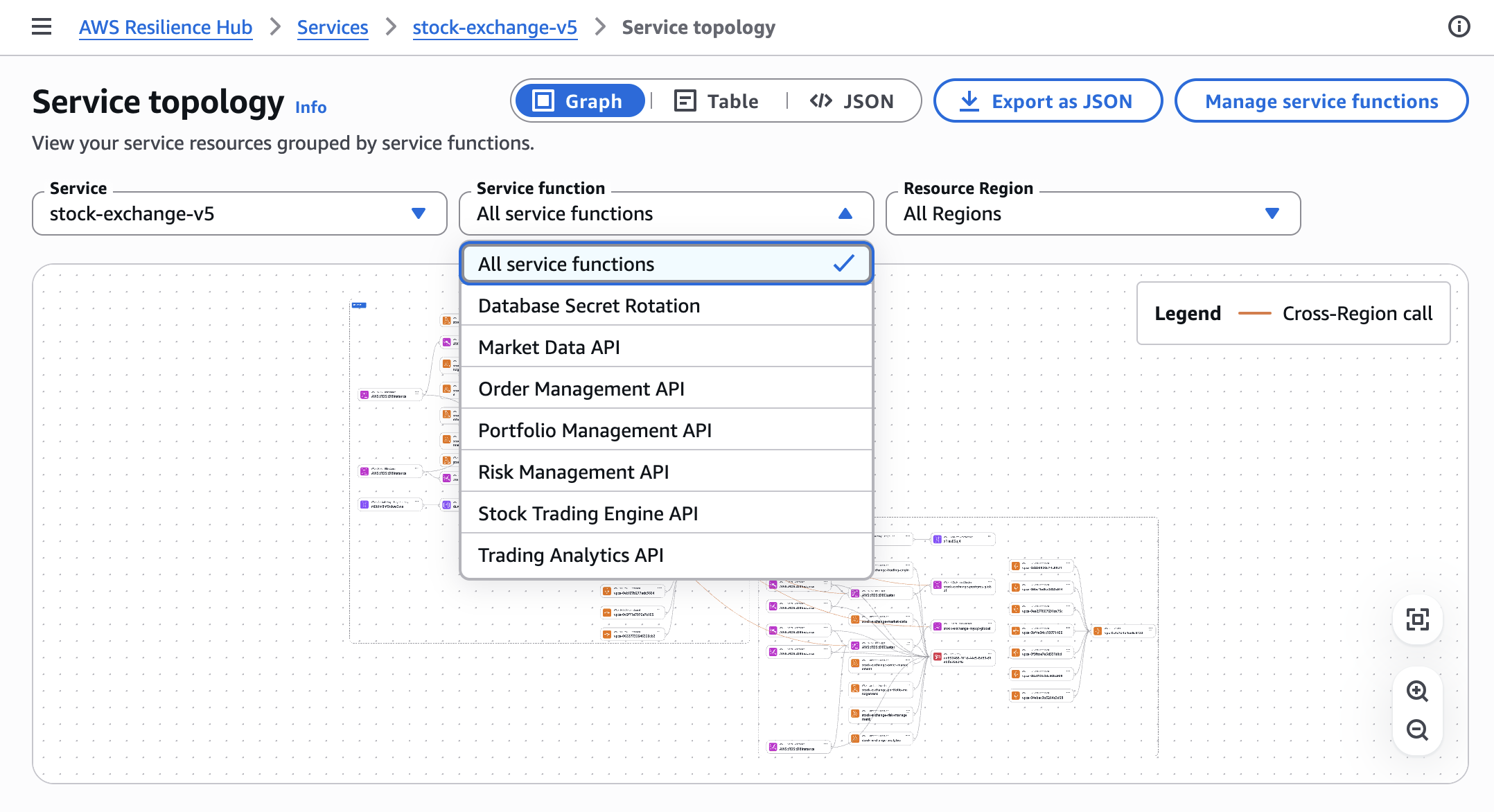
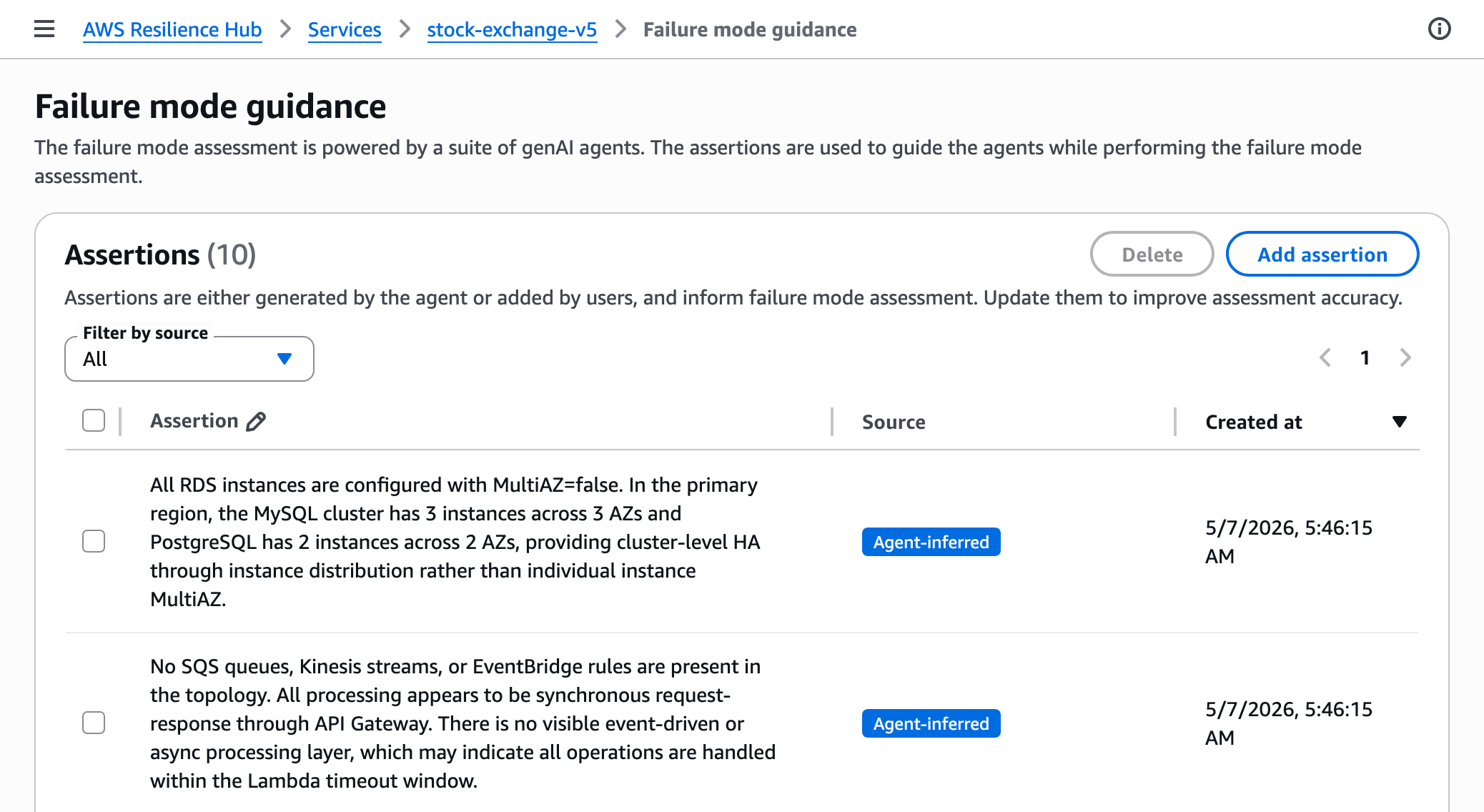
6. Reviewing Topology and Guidance: The "Service topology" view presents the service resources grouped by their functions, available in graph, table, or JSON formats, offering various perspectives on the application’s structure. The "Failure mode guidance" section allows users to add or refine assertions that guide the AI agents during the assessment. These assertions, which can be generated by the agent or provided by users, help improve the accuracy and relevance of the assessment results.
7. Analyzing Findings and Recommendations: Upon completion of the assessment, users can review detailed findings and recommendations in the "Assessment" tab of the service page. Each finding clearly articulates the identified failure mode, explains its significance for the specific architecture, outlines concrete steps for remediation, and links back to the related policy requirement. This actionable intelligence allows teams to address vulnerabilities systematically. Users can then "Mark as resolved" once a recommendation has been implemented or "Mark as irrelevant" if a finding does not apply to their specific use case, ensuring the system remains aligned with operational realities.
Migration for Existing Users and Broader Implications
For organizations already utilizing the previous version of AWS Resilience Hub, AWS has provided migration APIs. These APIs simplify the transition process, converting existing assessment policies into the new modular resilience policies and mapping older application models to the new system and service hierarchy. This ensures a smooth upgrade path, allowing customers to leverage the enhanced capabilities without a complete re-architecture of their resilience management strategies.
The strategic implications of this next-generation release are far-reaching. For SREs, it offers unprecedented visibility and control, transforming resilience from a reactive firefighting exercise into a proactive, data-driven discipline. Development teams gain clearer guidelines and automated feedback loops, integrating resilience considerations earlier into the development lifecycle. For business leaders, it translates into enhanced business continuity, reduced risk exposure, and demonstrable compliance with internal governance and external regulatory requirements, such as those mandated by GDPR, HIPAA, or financial industry standards. The ability to centrally report on resilience posture across an entire organization is a significant boon for corporate governance and risk management teams.
Availability and Pricing Model
The next generation of AWS Resilience Hub is now generally available across all AWS commercial Regions where Resilience Hub is currently offered. For a detailed list of regional availability and future roadmap information, interested parties can consult the AWS Capabilities by Region page.
AWS has also introduced a new service-based pricing model for Resilience Hub. This model includes two failure mode assessments per month for services, with optional charges for automated dependency assessments. To encourage adoption and exploration of its advanced features, AWS is offering a free tier for initial usage. Comprehensive pricing details are available on the AWS Resilience Hub pricing page.
This significant update underscores AWS’s commitment to empowering its customers with robust tools to build and operate highly available, resilient applications in the cloud. The integration of generative AI for failure mode analysis, combined with a holistic application model and enterprise-wide reporting, positions the new AWS Resilience Hub as a critical component in the modern cloud operations toolkit, promising to elevate the standard of application resilience across the industry. Organizations are encouraged to explore the new capabilities through the Resilience Hub console and provide feedback via AWS re:Post or their usual AWS Support channels.
