

Amazon Web Services (AWS) has announced the general availability of its highly anticipated AWS DevOps Agent and AWS Security Agent, marking a significant advancement in autonomous cloud management and security. These "frontier agents," first introduced as a visionary concept at the re:Invent conference, are designed to autonomously execute complex tasks across multiple steps, operating continuously to achieve predefined outcomes. The dual launch underscores AWS’s commitment to leveraging artificial intelligence and machine learning to enhance operational efficiency, accelerate incident response, and integrate proactive security measures directly into the development lifecycle for cloud, multi-cloud, and on-premises environments.
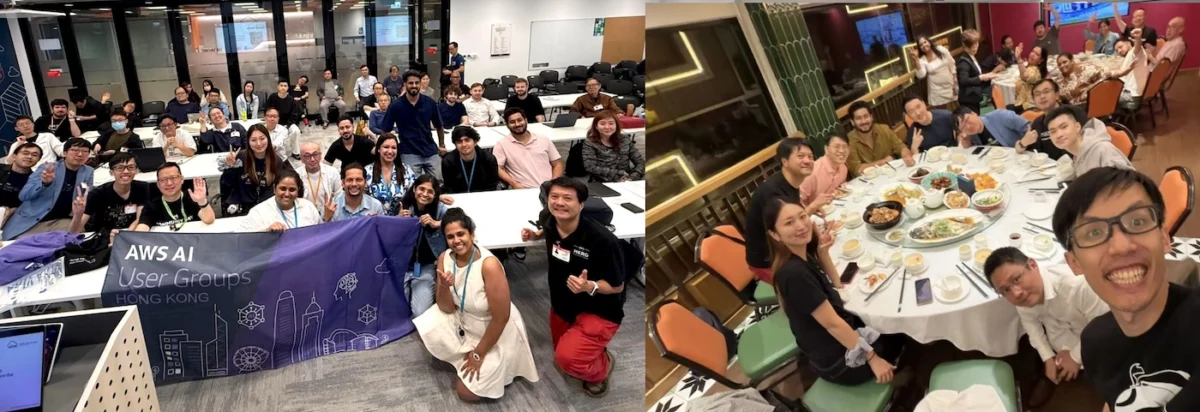
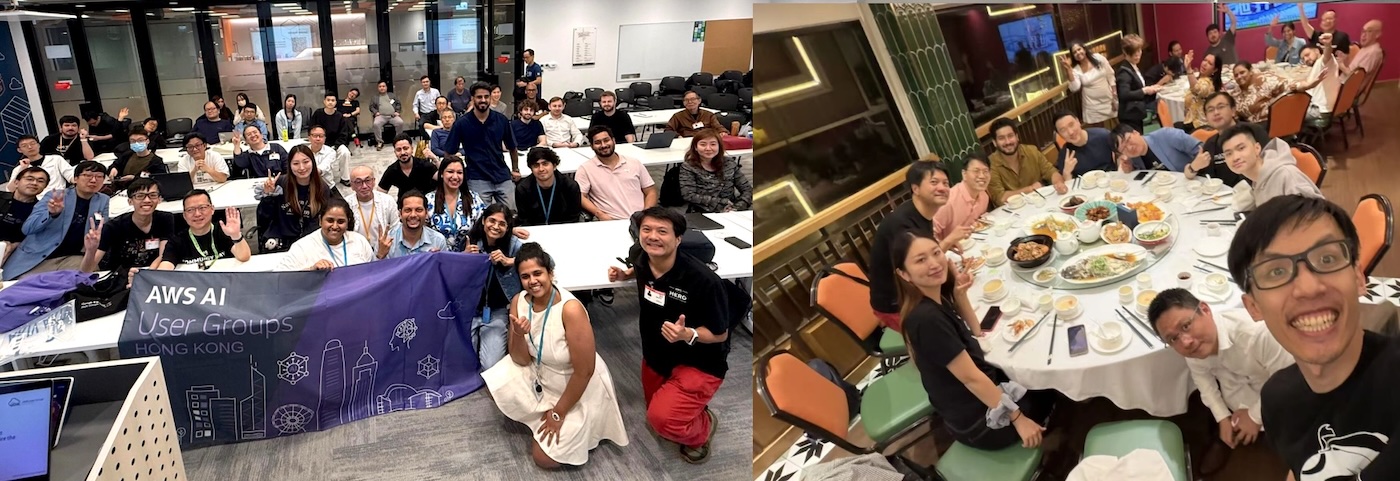
The strategic release of these autonomous agents coincides with AWS’s ongoing global outreach and community-building initiatives. Recently, an AWS team visited the AWS Hong Kong User Group, engaging with a vibrant and dedicated community. This interaction highlights the foundational role of user groups in fostering innovation, sharing knowledge, and providing crucial feedback that informs AWS’s product development and service enhancements. The Hong Kong group, while described as compact, demonstrates high energy and passion, further evidenced by their recent establishment of a new AI user group, signaling a keen interest in cutting-edge technologies like those now embodied by the frontier agents. Such community bonds, strengthened through direct engagement and dialogue, are vital for cultivating a robust ecosystem around AWS technologies worldwide.
The Dawn of Autonomous Cloud Management: Frontier Agents Go GA
The concept of "frontier agents" emerged from AWS’s vision for intelligent automation, aiming to alleviate the heavy operational burden on IT teams and security professionals. Unlike traditional automation scripts or rule-based systems, these agents are engineered to exhibit a higher degree of autonomy, reasoning, and adaptability, akin to a human expert. Their journey from conceptualization at re:Invent to general availability involved rigorous testing, refinement based on preview customer feedback, and continuous iteration to ensure scalability, reliability, and effectiveness across diverse operational landscapes.
AWS DevOps Agent: Accelerating Incident Response and Reliability
The AWS DevOps Agent is poised to transform cloud operations by providing an always-available, intelligent teammate capable of investigating incidents, significantly reducing mean time to resolution (MTTR), and proactively preventing issues before they escalate. In today’s complex cloud environments, where outages can lead to substantial financial losses and reputational damage, the ability to rapidly identify, diagnose, and resolve operational disruptions is paramount.
Preview customers have already reported remarkable improvements in their operational metrics. United Airlines, Western Governors University (WGU), and T-Mobile are among the early adopters leveraging the DevOps Agent to streamline their cloud operations. At WGU, for instance, resolution times for critical incidents have reportedly plummeted from hours to mere minutes, a testament to the agent’s efficiency. Across various preview deployments, customers have observed up to a 75% reduction in MTTR and a 3 to 5 times faster resolution of operational issues. This data underscores the agent’s potential to dramatically enhance system reliability and operational resilience.
The agent’s capabilities extend beyond mere incident response. By continuously monitoring systems, analyzing logs, and identifying anomalous behavior, it can predict potential failures and suggest preventative actions. This shift from reactive troubleshooting to proactive problem-solving represents a paradigm change in how organizations manage their cloud infrastructure. Industry analysis suggests the global AIOps market, which the DevOps Agent significantly contributes to, is projected to reach tens of billions of dollars in the coming years, driven by the increasing complexity of distributed systems and the demand for automated operational intelligence. The AWS DevOps Agent’s general availability positions AWS as a leader in this rapidly evolving space, offering a powerful tool for organizations striving for operational excellence.
AWS Security Agent: Continuous, Context-Aware Penetration Testing
Complementing its operational counterpart, the AWS Security Agent introduces a revolutionary approach to application security by integrating continuous, context-aware penetration testing directly into the development lifecycle. Traditionally, penetration testing has been a time-consuming, resource-intensive, and often infrequent process, typically performed manually by human experts at specific stages of development or before deployment. This often leaves vulnerabilities undetected until late in the cycle, making them more costly and difficult to remediate.
The AWS Security Agent operates like an autonomous human penetration tester, continuously scanning and probing applications for vulnerabilities from design to deployment. This "shift-left" security approach ensures that potential weaknesses are identified and addressed early, drastically reducing the attack surface and enhancing overall security posture. Customers like LG CNS, HENNGE, and Wayspring have already reported strong results from their use of the Security Agent during the preview phase. LG CNS, a leading IT services provider, estimates achieving over 50% faster testing cycles and approximately 30% lower costs associated with security assessments. Furthermore, the agent has significantly reduced false positives, allowing security teams to focus their efforts on genuine threats.
The global cybersecurity market, particularly in automated security testing, is experiencing exponential growth, driven by an increasing volume of cyber threats and stringent regulatory compliance requirements. The AWS Security Agent addresses a critical need by providing an always-on security expert that can scale to meet the demands of modern DevOps pipelines. Its ability to perform dynamic application security testing (DAST) and static application security testing (SAST) in a more integrated and intelligent manner makes it an invaluable asset for organizations seeking to embed security more deeply into their development processes. This not only enhances security but also frees up human security experts to focus on more complex, strategic challenges. Both the DevOps and Security Agents are engineered to operate seamlessly across AWS cloud environments, multi-cloud setups, and on-premises infrastructure, providing a unified and consistent approach to autonomous management and security.
AWS Service Availability Updates and Lifecycle Management

AWS maintains a comprehensive approach to service lifecycle management, providing clear guidance to customers on service availability and any upcoming changes. On March 31, 2026, AWS updated its Product Lifecycle Changes documentation, offering customers crucial information on available alternatives and support for migration to minimize operational disruptions. This commitment to transparency ensures that organizations can plan effectively for any service deprecations or modifications, maintaining continuity in their cloud operations. The process of service lifecycle management is a critical aspect of cloud provider responsibility, reflecting the natural evolution of technology, consolidation of features, or shifts in customer demand. AWS’s proactive communication and provision of migration pathways are designed to empower customers to adapt to these changes with minimal impact. For specific guidance on any service-related updates, customers are consistently directed to consult the relevant service documentation or contact AWS Support directly.
Recent Innovations Across the AWS Ecosystem
Beyond the significant launch of the frontier agents, the past week has seen a flurry of activity across the AWS ecosystem, with numerous updates and enhancements designed to empower builders and accelerate innovation. While a comprehensive list is available on the "What’s New with AWS" page, several key developments merit attention, showcasing AWS’s continuous evolution in core services, AI/ML capabilities, and infrastructure.
One notable development includes the introduction of new Amazon EC2 instance types, specifically optimized for advanced machine learning workloads and high-performance computing. These instances, featuring the latest generation of processors and accelerated computing capabilities, are designed to provide significant performance improvements for tasks ranging from large language model training to complex scientific simulations. This expansion caters to the growing demand for specialized compute resources that can handle increasingly data-intensive and computationally demanding applications.
Furthermore, Amazon S3 has rolled out enhanced data lifecycle management features, offering finer-grained control over object storage tiers and automated data archival policies. These improvements allow organizations to optimize storage costs more effectively while ensuring data availability and compliance with regulatory requirements. Security enhancements for S3, including advanced encryption options and improved access control mechanisms, were also introduced, reinforcing AWS’s commitment to data protection.
In the serverless domain, AWS Lambda expanded its runtime support to include newer versions of popular programming languages, alongside improvements aimed at reducing cold start times for functions. These updates contribute to making serverless architectures even more performant and developer-friendly, encouraging broader adoption for event-driven applications and microservices.
Finally, Amazon SageMaker, AWS’s machine learning platform, received updates to its MLOps (Machine Learning Operations) tools, simplifying the deployment, monitoring, and governance of machine learning models in production. New features supporting the fine-tuning and deployment of foundational models were also unveiled, democratizing access to powerful generative AI capabilities for a wider range of developers and data scientists. These continuous improvements underscore AWS’s dedication to providing a comprehensive and evolving platform for all stages of the machine learning lifecycle.
Additional AWS Ecosystem News and Resources
In broader news across the AWS landscape, several other items have captured attention, reflecting the dynamic nature of cloud innovation and strategic growth. AWS recently published a detailed report outlining its progress in global sustainability initiatives, detailing efforts to achieve 100% renewable energy use and reduce water consumption across its data centers. This report reinforces AWS’s commitment to environmental stewardship and provides transparency on its operational impact.
A significant new customer success story emerged, highlighting a major financial institution’s successful migration of its core banking systems to AWS, resulting in substantial cost savings and enhanced agility. This case study serves as a powerful testament to the scalability and reliability of AWS for mission-critical enterprise workloads.
Infrastructure expansion continued with the launch of new AWS Local Zones in key metropolitan areas, bringing AWS compute, storage, and other select services closer to end-users and on-premises installations. These Local Zones are crucial for applications requiring ultra-low latency, such as real-time gaming, media and entertainment content creation, and local data processing.
Lastly, AWS announced an update to its compliance certifications, achieving new industry-specific accreditations that further broaden the scope of regulated workloads that can be securely hosted on its platform. These certifications provide an additional layer of assurance for customers operating in highly regulated sectors.
AWS continues to foster a vibrant global community through a diverse array of events and educational resources. Builders are encouraged to explore and join upcoming AWS-led in-person and virtual events, including AWS Summits and Community Days, which offer invaluable opportunities for learning, networking, and skill development. Specialized events for startups and developer-focused gatherings provide tailored content for specific segments of the AWS ecosystem. The AWS Builder Center stands as a central hub for connecting with fellow builders, sharing innovative solutions, and accessing a wealth of technical content to support ongoing development and foster a collaborative environment.
This comprehensive overview reflects a period of significant innovation and strategic growth for AWS, marked by the transformative launch of its frontier agents and sustained efforts in community engagement and service enhancements. The coming weeks promise further developments as AWS continues to push the boundaries of cloud computing.
