

The modern data center has become the bedrock of the global digital economy, yet it remains a paradoxical entity defined by a fundamental struggle between aggressive energy conservation and the necessity of massive, redundant power provisioning. As artificial intelligence workloads accelerate, the demand for compute capacity has surged, forcing facility operators to confront two competing realities: the need to minimize the power draw of individual silicon components and the requirement to maintain significant power overhead to ensure 99.999% uptime. This convergence of efficiency and reliability is driving a new architectural shift in how hyperscalers and enterprise data centers manage energy, moving away from static provisioning toward dynamic, intelligent power orchestration.
The core of the challenge lies in the distinction between "active" energy consumption and "stranded" power—energy that is provisioned for a server rack but remains unused due to conservative safety margins, workload fluctuations, or inefficient hardware states. For years, the industry focused almost exclusively on reducing the power consumption of individual chips through clock gating, power domain isolation, and advanced manufacturing processes. However, as these gains are offset by the sheer volume of new hardware, the focus has shifted toward the systemic level: how to extract maximum utility from the power already entering the facility.
The Anatomy of Idle Power and Stranded Capacity
"Idle power is by far the biggest sink of power in systems," explains Arif Khan, vice president of product marketing for design IP at Cadence. This idle consumption is not merely a result of hardware running at peak capacity when it is not needed; it is a structural byproduct of the way data centers are designed. Because many systems operate with higher-than-necessary voltages—a safety measure to account for manufacturing variations and potential aging—the potential for wasted energy is vast.
The problem is compounded by the "stranded power" phenomenon, where resources are either over-provisioned or under-provisioned. Steven Woo, fellow and distinguished inventor at Rambus, notes that this issue has moved from a technical footnote to a boardroom conversation. "Customers are talking about this more openly now, especially in large data centers where small inefficiencies add up fast," Woo says. When a data center architect plans for a rack to be at full utilization, they often set power limits that cannot be met by actual, varying workloads. Conversely, if one server is fully utilized while its neighbor sits idle, the energy allocated to the idle server is effectively "stranded."
A Chronology of Power Management Evolution
The evolution of data center power management can be viewed in three distinct phases. In the early 2000s, power management was largely passive, focusing on basic cooling and simple uninterruptible power supply (UPS) backups. By the 2010s, the industry moved into the "Efficiency Era," characterized by the widespread adoption of virtualization and the implementation of Dynamic Voltage and Frequency Scaling (DVFS).
Today, the industry is entering the "Orchestration Era." This transition is driven by the realization that chips are no longer static components but dynamic, self-aware systems. Modern chips now incorporate sophisticated monitoring capabilities, such as those provided by proteanTecs, which allow for real-time telemetry of silicon health and margin-to-failure metrics. By measuring the actual electrical stresses a chip faces, operators can reclaim the "guard bands"—the extra voltage buffers added to protect against chip aging—that were historically left on the table.
The Silicon Lifecycle and the Case for Adaptive Voltage
Historically, engineers designed chips to operate at peak efficiency for the "worst-case" scenario—the performance level required on the final day of a chip’s five-to-seven-year service life. Because silicon degrades over time, this meant a brand-new chip was often running at a higher voltage than it actually required to perform its tasks.
"Power consumption scales with the square of voltage," notes Noam Brousard, vice president of systems at proteanTecs. "But the voltage applied to a device is based on characterizing the worst-case conditions in which it may run." By utilizing in-circuit monitoring, data centers can now implement a "safety net" architecture. This system allows for the real-time reduction of voltage during periods of low activity or when the chip is early in its lifecycle. If environmental conditions change or if a sudden spike in workload occurs, the system can trigger a protective response—such as clock throttling—to prevent timing errors, ensuring that efficiency never comes at the cost of stability.

The Redundancy Trap: The 2N Provisioning Model
Beyond the silicon level, the structural provisioning of data centers remains the single largest barrier to absolute efficiency. To guarantee reliability, many data centers employ "2N" redundancy, where every power feed is mirrored. In this model, if a facility is rated for 2 gigawatts (GW) of capacity, it effectively treats that capacity as 1GW to ensure that if one feed fails, the other can take the full load without crashing.
"A site may be provisioned for 2GW, but the site manager thinks of that as only 1GW," says Marissa Hummon, CTO of Utilidata. "Then, within that gigawatt, they generally aim for 70% to 80% utilization. When you look at it as a whole, they’re getting about a third of the 2GW to the compute infrastructure."
This massive discrepancy represents a multibillion-dollar opportunity for optimization. If operators could safely increase the utilization of these redundant feeds, they could potentially add thousands of additional GPUs or servers without the need to secure additional power from the grid—a process that currently takes years due to permitting and infrastructure constraints.
The Future of Autonomous Power Orchestration
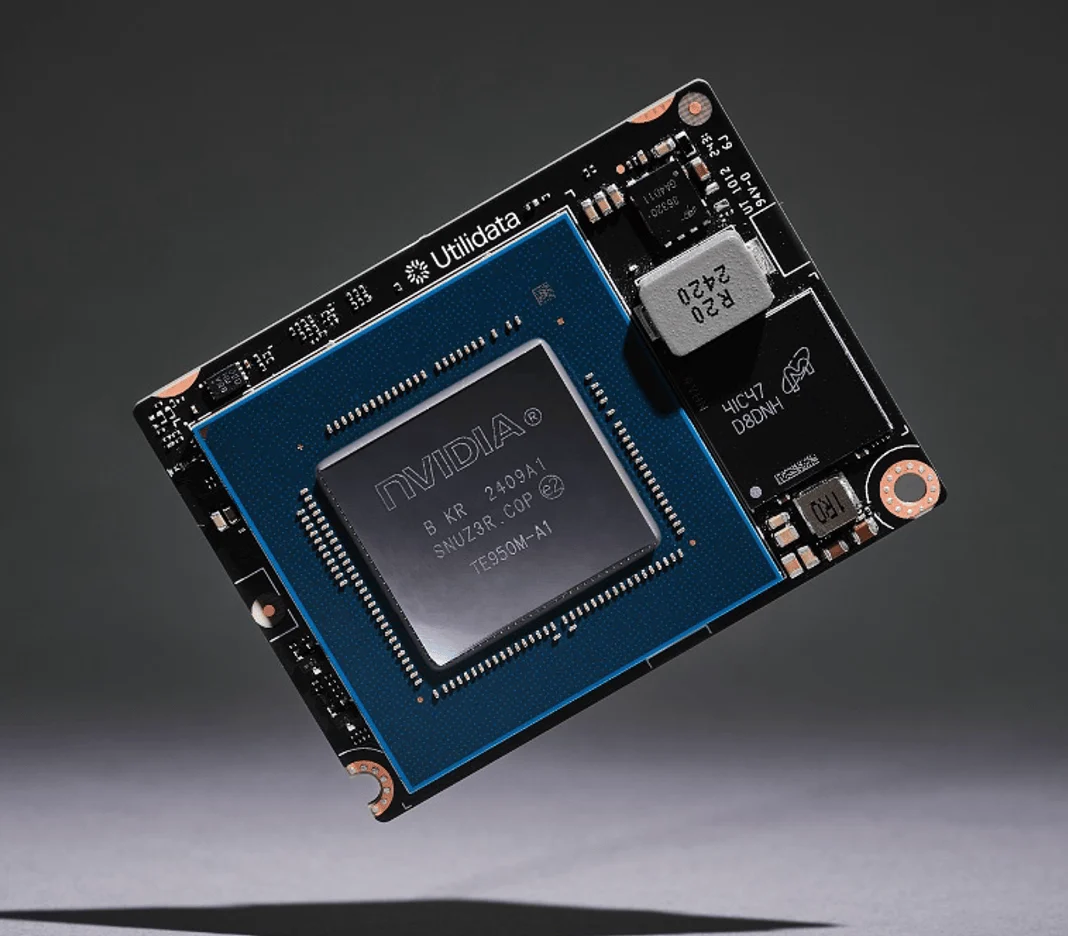
The integration of intelligent, real-time power control loops is the next frontier. Companies like Utilidata are developing technologies that interface with existing server management libraries (such as those from Nvidia) and Baseboard Management Controllers (BMCs) to create a high-speed feedback loop. By sampling power usage at a rate of one million samples per second, these systems can provide a "power budget" to the workload scheduler.
If a power feed is identified as becoming unstable, the system can preemptively signal the scheduler to migrate AI model weights or throttle inference requests across the rack before a failure occurs. This allows operators to push the utilization of their redundant feeds from 50% to as high as 95% during normal operations, relying on the speed of the control loop to "shed" load in the event of a grid anomaly.
Security Implications in a Connected Power Grid
As power management becomes increasingly software-defined and interconnected, the attack surface of the data center expands. Power control interfaces, which were once isolated within the hardware, are now reachable via the network.
"The ability to modulate power at scale is already there and already on the network," Hummon acknowledges. To mitigate this risk, modern power management systems are being built to meet rigorous industrial standards, such as IEC 62443-4-2. The implementation of secure boot, hardware roots of trust, and mutual authentication on every interface ensures that the power control layer remains as hardened as the data layer. By keeping these control loops on-site and isolated from external cloud dependencies, operators can maintain local autonomy over their most critical infrastructure.
Implications for the Future of AI and Hyperscale
The push for efficiency is not merely an environmental goal; it is an economic imperative. As the "power-to-compute" ratio becomes a defining metric for the success of AI companies, those who can squeeze more utility out of their existing infrastructure will hold a distinct competitive advantage. The ability to perform more work with the same power footprint—or even the same work with a smaller, more optimized footprint—will define the next generation of data center design.
The trajectory of this industry suggests that we are moving toward a future where the data center is an autonomous, self-optimizing organism. By synthesizing silicon-level health telemetry, rack-level power monitoring, and intelligent workload scheduling, the industry is gradually closing the gap between the power that is paid for and the power that is truly put to work. As the demand for artificial intelligence continues to scale, this sophisticated dance between power reliability and resource utilization will remain the most critical challenge for data center operators worldwide. While the path to absolute efficiency is paved with technical complexity, the potential to unlock vast, currently stranded capacity offers a compelling path forward in an energy-constrained world.
