
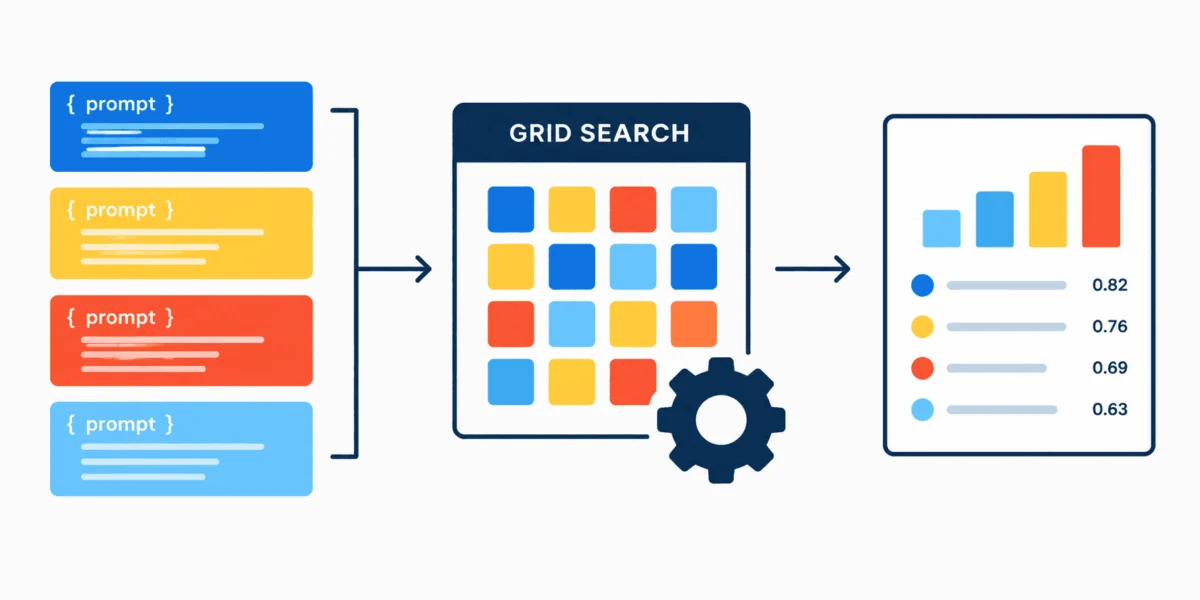

The rapid evolution of Large Language Models (LLMs) has necessitated a paradigm shift in how data scientists approach model configuration and performance optimization. Traditionally, machine learning pipelines relied on grid search and random search algorithms to tune parameters such as learning rates, tree depths, or regularization strengths. However, as LLMs become the backbone of modern text classification and natural language processing (NLP) tasks, the focus has shifted toward prompt engineering. By treating prompt templates as tunable hyperparameters, practitioners can now apply the rigorous statistical frameworks of scikit-learn to automate the discovery of optimal instruction sets, effectively moving from artisanal, manual prompt design to a systematic, data-driven methodology.
The Evolution of Model Tuning
In the classical machine learning era, hyperparameter optimization was the standard mechanism for achieving model convergence and high predictive accuracy. Data scientists would define a search space, execute iterative training cycles, and select the configuration that minimized the loss function. When applying these models to zero-shot text classification—a process where the model predicts labels without explicit training on a labeled dataset—the "instruction" provided to the model becomes the most significant variable affecting output quality.
The integration of LLMs into scikit-learn pipelines represents a significant development in AI development. By wrapping a language model in a custom class that conforms to the scikit-learn BaseEstimator and ClassifierMixin interfaces, developers can treat the text prompt as a standard parameter. This enables the use of GridSearchCV to exhaustively test multiple prompt variations against a validation dataset, providing a quantitative basis for prompt selection rather than relying on qualitative intuition.
Chronology of Systematic Prompt Engineering
The shift toward automated prompt optimization gained momentum alongside the release of efficient, instruction-tuned models such as the Qwen series. Before the current era, prompt engineering was largely an ad-hoc process involving trial and error in chat interfaces.
- Phase 1: Manual Iteration. Developers would manually refine prompts based on subjective observation of model responses.
- Phase 2: Scripted Evaluation. The introduction of frameworks allowed for automated scoring of model outputs, though these were often disconnected from traditional ML training workflows.
- Phase 3: Hyperparameter Integration. The current stage involves embedding LLM calls directly into ML pipelines, allowing for cross-validated grid search. This ensures that the "prompt" is treated with the same scientific rigor as any other model coefficient.
Implementation Framework
To implement this, one must initialize an LLM pipeline—such as the Qwen2.5-0.5B-Instruct model—within a Python environment. The critical component is the construction of a custom classifier class. This class must implement a fit method (which serves as a placeholder for the zero-shot nature of the model) and a predict method that handles the tokenization, inference, and response parsing.
In this architecture, the predict method transforms input data into a structured chat message. By utilizing specific role-based messaging—such as assigning the prompt to a "user" role—the developer can force the model into a constrained answering mode. Setting a strict max_new_tokens limit ensures that the model provides a concise, parsable label rather than an verbose explanation, which is essential for accurate evaluation.
Data-Driven Validation
The efficacy of this method is best demonstrated through a controlled, cross-validated experiment. When using a dataset of user reviews, the GridSearchCV object iterates through a defined dictionary of prompt templates. For example:
- Template A: "Classify as positive or negative: text"
- Template B: "Is the sentiment positive or negative? Text: text"
- Template C: "Analyze this review. Output ‘positive’ or ‘negative’: text"
By running these templates through a 2-fold cross-validation process, the pipeline calculates the accuracy for each variation. In empirical tests, nuanced instructions often outperform generic ones; specific directives—such as commanding the model to output only a single word—frequently result in higher predictive reliability. This objective scoring mechanism removes the bias inherent in human judgment, providing a mathematically defensible reason to choose one template over another.
Technical Safeguards and Optimization
While the automation of prompt tuning is a powerful tool, it requires specific technical considerations to ensure stability. First, the use of transformers.logging.set_verbosity_error() is recommended to suppress excessive output during the grid search process, which can otherwise clutter logs and obscure the final results. Second, memory management is paramount; when deploying larger models, practitioners should ensure that the GPU or CPU memory is cleared between iterations, or utilize lightweight, quantized models that fit within local constraints.
The robustness of this approach scales with the size of the dataset. While a four-sample toy dataset illustrates the logic, the true power of this technique is realized when the dataset reaches hundreds or thousands of examples. At scale, the cross-validation scores provide a stable estimate of how a prompt will perform in production, minimizing the risk of "prompt drift" where a model might perform well on one set of inputs but fail on edge cases.
Implications for AI Engineering
The transition to treating prompts as hyperparameters has broad implications for the AI industry. It signals the maturation of prompt engineering from a "black art" into a verifiable engineering discipline. This has several key impacts:
- Reproducibility: Experiments become reproducible. A specific set of prompt templates can be version-controlled alongside the dataset, ensuring that the model’s behavior can be audited.
- Standardization: It provides a common language for developers to communicate about model performance, moving away from subjective descriptions of "what works" to hard metrics like accuracy, F1-score, and precision.
- Efficiency: Automated pipelines reduce the human hours required to optimize model interactions, allowing engineers to focus on architectural improvements rather than manual fine-tuning of instructions.
Challenges and Future Outlook
Despite the benefits, this methodology faces challenges. One notable issue is the stochastic nature of some models, where the same prompt may yield different results due to temperature settings or inherent model randomness. Even when setting a fixed temperature, the model’s output can vary. Future developments in this field will likely involve integrating stability metrics into the grid search process, such as measuring the variance of results across multiple passes of the same prompt.
Furthermore, as models increase in size, the computational cost of running a full grid search on a large library of prompts may become prohibitive. Future innovations may focus on Bayesian optimization for prompts—using statistical models to predict which prompt modifications are most likely to yield improvements, thereby reducing the number of iterations required to find the optimum.
Conclusion
The systematic optimization of prompts via scikit-learn represents a significant leap forward in the practical application of LLMs. By aligning prompt engineering with the existing, well-understood frameworks of hyperparameter tuning, developers can ensure that their AI deployments are not only efficient but also measurable and stable. This approach replaces the uncertainty of manual prompt creation with a structured, empirical process, ultimately resulting in more reliable and effective AI systems. As the tooling for these pipelines continues to mature, the gap between traditional software engineering and artificial intelligence will continue to narrow, fostering a new generation of robust, data-driven applications.
