
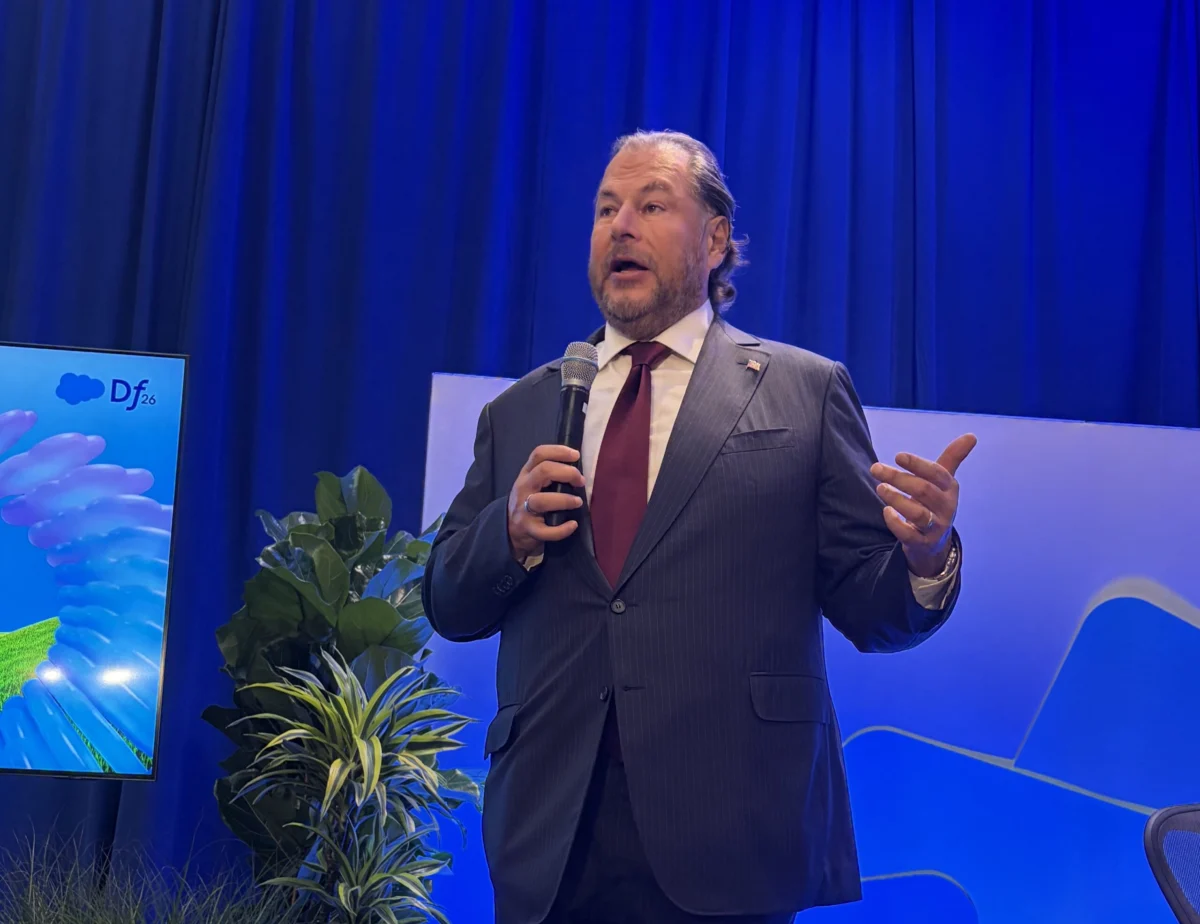

The enterprise software landscape is undergoing a profound paradigm shift, and according to Salesforce Chief Executive Officer Marc Benioff, 2026 will be remembered unequivocally as the year of the interface. Speaking at the annual Dreamforce conference, Benioff elaborated on the company’s recently unveiled AIforce initiative, detailing a sweeping four-layer technology stack designed to reshape how humans and autonomous agents interact with enterprise data. Amid ongoing debates regarding the viability of traditional software models against generative artificial intelligence—often colloquially termed the "SaaSpocalypse"—Benioff strongly defended the necessity of robust enterprise architectures, outlining a flexible, multi-model commercial strategy tailored to modern business demands.
The Evolution of the Corporate Interface
The unveiling of AIforce at Dreamforce initially sparked questions across the technology sector regarding its precise functional definition. Market analysts questioned how the newly introduced "live interface" would differentiate itself from existing enterprise automation tools. Addressing these inquiries, Benioff pointed directly to his own daily operational habits to illustrate the shift away from legacy navigation structures.
"My primary interface to Salesforce shifted several years ago to Slack," Benioff stated during his keynote follow-up. He emphasized that Slack, alongside collaborative workspaces like Cowork, has evolved into a primary conduit for executing complex workflows within the Salesforce ecosystem. While traditional environments such as Salesforce Lightning remain operational, executive usage patterns increasingly favor dynamic, conversation-driven, and agent-assisted workspaces.
The core innovation of AIforce lies in its ability to synthesize dynamic applications on the fly. Rather than relying on rigid, pre-configured software screens, the system utilizes artificial intelligence to construct highly composite applications driven by a real-time understanding of platform data. According to Benioff, these generative interfaces unlock unprecedented value by eliminating standard engineering roadblocks. For platform developers and citizen coders—traditionally referred to within the ecosystem as Trailblazers—the embedded intelligence acts as an active guide, mitigating the friction typically associated with sophisticated software engineering processes.
A Four-Layer Strategic Architecture
Salesforce has structured its technological evolution into a comprehensive four-layer framework, designed to provide a seamless continuum from foundational data ingestion to end-user engagement.
The architecture begins with the foundational Data 360 layer, which aggregates enterprise-wide information. This feeds directly into the second tier, the Application Layer. Benioff highlighted a significant departure from previous software strategies toward a "headless" paradigm. Through the vision of Headless 360, traditional applications and analytics engines function primarily as intelligent data providers for artificial intelligence systems, rather than isolated silos of human-facing forms.
The third tier consists of the rapidly expanding Agentforce layer. Salesforce reported that approximately 30,000 organizations are currently engaged in various stages of deploying Agentforce capabilities, supported by the general availability of tools such as Agent Script and Agent Voice.
Finally, the newly introduced AIforce interface crowns the stack. By integrating these four distinct layers, Salesforce aims to radically accelerate enterprise productivity, ensuring that fundamental user experiences remain deeply contextual and natively intelligent.
Multi-Model Strategy and the Anthropic Alliance
The rapid integration of advanced foundation models has forced enterprise software providers to abandon rigid, single-vendor dependencies. Salesforce’s deepening relationship with Anthropic, highlighted by the introduction of Claudeforce, underscores a broader strategic imperative: modern enterprise platforms must remain model-agnostic.
Recounting the historical trajectory of the company’s AI investments, Benioff noted that Salesforce’s engagement with frontier model developers is rooted in a decade-long commitment to artificial intelligence research. He revealed that the company initially sought to invest in OpenAI following the commercial breakout of ChatGPT, but was precluded due to existing capital arrangements between OpenAI and Microsoft.
Consequently, Salesforce expanded its investment portfolio to encompass a wide array of leading model developers, including Anthropic, Mistral AI, Sakana AI, and Cohere. The multi-hundred-million-dollar investment in Anthropic has since yielded substantial financial returns, appreciating into billions of dollars while securing a critical technological partnership. Nevertheless, Benioff maintained that Salesforce preserves robust relationships across the entire generative AI ecosystem, collaborating openly with multiple providers to ensure optimal performance for diverse enterprise workloads.
Navigating Adoption Curves and Redefining Enterprise Pricing
While adoption rates for advanced artificial intelligence solutions continue to show positive percentage growth across the Salesforce customer base, the absolute volume of active enterprise users reveals a familiar transitional lag. To bridge the gap between initial experimentation and broad-scale enterprise deployment, Salesforce has focused on simplifying adoption metrics and aligning pricing frameworks with tangible business outcomes.
A cornerstone of this effort is the introduction of the Agentic Work Unit (AWU), a metric designed to quantify and provide transparency regarding the utilization of Agentforce and agentic capabilities within the platform. By establishing clear usage metrics, enterprises can better audit and forecast the operational costs associated with autonomous agents.
Simultaneously, Salesforce has dismantled its traditional price books to accommodate a highly fragmented global market. Recognizing that enterprise clients demand commercial flexibility, Benioff outlined a diverse menu of pricing models tailored to specific organizational needs:
- Traditional User Pricing: Preserved for predictability and organizational familiarity.
- Named Agent Pricing: Designed for deployments centered around autonomous digital workers.
- Usage-Based and Consumption Pricing: Tied directly to platform resource allocation.
- Transaction and Outcome-Based Pricing: Conditional billing executed upon the successful completion of specific operational tasks.
- Business Outcome Pricing: Value-share models where fees are directly correlated with documented revenue generation or cost savings achieved.
This multifaceted commercial approach reflects a departure from legacy software licensing, positioning Salesforce to capture value across vastly different economic structures.
Human-Centric Systems and the Myth of the "SaaSpocalypse"
As autonomous agents assume increasingly complex operational responsibilities, enterprise architectures must reconcile the balance between human oversight and machine execution. Drawing a parallel to his ownership of Time magazine, Benioff noted an intriguing modern demographic shift: digital agents now constitute a larger volume of readership content consumption than human audiences, largely due to automated grounding protocols and real-time data indexing.
Despite the proliferation of autonomous agents, Benioff emphasized that the modern enterprise remains fundamentally human-centric. The overarching objective is not the replacement of human labor, but the establishment of symbiotic workflows where humans and agents operate collaboratively.
This balanced view directly challenges the persistent financial market narrative surrounding the "SaaSpocalypse"—the theory that open-ended frontier models will render traditional enterprise software platforms obsolete by enabling organizations to build custom solutions independently. Benioff dismissed this thesis as theoretical speculation propagated by short-term market interests.
To illustrate the limitations of bypassing structured enterprise architectures, Benioff cited the experience of Ohalo Genetics CEO David Friedberg, who previously explored "vibe coding" proprietary enterprise applications using raw models. According to Benioff, such initiatives ultimately underscore the necessity of comprehensive enterprise frameworks. Building functional enterprise systems requires robust data structures, sophisticated semantic layers, specialized agentic frameworks, and integrated user interfaces—components that foundational models alone cannot supply.
Ultimately, Benioff contends that enterprises are far more interested in building next-generation capabilities on top of established, secure platforms of record rather than attempting to reinvent foundational infrastructure independently. As Dreamforce 2026 demonstrates, Salesforce is betting heavily that the future belongs to integrated, multi-layered, and intelligent platforms capable of harmonizing human ingenuity with autonomous scale.
