
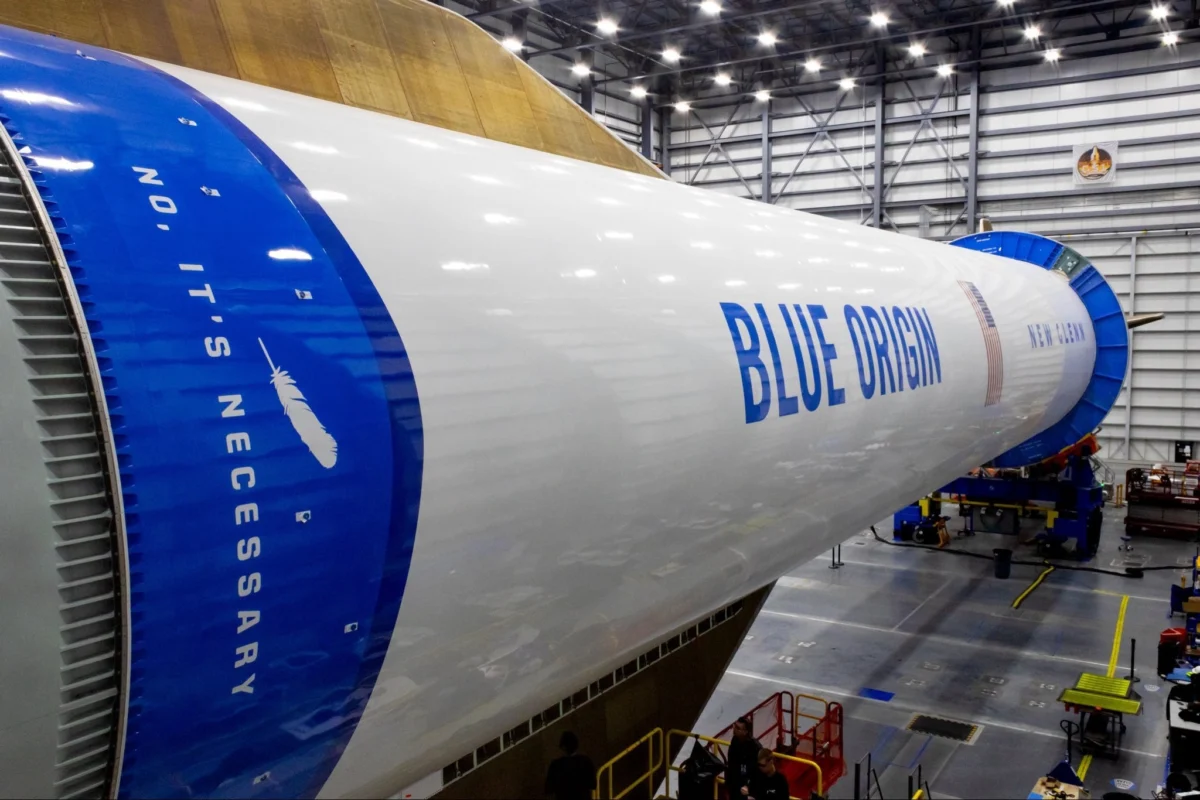

The burgeoning commercial space sector faced a significant disruption on Thursday evening when Blue Origin’s New Glenn heavy-lift rocket suffered a catastrophic explosion during a static hotfire test at Cape Canaveral, Florida. The incident, which occurred at the historic Launch Complex 36 (LC-36), resulted in extensive damage to the launch pad infrastructure and has cast a shadow over the immediate flight manifest for several high-profile customers. While Blue Origin confirmed that all personnel were safely accounted for, the "anomaly" represents a major setback for the aerospace company as it struggles to establish a reliable cadence for its heavy-lift vehicle.
The explosion occurred while the New Glenn was undergoing a critical pre-flight milestone: a hotfire test of its first-stage engines. This procedure is designed to verify the integrity of the propulsion system and ground support equipment under flight-like conditions without leaving the ground. Video footage captured by Spaceflight Now showed a massive fireball erupting from the base of the vehicle, followed by a dense plume of smoke that obscured the launch tower. The force of the blast was significant enough to cause visible structural damage to the pad and the umbilical tower, as evidenced by aerial imagery released by Launch Heaven Media the following day.
Root Cause Investigation and Official Responses
In the immediate aftermath of the event, Blue Origin founder Jeff Bezos issued a statement acknowledging the severity of the situation while reaffirming the company’s commitment to the program. Bezos characterized the incident as a "very rough day" but emphasized that the company would rebuild and return to flight operations. The company has initiated an internal investigation to identify the root cause of the explosion. At this stage, it remains unclear whether the failure originated within the BE-4 engines, the propellant delivery systems, or the ground support hardware.
The Federal Aviation Administration (FAA) also weighed in on the incident, clarifying its regulatory role. Because the explosion occurred during a ground-based test activity rather than a licensed launch attempt, the FAA stated that the event does not trigger a formal mishap investigation under its current protocols. The agency noted that the test was conducted outside the scope of FAA-licensed activities and that there was no reported impact on public safety or local air traffic. This distinction allows Blue Origin to lead its own investigation without the mandatory grounding typically associated with FAA-led mishap inquiries, though the physical damage to the pad may serve as a de facto grounding for several months.
A Sequence of Technical Challenges
This latest setback comes at a particularly sensitive time for Blue Origin. The New Glenn program had only recently been cleared to return to the launch pad following a mission failure in April 2026. During that previous mission, a New Glenn rocket failed to deliver an AST SpaceMobile satellite to its intended orbit. The satellite was subsequently lost, dealing a blow to AST SpaceMobile’s plans for its space-based cellular broadband constellation.
The FAA had formally closed its investigation into the April anomaly on May 22, just weeks before the Thursday explosion. That investigation identified a cryogenic leak that had frozen a hydraulic line, leading to a thrust anomaly during the flight. Blue Origin had committed to nine specific corrective actions to prevent a recurrence. The fact that a second major incident occurred so soon after the implementation of these fixes raises questions regarding the maturity of the New Glenn’s design and the robustness of its testing protocols.
Implications for Amazon Leo and Project Kuiper
Among the customers most affected by this explosion is Amazon, whose "Amazon Leo" (Project Kuiper) initiative is in a high-stakes race to deploy thousands of low-Earth orbit (LEO) satellites. Amazon is under a strict regulatory deadline imposed by the Federal Communications Commission (FCC), which requires the company to launch at least half of its planned 3,236-satellite constellation by July 2026 to retain its spectrum license.
Amazon confirmed that the satellites intended for the upcoming New Glenn mission were not on the rocket at the time of the explosion. These assets remain safe at Amazon’s dedicated processing facility at the Kennedy Space Center. However, the destruction of the launch pad and the potential delay in New Glenn’s flight schedule could severely bottleneck Amazon’s deployment strategy.
To mitigate these risks, Amazon has historically pursued a multi-provider launch strategy, contracting with United Launch Alliance (ULA), Arianespace, and even its primary competitor, SpaceX. While New Glenn accounts for less than 25% of the total planned Kuiper launches, it is a cornerstone of the heavy-lift capacity Amazon needs to meet its 2026 targets. Fortunately for the tech giant, a separate Kuiper mission remains scheduled for as early as Friday evening aboard a ULA Vulcan rocket, providing some continuity in its deployment efforts.
Impact on NASA and the Artemis Program
The New Glenn’s reliability is also a matter of national importance due to its role in NASA’s Artemis program. Blue Origin was selected to develop the Blue Moon lander, a critical component of NASA’s Human Landing System (HLS) that will return astronauts to the lunar surface. The New Glenn is the designated launch vehicle for this lander.
Furthermore, NASA recently announced plans for a "Moon Base" mission, utilizing the Blue Moon lander to deliver scientific payloads to the lunar south pole no earlier than the fall of 2026. NASA Administrator Jared Isaacman (per provided reports) stated that the agency is closely monitoring the situation. "Spaceflight is unforgiving, and developing new heavy-lift launch capability is extraordinarily difficult," Isaacman said. He noted that NASA would work with Blue Origin to assess the impact on the Artemis and Moon Base timelines as more data becomes available. Any significant delay in New Glenn’s certification could potentially push back the schedule for American lunar exploration, which is already facing intense international competition.
National Security and the U.S. Space Force
The U.S. Space Force also has a vested interest in the New Glenn’s success. The rocket is currently in the process of being certified for the National Security Space Launch (NSSL) program. Last year, Blue Origin was awarded nearly $2.4 billion for seven missions under Phase 3, Lane 2 of the NSSL program. This contract is part of a broader Department of Defense strategy to ensure "assured access to space" by maintaining at least three domestic launch providers capable of lifting heavy national security payloads.
The Thursday explosion could delay the certification process, forcing the Space Force to rely more heavily on SpaceX’s Falcon 9 and Falcon Heavy or ULA’s Vulcan Centaur. For the Space Force, the New Glenn represents a vital alternative to prevent a monopoly in the heavy-lift sector and to provide the specific volume and mass capabilities required for next-generation reconnaissance and communication satellites.
The Competitive Landscape of Heavy-Lift Rockets
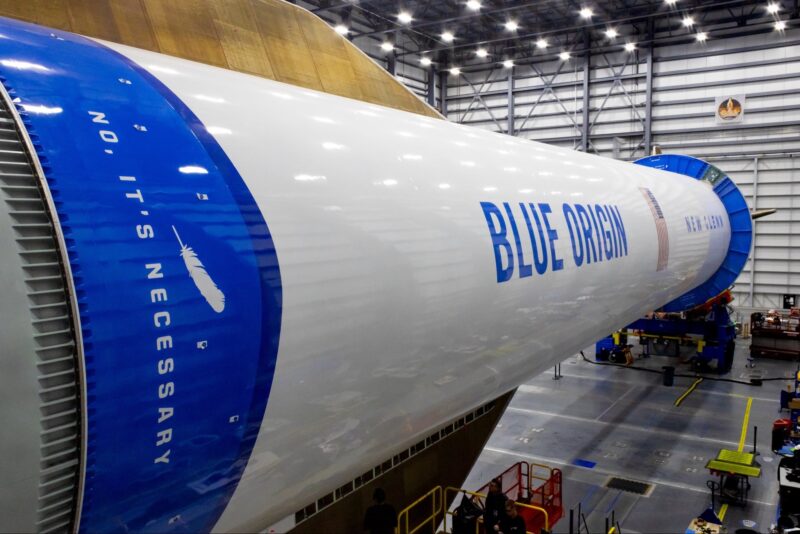
The New Glenn rocket was designed to fill a critical gap in the global launch market. Standing nearly 98 meters tall with a seven-meter fairing, it is significantly larger than many existing rockets, offering a massive payload volume that is attractive to both commercial and government entities. Its first stage is powered by seven BE-4 engines, which utilize liquefied natural gas (LNG) and liquid oxygen (LOX). These are the same engines used by ULA’s Vulcan rocket, though the New Glenn’s first stage is designed to be reusable, landing on a sea-based platform after launch.
The rocket made a successful debut in January 2025 and achieved a milestone booster landing during its second mission. These early successes had led to optimism that Blue Origin would finally provide a robust alternative to SpaceX’s dominance. However, the loss of an AST SpaceMobile satellite in April and this latest pad explosion suggest that the transition from a developmental vehicle to an operational workhorse remains fraught with difficulty.
The Road Ahead for Blue Origin
Restoring operations at LC-36 will be the first priority for Blue Origin. The damage to the launch mount, umbilical connections, and the tower itself could take months to repair, depending on the availability of specialized components and the extent of the structural damage. Simultaneously, the engineering team must determine if the "anomaly" was a result of a design flaw, a manufacturing defect, or a procedural error during the hotfire test.
For customers like AST SpaceMobile, the situation requires a delicate balance of patience and pragmatism. Despite the April failure, AST SpaceMobile leadership had remained optimistic about their partnership with Blue Origin, targeting the launch of 45 "BlueBird" satellites this year. The current explosion likely renders that target unattainable via New Glenn, potentially forcing the company to seek additional capacity from other providers to maintain its momentum in the satellite-to-cell market.
The broader space industry will be watching Blue Origin closely in the coming weeks. The ability of the company to transparently address the failure and implement swift, effective corrections will determine the level of confidence its partners and investors maintain. As the demand for satellite connectivity and lunar exploration continues to grow, the success of the New Glenn remains a pivotal factor in the future of the orbital economy. For now, however, the charred remains of the launch pad at Cape Canaveral serve as a stark reminder of the immense technical hurdles inherent in the quest to reach the stars.
