

The smart home landscape is at a pivotal juncture, marked by significant leadership changes at Amazon and the impending tenth anniversary of its flagship voice assistant, Alexa, and the Echo device family. David Limp, Amazon’s head of devices, is slated to retire, joining a notable exodus of executives from the e-commerce giant over the past year. This transition coincides with a critical examination of Alexa’s and the Echo’s impact on the smart home ecosystem, prompting a deep dive into what has transformed and what remains stagnant in the connected living space.
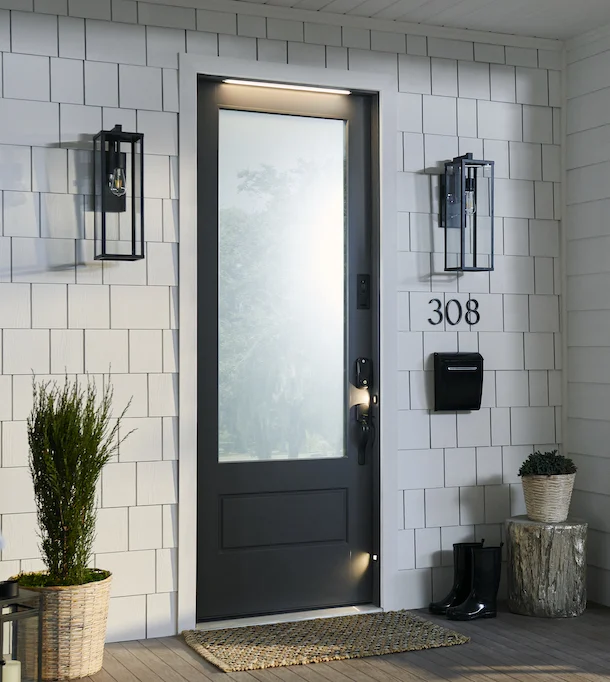
The current state of smart home innovation, characterized by both intriguing advancements and cautionary tales, is vividly illustrated by recent product launches and reviews. The Mill kitchen trash can, a composting system developed by Nest co-founder Matt Rodgers, exemplifies the ambition to integrate sophisticated technology into mundane household items. However, its functionality and consumer reception warrant scrutiny as a potential indicator of market appetite for highly specialized smart appliances. Similarly, the introduction of the Masonite M-Pwr smart door at Home Depot, priced at a premium, raises questions about accessibility and the perceived value proposition of such advanced home entry systems for the average consumer. These developments underscore a broader conversation about whether the smart home is truly maturing into a seamless and indispensable part of daily life or if it remains a niche market driven by early adopters and high-end offerings.
Against this backdrop of evolving consumer electronics and market dynamics, regulatory bodies are also stepping in to address emerging challenges. The Federal Communications Commission (FCC) has proposed a cybersecurity labeling program for Internet of Things (IoT) devices. This initiative, currently open for a 30-day public comment period, aims to provide consumers with clearer information regarding the security features of their connected devices, a crucial step in fostering trust and mitigating risks associated with an increasingly interconnected world. The proposal arrives at a time when cybersecurity threats to smart home infrastructure are a growing concern, as highlighted by Microsoft’s recent discovery of vulnerabilities that could potentially impact critical infrastructure, including power plants.
Furthermore, the smart home component market is seeing shifts that could influence device availability and innovation. A new company is emerging as a secondary source for Z-Wave chips, a critical radio frequency technology for many smart home devices. This development could potentially alleviate supply chain pressures and foster greater competition within the Z-Wave ecosystem. In the realm of smart home control, a review of the Homey Pro smart home hub offers insights into the potential and limitations of centralized, local control systems. While the Homey Pro is noted for its robust capabilities and potential for offline operation, its significant cost positions it as a high-end solution, further reinforcing the segmentation of the smart home market.
The Evolution and Future of Voice Assistants and the Smart Home
The impending tenth anniversary of Amazon’s Alexa and Echo devices offers a natural inflection point to assess their decade-long influence. Launched in November 2014, the Echo speaker, powered by Alexa, was a pioneering product that popularized voice-controlled smart home interactions. Its initial promise was to simplify daily tasks, provide instant information, and act as a central hub for connected devices. Over the years, Amazon has expanded the Alexa ecosystem with a wide array of Echo devices, including smart displays, wearables, and even devices integrated into cars and appliances. The voice assistant’s capabilities have grown to encompass music playback, setting timers, managing calendars, controlling smart lights, thermostats, and security systems, and facilitating online shopping.
However, the vision of a fully integrated, intuitive smart home has encountered several hurdles. One significant challenge has been the interoperability between different brands and protocols. While Alexa supports a vast number of third-party devices, users often face compatibility issues or the need for multiple apps and hubs to manage their connected homes. This fragmentation has led to a less seamless experience than initially envisioned, where the smart home operates as a cohesive unit rather than a collection of disparate devices.
The departure of David Limp, a key figure in Amazon’s devices division, signals a potential recalibration of the company’s strategy in the smart home and devices sector. Limp oversaw the development and expansion of the Echo line and other hardware products, playing a crucial role in Amazon’s ambitious push into the connected home. His retirement, alongside other executive departures, could indicate a period of strategic review and potential restructuring for Amazon’s hardware division, possibly influencing the future direction of Alexa and its role in the smart home.
Examining the Smart Home Market: Innovation, Cost, and Consumer Adoption
Recent product introductions highlight the diverging paths within the smart home market. The Mill kitchen trash can, for instance, represents a category of smart appliances that aim to automate and optimize specific household chores. While innovative, such devices often come with a substantial price tag and require a commitment to a particular workflow, such as composting. The success of such niche products hinges on their ability to demonstrate clear value and convenience that outweighs their cost and complexity for a significant consumer base.
The commercial availability of the Masonite M-Pwr smart door at Home Depot further illustrates the premium segment of the smart home market. These high-security doors integrate features like smart locks, video doorbells, and Wi-Fi connectivity, offering enhanced security and convenience. However, their significant cost places them out of reach for many homeowners, suggesting that while advanced smart home technology is becoming available, widespread adoption may be contingent on more affordable and accessible solutions. This trend raises questions about whether the smart home is becoming a luxury amenity rather than a mainstream utility.
Regulatory Advancements in Smart Home Security
In response to the growing concerns about the security of connected devices, the FCC’s proposed cybersecurity labeling program for IoT devices is a significant development. This initiative aims to empower consumers by providing a standardized, easy-to-understand label that indicates a product’s adherence to basic cybersecurity best practices. The program, if implemented, could encourage manufacturers to prioritize security in their product design and development, thereby enhancing the overall security posture of the smart home ecosystem.
The 30-day public comment period for this proposal is a critical window for industry stakeholders, consumer advocacy groups, and the public to voice their opinions and contribute to the final framework. The success of such a labeling program will likely depend on its clarity, comprehensiveness, and the industry’s willingness to comply. The FCC’s proactive stance reflects a growing recognition of the need for robust cybersecurity measures to protect consumers and critical infrastructure from evolving threats.

Cybersecurity Threats and Their Implications for Smart Homes
The discovery by Microsoft of new vulnerabilities affecting industrial equipment serves as a stark reminder of the potential ripple effects of cyber threats. While these vulnerabilities were identified in the context of critical infrastructure, they underscore the interconnectedness of modern systems and the potential for widespread disruption. For the smart home, this highlights the importance of secure network configurations, regular software updates, and awareness of potential attack vectors.
The proliferation of smart devices in homes, from thermostats to security cameras, creates a larger attack surface for malicious actors. Ensuring the security of these devices is paramount to protecting personal data, privacy, and the physical security of one’s home. The development of more secure communication protocols and robust security standards will be essential in mitigating these risks.
The Z-Wave Ecosystem and the Role of New Chip Providers
The Z-Wave protocol, a popular choice for smart home automation due to its reliability and low power consumption, is experiencing a notable shift with the emergence of a new company poised to become a secondary source for Z-Wave chips. This development is significant for several reasons. Historically, the Z-Wave chip market has been dominated by a few key players. The introduction of a new competitor can lead to increased supply, potentially lower costs, and greater innovation within the Z-Wave ecosystem.
This new player, identified as Trident IoT, is not only focusing on Z-Wave chip production but also aiming to integrate other smart home radio protocols. This integrated approach could simplify device design and manufacturing, fostering a more cohesive smart home experience. Furthermore, Trident IoT’s intention to act as a Z-Wave certification house adds another layer of support for the protocol’s integrity and security.
Bridging the Gaps: Matter, Z-Wave, and the Future of Interoperability
The conversation around smart home interoperability is increasingly centered on the Matter standard. Developed by the Connectivity Standards Alliance (CSA), Matter aims to create a unified connectivity protocol that allows smart home devices from different manufacturers to communicate seamlessly. The integration of Z-Wave with Matter is a key area of focus for companies like Trident IoT.
Mariusz Malkowski, founder and CTO of Trident IoT, elaborated on this synergy. He explained how Matter will work in conjunction with Z-Wave, emphasizing the importance of bridging technologies that enable communication between these distinct protocols. This bridging is crucial for ensuring that existing Z-Wave devices can be incorporated into a Matter-enabled smart home ecosystem, thereby preserving consumer investments and facilitating a smoother transition to the new standard.
The future of Z-Wave includes planned enhancements such as Z-Wave Long Range (LR) and security upgrades. Z-Wave LR promises extended range and improved performance for devices in larger homes or areas with challenging signal propagation. Security upgrades are vital to address the evolving threat landscape and maintain consumer trust. Trident IoT’s commitment to these advancements, coupled with their role in chip manufacturing and certification, positions them as a potentially influential player in the continued evolution of the Z-Wave protocol and its integration into the broader smart home landscape.
Local Control and the Homey Pro Hub
In contrast to cloud-dependent smart home systems, the Homey Pro smart home hub represents a segment of the market focused on local control. This approach offers users greater privacy, reliability, and performance, as devices can operate even without an internet connection. The Homey Pro, while recognized for its potential and extensive device support, comes with a significant price tag. This positions it as a solution for enthusiasts and advanced users who prioritize local control and are willing to invest in a premium hub.
The review of the Homey Pro highlights the trade-offs consumers face in the smart home market. While cloud-based systems like Alexa offer convenience and broad accessibility, they are susceptible to internet outages and privacy concerns. Local control hubs, on the other hand, provide enhanced security and reliability but often at a higher cost and with a steeper learning curve. The existence of such diverse solutions indicates a market that is still maturing, catering to a range of user needs and preferences.
Answering Listener Queries: Lighting Solutions for Woodworkers
Beyond the broader industry trends, the discussion also touched upon practical applications of smart home technology. A listener question regarding appropriate lighting for a woodworker’s lamp project illustrates the everyday utility of smart lighting solutions. For such applications, considerations include color temperature (warm white for ambiance, cool white for task lighting), dimmability, and potentially smart controls for convenience. LED bulbs are generally recommended for their energy efficiency, longevity, and versatility in color and brightness. Smart LED bulbs can offer adjustable color temperature and brightness, controlled via voice or app, which can be highly beneficial for detailed woodworking tasks requiring precise illumination.
The confluence of leadership changes, technological advancements, regulatory initiatives, and evolving consumer demands paints a complex picture of the smart home’s present and future. As Alexa and the Echo approach their tenth anniversary, the industry is at a crossroads, seeking to balance innovation with accessibility, security with convenience, and centralized control with local autonomy. The coming years will likely see further refinement of existing technologies, the emergence of new standards, and a continued effort to make the promise of a truly intelligent and seamless home a reality for a wider audience.
