
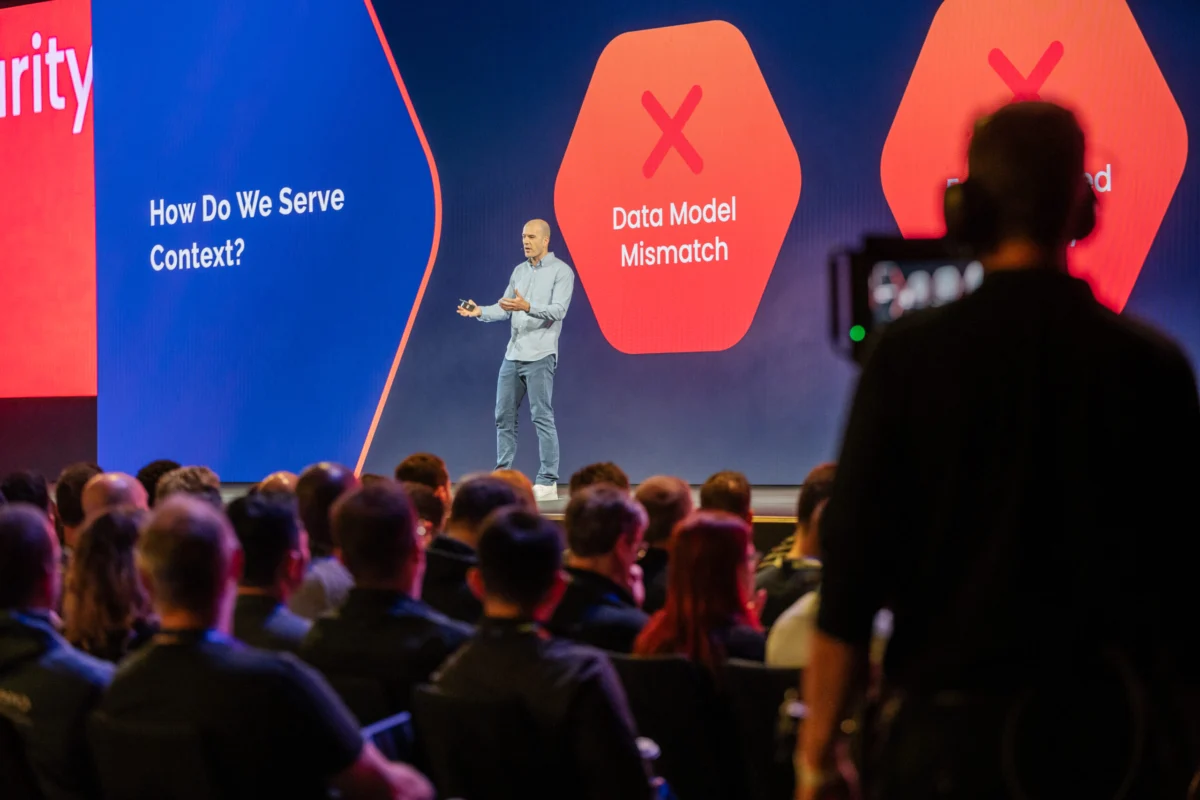

The landscape of enterprise data architecture underwent a significant shift this week as Confluent, now operating as a core pillar of IBM’s software portfolio, announced a comprehensive suite of product updates designed to bridge the gap between static data repositories and real-time artificial intelligence. Speaking at a major industry event in London, Confluent Co-founder and CEO Jay Kreps detailed how the integration with IBM is accelerating the development of a "data streaming backbone" for the modern enterprise. These announcements follow the finalization of IBM’s $11 billion acquisition of Confluent in late 2025, a move that signaled Big Blue’s intent to dominate the hybrid cloud and real-time data markets.
The London keynote focused on a central challenge facing Chief Information Officers (CIOs) in 2026: the inability of traditional data infrastructures to support the low-latency requirements of agentic AI. Kreps argued that while the previous decade was defined by "data-driven" insights—characterized by data lakes, warehouses, and business intelligence reports—the current era demands "data-actuated" systems. These are autonomous applications capable of making real-time decisions without human intervention, a feat that requires data to be processed as it is generated rather than after it has been stored.
The Technological Core: Managed MCP and Agent Skills
Central to the product rollout is the introduction of a managed Model Context Protocol (MCP) server. MCP is an emerging standard that allows AI models to interact securely and efficiently with external data sources. By offering this as a managed service, Confluent aims to simplify the "plumbing" required to connect Large Language Models (LLMs) to live data streams. This is paired with "Agent Skills," a set of code development tools that allow AI agents to manage, monitor, and debug streaming operations using natural language commands.
According to Confluent, these tools address the "token efficiency" problem. In many current AI implementations, models "fish" through massive datasets to find relevant information, consuming expensive computational tokens in the process. By using the managed MCP server, AI applications can pinpoint the exact data needed from a live stream, significantly reducing operational costs.
Furthermore, the company unveiled automated redaction of personally identifiable information (PII). This feature is specifically targeted at highly regulated sectors such as financial services, healthcare, and insurance. The system identifies and masks sensitive data within the stream before it reaches the AI model, ensuring that organizations can leverage public or third-party LLMs without violating privacy regulations or compliance mandates like GDPR and HIPAA.
Strategic Integration with IBM and the Global Cloud Ecosystem
The London event served as one of the first major public showcases of Confluent since its acquisition by IBM. Kreps emphasized the cultural and technical alignment between the two entities, citing IBM’s long history of stewardship in the open-source community, notably through its management of Red Hat and contributions to the Linux kernel.
"Confluent is now part of IBM, and this is an awesome opportunity for us to join forces with an organization that has been contributing to open source for many years," Kreps stated during his keynote. He noted that the acquisition allows for deeper integration with IBM’s Watsonx platform, providing a seamless pipeline for real-time data to reach IBM’s enterprise AI tools.
Beyond the IBM ecosystem, Confluent announced expanded support for Microsoft Azure through Azure Private Link. This update ensures that AI workloads can call external models and query external tables via private network paths, bypassing the public internet entirely. This is a critical security requirement for enterprises running Flink jobs—distributed data processing tasks—on Microsoft-hosted services like Azure OpenAI, Azure SQL, and Cosmos DB. Additionally, Flink SQL on Confluent Cloud now includes an open-source dbt (data build tool) adapter, streamlining the workflow for data engineers.
A Chronology of the Data Streaming Evolution
To understand the significance of these announcements, it is necessary to look at the timeline of data infrastructure. In the early 2010s, the industry focused on "Big Data," with Hadoop and Spark enabling the processing of massive datasets in batches. Confluent was founded in 2014 by the creators of Apache Kafka, an open-source project developed at LinkedIn to handle real-time data feeds.
Over the next decade, Kafka became the de facto standard for data streaming, but it remained complex to manage at scale. Confluent’s transition to a cloud-native service (Confluent Cloud) lowered the barrier to entry. The acquisition by IBM in December 2025 for $11 billion represented a 30% premium over Confluent’s market valuation at the time, reflecting the urgent need for IBM to provide a real-time alternative to the "data warehouse" models championed by competitors like Snowflake and Databricks.
The 2026 roadmap presented in London indicates that the focus has shifted entirely from "moving data" to "governing and preparing data for AI." The introduction of support for Anthropic’s TimesFM model for anomaly detection further illustrates this, providing users with specialized tools to identify patterns in time-series data—a common requirement in fraud detection and industrial IoT.
The Economic Argument: ROI in an Era of Cost Containment
As geopolitical instability and high interest rates continue to pressure corporate budgets, CIOs are increasingly scrutinized on the Return on Investment (ROI) of their AI projects. Sean Falconer, Head of AI at Confluent, highlighted that many AI initiatives fail to reach production because of "fragmented data and security risks."
"Teams have the models and the mandate, but security risks and fragmented data stop them from shipping," Falconer said. "We’re fixing that by making the streaming layer the foundation for secure, production-ready AI."
The economic benefit of this approach is centered on "Tableflow," a feature that automatically translates streaming data into formats suitable for data lakes (such as Apache Iceberg). Kreps argued that this prevents the need for "reprocessing data every day," which is a common and costly practice in traditional data architectures. By allowing data to be reused across different business units without duplication, organizations can reduce their cloud storage and compute bills.
Industry data supports this shift. Recent market analysis suggests that the real-time data streaming market is expected to grow at a CAGR of 25% through 2030, as companies move away from legacy batch processing. In the financial sector alone, real-time processing is estimated to save large institutions billions of dollars annually by reducing latency in fraud detection and trade execution.
Analysis: The Shift from Deterministic to Probabilistic Systems
One of the most profound sections of Kreps’ keynote was his analysis of how AI changes the fundamental nature of software development. He distinguished between "classical software" and "AI systems."
Classical software is deterministic; it follows a set of hardcoded rules that produce predictable outcomes. Developers can test these systems using "fake" data because the logic remains the same. AI systems, however, are probabilistic. They make decisions based on patterns in data, and their accuracy is entirely dependent on the quality and freshness of the data they are fed.
"If you are building something which is going to support your customers and solve their problems, you will need real customer data," Kreps explained. "It would be impossible to validate that your system worked without it."
This distinction is why data streaming has moved from a "nice-to-have" feature to a core requirement. If an AI agent is interacting with a customer, it cannot rely on data that is hours or days old. It needs to know what the customer did thirty seconds ago. By integrating the streaming layer directly with AI models through MCP and Agent Skills, IBM and Confluent are betting that the future of the enterprise lies in these "closed-loop" autonomous systems.
Future Implications for the Enterprise Data Stack
The implications of the London announcements extend beyond the technical specifications of MCP servers or Flink adapters. They represent a challenge to the "data gravity" of traditional cloud warehouses. For years, the prevailing wisdom was to move all data into a single central repository before analyzing it. IBM and Confluent are proposing a decentralized alternative: a "nervous system" where data is processed and acted upon while it is in motion.
For the CIO, this means a rethink of the "Single Source of Truth." Instead of a static database, the truth becomes a continuous, governed stream of events. While this architecture offers superior speed and AI readiness, it also requires a higher level of technical maturity. The success of the IBM-Confluent merger will likely depend on how effectively they can simplify these complex streaming technologies for the average enterprise.
As the London event concluded, the message was clear: the era of AI experimentation is over, and the era of AI production has begun. For IBM, the $11 billion bet on Confluent is the cornerstone of a strategy to ensure that when the world’s largest companies build their AI future, they do so on a foundation of real-time data. The next phase will be watching how customers across the targeted verticals—finance, healthcare, and insurance—implement these tools to move from "insights" to "autonomous action."
