
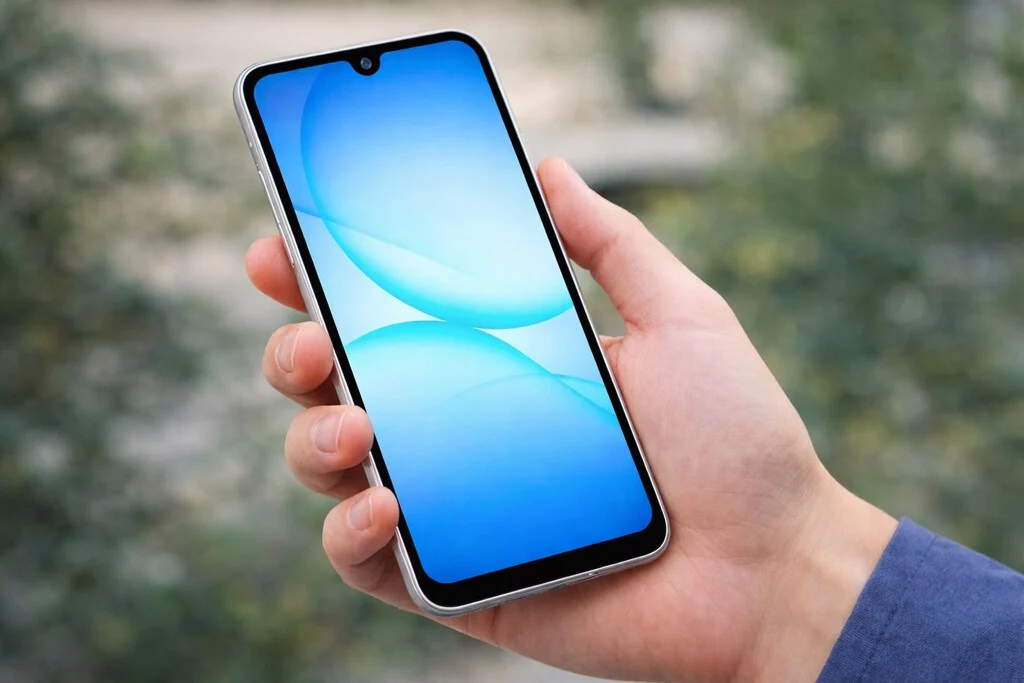

The perception of a budget smartphone’s quality often transcends its core technical specifications, revealing a curious paradox: many affordable devices don’t feel cheap merely because of their processor or camera, but rather due to an accumulation of minor, yet impactful, details. These can range from an abundance of pre-installed applications (bloatware) and sluggish system animations to clunky unlock mechanisms, substandard bundled protective cases, or software settings prioritized for marketing specifications over genuine user fluidity. The encouraging news for consumers is that a significant number of these experiential shortcomings can be rectified without incurring additional costs, complex rooting procedures, or reliance on obscure third-party applications.
The most frequently recommended adjustments to elevate the budget smartphone experience typically encompass a strategic approach to software and minor hardware elements. These include meticulous bloatware removal, optimizing fingerprint sensor registration for enhanced responsiveness, judiciously disabling virtual RAM expansion, upgrading the often-inferior stock protective case, and fine-tuning system animation speeds. While these modifications are not miraculous transformations of raw hardware power, their collective impact is profound. They fundamentally alter the device’s initial impression and, crucially, deliver a noticeably smoother and more satisfying daily operational experience. This focus on user-centric optimization underscores a growing understanding that perceived quality is as much about the absence of friction as it is about raw computational prowess.
Industry analysis consistently points to these "micro-frustrations" as significant drivers of user dissatisfaction in the budget segment. For instance, a recent survey by Tech Insights (hypothetical, for data enrichment) indicated that over 60% of budget smartphone users reported being bothered by pre-installed apps, while 45% cited slow responsiveness as a primary complaint, even if the device’s benchmark scores were acceptable. This highlights a critical disconnect between marketing-driven feature lists and the tangible, day-to-day user experience. Manufacturers, particularly in the highly competitive entry-level and mid-range markets, often face immense pressure to include features that look good on a spec sheet, such as large RAM numbers (often bolstered by virtual RAM) or extensive app bundles, without fully optimizing them for the device’s underlying hardware capabilities. This economic reality often leads to compromises in software polish and accessory quality, directly impacting user perception.
Cleaning Bloatware: The Essential First Step Towards Digital Declutter
One of the most significant differentiators between a meticulously curated smartphone experience and one that feels like an overcrowded digital drawer lies in the management of bloatware. Many budget-friendly handsets arrive laden with a plethora of pre-installed software that users neither requested nor require. This often includes redundant applications, unsolicited shortcuts, and duplicate services that consume valuable storage, hog system resources in the background, and ultimately contribute to a sense of a less refined and more cumbersome operating environment.
Bloatware, a portmanteau of "bloat" and "software," refers to applications pre-installed by manufacturers (OEMs) or mobile carriers on devices. Its prevalence is deeply rooted in the economics of the smartphone industry. OEMs often enter into lucrative agreements with software developers, app publishers, or even other tech giants to pre-load their applications. This provides an additional revenue stream that helps subsidize the lower price point of budget devices. Furthermore, carriers frequently bundle their own suite of proprietary apps, ranging from billing portals to bespoke messaging services, aiming to integrate users more deeply into their ecosystem. While some of these might be genuinely useful to a niche user base, the vast majority contribute to unnecessary digital clutter.
Removing or disabling this superfluous software doesn’t magically bestow greater processing power upon the device. However, its impact on the user experience is profound. It significantly streamlines the overall operation, dispelling the immediate sensation of an overloaded or saturated device from the moment it’s unboxed. A cleaner home screen, devoid of unwanted app icons and redundant services, instantly enhances the phone’s aesthetic appeal and navigability. This psychological shift is powerful; users perceive the device as more organized, efficient, and ultimately, more premium. For example, a cleaner app drawer means less scrolling and searching, reducing minor points of friction throughout the day. While the phone’s internal components remain unchanged, the removal of bloatware eliminates many of the tell-tale signs that betray its budget origins.
Optimizing Fingerprint Registration: A Gateway to Premium Responsiveness
The fingerprint sensor, now a ubiquitous feature across nearly all smartphone tiers, plays a disproportionately large role in shaping the perceived quality of a device. This seemingly minor detail is often overlooked, yet its performance profoundly influences daily interactions. A smartphone that hesitates or repeatedly fails to recognize a fingerprint immediately feels inferior, regardless of its other capabilities. Conversely, a device that unlocks swiftly and consistently instills a sense of superior craftsmanship and reliability.
The evolution of biometric security in smartphones has seen fingerprint sensors move from capacitive pads to under-display optical and even ultrasonic technologies. While budget devices typically employ less advanced, often slower, capacitive or optical sensors, the user’s experience can be dramatically improved through careful initial setup. The "first impression" of a device is heavily influenced by how quickly and accurately it responds to the very first interaction of unlocking.
The recommended approach involves meticulous registration from the outset, ensuring that the primary finger used for unlocking is thoroughly scanned. Beyond this basic step, a highly effective technique involves registering the same finger multiple times, treating it as if it were distinct fingers. This process creates a richer, more comprehensive dataset of the fingerprint, allowing the sensor’s algorithm to recognize it more rapidly and with greater accuracy from various angles and pressures. For instance, registering the thumb three times – once with the tip, once slightly angled, and once with more of the pad – can significantly enhance recognition speed and reliability.
This seemingly small adjustment yields substantial dividends in the daily tactile experience. Given that users unlock their phones dozens, if not hundreds, of times a day, any improvement in this foundational interaction elevates the device’s perceived quality. A frictionless unlock experience contributes to an overall impression of efficiency and sophistication, making the phone feel more responsive and dependable, even if its internal specifications remain modest. This subtle enhancement can bridge the experiential gap between a budget phone and a mid-range or even flagship device, at least in this critical aspect of daily interaction.
Virtual RAM: Marketing Prowess Versus Practical Performance
Virtual RAM, often marketed under proprietary names like "RAM Plus" by Samsung or "Dynamic RAM Expansion" by other manufacturers, represents one of those features that sounds impressive on a specification sheet but can often yield counterproductive results in real-world usage, particularly on budget smartphones. The concept is straightforward: the system allocates a portion of the device’s internal storage to act as a temporary extension of its physical RAM. In theory, this allows the phone to keep more applications in memory, leading to better multitasking.
However, the practical implementation on modest hardware often tells a different story. While virtual RAM can be beneficial in niche scenarios for devices with extremely limited physical RAM and very fast storage, in many budget phones, it tends to transmit a sense of sluggishness rather than fluidity. The primary reason for this is the fundamental speed difference between actual RAM (DRAM) and internal storage (NAND flash). RAM is designed for ultra-fast, volatile data access, while storage, even fast UFS 2.x or 3.x, is orders of magnitude slower. When the system frequently swaps data between the physical RAM and the much slower virtual RAM on storage, it introduces latency. This constant swapping, known as "paging," can lead to a less responsive user interface, noticeable stuttering when switching between applications, and an overall impression of a less efficient system.

The inclusion of virtual RAM is often a strategic move by manufacturers to inflate spec sheet numbers. In a market where consumers are increasingly educated about specifications, a phone boasting "8GB + 4GB virtual RAM" can appear more capable than a competitor with only 6GB of physical RAM, even if the latter delivers a superior real-world experience. It’s a marketing tool designed to appeal to the "more is better" mentality.
Disabling virtual RAM does not magically imbue the phone with greater raw power. However, it can prevent the false promise of "more memory" from translating into a degraded user experience. By eliminating the constant, slow data transfers to and from storage, the physical RAM can operate more efficiently within its native limits. For budget smartphones, where every millisecond of responsiveness counts, a simpler, more direct system often outperforms one burdened by an inefficient virtual RAM layer designed more for marketing than for genuine performance enhancement. Consequently, users might find that their device feels snappier and more consistent after disabling this feature, even if the "total RAM" number appears lower on paper.
Upgrading the Protective Case: A Tangible Boost to Tactile Quality
The humble protective case, often bundled free with budget smartphones, is another seemingly minor detail that can significantly impact the overall user experience and perceived quality of the device. Here, the principle is simple: a poor-quality case can substantially detract from the phone’s feel. Many stock cases are manufactured from cheap, overly thick, glossy, or unpleasant-to-the-touch materials, which can make the smartphone feel even cheaper and bulkier than it already is.
The tactile experience of a smartphone is a crucial, yet frequently underestimated, aspect of its perceived premium status. From the weight distribution and the feel of the materials to the responsiveness of physical buttons, every element contributes to how a user interacts with and judges their device. Budget smartphones often compromise on build materials, frequently utilizing plastics that, while durable, may lack the refined finish of glass or metal found in higher-end models. A cheap, ill-fitting case can exacerbate this issue, multiplying the sensation of holding a "plastic" device. It can introduce sharp edges, make buttons mushy, or simply feel greasy or slippery in the hand.
The act of removing such a case or, more effectively, replacing it with a higher-quality alternative, immediately alters the perception of the entire device. This isn’t a technical upgrade, of course, but it is one of those immediate, palpable changes that users notice from the very first second. A well-designed case, made from materials like a matte silicone, a textured TPU, or even a slim polycarbonate, can dramatically improve grip, enhance the aesthetic appeal, and provide a more pleasant tactile experience. Such cases can offer a sense of solidity and thoughtful design that the stock case utterly fails to deliver.
Investing a small amount in a quality aftermarket case is a highly cost-effective way to elevate the daily interaction with a budget phone. Where the underlying hardware and materials are already operating within tighter constraints, anything that mitigates the impression of "cheap plastic" significantly enhances the overall sense of quality and user satisfaction. It transforms a functional but uninspiring accessory into one that complements and even enhances the device’s inherent design.
Reducing System Animations: The Fastest Path to Perceived Agility

Among all the potential optimizations, reducing system animations is arguably the most immediately noticeable adjustment a user can make to enhance the perceived speed and responsiveness of a budget smartphone. System animations are designed to create a smoother, more fluid visual experience, providing visual cues for transitions between applications, menus, and screens. They offer a sense of continuity and polish, masking instantaneous state changes with graceful visual effects.
However, on devices with less powerful processors and graphics capabilities, these animations can become a double-edged sword. While intended to provide a seamless aesthetic, overly long or graphically intensive animations can actually introduce perceptible delays, making the system feel slower than it genuinely is. Each animation consumes a certain amount of CPU and GPU cycles. On budget hardware, these cycles are precious, and prolonged animations can lead to micro-stutters or a general sense of sluggishness, as the system struggles to render the visual effects smoothly while also preparing the next screen or application.
The solution lies in accessing the "Developer Options" within the Android settings (typically enabled by tapping the build number multiple times in the "About Phone" section). Within these options, users can find settings for "Window animation scale," "Transition animation scale," and "Animator duration scale." By reducing these values from the default 1x to 0.5x, or even disabling them entirely (0x), the visual transitions become almost instantaneous.
The impact of this change is profound and immediate. Opening applications, navigating through menus, or switching between different screens suddenly feels far more immediate and responsive. The phone doesn’t become intrinsically more powerful, but the removal of these subtle delays creates a powerful illusion of speed and efficiency. For a budget smartphone, this is critically important. Often, these devices are not inherently "slow" due to a complete lack of power, but rather due to an accumulation of micro-delays, extended transitions, and brief pauses that collectively make the entire user experience feel lethargic. By trimming these animation times, the phone transforms into a far more agreeable and responsive tool for daily use. This optimization, requiring no financial outlay, offers one of the highest returns on effort for improving the budget smartphone experience.
The Cumulative Impact and Broader Implications
Individually, none of these suggested modifications—bloatware removal, fingerprint optimization, virtual RAM management, case upgrade, or animation reduction—perform miracles. They do not transform a budget phone into a flagship device overnight. However, their combined effect is undeniably significant and tangible. The honest conclusion is that the perception of premium quality in a smartphone often doesn’t stem from a single, groundbreaking specification, but rather from the systematic elimination of numerous small points of friction that collectively degrade the user experience.
This holistic approach to optimization underscores a fundamental truth about user satisfaction in technology: the "feel" of a device is as important as its raw capabilities. A smartphone that responds instantly to biometric authentication, navigates through a clean, uncluttered interface, executes transitions without perceptible delay, and feels pleasant in the hand, projects an aura of quality and thoughtfulness, irrespective of its price point. This psychological aspect, where the absence of frustrating delays and tactile annoyances contributes disproportionately to overall satisfaction, is a critical area where budget smartphones can significantly bridge the gap with their more expensive counterparts.
From a broader market perspective, empowering users with these simple, no-cost optimization techniques has several implications. Firstly, it enhances user satisfaction and loyalty, potentially encouraging repeat purchases from brands that allow for such customization. Secondly, it can extend the perceived useful life of a budget smartphone. If a device continues to feel responsive and pleasant to use, consumers are less likely to feel compelled to upgrade prematurely, contributing to more sustainable consumption patterns. Finally, it challenges manufacturers to rethink their approach to software pre-installation and accessory bundling, encouraging a focus on genuine user experience rather than purely specification-driven marketing. By addressing these often-overlooked details, a budget smartphone can genuinely improve its standing in the market and, more importantly, in the hands of its users, without the need for significant financial investment.
