

The Pervasive Threat of Unsolicited Calls: A Global Challenge
The phenomenon of unsolicited calls, commonly known as spam calls, has evolved into a pervasive global issue, impacting millions daily. These calls range from legitimate, albeit unwelcome, telemarketing pitches to malicious attempts at fraud and identity theft. According to various industry reports, spam calls account for a significant percentage of all phone traffic. For instance, global statistics from companies like Truecaller often indicate that users receive dozens of spam calls per month, with countries like Brazil, India, and the United States frequently topping the lists for the highest volume of spam calls. The financial implications are staggering; consumer protection agencies frequently report billions of dollars lost annually to phone scams, highlighting the severe economic impact on individuals and the broader economy.
The tactics employed by scammers and aggressive marketers are constantly evolving. Beyond simple cold calls, modern techniques include "spoofing," where callers disguise their true identity by displaying a fake number that often mimics a local area code or even a government agency, making the call appear legitimate. Robocalls, automated calls delivering pre-recorded messages, also contribute significantly to the problem, enabling scammers to reach a vast number of potential victims with minimal effort. These calls not only represent a financial threat but also infringe upon personal privacy, waste valuable time, and contribute to a general erosion of trust in telecommunication channels. The psychological toll, particularly on vulnerable populations, can be considerable, leading to anxiety and frustration.
Legislative Responses and Their Limitations
Recognizing the escalating problem, governments and regulatory bodies globally have attempted to curb unsolicited calls through various legislative measures. In Spain, the General Telecommunications Law (Ley General de Telecomunicaciones), which came into effect in late June 2023, introduced a significant provision: a blanket ban on unsolicited commercial calls to consumers who have not given prior consent. This law was hailed as a major step forward, aiming to provide consumers with greater control over their privacy and reduce the volume of unwanted marketing calls. Complementary measures, such as the introduction of special prefixes (e.g., 603, 606, 607, 608) to identify calls from specific telemarketing companies, were also implemented to enhance transparency.
Despite the noble intentions behind such legislation, the practical impact has been mixed. While some consumers reported an initial decrease in telemarketing calls following the implementation of the LGT, many others continue to receive a high volume of unsolicited communications. The limitations stem from several factors:
- Enforcement Challenges: Policing thousands of companies and individuals, especially those operating across international borders or using sophisticated technological workarounds, proves difficult for regulatory bodies.
- Definition Loopholes: The law primarily targets commercial calls from identifiable entities. Scam calls, often originating from criminal enterprises, frequently operate outside these legal frameworks.
- Technological Evasion: Call spoofing, VoIP services, and other technologies allow callers to bypass traditional identification and blocking mechanisms, making it challenging for regulators to track and prosecute offenders.
- Consent Gaps: Consumers may inadvertently grant consent through vague terms and conditions when signing up for services, creating legal avenues for companies to make calls.
- International Calls: The jurisdiction of national laws often ends at the border, leaving consumers vulnerable to calls originating from other countries.
The ongoing struggle underscores the necessity for multi-faceted solutions, combining legislative efforts with robust technological defenses directly accessible to consumers. This dual approach acknowledges that while laws set boundaries, technology provides the immediate, granular control needed to combat the diverse and dynamic nature of unsolicited calls.

The Technological Frontline: Google’s Integrated Call Filter
Amidst the legislative hurdles, smartphone manufacturers and software developers have stepped up to provide users with powerful tools to manage and block unwanted calls. One of the most effective and widely available solutions is Google’s Call Filter, integrated into its native Phone application. This application, often pre-installed on Google Pixel devices and many Android phones from manufacturers like Xiaomi, is also freely available for download from the Google Play Store, making it accessible to a vast majority of Android users.
Google’s Phone app leverages advanced machine learning algorithms and a vast, continuously updated database of known spam numbers to identify and filter unwanted calls. The system operates on two primary levels:
- Caller ID and Spam Protection: This feature actively displays information about callers not in your contacts, indicating if a call is suspected spam or from a legitimate business. This empowers users to decide whether to answer or ignore.
- Filtered Calls (Automatic Rejection): This more aggressive setting automatically blocks suspected spam and scam calls without even notifying the user, effectively preventing the phone from ringing. The call is simply logged in the call history as a blocked call, providing a seamless and silent defense.
Activating Google’s Anti-Spam Call Filter on Android Devices:
For users whose devices do not have the Google Phone app installed by default, the first step is to download it from the Google Play Store. Once installed and set as the default phone application (if prompted), the activation process is straightforward:
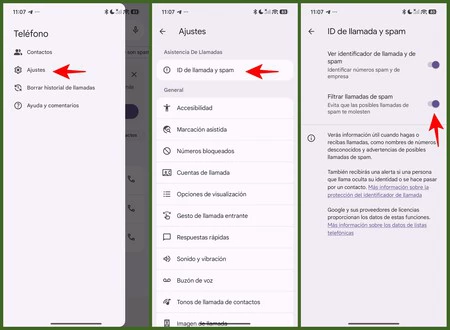
- Open the Google Phone App: Locate and tap the Phone icon on your home screen or app drawer.
- Access Settings: Tap the three-dot menu icon (usually in the top right corner) to open the app’s settings.
- Navigate to Caller ID & Spam: Within the settings menu, locate and select the "Caller ID & Spam" option.
- Enable Key Features: Toggle on the "See caller and spam ID" option. This will enable Google to display information about incoming calls.
- Activate Filtered Calls: Crucially, also toggle on the "Filter spam calls" option. This enables the automatic rejection of suspected spam and scam calls.
Once these settings are activated, the Google Phone app will begin to actively screen incoming calls. It not only provides alerts for suspected spam (the first option) but, in most cases, automatically rejects the call, ensuring that the user’s phone remains undisturbed by malicious or unsolicited attempts. The effectiveness of this filter is frequently highlighted by users who report a drastic reduction in unwanted calls after activation, transforming their phone experience.
Beyond the automated filtering, the Google Phone app offers additional layers of control:
- Blocked Numbers: Within the app’s main settings, the "Blocked numbers" option allows users to manually add specific phone numbers to a blacklist. Any number added here will be automatically blocked from calling or sending text messages, providing a personalized defense against persistent harassers.
- Block Unknown Numbers: An option to "Block calls from unidentified callers" or similar phrasing can be found in some versions. While effective for stopping calls from private numbers or those not recognized, users must exercise caution with this setting. Activating it means legitimate calls from numbers not saved in contacts (e.g., a new doctor’s office, a delivery service, or a potential employer) will also be blocked, potentially leading to missed important communications. It is advisable to use this feature with discretion or only when expecting no critical calls from unknown sources.
Beyond Google: Samsung’s Integrated Solution with Hiya

While Google’s Phone app offers a robust solution for a wide array of Android devices, many manufacturers integrate their own proprietary anti-spam systems. Samsung, a dominant player in the Android market, is a prime example. Samsung Galaxy smartphones come with their own native Phone application, which includes an integrated spam detection system, often powered by the Hiya database. This provides a compelling alternative for Samsung users who prefer to stick with their device’s native software rather than installing a third-party application.
Samsung’s approach leverages Hiya, a global leader in caller identification and spam protection, to provide a comprehensive database of known spam and scam numbers. This partnership allows Samsung devices to offer intelligent call screening directly within their default dialer.
Activating Samsung’s Anti-Spam Filter:
The process for enabling Samsung’s integrated spam filter is designed for ease of use within the One UI interface:
- Open the Samsung Phone App: Tap the green Phone icon on your Samsung Galaxy device.
- Access Settings: Tap the three-dot menu icon (usually in the top right corner) and select "Settings."
- Navigate to Call Settings: Look for an option like "Caller ID and spam protection" or similar.
- Enable Spam Protection: Toggle on the "Caller ID and spam protection" feature. This activates Samsung’s system, allowing it to identify and warn you about suspected spam and scam calls.
- Customize Call Filtering: After enabling, you will typically find an option for "Call filtering" or "Block spam and scam calls." Here, you can customize the behavior:
- Block all spam and scam calls: This option will automatically block calls identified as highly likely spam or scam.
- Only block high-risk scam calls: This provides a slightly less aggressive approach, focusing on the most dangerous threats.
- Show warnings for spam and scam calls: This will only warn you about suspicious calls without automatically blocking them, allowing you to decide.
Samsung’s integration with Hiya means that its database is constantly updated with information on millions of phone numbers, including telemarketers, robocallers, and fraudsters. This real-time intelligence is crucial for staying ahead of evolving scam tactics. Similar to Google’s solution, Samsung also offers options for manually blocking numbers and managing a blacklist, providing users with granular control over who can contact them.
The Broader Ecosystem of Spam Protection and Future Challenges
While Google and Samsung provide robust built-in solutions, the broader ecosystem of spam protection also includes third-party apps like Truecaller, Nomorobo, and Hiya’s standalone application. These apps often offer advanced features such as reverse phone lookup, community-reported spam lists, and even text message filtering. Additionally, some telecommunications carriers offer network-level spam blocking services, which attempt to filter out unwanted calls before they even reach the subscriber’s device. These diverse approaches highlight the complexity of the problem and the ongoing arms race between callers and defenders.
Despite these advancements, the fight against spam and scam calls is far from over. New challenges continually emerge:
- AI-Powered Scams: The rise of artificial intelligence (AI) and deepfake technology poses a significant threat, enabling scammers to generate highly convincing voice impersonations or create more persuasive scripts, making it harder for both humans and automated systems to detect fraud.
- Smishing and Vishing: Scammers are increasingly combining calls with text messages (smishing) or emails (phishing), creating multi-channel attack vectors that can bypass single-point defenses.
- Evolving Tactics: Scammers adapt quickly to new legislation and technological defenses, constantly devising new ways to exploit vulnerabilities or trick users.
The Economic and Social Impact of Unwanted Calls
The consequences of unsolicited calls extend far beyond mere annoyance. Economically, the financial losses incurred by victims of phone scams are substantial. From imposter scams (e.g., claiming to be from a bank, government agency, or tech support) to lottery and sweepstakes scams, millions of individuals fall victim annually, losing significant sums of money, often their life savings. The Federal Trade Commission (FTC) in the United States, for example, consistently reports billions in losses each year, with older adults being particularly vulnerable.
Socially, the constant barrage of unwanted calls erodes trust in communication systems. Many people become hesitant to answer calls from unknown numbers, potentially missing important legitimate communications. This also contributes to a sense of invasion of privacy and heightened stress, affecting mental well-being. Businesses, too, suffer from the reduced effectiveness of legitimate telemarketing efforts, as consumers become more wary of answering any call.
Expert Perspectives and Consumer Advice
Consumer protection advocates and cybersecurity experts consistently emphasize the importance of proactive measures. "While legislative efforts provide a foundational deterrent, the ultimate defense against spam and scam calls lies in empowering consumers with effective technological tools," states a representative from a leading consumer rights organization. "It is crucial for individuals to understand and utilize the features available on their smartphones to reclaim control over their communication channels."
Experts also advise a multi-layered approach:
- Enable Built-in Filters: Activate and configure the spam call filters provided by Google, Samsung, or your device manufacturer.
- Be Skeptical: Always be suspicious of unsolicited calls, especially those asking for personal information, money, or immediate action.
- Verify Identity: If a call claims to be from a known entity (bank, government), hang up and call them back on an official, publicly listed number, not the one provided by the caller.
- Report Spam: Report spam calls to your carrier and relevant authorities. This data helps improve detection algorithms and aids in enforcement.
- Guard Personal Information: Be extremely cautious about sharing personal or financial details over the phone, especially if the call was unexpected.
Conclusion: An Ongoing Battle for Digital Serenity
The persistent nature of spam and scam calls necessitates a continuous and evolving defense strategy. While national legislation, such as Spain’s General Telecommunications Law, lays down important legal groundwork, the day-to-day battle is increasingly fought on the digital frontline of our smartphones. Tools like Google’s Call Filter and Samsung’s integrated spam protection, powered by sophisticated AI and extensive databases, offer indispensable shields against the tide of unwanted communications. By understanding, activating, and judiciously utilizing these powerful features, consumers can significantly reduce their exposure to fraud, reclaim their digital privacy, and restore a measure of serenity to their daily lives, turning their mobile device from a target of nuisance into a fortress of personal communication. The ongoing development of smarter algorithms and tighter integration between regulatory efforts and technological solutions will be critical in shaping a future where unsolicited calls become a rare anomaly rather than a daily annoyance.
