
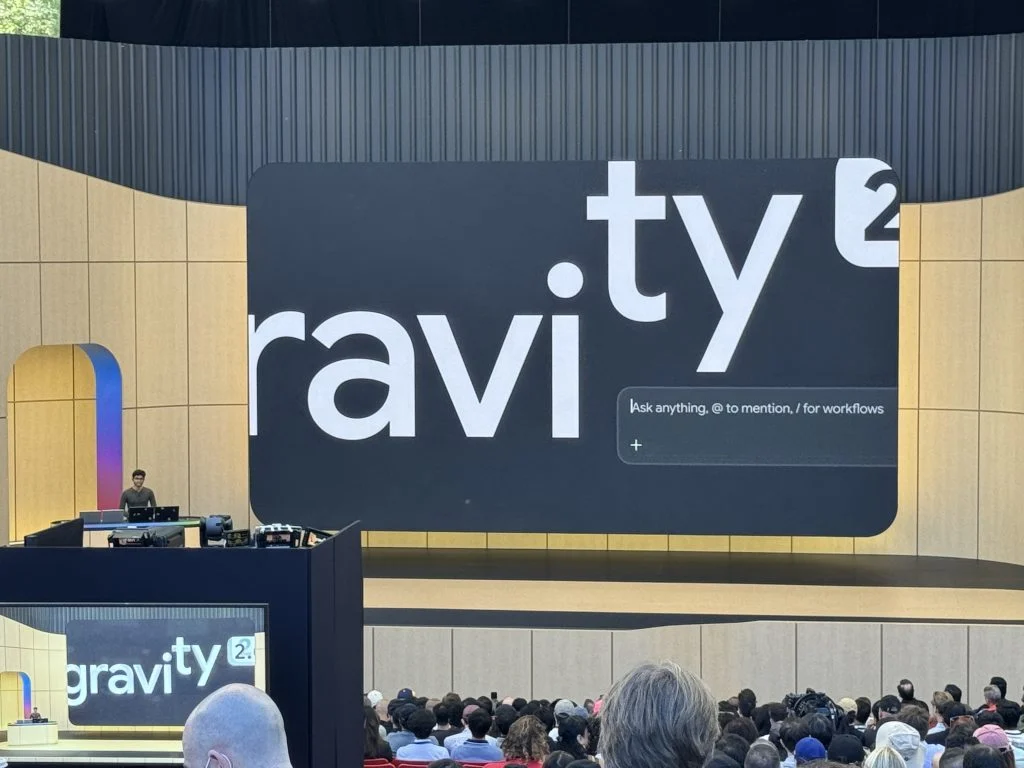

Six months after its initial introduction as a sophisticated coding environment, Google is significantly expanding the scope of Antigravity, repositioning it as a robust platform designed for the development and management of teams of autonomous AI agents. This strategic pivot, revealed ahead of Google I/O 2026, signals a profound shift in how Google envisions the future of software development and AI integration, moving beyond individual AI assistants to sophisticated, coordinated multi-agent systems. The expansion is underpinned by a suite of new tools, including a dedicated desktop application, a command-line interface (CLI), a comprehensive Software Development Kit (SDK), and deep enterprise cloud integration.
"We are expanding Antigravity beyond a coding environment and turning it into a platform to develop and manage teams of autonomous AI agents," stated Koray Kavukcuoglu, CTO of Google DeepMind and Chief AI Architect at Google, during a press briefing. This announcement underscores Google’s commitment to empowering developers with tools that facilitate the creation of complex AI workflows. The company reports that millions of developers are already actively engaged with the platform, indicating a strong existing user base and a fertile ground for this ambitious expansion.
The evolution of Antigravity represents a significant step towards realizing the full potential of artificial intelligence in practical applications. The transition from a coding-centric tool to a platform for agent orchestration acknowledges the growing trend towards agent-based computing, where AI systems are not merely executing commands but are capable of independent reasoning, planning, and execution of complex tasks. This approach allows for the creation of highly sophisticated applications where multiple AI agents can collaborate to achieve a common goal, mirroring human teamwork in a digital realm.
A Platform in Three New Forms
At the heart of this major announcement is Antigravity 2.0, a standalone desktop application designed to serve as a centralized hub for orchestrating AI agents. This new iteration moves beyond the concept of running a single agent on a singular task. Instead, developers can now coordinate multiple agents working in concert. For instance, one agent could be tasked with generating code, another with producing brand assets, and a third with handling product architecture planning. This parallel processing and specialization capability dramatically increases efficiency and allows for the tackling of more complex projects.
For developers who prefer to operate within the command-line interface, Google has introduced the Antigravity CLI. This lightweight interface allows for the rapid deployment and management of agents without the need for a graphical environment, catering to workflows that are already terminal-centric. Existing users of the Gemini CLI are being actively encouraged to migrate to this new offering, streamlining their transition to the expanded agent management capabilities.
Complementing these interfaces is the Antigravity SDK, which grants developers programmatic access to the same underlying agent harness that powers Google’s internal products. This SDK is specifically co-optimized for Gemini models, with a particular focus on Gemini 3.5 Flash. Google has revealed that Gemini 3.5 Flash was developed in parallel with Antigravity 2.0, serving as the platform’s primary computational engine. Benchmarks indicate that Gemini 3.5 Flash significantly outperforms Gemini 3.1 Pro across a wide range of metrics and exhibits four times the speed of competing frontier models, promising substantial performance gains for Antigravity users.
Expanding Capabilities into the Cloud and Enterprise
The platform’s reach is further extended through Managed Agents within the Gemini API, bringing its capabilities into the cloud. A single API call can now initiate a fully functional agent capable of reasoning, utilizing tools, and executing code within a persistent, isolated Linux environment. Crucially, the state and files associated with these agents are preserved across subsequent calls, enabling seamless multi-turn conversations and workflows without the need for re-initialization, a significant advantage for complex, long-running tasks.
The enterprise sector is a key focus of this expansion, with Antigravity now integrating directly with the Gemini Enterprise Agent Platform. This integration allows Google Cloud customers to connect the platform directly to their existing Cloud projects, facilitating the deployment of agentic workflows within their established cloud infrastructure. To support this, Google has introduced a new $100-per-month Google AI Ultra subscription tier. This tier offers five times higher usage limits within Antigravity compared to the existing Pro plan, providing enhanced capacity for demanding enterprise applications.
Early enterprise adopters have provided strong endorsements for the expanded Antigravity platform. Nikunj Shanti, CTO of AirAsia Next, reported that more than half of the company’s production-ready code is now generated through Antigravity’s agentic workflows, highlighting the platform’s ability to accelerate development cycles and improve code quality.

Faruk Muratovic, US AI and Engineering Strategy and Services Leader at Deloitte, emphasized the platform’s capacity to manage governed, autonomous engineering workflows that adhere to Deloitte’s stringent enterprise security standards. This suggests that Antigravity is not only a tool for accelerating development but also for ensuring compliance and security in AI-driven processes. Vikas Agarwal, PwC Advisory CTIO, characterized the shift as moving "past simple AI code completion to true agent orchestration," underscoring the platform’s advanced capabilities in managing complex AI interactions.
Callum Anderson, Head of Engineering at WPP, shared that WPP has integrated Antigravity into WPP Open, their agentic marketing platform, to enhance their product development lifecycle. "Leveraging the power of Gemini, it has streamlined workflows, automated repetitive tasks and empowered engineering teams to deliver high-quality solutions for our clients, faster," Anderson stated, pointing to tangible benefits in efficiency and client delivery.
Addressing the Growing Challenge of AI-Generated Code Security
In parallel with the advancements in agent development, Google is also proactively addressing the security implications of this rapid AI-driven code generation. The company has announced enhancements to CodeMender, an AI code security agent developed by Google DeepMind. CodeMender goes beyond simply identifying vulnerabilities; it is designed to autonomously patch them.
"CodeMender is an AI code security agent, originally developed by Google DeepMind. Leveraging Agent Platform capabilities and advanced Gemini models, CodeMender autonomously identifies vulnerabilities within your code," explained Thomas Kurian, CEO of Google Cloud, in a blog post. "It then recommends precise fixes, securely tests them, and can apply patches and necessary changes across dependent systems, with your approval. This entire process automates secure deployment while ensuring your developers retain control."
The advanced reasoning capabilities of Gemini models empower CodeMender to autonomously detect critical code flaws, propose precise remedies, test these solutions in a secure sandbox environment, and then deploy patches across dependent systems. Importantly, developer approval is sought at each critical juncture, ensuring human oversight and control throughout the remediation process. Koray Kavukcuoglu highlighted the significance of this development, stating, "It shows how AI can actually patch code, not just find exploits."
CodeMender is being integrated into Google’s Agent Platform as part of its AI Threat Defense offering. A limited group of security experts has been invited to test a CodeMender API immediately, with broader availability planned for the near future. This initiative places Google directly into a competitive market segment characterized by significant startup activity in autonomous vulnerability remediation. Companies like Aikido Security and Mobb are already offering AI-driven patching solutions. CodeMender’s entry into this field is bolstered by the advanced reasoning of Gemini models and its native integration within the Agent Platform infrastructure.
Furthermore, Google has launched an AI Content Detection API on Agent Platform. This new API allows businesses to identify AI-generated content, irrespective of whether it was produced by Google models or third-party systems. This development underscores the growing recognition of synthetic media governance as a critical platform-level concern, on par with code security.
Implications and the Future of Developer Infrastructure
Taken together, the significant expansion of Antigravity and the advancements in CodeMender signal Google’s clear vision for the future of developer infrastructure. The company is moving decisively away from single-turn prompt-based interactions towards persistent, collaborative, and always-on agent systems.
"The leap from single-turn prompts to collaborative, always-on agents changes how developers build software," Kavukcuoglu remarked. This fundamental shift implies a future where software development is a continuous process, managed and augmented by intelligent agents working in concert.
Google’s strategy appears to be a dual approach: simultaneously building the sophisticated tooling required for agents to generate code at an unprecedented scale, and establishing the robust security infrastructure necessary to govern the output of these agents. This creates a closed loop of agentic development and agentic remediation, a powerful proposition for enterprises seeking to harness the benefits of AI while mitigating associated risks. The company is positioning itself not just as a provider of AI tools, but as a foundational architect of the next generation of software development, where AI agents are not just assistants but integral collaborators. This comprehensive approach addresses both the creative and the critical security aspects of AI-driven development, laying the groundwork for a more efficient, secure, and intelligent software ecosystem.
