

The technology world was abuzz this week following Google’s significant annual event, which unveiled the latest iteration of its mobile operating system, now formally referred to as an "intelligent system," Android 17. This rebranding signifies a profound shift in Google’s strategy, emphasizing deep integration of artificial intelligence at the core of the user experience. For millions of users worldwide, particularly those within the vast Samsung Galaxy ecosystem, this announcement carries considerable weight, as Android serves as the foundational software layer beneath Samsung’s custom One UI interface. This year, the seventeenth version of Android is slated to converge with One UI 9, a major update for which Samsung has already initiated an open beta program, signaling its rapid development and imminent arrival.
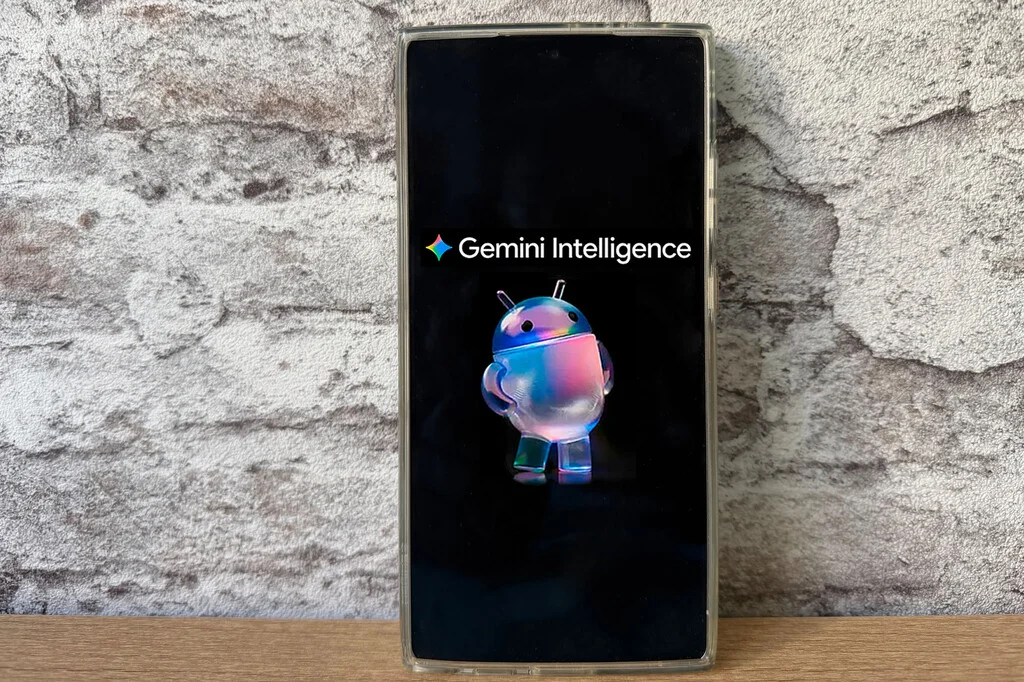
Central to Google’s Android 17 announcements was the introduction of "Gemini Intelligence," a groundbreaking feature positioned as a new "agent mode" for the company’s powerful Gemini AI platform. This ambitious innovation promises to hand over significant control of smartphone operations to artificial intelligence, with the explicit goal of simplifying daily tasks, anticipating user needs, and proactively fulfilling desires. This represents a monumental leap from reactive voice assistants to a more autonomous, context-aware digital companion embedded deeply within the device’s functionality.
The Evolution of Android and Google’s AI Vision
Google’s decision to rename its operating system to an "intelligent system" for Android 17 is more than mere semantics; it’s a clear declaration of intent. For years, Android has evolved from a basic mobile platform to a sophisticated ecosystem supporting billions of devices. The "intelligent system" moniker underscores a paradigm shift where the OS is no longer just a set of instructions for hardware but an active, learning entity designed to personalize and optimize the user experience through pervasive AI. This move aligns with Google’s overarching corporate strategy to embed AI into every facet of its products and services, from search and cloud computing to consumer hardware.
Gemini Intelligence, as the flagship AI feature of Android 17, embodies this vision. Unlike previous iterations of Google Assistant or even earlier versions of Gemini, which largely responded to explicit commands, the "agent mode" aims for proactive engagement. Imagine a smartphone that, based on your calendar, location, and communication patterns, automatically suggests the best route to your next meeting, orders your favorite coffee on the way, or even drafts responses to emails based on context. This level of autonomy requires not just robust algorithms but also deep integration with system-level functions and access to user data (with stringent privacy safeguards, Google assures). It represents Google’s answer to the burgeoning demand for hyper-personalized and effortlessly efficient digital interactions, a critical battleground in the ongoing tech race.
The development of Gemini Intelligence is a natural progression of Google’s long-term commitment to AI. From the pioneering days of Google Assistant, through the evolution of its large language models (LLMs) like LaMDA and PaLM, culminating in the unified Gemini platform, Google has consistently pushed the boundaries of conversational AI. Gemini Intelligence now extends this capability from a conversational interface to an operational agent, capable of executing complex multi-step tasks across various applications and services on a smartphone. This strategic pivot ensures that Android devices remain at the forefront of AI innovation, potentially setting a new standard for mobile intelligence.
Samsung’s Strategic Integration: One UI 9 and the Galaxy Ecosystem
The announcement of Gemini Intelligence holds particular significance for Samsung, Google’s largest Android partner. The symbiotic relationship between Google’s Android and Samsung’s highly customized One UI interface is foundational to the mobile industry. Samsung’s One UI is not merely a skin; it’s a comprehensive re-imagining of the Android experience, adding unique features, design elements, and optimizations tailored for Galaxy devices. The impending arrival of One UI 9, built atop Android 17, is thus a critical milestone for Samsung, promising to deliver Google’s latest innovations alongside its own enhancements.
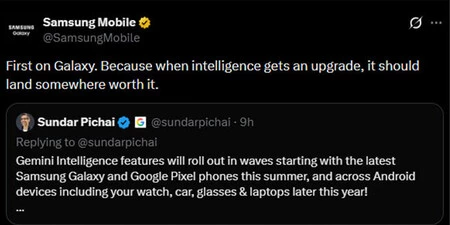
A notable aspect of the Gemini Intelligence rollout plan is Google’s statement that the feature would initially debut on its own Pixel devices and Samsung’s Galaxy smartphones. Samsung swiftly capitalized on this, issuing an official statement via its social media channels, asserting that Gemini Intelligence would arrive "first on Galaxy, because when intelligence updates, it must first land in a place that deserves it." This seemingly competitive declaration, while subtly challenging Google’s own Pixel line, underscores Samsung’s strategic intent to position its Galaxy devices as premium platforms for cutting-edge AI.
This claim of early access is not without a logical basis rooted in the typical product release cycles of both companies. Historically, Samsung hosts its second "Unpacked" event of the year around July or August, where it unveils its latest foldable devices. If previous patterns hold, the upcoming Galaxy Z Fold8 and Galaxy Z Flip8 are expected to make their debut this summer. These devices are traditionally the first to launch with the newest iteration of One UI (in this case, One UI 9) and the underlying Android version (Android 17). Given that Google’s next Pixel flagship devices typically launch later in the year, around October, Samsung’s foldables could indeed be the first consumer-ready smartphones to ship with Gemini Intelligence integrated. This would provide Samsung with a crucial, albeit temporary, marketing advantage in the fiercely competitive premium smartphone segment. The possibility of a "Wide Fold" model further suggests Samsung’s commitment to expanding its innovative hardware lineup, all poised to showcase the advanced capabilities of the new intelligent system.
The Hardware Hurdle: Gemini Nano V3 and Device Compatibility
While the promise of Gemini Intelligence is compelling, its widespread adoption faces a significant technical hurdle: hardware compatibility. Google has stipulated that the primary requirement for utilizing this advanced agent mode is the presence of Gemini Nano V3, the latest iteration of its on-device AI model. Gemini Nano is designed to perform complex AI tasks directly on the device, minimizing reliance on cloud processing for speed, privacy, and offline functionality. The leap from Nano V2 to Nano V3 represents a substantial increase in computational demands, requiring more sophisticated neural processing units (NPUs) and greater memory bandwidth to handle its expanded model parameters and enhanced capabilities efficiently.
Currently, among Samsung’s vast portfolio, only the most recent flagship devices — the Galaxy S26, S26+, and the top-tier S26 Ultra — are confirmed to be equipped with the necessary hardware to run Gemini Nano V3. The upcoming Galaxy Z Fold8 and Flip8 are also expected to feature this crucial component. This means that older Galaxy models, which predominantly rely on Gemini Nano V2 or even earlier on-device AI architectures, will likely be excluded from accessing the full suite of Gemini Intelligence features.
The implications of this hardware-driven requirement are profound. It transforms Gemini Intelligence from a mere software update, universally deployable across compatible Android versions, into a feature deeply tethered to specific, high-end hardware. This effectively creates a new tier of device compatibility, where older flagship devices, despite being relatively recent and powerful, may not be able to fully participate in the intelligent system revolution. The specific chip requirements (e.g., advanced NPU architectures from Qualcomm’s Snapdragon or Samsung’s Exynos SoCs) and increased RAM capacity necessary for Gemini Nano V3 will act as significant barriers, leaving a substantial portion of the existing Galaxy user base unable to experience Google’s most advanced AI agent.
Market Dynamics and User Impact
This hardware-centric approach to AI integration is likely to reshape market dynamics and consumer behavior. The emergence of an "AI divide" within a single brand’s ecosystem could present both challenges and opportunities. For users with older Galaxy devices, the inability to access Gemini Intelligence might accelerate their upgrade cycles, driven by the desire for the latest, most intelligent features. This could boost sales of Samsung’s newest flagships and foldables. However, it also risks alienating users who feel their relatively recent, expensive devices are becoming artificially obsolete due to AI hardware requirements.
In the broader competitive landscape, this strategy places Samsung and Google in direct alignment with Apple, whose on-device AI capabilities have always been tightly coupled with its custom silicon. Apple’s recent announcements regarding "Apple Intelligence" also emphasize hardware requirements, specifically the A17 Pro chip or newer, effectively limiting its advanced AI features to its latest iPhones and Macs. This trend suggests that sophisticated on-device AI is becoming a key differentiator that demands bleeding-edge hardware, rather than being a universal software layer.
Samsung, however, is not entirely dependent on Google for its AI prowess. The company has been aggressively investing in its own "Galaxy AI" features, which debuted with the Galaxy S24 series earlier this year. These features, such as "Circle to Search," "Chat Assist," and advanced photo editing tools, demonstrate Samsung’s capacity to develop and integrate powerful AI functionalities independently. This internal capability offers a potential counter-strategy: if older Galaxy devices cannot run Gemini Nano V3, Samsung might develop and offer its own, perhaps slightly less demanding but functionally similar, "agent mode" features, powered by its existing Galaxy AI platform. This would allow Samsung to maintain a competitive edge and offer compelling AI experiences across a wider range of its devices, mitigating the impact of Google’s hardware stipulations. This dual approach – leveraging Google’s AI where possible and augmenting with proprietary solutions – highlights Samsung’s strategic flexibility in the evolving AI landscape. The company’s focus on on-device AI, whether through Google’s Gemini Nano or its own solutions, is crucial for privacy, speed, and enabling features even without an internet connection.
Future Outlook and Strategic Considerations
The rapid acceleration of AI integration into consumer electronics signifies a new era for mobile technology. The advent of Android 17 and Gemini Intelligence marks a pivotal moment where smartphones transition from smart tools to truly intelligent companions. However, the hardware requirements for these advanced capabilities raise important questions about sustainability and device lifespan. As AI features become increasingly central to the user experience, the pressure to upgrade devices more frequently will intensify, potentially contributing to electronic waste and consumer expenditure. Policymakers and industry leaders may need to consider strategies to balance innovation with environmental responsibility and device longevity.
User expectations will also play a crucial role. As more users become aware of the capabilities locked behind newer hardware, the demand for accessible AI will grow. Companies like Samsung will face the challenge of clearly communicating which features are available on which devices and why. Transparency regarding hardware limitations and proactive solutions for older devices will be key to maintaining customer loyalty and satisfaction.
Ultimately, the synergy between Google and Samsung remains paramount in shaping the future of the Android ecosystem. Their collaborative yet sometimes competitive relationship drives innovation, pushing the boundaries of what smartphones can achieve. The arrival of Gemini Intelligence, while introducing hardware-based limitations, also ushers in a transformative potential for mobile interaction. The future of mobile is undeniably AI-centric, and how both Google and Samsung navigate these technological and market shifts will define the user experience for years to come. Whether through Google’s powerful agent mode or Samsung’s tailored Galaxy AI, the era of the truly intelligent smartphone is no longer a distant dream but an unfolding reality, albeit one that currently favors the latest and most capable hardware.
