


The landscape of domestic telecommunications in Spain has undergone a significant transformation with the commercial deployment of 10 Gbps symmetric fiber-optic connections. As providers such as Movistar continue to roll out XGS-PON (10-Gigabit Symmetrical Passive Optical Network) technology, consumers are increasingly faced with the decision of whether to invest in ultra-high-speed tiers that far exceed the bandwidth requirements of standard internet applications. This shift represents a move toward future-proofing domestic networks, yet it introduces a complex interplay between infrastructure capabilities, hardware limitations, and the practical realities of data consumption in the home.
The Evolution of Residential Broadband in Spain
For the past decade, the standard for high-speed residential internet in Spain transitioned from ADSL to 100 Mbps, then 300 Mbps, and eventually 1 Gbps fiber. The jump to 10 Gbps is qualitatively different from previous upgrades. While moving from 100 Mbps to 1 Gbps offered immediate, visible benefits for activities like file downloading and streaming, the jump to 10 Gbps challenges the current bottleneck of domestic hardware.
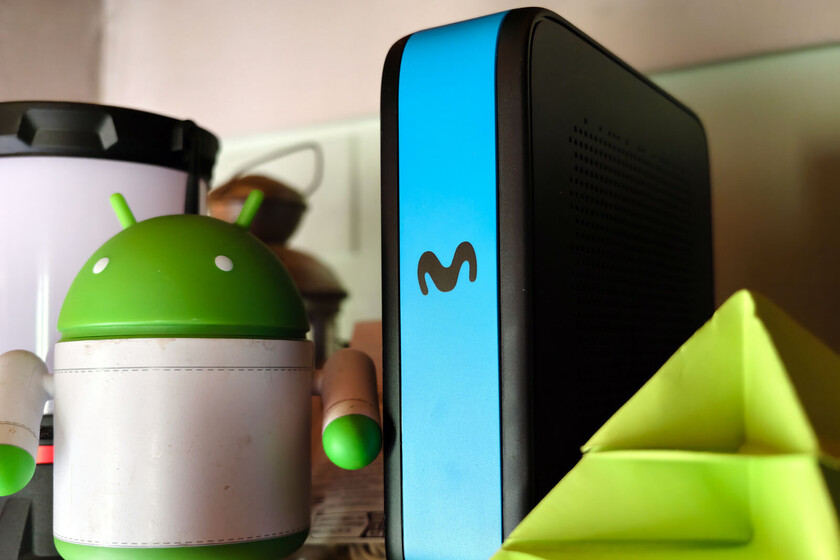
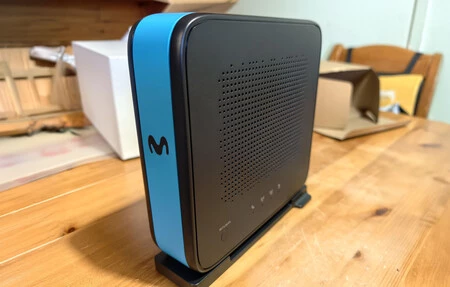
The timeline of this deployment began in earnest between 2022 and 2023, as telecommunications giants sought to differentiate their premium service tiers. Movistar’s integration of the Smart WiFi 7 router—a device capable of managing the higher throughput and efficiency standards required for 10 Gbps—marked the shift from experimental connectivity to a commercial product available to the general public.
Technical Limitations and Reality of Throughput
A critical distinction must be made between the bandwidth delivered to the Optical Network Terminal (ONT) and the actual data rate experienced by the end-user. Industry experts and network analysts note that achieving 10 Gbps at the device level is currently hindered by the physics of local area networks (LANs). Most modern computing hardware, including high-end consumer laptops and desktop motherboards, is equipped with standard 1 Gbps or 2.5 Gbps Ethernet ports. Even when utilizing the latest Wi-Fi 7 protocols, real-world speeds rarely hit the theoretical 10 Gbps ceiling due to signal attenuation, interference, and protocol overhead.
Data from speed tests indicates that while the connection to the ONT may indeed reach near-total capacity, the effective throughput often fluctuates between 8 Gbps and 9 Gbps due to framing, error correction, and standard network management overhead. Furthermore, unless a household operates a localized 10 GbE (10-Gigabit Ethernet) infrastructure—which requires enterprise-grade switches, Cat6a or Cat7 cabling, and compatible network interface cards—the "last mile" within the home effectively creates a performance ceiling long before the 10 Gbps threshold is reached.
The True Utility: Capacity Over Raw Speed
If the average user cannot achieve a 10 Gbps connection on a single device, the question of value arises. The utility of such a connection lies not in the speed of a single download, but in the total capacity of the network to manage concurrent, high-bandwidth demands. In a modern "smart home," this is known as network concurrency.
A typical household today may simultaneously host:
- Multiple 4K or 8K streaming services (Netflix, Disney+, YouTube).
- Cloud-based gaming platforms (GeForce Now, Xbox Cloud Gaming).
- Large file synchronization for remote work environments.
- Internet of Things (IoT) devices that require consistent, low-latency background communication.
When these activities occur concurrently on a 1 Gbps connection, congestion can occur, leading to buffer bloat—a phenomenon where high latency is introduced as a queue of data packets waits for bandwidth. A 10 Gbps connection effectively eliminates this congestion. Even if no single device can consume 10 Gbps, the network as a whole operates with significantly lower latency and higher agility, ensuring that high-priority traffic remains uninterrupted regardless of background activity.
The Role of Next-Generation Hardware
The transition to 10 Gbps is inextricably linked to the adoption of Wi-Fi 7. Unlike its predecessors, Wi-Fi 7 is designed for high-density environments and lower latency. By utilizing the 6 GHz band, it can handle more concurrent connections without the performance degradation typically associated with the 2.4 GHz and 5 GHz bands.
However, this requires a complete overhaul of the home network ecosystem. For users upgrading to these premium tiers, the router is merely the first step. To maximize the investment, consumers are often forced to upgrade switches to support multi-gigabit speeds and ensure that internal house wiring meets the standards required for stable, high-speed data transmission. This has created a niche market for home-networking enthusiasts who are effectively building enterprise-level network architectures in residential settings.
Broader Implications for the Telecommunications Sector
The introduction of 10 Gbps fiber is as much a branding exercise for service providers as it is a technological advancement. By establishing a "prestige" tier, companies can command a premium price point while simultaneously demonstrating technical leadership in the fiber-optic sector.

From an infrastructure standpoint, the move to XGS-PON allows providers to manage network load more efficiently. Because the network capacity is significantly higher, service providers can accommodate more users per fiber strand without sacrificing quality of service. This is a vital long-term strategy as the demand for bandwidth is projected to grow exponentially with the rise of spatial computing, virtual reality, and high-fidelity cloud applications.
Future-Proofing and Economic Analysis
From an economic perspective, the current adoption of 10 Gbps by the average consumer is speculative. Most households do not reach the limits of a 1 Gbps connection under normal conditions. However, the logic of "more is better" continues to drive consumer behavior, mirroring the historical trend of purchasing high-spec hardware that is not immediately utilized to its full potential.
The implications for the industry are clear: we are entering an era where bandwidth is no longer the limiting factor of home connectivity—latency and internal hardware limitations are. The industry is moving toward a "plug and play" future where the speed at the wall is essentially limitless, shifting the responsibility of management to the software and hardware within the home.
Conclusion
The decision to contract a 10 Gbps fiber connection is currently a choice for early adopters and power users who prioritize network stability and massive capacity over immediate, singular-device performance. While it is true that the average consumer cannot, and perhaps does not need to, tap into the full 10 Gbps bandwidth today, the presence of such a robust pipeline offers a level of network immunity against congestion. As residential data consumption continues to climb, driven by higher resolution content and the proliferation of connected devices, 10 Gbps will eventually transition from a luxury feature to a standard necessity. For now, it remains the gold standard for those who view network infrastructure as a foundation for a modern, interruption-free digital life.
