
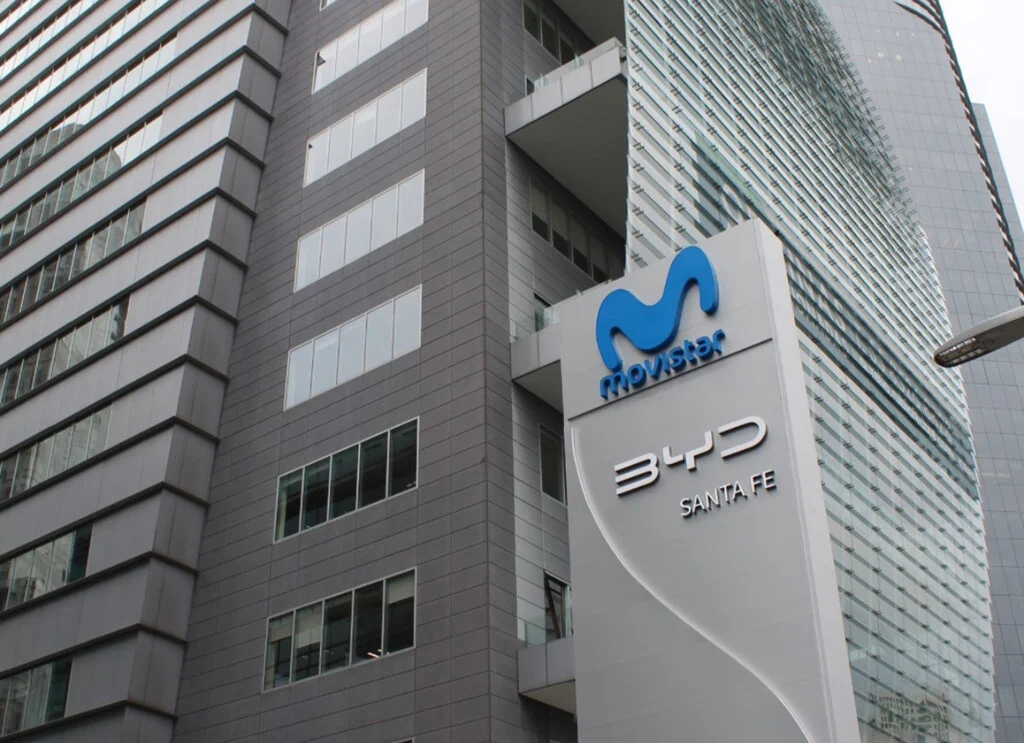

Madrid-based telecommunications giant Telefónica recently concluded the sale of its mobile telephony business in Mexico, a pivotal move in its broader strategic divestment from its Hispam operations. The transaction, valued at approximately $450 million, saw the Mexican Movistar operations transition to Melissa Acquisition, a consortium spearheaded by the innovative technology platform OXIO. While the deal awaits final regulatory authorizations, OXIO has already begun to articulate an ambitious and unconventional strategy for Movistar Mexico, promising a paradigm shift from traditional telecommunications models by prioritizing artificial intelligence, data analytics, and an infrastructure-light approach to deliver "better and cheaper" services.
Telefónica’s Strategic Divestment and Movistar Mexico’s Evolution
The sale of Movistar Mexico marks a significant chapter in Telefónica’s strategic realignment, initiated in late 2019 under its "New Telefónica" plan. This comprehensive strategy involved focusing investments on core markets—Spain, Brazil, Germany, and the UK—while streamlining operations and divesting non-strategic assets across its Latin American (Hispam) portfolio. The goal was to reduce debt, optimize capital allocation, and free up resources for accelerating fibre optic deployment and 5G network expansion in its priority regions. Over the past few years, this strategy has led to various sales, including the majority stake in its Central American operations and infrastructure asset sales across the region, collectively generating substantial capital for the company.
Movistar’s journey in Mexico has been characterized by intense competition and evolving strategies. Telefónica first entered the Mexican market in 2000, aiming to challenge the entrenched dominance of Telcel, a subsidiary of América Móvil. Despite significant investments and a strong global brand, Movistar consistently found itself in a challenging second or third position, grappling with Telcel’s expansive network and market power. In a landmark move in 2019, Movistar Mexico began to fundamentally alter its operational model by selling its physical infrastructure, including thousands of mobile towers, to AT&T Mexico and entering into a long-term network access agreement. This pivot effectively transformed Movistar into a mobile virtual network operator (MVNO) reliant on AT&T’s infrastructure for its last-mile wireless capacity, while retaining its spectrum licenses. Subsequently, Telefónica returned a significant portion of its spectrum to the Instituto Federal de Telecomunicaciones (IFT), Mexico’s telecom regulator, further reducing its capital expenditure requirements and setting the stage for an eventual full exit from direct ownership of network assets in the country. This gradual divestment of physical assets paved the way for a more agile, software-centric operation, aligning with the vision now championed by OXIO.
The Transaction and Regulatory Landscape
The acquisition by Melissa Acquisition, led by OXIO, represents a pivotal moment for Movistar Mexico and the broader telecommunications sector. The $450 million deal encompasses a customer base of over 21 million mobile lines, positioning the new entity as a substantial player in the competitive Mexican market. However, the completion of the sale is contingent upon securing the necessary regulatory authorizations from the IFT. The IFT’s review process typically scrutinizes such transactions for potential impacts on market competition, consumer welfare, and compliance with existing telecom regulations. Given the Mexican market’s history of dominance by a single player (Telcel), regulators are keen to ensure that any change in ownership fosters a more competitive environment and prevents market concentration. OXIO’s stated strategy, which promises increased coverage and innovative service models, could be viewed favorably by the IFT as it aligns with national goals of enhancing connectivity and digital inclusion.
OXIO’s Vision: A Disruptive "Carrier of Carriers" Model
At the core of OXIO’s strategy for Movistar Mexico is a radical departure from the capital-intensive model historically employed by traditional telecommunication companies. Nicolas Girard, CEO of OXIO, articulated this vision at the GSMA’s M360 LATAM event, emphasizing that the company will not compete solely on price against giants like Telcel or AT&T. Instead, OXIO aims to construct a "digital ecosystem" powered by data, artificial intelligence, and flexible connectivity.
The fundamental principle is to operate as a "carrier of carriers" – a model that eschews significant investment in proprietary physical infrastructure. This means Movistar Mexico under OXIO will continue to leverage existing network agreements, such as the crucial partnership with AT&T Mexico, which remains valid until 2030. This agreement provides Movistar access to AT&T’s robust 4G LTE network across a vast portion of Mexico. Furthermore, OXIO intends to forge additional agreements with other operators, including Altán Redes, which operates Mexico’s wholesale mobile network designed to expand connectivity in underserved areas, and potentially even Telcel for specific regional or technological needs. This strategic reliance on third-party networks allows OXIO to minimize its capital expenditures (CAPEX) on towers, spectrum, and physical infrastructure, redirecting resources towards software development, AI integration, and service innovation.
This infrastructure-light approach offers several advantages. It enables faster market response, reduces operational complexity, and allows for a more agile business model. By not owning and maintaining extensive physical networks, OXIO can focus on what it perceives as the true value drivers in modern telecommunications: intelligent service delivery and data monetization.
Achieving 100% Coverage Through Innovation
A cornerstone of OXIO’s ambitious plan is to achieve 100% mobile coverage across Mexico. This is a particularly challenging goal in a country with diverse geography, including remote rural areas where traditional cellular infrastructure deployment is economically unfeasible. OXIO plans to address this challenge by combining its reliance on existing terrestrial networks with the burgeoning capabilities of satellite connectivity.
Girard explicitly stated in an interview with Expansión, "We intend to bring satellites to Mexico to be able to have 100% coverage in the country. When you have towers, you use towers; and when you don’t have towers, you resort to a satellite." This hybrid approach is innovative and aligns with global trends in connectivity. Low Earth Orbit (LEO) satellite constellations, such as Starlink, OneWeb, and Amazon’s Project Kuiper, are rapidly expanding their reach, offering high-speed, low-latency internet access even in the most remote regions. By integrating satellite backhaul and direct-to-device satellite connectivity solutions, OXIO can effectively bridge the digital divide in areas where terrestrial networks are absent or inadequate. This dual-layer strategy ensures that users, regardless of their location, can maintain connectivity, significantly enhancing the value proposition of Movistar Mexico. The ability to seamlessly switch between terrestrial and satellite networks, potentially managed by AI, would offer an unparalleled level of service resilience and ubiquity.
Artificial Intelligence: The "Backbone" of the Business
Beyond network access, the true differentiating factor for OXIO’s Movistar Mexico lies in its profound commitment to artificial intelligence. Girard characterizes AI as the "backbone" of the entire business, underpinning operational efficiency, service delivery, and strategic decision-making.
AI’s role will be multifaceted:
- Network Optimization and Predictive Management: OXIO plans to deploy AI to proactively anticipate network congestions, dynamically reconfigure traffic routes, and optimize resource allocation in real-time. This includes intelligent management of energy consumption, which is a substantial operational cost for telecom providers, as well as optimizing network capacity and minimizing latency. By leveraging AI for predictive maintenance, the company can identify and address potential network issues before they impact service quality, significantly reducing operational expenses (OpEx) and improving network reliability.
- "Programmable Networks": OXIO envisions networks that are "programmable" and can adapt dynamically to varying demands and application types. This concept aligns with software-defined networking (SDN) and network function virtualization (NFV), enabling the network to be reconfigured and optimized on the fly. For instance, a network segment could automatically prioritize bandwidth for mission-critical applications like telemedicine or emergency services, or scale down resources for less demanding applications. Girard cited the example of video surveillance systems, which only require significant network resources when detecting important events, allowing for efficient resource utilization during dormant periods. This intelligent resource management contrasts sharply with traditional static network provisioning, offering superior performance and cost efficiency.
- Enhanced Customer Experience: By analyzing usage patterns and network performance data, AI can personalize services, proactively address customer issues, and offer tailored recommendations. This level of responsiveness and customization is expected to elevate the customer experience beyond what traditional telcos typically offer.
Data Monetization: The New Economic Paradigm

Perhaps the most ambitious and potentially transformative aspect of OXIO’s strategy is its approach to data monetization. Girard unequivocally stated that the real economic value in the future of telecommunications does not lie in merely selling internet access, but in leveraging the vast amounts of information generated by millions of users. "Monetization occurs on the data side, not the access side," he asserted.
To illustrate this, Girard drew a compelling comparison to tech giants like Google: "Google and Gmail are free because they discovered they can monetize the byproducts of the service much better than the service itself." This analogy suggests that while connectivity will be a core offering, the true revenue streams will come from intelligently processing and utilizing aggregated and anonymized user data to develop new, value-added services.
The data monetization strategy would involve:
- Aggregated and Anonymized Insights: Crucially, OXIO emphasizes the use of aggregated and anonymized data to ensure user privacy and comply with data protection regulations such as Mexico’s Federal Law on Protection of Personal Data Held by Private Parties. This means individual user data would not be directly sold or exposed, but rather, patterns and trends derived from large datasets would be utilized.
- Developing New Services: These insights can be leveraged to develop innovative services across various sectors:
- Urban Mobility: Analyzing anonymized movement patterns to optimize public transport routes, manage traffic flow, and inform smart city initiatives.
- Logistics: Enhancing supply chain efficiency, optimizing delivery routes, and managing fleets more effectively for businesses.
- Financial Services: With appropriate consent and anonymization, data could inform credit scoring models for underserved populations, detect fraud, or enable targeted financial product offerings.
- Retail Analytics: Understanding foot traffic in commercial areas, consumer behavior patterns, and store performance.
- Public Services: Assisting government agencies in urban planning, disaster response, and resource allocation.
This approach signifies a shift from a utility-based model to a data-driven ecosystem, positioning Movistar Mexico not just as a connectivity provider, but as an intelligence platform.
Implications for the Mexican Telecommunications Landscape
OXIO’s strategy for Movistar Mexico holds profound implications for the competitive dynamics of the Mexican telecommunications market:
- Heightened Competition: The entry of a tech-first, AI-driven player like OXIO could inject a new level of innovation and competition. While Telcel’s dominance remains formidable, and AT&T has invested heavily, OXIO’s agile, low-CAPEX model could allow it to offer more flexible and potentially lower-cost services. This pressure could compel existing players to accelerate their own digital transformation efforts and enhance customer offerings.
- Consumer Benefits: Mexican consumers stand to benefit from potentially cheaper, more reliable, and more innovative services. The promise of 100% coverage, even in remote areas, addresses a critical need and could significantly reduce the digital divide. The personalized and optimized services driven by AI could also lead to a more satisfying user experience.
- Regulatory Scrutiny and Innovation: The IFT will likely observe OXIO’s model closely. While promoting competition and connectivity, the regulator will also need to address the implications of extensive data monetization, ensuring privacy safeguards are robust and transparent. This new model may also push the IFT to consider new regulatory frameworks that accommodate the convergence of telecom and technology services.
- Future of Infrastructure Ownership: OXIO’s "carrier of carriers" approach challenges the traditional paradigm of telcos owning vast physical infrastructure. If successful, this model could inspire other operators globally to re-evaluate their asset ownership strategies, potentially leading to a greater reliance on shared networks and wholesale agreements.
Conclusion
The acquisition of Telefónica’s Movistar Mexico by the OXIO-led Melissa Acquisition marks a transformative moment for the Mexican telecommunications sector. OXIO’s bold strategy—characterized by an infrastructure-light, AI-centric, and data-driven approach—represents a significant departure from traditional models. By leveraging existing network agreements, integrating satellite connectivity for universal coverage, and embedding artificial intelligence as the operational backbone, OXIO aims to deliver superior and more affordable services. The ambition to monetize aggregated and anonymized data, drawing parallels to successful internet platforms, signals a profound shift in how value is perceived and generated in the telecom industry. While regulatory approvals are pending and the execution of such an ambitious vision presents its own set of challenges, OXIO’s blueprint for Movistar Mexico could serve as a harbinger for the future of telecommunications, not just in Mexico, but across the globe, as the industry grapples with evolving consumer demands, technological advancements, and the relentless pursuit of efficiency and innovation.
