
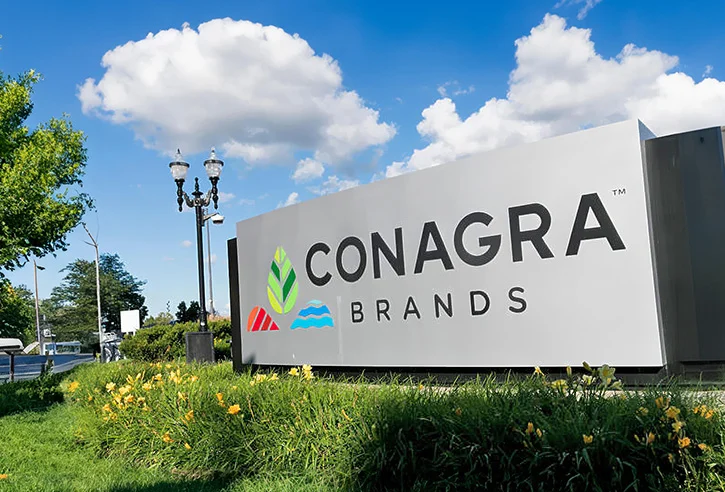

Conagra Brands, one of North America’s preeminent packaged food giants, was recently honored with the ICONic Customer Award at Blue Yonder’s ICON 2026 conference in San Diego. The recognition highlights a multi-year journey in which the company, responsible for a portfolio including Slim Jim, Marie Callender’s, Birds Eye, and Orville Redenbacher’s, successfully reimagined its supply chain as a modern, automated, and high-trust ecosystem. This transformation comes at a critical juncture for the consumer packaged goods (CPG) industry, which continues to face volatility from inflationary pressures, geopolitical instability, and shifting consumer demands. By shifting away from manual intervention toward a "no-touch" planning environment, Conagra has achieved industry-leading service levels and significant inventory reductions, providing a blueprint for digital maturity in large-scale manufacturing.
With annual revenues hovering around $12 billion and a workforce of 18,000 employees, Conagra operates a supply chain of immense scale and intricacy. The company manages 41 factories and 25 distribution centers that service 80% of its U.S. customer base. The logistical challenge is compounded by the diversity of its 5,000 Stock Keeping Units (SKUs), which span across frozen, refrigerated, and ambient temperature states. RL Rosqueta, Vice President of Planning and Digital Capabilities at Conagra, notes that the true difficulty lies not just in the volume of goods, but in the mathematical precision required to synchronize these disparate product types across a network of 300 major customers. In an era where "free cash flow" and "service reliability" are the primary metrics of success for investors, the optimization of this network has moved from a back-office function to a core strategic pillar.
A Chronology of Transformation: From Crisis to Resilience
The genesis of Conagra’s current supply chain architecture dates back to the 2021-2022 period, a time characterized by the global disruptions of the COVID-19 pandemic. During this window, the food industry at large struggled with unprecedented demand spikes and severe capacity constraints. While many competitors focused on short-term stabilization, Conagra’s leadership viewed the crisis as an opportunity to build long-term resilience. The initial implementation of Blue Yonder’s planning solutions was designed to move the company beyond "business as usual" and prepare it for a future where volatility is the only constant.
The transformation unfolded in distinct phases. The first two years (2022-2023) were dedicated to adoption and stabilization. The objective was to transition the planning teams onto a unified digital toolset and ensure that the underlying data was clean and accessible. However, despite the adoption of the technology, the company realized approximately 18 months ago that "usage" did not necessarily equate to "outcomes." While service levels were respectable at 96%, inventory levels remained in the upper tier of industry benchmarks, indicating that the system was not operating at peak efficiency.
The pivotal moment in Conagra’s journey occurred when an internal audit revealed a "trust deficit" between the human planners and the automated system. The data showed that inventory optimization recommendations were being followed only 20% to 35% of the time. Planners, acting on intuition or perceived risk, were frequently overriding the system’s logic—for example, increasing a recommended 1,000-case stock level to 5,000 cases. These manual overrides, when multiplied across thousands of SKUs and dozens of distribution points, resulted in bloated inventory and eroded the very efficiencies the technology was designed to create.
Achieving the "Dark-Room Planning" Standard
To rectify these inefficiencies, Conagra shifted its focus from output manipulation to input integrity. The company implemented stricter "time fences"—periods during which the system will not replan despite demand fluctuations—to prevent reactionary adjustments. More importantly, leadership restricted the ability of planners to manually override production plans. The goal was to reach a state of "dark-room planning," where the automated system performs the heavy mathematical lifting, and human experts focus exclusively on refining the data inputs and managing high-level strategy.
The results of this shift have been statistically significant. Conagra has achieved a 95% "no-touch" production plan, meaning the vast majority of manufacturing schedules are generated and executed without human interference. This level of automation has propelled the company’s service level to 98%, a figure Rosqueta describes as exceptional within the CPG sector. Simultaneously, the company successfully reduced its inventory by five days, meeting a 13% reduction target set 18 months prior. These improvements have directly contributed to the company’s financial health, freeing up cash flow and ensuring that the right products reach retail shelves with pinpoint accuracy.
Supporting this operational success is a sophisticated technological architecture. Conagra utilizes SAP ERP as its system of record, while leveraging Databricks on the Azure cloud platform as its primary data lake. Blue Yonder serves as the "system of differentiation," where the actual planning and optimization logic reside. Data flows seamlessly between these layers, with production plan snapshots fed through Snowflake back into Databricks for advanced analytics and exception reporting. This "best-of-breed" approach allows Conagra to maintain a lean, centralized supply planning team based in Omaha, Nebraska, supported by a specialized Center of Excellence (CoE).
Organizational Evolution and Role Consolidation
A critical, though often overlooked, component of Conagra’s success is its organizational restructuring. Recognizing that complex technology requires clear ownership, the company reduced 14 different planning role types down to just four core, end-to-end roles. This consolidation provided much-needed clarity on tasks and activities, ensuring that every team member understood their place within the standardized process.
Rosqueta emphasizes that change management was the most challenging aspect of the past two years. Transforming a supply chain is as much about human behavior as it is about software code. Planners who had spent decades relying on their own experience had to be convinced to trust the "black box" of the algorithm. Conagra’s strategy involved transparent communication regarding the reasons for the shift, clearly defining what a planner’s role looks like in an automated environment, and demonstrating the tangible benefits of a "high-trust" ecosystem. By focusing on the "why" as much as the "how," the company was able to minimize resistance and foster a culture of data-driven decision-making.
The Next Frontier: Project Catalyst and AI Agents
As Conagra looks toward the future, the company is embarking on "Project Catalyst," an enterprise-wide AI and process transformation initiative announced in late 2025. Because the supply chain division has already established a robust digital foundation, it is positioned as the vanguard of this project. The next six to eight months will see the deployment of "micro-agents"—specialized AI entities designed to manage risks and exceptions within planning recommendations.
These agents will act as a force multiplier for the planning team. Instead of manually reviewing thousands of lines of data to find anomalies, planners will use AI agents to flag potential disruptions and run various "what-if" scenarios. This allows the human workforce to shift their attention to higher-value strategic work, such as long-term capacity planning and supplier relationship management. Furthermore, the company is in the midst of migrating from SAP ECC to S/4HANA, a move expected to be completed within the next 12 months, which will further enhance data processing speeds and integration capabilities.
Broader Implications for the CPG Industry
Conagra’s success serves as a case study for the broader CPG industry, which is currently grappling with a "new normal" of permanent volatility. The transition from 96% to 98% service levels may seem incremental, but in a multi-billion-dollar enterprise, that two-percent margin represents millions of dollars in recovered revenue and strengthened retailer relationships. Moreover, the 13% reduction in inventory demonstrates that "lean" operations and "high service" are not mutually exclusive, provided the technology is backed by a culture of trust and disciplined process management.
The industry is watching closely as Conagra moves into the agentic AI space. If the company can successfully integrate micro-agents into its daily planning cycles, it will set a new standard for "autonomous" supply chains. This evolution suggests that the future of global logistics lies not in more human oversight, but in better human-machine collaboration—where the machine handles the complexity of the "math" and the human handles the nuance of the "strategy."
As geopolitical tensions and climate-related disruptions continue to threaten global trade routes, the ability to respond with agility and precision is no longer a luxury—it is a requirement for survival. Conagra Brands has demonstrated that by embracing automation, simplifying organizational structures, and prioritizing data integrity, a legacy food company can transform itself into a high-tech engine of efficiency. The ICONic Customer Award is a validation of this journey, but for Conagra, the true reward is a supply chain that is finally as resilient as the brands it carries.
