
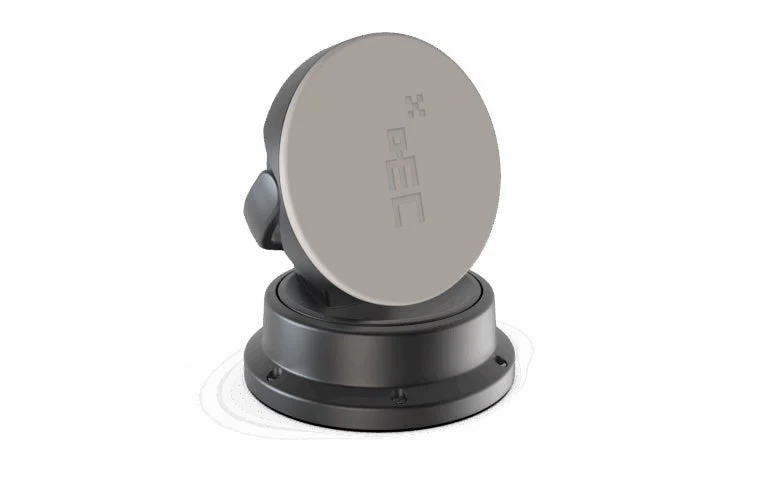

Swedish satellite communications leader Ovzon has officially introduced the Ovzon T8, a groundbreaking mobile satellite terminal designed to redefine the parameters of portable, high-performance connectivity. As the latest addition to Ovzon’s specialized hardware portfolio, the T8 is engineered specifically for "on-the-move" (OTM) applications, targeting a diverse range of environments including aerial, terrestrial, and maritime platforms. By prioritizing a drastically reduced physical footprint without compromising data throughput, the Ovzon T8 addresses a critical gap in the SATCOM (satellite communications) market: the need for enterprise-grade bandwidth on small, unmanned, or highly mobile systems.
The debut of the Ovzon T8 marks a significant milestone for the Stockholm-based company, which has spent the last several years positioning itself as a premier provider of "SATCOM-as-a-Service." This model integrates high-performance proprietary hardware with a sophisticated satellite network to provide end-to-end connectivity solutions. The T8 is positioned as the smallest and lightest terminal in its performance class, a claim backed by its compact dimensions of 7.3 inches by 5.1 inches and a total weight of just 4.6 pounds. This lightweight profile allows the terminal to be integrated into platforms that were previously unable to support high-speed satellite links, such as small tactical unmanned aerial vehicles (UAVs), light robotic ground vehicles, and small-hull maritime vessels.
Technical Specifications and Performance Benchmarks
The Ovzon T8 is not merely a downsizing of previous technology but a re-engineering of the mobile terminal interface. According to the official technical specifications provided by Ovzon, the T8 is capable of achieving transmission speeds of up to 6 Mbps and reception speeds of up to 96 Mbps. In the context of satellite communications, where size usually dictates antenna gain and thus speed, these figures represent a high level of efficiency.
The terminal’s ability to maintain these speeds while "on-the-move" is facilitated by advanced tracking algorithms and a low-profile antenna design. Unlike traditional "manpack" terminals that require a user to stop, deploy a tripod, and manually align with a satellite, the T8 is designed for seamless operation while the host platform is in motion. This is a vital requirement for modern military and emergency services, where stopping to establish a communications link can result in tactical disadvantage or life-threatening delays.
Furthermore, the T8 is optimized for low power consumption. This is a critical factor for battery-operated unmanned systems and remote sensor hubs. By minimizing the "size, weight, and power" (SWaP) requirements, Ovzon enables longer mission durations and reduced logistical footprints for field teams. The terminal is also built to withstand rigorous environmental conditions, adhering to the durability standards required for military and civil defense operations.
The Synergy of T8 and the Ovzon-3 Satellite Network
The timing of the Ovzon T8 release is strategically aligned with the operational rollout of Ovzon-3, Sweden’s first privately funded Geostationary Orbit (GEO) satellite. Launched in early 2024, Ovzon-3 represents a shift in how GEO satellites operate. While traditional GEO satellites are often criticized for high latency and "bent-pipe" architectures that merely reflect signals, Ovzon-3 features an advanced "On-Board Processor" (OBP).
The T8 is specifically designed to leverage the unique capabilities of the Ovzon-3 network. The OBP on the satellite allows for direct terminal-to-terminal communication, bypassing the need for a ground station (teleport) to relay the signal. This reduces latency—a common hurdle in GEO communications—and enhances security by minimizing the number of points where a signal could be intercepted or disrupted.
When paired with Ovzon-3, the T8 terminal can utilize steerable spot beams. These beams concentrate satellite power on specific geographic areas, allowing even a tiny antenna like the one in the T8 to maintain high-speed links. This synergy between the space segment (the satellite) and the ground segment (the T8 terminal) allows Ovzon to provide a level of service that mimics the performance of much larger, more expensive satellite dishes.
A Chronology of Innovation: Ovzon’s Path to the T8
The development of the T8 is the culmination of a decade of evolution within Ovzon’s engineering department. To understand the significance of this launch, it is necessary to look at the company’s trajectory:
- 2014-2017: Ovzon establishes itself as a service provider, utilizing leased capacity from third-party satellite operators to provide high-bandwidth mobile solutions to the U.S. Department of Defense and other high-end users.
- 2018-2020: The company introduces the Ovzon T5 and T6 terminals. These were revolutionary at the time for their "briefcase" form factor, allowing users to carry a high-speed satellite hub in a backpack.
- 2021-2023: Ovzon focuses on the development of its own satellite, Ovzon-3, realizing that to truly optimize mobile terminals, they needed control over the space hardware. During this period, the T7 was introduced, further refining the "manpack" concept.
- January 2024: Ovzon-3 is successfully launched aboard a SpaceX Falcon 9 rocket from Cape Canaveral. This launch was a pivotal moment, making Ovzon one of the few companies globally to own both the satellite and the terminal technology.
- April 2024: The debut of the Ovzon T8. With the Ovzon-3 satellite reaching its operational orbit and completing its commissioning phase, the T8 arrives as the flagship hardware designed to exploit the satellite’s full potential.
Strategic Applications: Defense, Civil Protection, and Commercial Markets
The Ovzon T8 is expected to find immediate adoption across three primary sectors, each with unique demands for mobile connectivity.
Defense and National Security
In modern warfare, the "sensor-to-shooter" link is paramount. Tactical UAVs used for Intelligence, Surveillance, and Reconnaissance (ISR) require high-definition video feeds to be transmitted in real-time to command centers. Previously, small drones were limited to line-of-sight radio links or lower-bandwidth L-band satellite connections. The T8 allows these smaller platforms to transmit high-resolution imagery and telemetry over a secure, high-throughput GEO link, regardless of distance from the base.
Civil Defense and Emergency Response
During natural disasters—such as earthquakes, floods, or wildfires—terrestrial infrastructure (cell towers and fiber optics) is often destroyed. First responders require immediate, reliable communication to coordinate rescue efforts. The T8’s small size means it can be mounted on the roof of a standard SUV or integrated into a portable "go-kit" that a single individual can carry. Its "on-the-move" capability ensures that as a command vehicle moves through a disaster zone, it remains connected to regional headquarters.
Commercial and Industrial Use
Beyond government use, the T8 has significant implications for the commercial sector. In the energy industry, remote monitoring of pipelines or offshore platforms often requires data transmission from mobile inspection robots. In the maritime industry, small autonomous vessels used for environmental monitoring or subsea mapping can utilize the T8 to send large datasets back to shore without the need for the bulky stabilized platforms required by traditional VSAT systems.
Official Responses and Industry Analysis
Per Norén, the CEO of Ovzon, emphasized the disruptive nature of the T8 during the product unveiling. "The Ovzon T8 represents a step-change in what is possible with mobile satellite communications," Norén stated. "By drastically reducing size, we are enabling our customers to rethink how and where connectivity can be deployed. This is not just an incremental improvement; it is a catalyst for new use cases in unmanned systems and rapid-response scenarios that were previously restricted by the weight and power requirements of satellite hardware."
Industry analysts suggest that Ovzon’s move toward ultra-small terminals is a direct response to the growing competition from Low Earth Orbit (LEO) constellations like SpaceX’s Starlink and Eutelsat OneWeb. While LEO networks offer low latency, they often require larger phased-array antennas that consume significant power. Ovzon’s strategy is to offer a "best-of-both-worlds" approach: the reliability and global coverage of GEO, combined with the portability and ease of use typically associated with smaller, less capable systems.
Furthermore, the T8’s compatibility with the Ovzon-3 satellite provides a "sovereign" capability for Sweden and its allies. In an era where space assets are increasingly contested, having a privately funded, secure, and independent satellite network paired with proprietary hardware offers a layer of resilience that many defense organizations find attractive.
Broader Impact and Implications for the SATCOM Industry
The introduction of the Ovzon T8 is likely to accelerate the trend of "miniaturization" in the satellite industry. For decades, satellite terminals were synonymous with large dishes and complex setups. The T8 proves that high-throughput data is no longer tied to heavy equipment.
This shift has profound implications for the future of autonomous systems. As the world moves toward more "swarming" drone technologies and autonomous logistics, the bottleneck has often been the ability to control these assets at over-the-horizon distances. The T8 removes this bottleneck, providing a standardized, lightweight communication node that can be integrated into almost any mobile platform.
Economically, the T8 strengthens Ovzon’s position in the global market by diversifying its hardware offerings. While the T6 and T7 remain popular for stationary or semi-portable use, the T8 opens doors to the rapidly growing market for unmanned systems. As NATO members and other global powers increase their spending on autonomous defense technologies, Ovzon is well-positioned to become a primary provider of the underlying communication fabric.
In conclusion, the Ovzon T8 is more than just a new product; it is a testament to the rapid advancement of satellite technology. By combining ultra-compact design with the high-throughput capabilities of the Ovzon-3 network, Ovzon is setting a new standard for mobile SATCOM. As the terminal enters the market, it is expected to facilitate a new era of connectivity where the constraints of geography and motion no longer limit the flow of critical information.
