
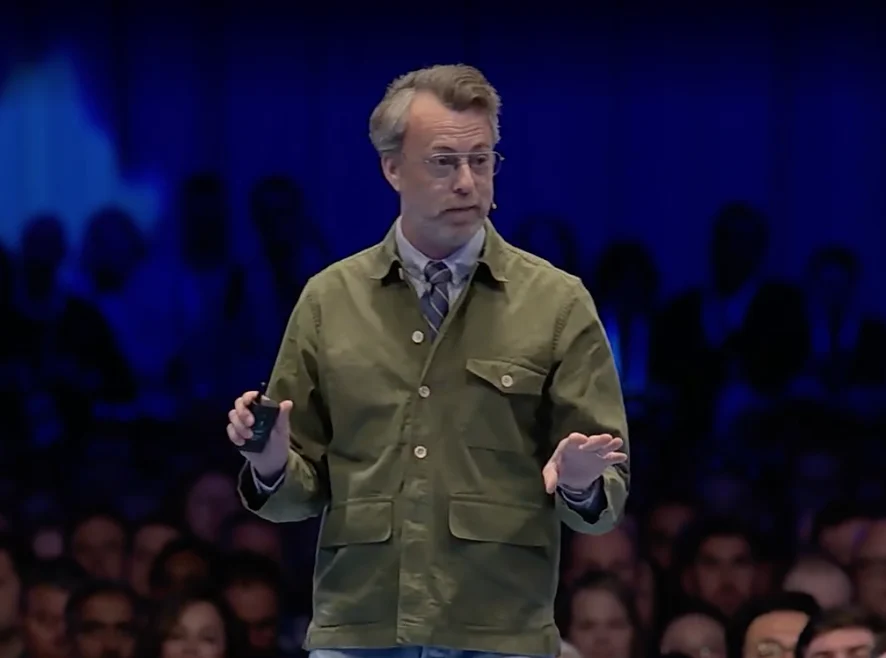

The landscape of digital marketing reached a significant turning point this week in Chicago as Salesforce kicked off its annual Connections conference. The event, a cornerstone for professionals in the marketing, commerce, and customer experience sectors, served as the stage for a major strategic pivot within the Salesforce ecosystem. Leading the discourse was Patrick Stokes, marking his debut as Salesforce’s Chief Marketing Officer. In a keynote session that set the tone for the multi-day event, Stokes introduced a vision of the future centered on "agentic AI"—a shift from AI that merely assists to AI that autonomously executes.
The atmosphere at the Chicago venue was one of cautious optimism as industry leaders gathered to grapple with the complexities of the post-generative AI era. While 2023 was defined by the explosion of Large Language Models (LLMs) and creative tools, 2024 is increasingly becoming the year of integration and autonomy. Stokes addressed these shifts directly, framing the current state of marketing as one burdened by operational friction, siloed data, and a prohibitive "cost of failure" that stifles the very creativity the profession is built upon.
The Bottleneck of Modern Marketing Creativity
Opening the keynote, Stokes provided a candid assessment of the hurdles facing modern marketing departments. He characterized the typical marketer as an individual overflowing with ideas—ranging from the brilliant to the ill-advised—who is ultimately constrained by the inability to test these concepts at scale. According to Stokes, the fundamental problem is not a lack of vision but a lack of velocity. Marketers are currently "crushed" by a combination of limited resources, excessive approval layers, and the high stakes of potential failure.
In the current paradigm, a marketing campaign often requires months of planning, cross-departmental coordination, and significant budget allocation. This high barrier to entry means that many creative ideas never reach the market, and those that do often take too long to yield actionable data. Stokes argued that the "suck it and see" approach—a philosophy of rapid shipping, testing, and iteration—is the desired mode of operation for most creatives, yet it remains out of reach due to technical and organizational silos.
The "siloed data" problem remains a persistent thorn for the industry. Despite decades of investment in Customer Relationship Management (CRM) and Customer Data Platforms (CDP), many organizations still struggle to unify their data in a way that allows for real-time responsiveness. This lack of agility, Stokes noted, is what prevents marketers from moving fast enough to capitalize on intent or pivot away from underperforming strategies.
The Transition to Agentic AI: From Assistants to Agents
The solution proposed by Salesforce involves a fundamental shift in how artificial intelligence is deployed within the enterprise. For the past eighteen months, much of the conversation around AI has focused on "copilots"—tools that act as digital assistants to help human workers write emails, summarize meetings, or generate images. However, Salesforce is now championing "agentic AI."
Unlike traditional AI assistants, AI agents are designed to be autonomous or semi-autonomous entities capable of reasoning, planning, and executing tasks across various systems. Stokes emphasized that when deployed correctly, these agents act as a "force multiplier" for marketing impact. By handling the logistical and analytical heavy lifting, agents allow human marketers to focus on higher-level strategy and creative direction.
This shift represents a maturation of Salesforce’s AI strategy, moving beyond the "Einstein" predictive models of the past decade into a more active, operationalized form of intelligence. The goal is to move from a world where humans have to "work with" the data to a world where agents "work the" data on behalf of the human.
Case Study: The Acquisition of Qualified and the Birth of Piper and Hunter
To demonstrate the tangible benefits of agentic AI, Stokes highlighted Salesforce’s internal implementation of new tools acquired through the purchase of Qualified, an agentic marketing firm. The acquisition, which was finalized in late 2023, was a strategic move to bolster Salesforce’s conversational marketing capabilities.
The first significant output of this acquisition is "Piper," a Sales Development Representative (SDR) agent. Piper is designed to solve one of the most enduring challenges in B2B marketing: capturing and qualifying website intent in real-time. Stokes noted that for 25 years, marketers have optimized websites with forms and navigation paths, yet the process remains high-friction. Piper changes this by engaging visitors conversationally, identifying their intent—whether they are troubleshooting a product or ready to make a purchase—and qualifying them before they ever speak to a human.
The results of this internal rollout at Salesforce have been substantial. According to data shared during the keynote, Salesforce has seen a 68% increase in conversions from website visits to fully qualified leads. Perhaps more impressive was the speed of implementation; Stokes revealed that it took only 37 days for the marketing and IT teams to collaborate and deploy Piper across their digital properties.
Complementing Piper is "Hunter," a prospecting agent focused on outbound pipeline generation. While Piper handles inbound traffic, Hunter identifies potential contacts, initiates outreach, and manages email nurture sequences. This ensures that sales teams begin their workdays with a slate of pre-qualified opportunities already in motion, effectively automating the "cold" aspects of the sales funnel.
Redefining the Customer Interface: The Death of the Traditional IVR
Beyond website interactions, Stokes addressed the traditional "1-800 number" experience, which has long been a source of frustration for consumers. The standard Interactive Voice Response (IVR) systems—where users navigate menus by pressing numbers—are being replaced at Salesforce by "Agentforce."
Agentforce is an agentic layer that now handles 100% of Salesforce’s incoming marketing calls. Instead of a rigid menu, callers can speak naturally to the agent to get help or be routed to a qualified human seller. Stokes framed this not just as a cost-saving measure, but as a "brand channel." He argued that as agents become the primary point of contact for customers, marketing departments must take ownership of the "customer experience layer" that was previously left to human call center staff or rigid automated systems.
This transition requires constant "re-tuning" and monitoring to ensure the agent’s communication style aligns with the brand’s identity. It marks a shift where the customer experience is no longer just managed by humans, but designed by marketers and executed by agents.
The Age of Marketing Makers: A New Professional Identity
The overarching theme of Stokes’ keynote was the arrival of the "Age of Marketing Makers." This concept suggests a fundamental change in the job description of a marketer. For the last two decades, marketers have been primarily "creators" of assets—writing copy, designing graphics, and building campaigns. In the new era, they are becoming "makers" of systems and agents.
Stokes argued that every marketing and service channel must be re-evaluated through this lens. "A service channel can be a sales experience as well," he noted, suggesting that the traditional boundaries between departments are dissolving in the face of unified AI agents. By building agents that act as creative partners, marketers can experiment with thousands of variations of a campaign, pulling data from disparate systems to create an "explosion of creativity."
This vision implies a closer relationship between Marketing and IT than ever before. The 37-day turnaround for the Piper agent was cited as a benchmark for this new collaborative model. Marketing provides the brand voice, strategy, and intent, while IT provides the data infrastructure and governance required to let agents operate safely and effectively.
Industry Implications and Competitive Landscape
The move toward agentic AI by Salesforce is part of a broader industry trend. Competitors like Adobe, HubSpot, and Microsoft are also racing to integrate autonomous agents into their marketing clouds. However, Salesforce’s advantage lies in its "Data Cloud" and the deep integration of its CRM data. For an AI agent to be effective, it requires high-quality, real-time data; Salesforce’s strategy is built on the premise that the "Einstein Trust Layer" can provide this while maintaining enterprise-grade security.
Analysts observing the event noted that while the 68% conversion increase is a compelling data point, the long-term success of agentic AI will depend on consumer acceptance. There is a delicate balance between a helpful AI agent and one that feels intrusive or "uncanny." Stokes acknowledged this by emphasizing that agents must be viewed through a "customer experience lens," requiring constant human oversight and ethical guardrails.
Furthermore, the "Marketing Maker" shift may prompt a period of labor realignment. While Stokes framed agents as "multipliers" of human impact, the automation of SDR roles and outbound prospecting inevitably raises questions about the future of entry-level positions in sales and marketing. The industry will likely see a premium placed on workers who can design, prompt, and manage these AI systems, rather than those who perform the manual tasks the agents are now assuming.
Conclusion: The Road Ahead for Salesforce Connections
As Day One concluded, the message from Salesforce was clear: the era of incremental optimization is over. The introduction of Piper, Hunter, and the Agentforce platform signals a move toward a more aggressive, autonomous future for digital commerce. Patrick Stokes’ first keynote as CMO has set a high bar, challenging marketers to stop viewing themselves as mere creators of content and start seeing themselves as architects of intelligent systems.
The conference will continue over the coming days with deeper technical sessions into Data Cloud integration, ethical AI frameworks, and further demonstrations of the Agentforce ecosystem. For the thousands of attendees in Chicago, the takeaway is a new mandate: to embrace the role of the "maker" and prepare for a world where the most effective marketing team is a hybrid of human creativity and agentic autonomy.
