

Samsung Electronics is poised to significantly expand the utility of its digital wallet platform, Samsung Wallet, by introducing a comprehensive travel management feature dubbed "Trips." This strategic enhancement aims to transform Samsung Wallet from a mere repository for payment cards and isolated documents into an indispensable, all-in-one travel companion, capable of organizing entire journeys from flights and train tickets to hotel reservations, complete with real-time updates and reminders. This development marks a pivotal moment in Samsung’s ongoing effort to position its digital wallet at the core of its users’ daily lives, extending its functionality far beyond conventional financial transactions.
The Evolution of Samsung Wallet: A Strategic Shift Towards Comprehensive Utility
For an extended period, Samsung has been systematically working to imbue its Wallet application with capabilities transcending its foundational role as a digital storage solution for banking cards and personal identification. The initial iterations of Samsung Wallet, much like its counterparts in the market, primarily facilitated contactless payments and offered a secure environment for digital versions of loyalty cards or identification documents. However, the company’s long-term vision has consistently pointed towards a more integrated and versatile platform.
Early advancements saw the gradual incorporation of digital tickets and boarding passes in various global markets. This marked a crucial step in diversifying Wallet’s utility, allowing users to consolidate travel-related credentials alongside their payment methods. The underlying philosophy was clear: simplify the user experience by reducing the need to navigate multiple applications or physical documents during transit. This incremental expansion laid the groundwork for the more ambitious features now under development.
A significant precursor to the "Trips" feature arrived in March of the current year, when Samsung announced a sophisticated integration with American Airlines for users in the United States. This partnership allowed travelers to store their American Airlines boarding passes within Samsung Wallet, critically augmented by real-time updates. These updates included dynamic information such as gate changes, revised departure times, terminal assignments, and even seat alterations, all delivered directly to the user’s device. This integration was not merely about digital storage; it represented a commitment to live, actionable information, significantly enhancing the travel day experience. The company positioned this update as a crucial step towards making travel smoother and centralizing all vital information in one accessible location, eliminating the common traveler’s scramble between airline apps, email confirmations, and airport monitors.
The introduction of "Trips" is a direct and logical progression from these foundational enhancements. If Samsung Wallet could effectively manage an enriched, real-time updated boarding pass, the next natural evolution was to aggregate the entirety of a journey. This strategic move aligns with the broader industry trend of digital platforms seeking to become indispensable hubs for various aspects of daily life, mirroring similar ambitions seen in rival ecosystems.
Unpacking the "Trips" Feature: A Holistic Travel Manager
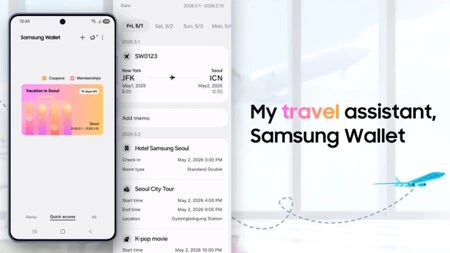
The upcoming "Trips" feature within Samsung Wallet is designed to be a dedicated section specifically tailored for organizing and managing travel itineraries. Unlike previous functionalities that treated individual tickets or passes as standalone items, "Trips" aims to provide a holistic view of an entire journey. This means consolidating a wide array of travel-related information into a single, intuitive interface.
The core functionalities of "Trips" are expected to include the integration of flights, train tickets, and hotel reservations. This comprehensive aggregation promises to streamline the travel experience significantly. Travelers will no longer need to juggle between various airline applications, train operator websites, hotel booking platforms, or a multitude of email confirmations and PDF documents. Instead, all pertinent details for a given trip—from departure and arrival times to reservation numbers, accommodation details, and check-in information—will be accessible within Samsung Wallet.
Beyond mere storage, "Trips" is anticipated to offer proactive notifications and reminders linked directly to the travel itinerary. Imagine receiving an alert for an impending flight check-in, a gate change notification for your next connection, or a reminder about your hotel check-in time, all pushed directly through Wallet. This predictive and assistive capability moves Samsung Wallet beyond a passive data holder to an active travel assistant, designed to mitigate stress and improve efficiency for travelers.
This shift represents a fundamental change in the application’s logic. While storing a digital ticket was undoubtedly useful, it remained a somewhat isolated function. "Trips," by contrast, intends to orchestrate the entire travel sequence. It will act as a centralized dashboard, displaying elements related to the complete journey, thereby creating a seamless and integrated experience. For instance, upon landing from a flight, the app could immediately present the details of a connecting train journey or provide directions to a pre-booked hotel. This level of integration is precisely what was missing for Samsung to offer a truly complete travel experience, positioning the Galaxy device as the central control panel for personal mobility.
Strategic Implications and Competitive Landscape
The introduction of "Trips" holds significant strategic implications for Samsung in the fiercely competitive digital wallet arena. While Apple Wallet and Google Wallet also offer capabilities for storing boarding passes and various tickets, Samsung’s explicit focus on a dedicated "Trips" section that unifies flights, trains, and hotels could provide a unique competitive edge, especially in markets where train travel is a dominant mode of intercity or regional transportation.
By consolidating disparate travel components, Samsung is directly addressing a key pain point for modern travelers: information fragmentation. The average traveler today interacts with numerous digital touchpoints for a single journey—booking sites, airline apps, ride-sharing services, hotel apps, and more. "Trips" seeks to simplify this by creating a single, reliable source of truth for all travel-related data. This could significantly enhance user loyalty to the Samsung ecosystem, making Galaxy devices even more integral to users’ daily and travel routines.
The move also underscores Samsung’s broader ecosystem strategy. By making the smartphone (and potentially other Galaxy devices like smartwatches) a central hub for travel, Samsung reinforces the value proposition of its hardware. A seamless travel experience tied to the device could influence purchasing decisions, particularly for frequent travelers or those seeking maximal digital convenience.
To fully realize the potential of "Trips," Samsung will undoubtedly need to forge extensive partnerships across the global travel industry. This includes collaborations with major airlines, national and regional train operators, hotel chains, and potentially even online travel agencies (OTAs) and ground transportation providers. Industry analysts suggest that the success and widespread adoption of "Trips" will hinge on the breadth and depth of these integrations. Secure APIs and robust data exchange protocols will be essential to ensure real-time accuracy and comprehensive coverage. For instance, the ability to import bookings directly from popular travel agencies or automatically detect travel itineraries from email confirmations (with user consent) would significantly enhance the feature’s convenience and appeal.
Supporting Data and Market Trends Driving Digital Travel Solutions
The timing of Samsung’s "Trips" initiative aligns perfectly with several prominent market trends and supporting data points within the travel and technology sectors. The global travel industry, having largely rebounded from the disruptions of the pandemic, is witnessing a robust resurgence. Reports from organizations like the World Travel & Tourism Council (WTTC) indicate strong growth projections, with travelers increasingly seeking seamless and digitally integrated experiences.
Furthermore, the adoption of mobile wallets for non-payment functions has been on a steady upward trajectory. Research firms like Statista and Juniper Research consistently report a significant increase in users leveraging mobile wallets for loyalty cards, event tickets, and various forms of identification. A 2023 report by Juniper Research, for example, projected that the total transaction value of digital wallets would exceed $12 trillion globally by 2027, with a substantial portion of this growth driven by value-added services beyond just payments. This indicates a clear consumer appetite for a centralized digital hub for personal credentials and information.
The digital transformation within the travel sector itself has accelerated dramatically. Travelers now expect to manage bookings, check in, receive updates, and even access hotel rooms using their smartphones. According to a study by SITA, a leading IT provider for the air transport industry, over 70% of passengers are willing to use their mobile devices for tasks throughout their journey, from baggage drop to boarding. This pervasive reliance on mobile technology makes a feature like "Trips" not just a convenience but an expected evolution in the travel experience.
Moreover, the increasing demand for sustainable travel and efficient public transport systems in many regions, particularly in Europe and Asia, means that robust train ticket integration within a digital wallet is not merely an optional add-on but a crucial utility. In countries where high-speed rail networks are extensive and heavily utilized for both business and leisure travel, a seamless digital solution for train tickets can be as impactful as flight integration. This focus on train travel could give Samsung a distinct advantage in these specific markets, differentiating it from competitors whose travel features might be more heavily skewed towards air travel.
Challenges and Future Outlook
Despite the clear strategic advantages and market alignment, the successful implementation and widespread adoption of "Trips" will face several challenges. Foremost among these is the official launch strategy. Samsung has yet to confirm key details such as the initial launch countries, the specific travel operators and services that will be compatible, and whether the feature will roll out globally or in a phased regional deployment. The complexity of integrating with diverse travel systems, each with its own APIs and data standards, cannot be underestimated.
Interoperability will be another critical factor. For "Trips" to be truly effective, it must seamlessly pull data from a vast array of airlines, train companies, hotel chains, and potentially even car rental services worldwide. Ensuring consistent data accuracy, real-time synchronization, and robust error handling across such a fragmented ecosystem will be a significant technical undertaking.
Data privacy and security will also remain paramount concerns. Storing sensitive travel itineraries, personal identification details, and booking information within a digital wallet necessitates the highest levels of encryption and user control. Samsung’s reputation for device security will be an asset here, but transparent policies regarding data usage and sharing will be crucial for building user trust.
Finally, user adoption will depend not only on the feature’s technical prowess but also on its ease of use and perceived value. Samsung will need to effectively communicate the benefits of "Trips" to encourage users to switch from their established travel management habits, which might involve dedicated travel apps or manual organization methods. A strong marketing campaign highlighting the convenience and stress-reduction aspects will be vital.
Despite these hurdles, the direction Samsung is taking with Wallet is unequivocally clear. By integrating "Trips," Samsung Wallet is moving beyond being merely a transactional tool or a digital card holder. It is evolving into a sophisticated digital companion designed to actively assist users in navigating the complexities of modern travel. This ambitious step positions Samsung to offer a truly comprehensive digital lifestyle platform, where the Galaxy device serves not only as a means of communication and entertainment but also as an intelligent, indispensable orchestrator of movement, making journeys smoother and more organized for millions of users worldwide. The eventual global rollout and the scope of its integrations will be keenly watched by both consumers and industry rivals alike.
