

The United States Space Force, acting through its innovation arm SpaceWERX, has officially awarded a $4 million Tactical Funding Increase (TACFI) contract to TrustPoint, a commercial aerospace firm specializing in next-generation positioning, navigation, and timing (PNT) services. This significant financial injection is earmarked for the development and deployment of a comprehensive end-to-end demonstration involving four Low-Earth Orbit (LEO) satellites and four corresponding ground stations. The primary objective of this mission is to validate a PNT service that functions entirely independently of the Global Positioning System (GPS), providing a critical layer of redundancy and resilience for both military and commercial applications.
This contract represents a pivotal moment in the Department of the Air Force’s broader strategy to diversify the nation’s orbital assets. The funding is a collaborative effort, drawing resources from the Small Business Innovation Research (SBIR) program and the Commercial Space Office (COMSO). Unlike many TACFI awards that require a matching contribution from private venture capital, this specific $4 million award was provided in full by SpaceWERX, signaling a high level of confidence and a sense of urgency regarding the development of alternative PNT capabilities.
The Strategic Necessity of Independent PNT
For decades, the Global Positioning System, operated by the U.S. Space Force, has been the "gold standard" for global navigation. However, the system’s reliance on Medium-Earth Orbit (MEO) satellites—positioned approximately 20,000 kilometers above the Earth—presents inherent vulnerabilities. GPS signals are relatively weak by the time they reach the surface, making them susceptible to intentional jamming and "spoofing," where a malicious actor broadcasts a fake signal to misdirect a receiver.
As geopolitical tensions rise in regions like Eastern Europe and the Indo-Pacific, the threat of electronic warfare has moved from a theoretical risk to a daily reality. TrustPoint’s solution addresses these vulnerabilities by utilizing LEO satellites, which orbit much closer to Earth (typically between 500 and 2,000 kilometers). Because the satellites are closer, the signals they transmit can be significantly stronger—up to 1,000 times more powerful than traditional GPS—making them far more difficult to disrupt.
Furthermore, TrustPoint’s system operates in the C-band. This choice of frequency is strategic; it is distinct from the L-band frequencies used by GPS and other Global Navigation Satellite Systems (GNSS) like Europe’s Galileo, Russia’s GLONASS, and China’s BeiDou. By creating a system that does not tie back to these existing frameworks, TrustPoint offers a truly "sovereign" capability. As Patrick Shannon, CEO and founder of TrustPoint, noted, this independence allows users to rely on the service in a standalone fashion, ensuring operational continuity even if traditional GNSS signals are compromised or denied.
Technical Architecture: The Power of Microsats and Ground Nodes
The $4 million TACFI contract will fund a specific four-satellite constellation designed to demonstrate full end-to-end functionality. TrustPoint’s engineering philosophy centers on the use of microsatellites, specifically those in the 10-kilogram range. By utilizing smaller, "microsat-class" buses, the company can significantly reduce the costs associated with manufacturing and launch.
The company’s strategy involves a hybrid manufacturing model. TrustPoint sources commercial satellite buses from established vendors while keeping the core intellectual property—the PNT payload—in-house. This allows for rapid iteration and ensures that the most sensitive technology remains under proprietary control. The small form factor of these satellites also facilitates a "proliferated" architecture. If a satellite fails or is neutralized, it can be replaced quickly and affordably, a concept the Space Force refers to as "resilience through numbers."
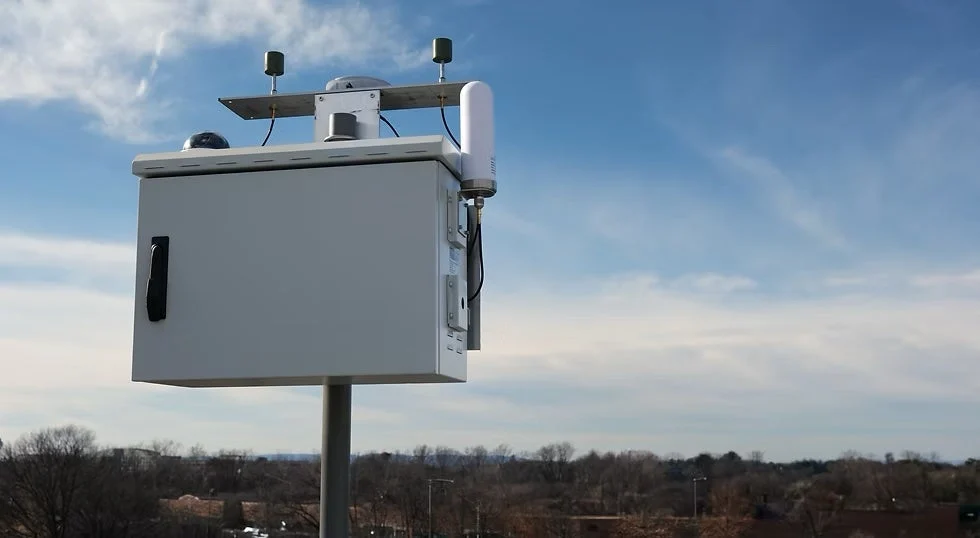
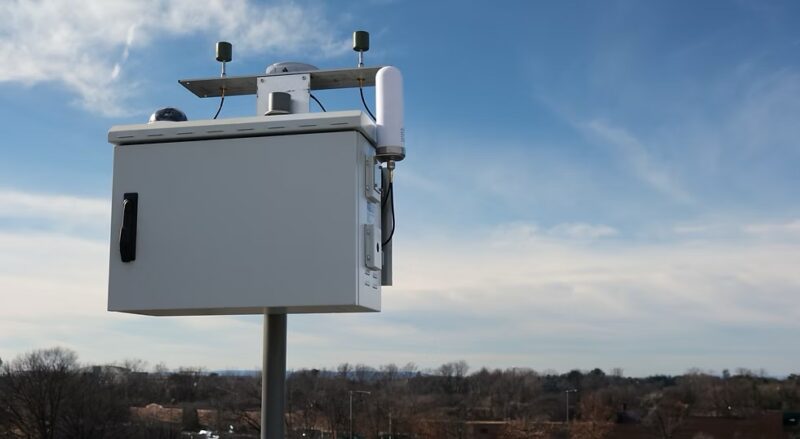
The ground component of the system is equally innovative. The four ground stations funded by this contract are described as being roughly the size of a household microwave. Their compact size and low production cost allow for rapid deployment across various theaters of operation. In a military context, these ground nodes could be set up by forward-deployed units to provide localized, high-precision timing and navigation in environments where GPS is being actively jammed. For commercial users, such as autonomous vehicle fleets or critical infrastructure operators, these nodes provide a low-barrier entry point for integrating redundant PNT into their existing systems.
Chronology of TrustPoint’s Development
The path to this $4 million award has been defined by a series of incremental successes. TrustPoint has previously launched and operated three separate single-satellite technical demonstrations. these missions were designed to test individual components of the C-band PNT payload and to validate the signal architecture in the harsh environment of space.
With the successful completion of these single-satellite tests, the company is now moving toward a "constellation-level" demonstration. The upcoming mission, scheduled for the first half of 2025, will be the first time TrustPoint operates multiple satellites in a synchronized network. This is a critical step because PNT services require signals from multiple sources to "triangulate" a user’s exact position and time. A four-satellite configuration provides the minimum viable geometry to prove that a LEO-based C-band system can provide accurate, real-time data to a receiver on the ground.
The Role of SpaceWERX and COMSO
The involvement of SpaceWERX and the Commercial Space Office underscores a shift in how the U.S. military acquires technology. Traditionally, the Department of Defense (DoD) relied on massive, multi-decade programs with "Prime" contractors to build bespoke systems. Today, the Space Force is increasingly looking toward "dual-use" commercial technologies—tools that have both military and civilian applications—to fill capability gaps more quickly.
The TACFI program is specifically designed to bridge the "Valley of Death," the gap between a successful prototype and a full-scale production contract. By providing $4 million in non-dilutive funding, the Space Force is essentially acting as a lead investor, helping TrustPoint scale its infrastructure without the immediate pressure of seeking private capital for this specific demonstration phase.
This award also reflects the priorities of the Commercial Space Office (COMSO), which was established to better integrate commercial space solutions into the Space Force’s operational architecture. COMSO’s support indicates that the government views LEO PNT not just as an experimental science project, but as a viable commercial service that the military can "buy" as a customer, rather than "owning and operating" as a traditional program of record.
Broader Implications for National Security and Global Markets
The implications of a successful TrustPoint demonstration extend far beyond the $4 million contract. For the U.S. military, a functional LEO PNT layer provides a "fail-safe" for the Joint Force. In a high-end conflict, the ability to maintain precision-guided munitions, synchronized communications, and accurate troop movements despite GPS interference could be the difference between victory and defeat.
However, the civilian and commercial applications are equally vast. Modern society is "GPS-dependent" to an extent that is often overlooked. Financial markets rely on GPS timing for high-frequency trading; telecommunications networks use it to synchronize cellular towers; and power grids use it to manage the flow of electricity. A significant disruption to GPS could result in billions of dollars in daily economic losses.
By providing a GNSS-independent alternative, TrustPoint is positioning itself as a provider of "economic insurance." Commercial industries, particularly those involved in autonomous transportation, drone delivery, and maritime logistics, are seeking "assured PNT" to ensure safety and reliability. The ability to access a high-strength, C-band signal from LEO offers these industries a level of security that the aging GPS infrastructure currently cannot match.
Looking Ahead: The 2025 Launch and Beyond
As TrustPoint prepares for its 2025 launch window, the company remains focused on demonstrating the affordability and scalability of its model. The goal is to prove that a robust, global PNT service can be built for a fraction of the cost of traditional MEO systems. If successful, this demonstration will likely pave the way for a much larger constellation, potentially numbering in the hundreds of satellites, providing continuous global coverage.
The Space Force’s "demand signal," as Shannon described it, is clear: the era of relying on a single, vulnerable source for positioning and timing is coming to an end. The collaboration between SpaceWERX and TrustPoint serves as a blueprint for how the government can leverage commercial agility to solve some of the most pressing technical challenges in modern defense.
As the satellites are integrated and the ground nodes are prepared for deployment within the United States, the aerospace industry will be watching closely. The success of this end-to-end demonstration could redefine the PNT landscape, ushering in a new age of resilient, multi-layered navigation that is robust enough to withstand the complexities of 21st-century warfare and the demands of a hyper-connected global economy.
