
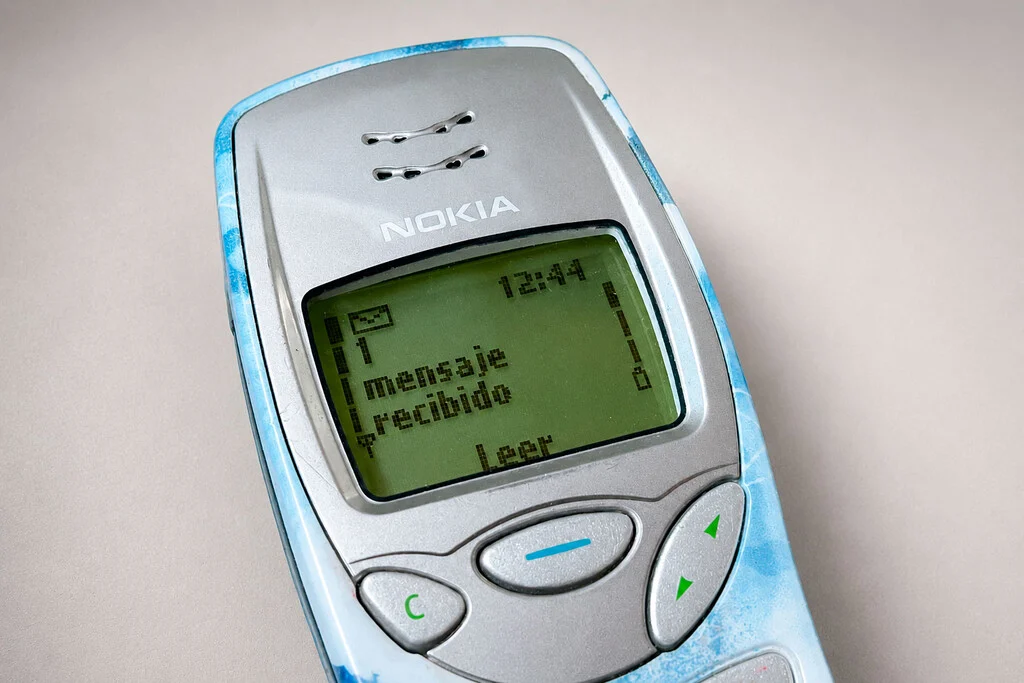

The ubiquitous Short Message Service (SMS), a cornerstone of mobile communication for decades, is famously constrained by a 160-character limit. This seemingly arbitrary restriction, often perceived as an inconvenience in an era of boundless digital expression, is in fact the product of a fascinating confluence of technical necessity and human ingenuity. Far from a mere historical footnote, this limit shaped an entire generation’s communication habits and continues to influence digital interactions today. Understanding its origins reveals a profound insight into the early days of mobile telephony and the meticulous engineering decisions that underpinned its global rollout.
The Technical Imperative: GSM and the Signaling Channel
At the heart of the 160-character limit lies the technical architecture of the Global System for Mobile Communications (GSM), the standard that revolutionized mobile telephony in the late 1980s and early 1990s. When engineers were developing GSM, they sought an efficient way to transmit short text messages without requiring a dedicated, resource-intensive data channel. Their ingenious solution was to "piggyback" SMS messages on the existing signaling channels of the GSM network, specifically the Signaling System No. 7 (SS7) network.
The SS7 network is the backbone for controlling and managing mobile calls, handling tasks such as call setup, routing, and subscriber registration. Within this critical infrastructure, a small, unused portion of the signaling channel was identified as suitable for carrying short bursts of data. This channel, known as the control channel or signaling channel, had a specific capacity for data packets. The maximum payload available for an SMS message in this channel was precisely 140 octets (bytes).
To maximize the number of characters that could be transmitted within these 140 octets, the engineers opted for a 7-bit encoding scheme, rather than the more common 8-bit ASCII. In a 7-bit scheme, each character requires 7 bits of data. Since one octet equals 8 bits, 140 octets provide 140 * 8 = 1120 bits. Dividing 1120 bits by 7 bits per character yields exactly 160 characters. This technical decision was a stroke of brilliance, allowing messages to be sent reliably and economically without interfering with the primary function of the network—voice calls. It ensured that SMS could function as an "always-on" service, even when network congestion might prevent voice calls or data connections.
This technical foundation, established in the nascent stages of GSM development, ensured the robustness and ubiquity of SMS. Messages transmitted over the signaling channel were inherently prioritized and had a higher likelihood of delivery, even in challenging network conditions, because they rode alongside the critical control signals that kept the entire mobile network operational.
A Pioneer’s Vision: Friedhelm Hillebrand and the Human Factor
While the 140-octet technical constraint provided the raw capacity, the final commercial decision to cap messages at 160 characters was famously attributed to a human, Friedhelm Hillebrand. In 1985, Hillebrand, a German engineer then aged 45, was chairing the non-voice services committee of the GSM group (then known as Groupe Spécial Mobile under the European Conference of Postal and Telecommunications Administrations, CEPT). His committee was tasked with defining the fundamental standards for mobile communication beyond voice.
Hillebrand, a visionary in the telecommunications field, was contemplating the ideal length for these new text messages. He wasn’t just working with technical specifications; he was trying to understand human communication patterns. As recounted in various chronicles, including a 2009 article in the Los Angeles Times, Hillebrand conducted an unusual but insightful experiment. He sat at his typewriter, tapping out random sentences and questions, meticulously counting the characters. He analyzed the average length of postcards, telegrams, and telex messages, all forms of concise written communication prevalent at the time.
His empirical findings led him to a crucial conclusion: most sentences, questions, and replies could be adequately expressed within 160 characters. "This is perfectly sufficient," he famously declared, a statement that would reverberate through the history of mobile communication. Hillebrand’s genius lay in bridging the technical capacity of the GSM network with a pragmatic understanding of human communication needs. He recognized that while the network could support up to 140 octets, packaging that into a user-friendly and functionally effective 160-character limit, even with a slightly complex 7-bit encoding, would be optimal for widespread adoption and utility. This decision was not merely about what was technically possible, but what was humanly effective.
A Brief History of SMS: From Concept to Global Phenomenon
The concept of sending text messages over mobile networks predates Hillebrand’s work. Matti Makkonen, a Finnish engineer, is often credited with proposing the idea of a "short message service" in 1984 during a telecommunications conference. However, it was the meticulous standardization efforts of the GSM committee, including Hillebrand’s contribution, that brought the concept to fruition.
The first actual SMS message was sent on December 3, 1992, by Neil Papworth, a British test engineer, from a computer to the Vodafone director Richard Jarvis’s Orbitel 901 handset. The message simply read, "Merry Christmas." Initially, SMS was a free service, primarily used by network operators to send notifications to subscribers. Its commercial potential was not immediately recognized.
Early adoption was slow. Mobile phones of the early to mid-1990s were primarily designed for voice calls, and texting on numeric keypads was a cumbersome process requiring multiple presses for each letter (T9 predictive text entry, while a significant improvement, didn’t become widespread until later). However, by the late 1990s, with the rise of more affordable handsets, pre-paid plans, and the increasing popularity of mobile communication among younger demographics, SMS began its meteoric ascent.
The turn of the millennium marked the "golden age" of SMS. By 2002, over 250 billion SMS messages were sent globally. This figure soared to over 6.1 trillion by 2010, demonstrating the service’s unparalleled reach and impact. For many, especially teenagers and young adults, SMS became the primary mode of communication, fostering a new culture of instant, discreet, and personal interaction.
The Cultural and Economic Impact of Brevity
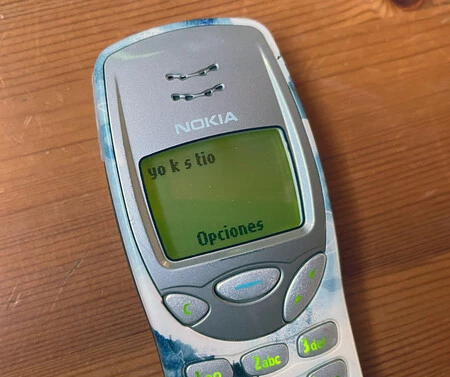
The 160-character limit, combined with a per-message charging model, profoundly shaped communication habits. Unlike today’s flat-rate data plans, early SMS messages were often charged individually, sometimes at premium rates. This economic reality forced users to be incredibly concise, leading to the widespread adoption of "text speak" – abbreviations, acronyms, and phonetic spellings (e.g., "LOL" for laugh out loud, "CU" for see you, "GR8" for great). This shorthand became a cultural phenomenon, a secret language shared among mobile users, often to the consternation of older generations.
The discipline imposed by the character limit had unexpected benefits. It encouraged clear, direct communication, forcing senders to distill their thoughts to their essence. This brevity, while sometimes leading to ambiguity, also fostered a unique form of creativity in expression. Users became adept at conveying complex ideas or emotions within the tight confines, utilizing emojis and emoticons as visual shortcuts.
Beyond personal communication, SMS quickly found commercial applications. It became a vital tool for news alerts, weather updates, basic banking notifications, and early forms of mobile marketing. Its reliability and reach made it ideal for conveying critical information, establishing a precedent for its enduring role in emergency services and two-factor authentication. The economic model, where "SMS valían oro" (SMS were worth gold), generated significant revenue for mobile operators globally, solidifying its position as a core service.
The Rise of OTT Messaging and the SMS Paradigm Shift
The dominance of SMS began to wane with the advent of smartphones and the widespread availability of mobile internet data plans in the late 2000s. This period saw the rise of "over-the-top" (OTT) messaging applications like BlackBerry Messenger (BBM), WhatsApp, iMessage, Viber, and Telegram. These apps leveraged the internet connection on smartphones to offer "free" messaging (as long as users had a data plan or Wi-Fi), breaking free from the per-message charges imposed by mobile carriers.
OTT apps offered a vastly superior user experience. They removed the character limit, allowing users to send messages of virtually any length, akin to composing a "Quijote" as the original article implies. Crucially, they introduced multimedia capabilities, enabling the sharing of photos, videos, audio messages, and location data—features that were either impossible or prohibitively expensive with traditional SMS. Group chats, read receipts, and a richer, more interactive interface further cemented their appeal.
The shift was rapid and dramatic. Consumers, no longer bound by character limits or per-message costs, flocked to these new platforms. Mobile network operators, initially slow to react, saw their lucrative SMS revenues plummet. While they tried to compete with their own messaging apps or by offering unlimited SMS bundles, the momentum had irrevocably shifted towards data-driven, app-based communication.
The Persistent Relevance and Evolving Role of SMS
Despite the overwhelming popularity of OTT messaging apps, SMS has remarkably retained a significant, albeit redefined, role in the digital ecosystem. Its enduring relevance stems from its foundational technical advantages:
- Ubiquity and Reach: SMS is supported on virtually every mobile phone globally, regardless of whether it’s a basic feature phone or a high-end smartphone, and does not require an internet connection. This makes it indispensable for reaching users in areas with limited data coverage or for those who do not use smartphones.
- Reliability: Because SMS messages still largely traverse the robust signaling channels of the mobile network, they boast a higher delivery rate and are less susceptible to internet connectivity issues compared to OTT apps.
- Security and Authentication: SMS remains a cornerstone for two-factor authentication (2FA) and one-time passcodes (OTPs) for banking, online services, and account verification. Its direct delivery to a registered phone number provides a layer of security, despite some known vulnerabilities like SIM-swapping attacks.
- Application-to-Person (A2P) Messaging: Businesses heavily rely on SMS for critical communications such as appointment reminders, delivery notifications, flight updates, marketing alerts, and emergency broadcasts. This A2P SMS market continues to be a multi-billion dollar industry.
- Emergency Services: In many regions, SMS is integrated into emergency alert systems, providing a crucial communication channel during disasters or public safety crises.
Looking ahead, the telecommunications industry is actively developing Rich Communication Services (RCS) as the "SMS of the future." RCS aims to combine the best features of OTT apps (rich media, group chat, read receipts) with the universal reach and reliability of SMS, all while operating within the carrier network infrastructure. While its adoption is still in progress, RCS represents an acknowledgment of the enduring need for a standardized, carrier-supported messaging service that can evolve beyond the original 160-character constraint.
Conclusion: A Legacy of Efficiency and Innovation
The 160-character limit of SMS is more than just a historical artifact; it is a testament to the foresight of early mobile engineers and a profound example of how technical constraints, when combined with human-centric design, can shape global communication. From the technical brilliance of leveraging GSM’s signaling channels to Friedhelm Hillebrand’s empirical determination of "sufficient" length, the SMS limit fostered a culture of conciseness, spurred innovation in shorthand communication, and created a universally accessible messaging platform.
While modern communication has largely moved towards multimedia-rich, data-driven platforms, the discipline of brevity enforced by SMS continues to resonate. It reminds us of an era when every character counted, fostering a valuable skill in direct and efficient expression. The legacy of the 160-character SMS, therefore, is not merely one of limitation, but one of remarkable efficiency, adaptability, and an enduring influence on how we connect in the digital age.
