

The global landscape of artificial intelligence infrastructure is undergoing a fundamental transformation, moving from an era defined by the raw quantity of accelerators to one defined by complex system composition. In the initial phase of the generative AI boom, success was measured by the sheer scale of deployment: the number of Graphics Processing Units (GPUs), Neural Processing Units (NPUs), or custom AI accelerators a data center could house, power, and cool. While the demand for high-density compute remains, industry experts and architectural shifts indicate that accelerator scale is no longer the sole determinant of performance. The industry is entering a second phase centered on heterogeneous rack-scale systems, where diverse compute resources are strategically optimized for different stages of the increasingly complex "agentic" AI workflow.
As AI inference matures from simple, single-pass model calls into multi-step agentic pipelines, the focus of data center design is shifting toward how to best assemble specialized compute tiers. These modern architectures, often reaching gigawatt-scale superclusters, treat the entire rack as a singular, dense compute engine rather than a collection of independent servers. Within these racks, accelerators continue to handle the heavy lifting of model execution, but Central Processing Units (CPUs) have emerged as the critical orchestration layer required to manage the sophisticated logic of AI agents.
The Chronology of Infrastructure Evolution
To understand the current shift, it is necessary to trace the trajectory of AI hardware over the last decade. From 2012 to 2020, AI infrastructure was largely experimental and focused on training small-scale models. The release of large language models (LLMs) and the subsequent viral success of ChatGPT in late 2022 triggered a massive "arms race" for hardware. This period, which defined the first phase of generative AI infrastructure, saw hyperscalers and enterprises focused almost exclusively on securing NVIDIA H100s and similar accelerators. The goal was to build massive clusters capable of training trillion-parameter models.
By 2024, however, the industry began to hit a "bottleneck of efficiency." While training remains essential, the volume of inference—the actual use of these models in production—has skyrocketed. Simultaneously, the nature of inference itself has changed. It is no longer a linear process where a user sends a prompt and receives a response. Instead, the rise of "Agentic AI" has introduced a structural change in how workloads are processed. Agents do not just generate text; they plan, retrieve external data, call various APIs, run Python code, and reason over intermediate results before delivering a final output. This iterative process requires a more nuanced approach to hardware than the "brute force" accelerator model of the past.
The Shift to Agentic AI Workflows
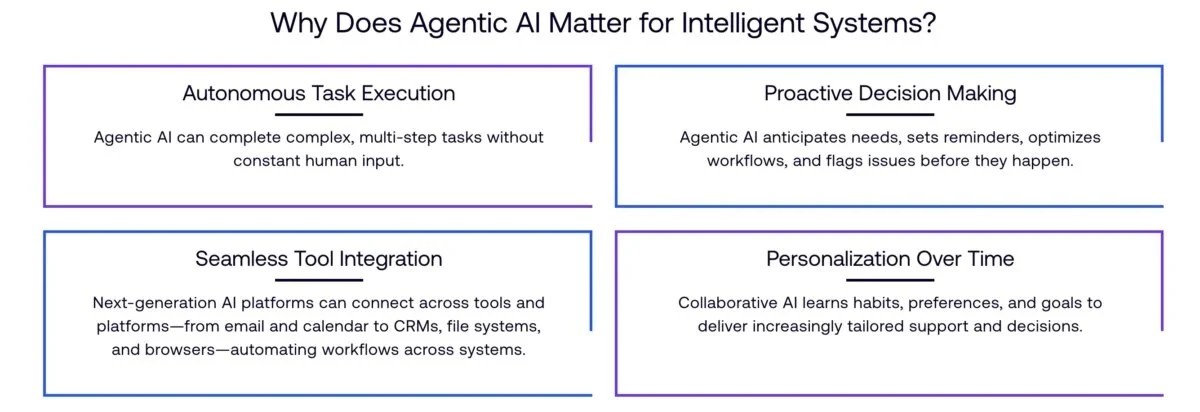
The move toward agentic AI represents a departure from traditional "one-shot" inference. Traditional inference was characterized by a request entering the system, a model generating a response, and the transaction concluding. Agentic AI, by contrast, operates in loops. An agent might receive a prompt, decide it needs more information, query a database (Retrieval-Augmented Generation or RAG), analyze that data, call a third-party tool to perform a calculation, and then pass that information back into the model for further reasoning.
This shift has profound implications for data center architecture. A significant portion of the workload now exists outside the neural network’s forward pass. More time and energy are spent coordinating tasks across accelerators, high-speed memory, storage, and networking. This has led to the realization that the CPU is not merely a "host" for the GPU, but a central component of the agentic engine.
In a recent analysis by Austin Lyons in Chipstrat, the author noted that "the CPU is not a commodity, but it is not a single prize either." This perspective highlights the need for specialized CPUs rather than generic, one-size-fits-all processors. In a heterogeneous rack, different CPUs are required to handle different tasks: some are optimized for feeding data to accelerators at high speeds, while others are designed to manage memory-intensive operations or execute the complex logic that occurs between model calls.
The Rack as the Unit of Compute
In this new architectural era, the rack itself has become the system of record. Infrastructure builders are no longer designing for individual nodes; they are designing for "rack-scale composition." This approach is necessitated by the growing separation between two distinct phases of the inference pipeline: prefill and decode.
The prefill phase occurs when the system processes the initial input prompt and populates the Key-Value (KV) cache. This stage is compute-intensive and relies heavily on the parallel processing power of accelerators. The decode phase, however, is where the system generates the response token by token. As context windows expand to handle hundreds of thousands of tokens, the decode phase becomes increasingly constrained by memory bandwidth and the movement of the KV cache rather than raw flops.

A heterogeneous AI rack must integrate these specialized components to behave as a single, coherent system. This requires sophisticated software orchestration to route requests to the correct compute tier, manage KV cache transfers between different nodes, and maintain session states across multi-step workflows. The architectural question has evolved from "how many accelerators can we fit?" to "how do we coordinate each stage of the agentic workflow to maximize throughput and minimize latency?"
Three Essential CPU Roles in Modern AI Racks
Industry leaders, including those at Arm, have identified three distinct roles that CPUs must play within these new heterogeneous racks:
- The Prefill Host: This CPU is responsible for managing the high-speed data ingestion required to feed accelerators. It handles the scheduling of massive parallel workloads and ensures that the accelerators are never "starved" for data, which would lead to wasted power and compute cycles.
- The Decode Host: During the token generation phase, the CPU’s role shifts toward memory management. The decode host must handle high-bandwidth memory transfers and manage the KV cache, which grows in size as conversations or reasoning chains become longer.
- The Agent Worker: This is perhaps the most significant new role. The agent worker CPU executes the non-model code—the logic that connects the AI to the outside world. This includes running API calls, executing sandboxed code, performing policy checks, and orchestrating retrieval systems.
This reframing is critical for infrastructure teams. Evaluating a CPU based solely on a single benchmark is no longer sufficient; instead, capacity must be measured against the specific requirements of the inference pipeline.
Arm’s Strategic Pivot and the AGI CPU
Arm, a dominant force in mobile and increasingly in cloud computing, has positioned itself at the center of this transition. The company recently introduced the Arm AGI CPU, a processor specifically designed for the requirements of agentic AI infrastructure. Unlike traditional server CPUs, the AGI CPU focuses on high core density, massive memory bandwidth, and CXL (Compute Express Link) readiness to facilitate fast data exchange between CPUs and accelerators.
Mohamed Awad, Executive Vice President of the Cloud AI Business Unit at Arm, has emphasized that "performance per watt" has become the definitive benchmark for the modern AI data center. As data centers push toward the gigawatt scale, the efficiency with which a system converts power into useful AI work determines its economic viability. Arm’s architecture, known for its power efficiency and flexibility, allows partners to build custom silicon or utilize pre-designed compute subsystems that are tailored for either prefill, decode, or agentic worker roles.
Economic and Operational Implications
The shift to heterogeneous infrastructure also addresses a historical barrier: software friction. In the past, deploying multiple architectures (such as mixing x86 and Arm, or different types of accelerators) was a logistical nightmare involving complex code porting and performance tuning. However, the rise of AI-assisted development is compressing this timeline. AI models are now being used to assist in porting code, validating software stacks, and automating DevOps workflows, making it significantly easier for enterprises to adopt the "best tool for the job" regardless of the underlying architecture.
The economics of AI are also being rewritten. The key metric is no longer the price-to-performance ratio of a single GPU, but the total cost of ownership (TCO) of the entire rack. If a rack can handle 30% more agentic workflows by utilizing specialized CPUs to offload work from expensive GPUs, the return on investment (ROI) shifts dramatically in favor of heterogeneity.
Future Outlook and Industry Impact
As we look toward 2025 and beyond, the trend toward rack-scale specialization is expected to accelerate. Major hyperscalers like Amazon (AWS), Google, and Microsoft are already developing their own custom silicon—such as AWS Trainium/Inferentia and Google’s TPUs—which are designed to work in concert with specialized CPUs like Graviton or Axion.
The industry is moving beyond the "accelerator-first" mentality. While NVIDIA’s dominance in the accelerator market remains unchallenged in the short term, the surrounding ecosystem is becoming increasingly diverse. The differentiator for future data centers will be how effectively they can orchestrate these diverse resources.
In the era of agentic AI, the rack is the system, and heterogeneity is the standard. The most successful infrastructure deployments will be those that recognize the CPU as a central pillar of the AI strategy, providing the necessary orchestration, memory coordination, and efficiency required to turn raw silicon power into intelligent, autonomous action. The transition from component-level scaling to system-level composition marks the beginning of a more mature, efficient, and capable age of artificial intelligence.
