
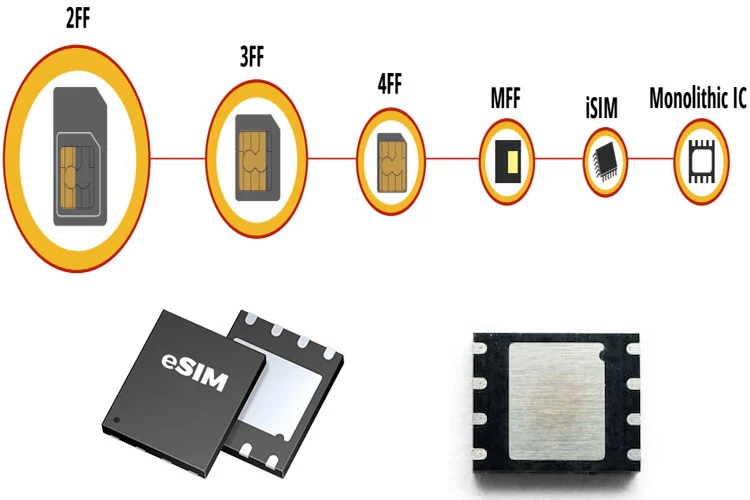

The telecommunications industry is currently undergoing one of its most significant structural transformations since the inception of the cellular network: the transition from physical, removable SIM cards to the Embedded Subscriber Identity Module, or eSIM. This shift represents more than just a change in form factor; it is a fundamental reimagining of how mobile devices connect to global networks, offering unprecedented flexibility for consumers, streamlined logistics for manufacturers, and a new digital-first paradigm for service providers. As of 2024, the adoption of eSIM technology has moved from a niche feature found in high-end wearables to a standard requirement for modern flagship smartphones, fundamentally altering the landscape of mobile roaming and device security.
Defining the eSIM: The Architecture of Digital Identity
An eSIM, technically known as an eUICC (Embedded Universal Integrated Circuit Card), is a hardware component soldered directly onto a device’s motherboard during the manufacturing process. Unlike the traditional plastic SIM card, which has been the industry standard for over three decades, the eSIM is a programmable microchip that stores multiple subscriber profiles digitally. This hardware measures approximately 5mm by 5mm—significantly smaller than even the Nano-SIM—allowing device manufacturers to reclaim internal space for larger batteries, improved thermal management, or additional sensors.
The core functionality of an eSIM revolves around Remote SIM Provisioning (RSP). This technology allows a mobile network operator (MNO) to send subscriber credentials over-the-air (OTA) to the device. Once the encrypted data is received, the eSIM stores the authentication keys and network configurations necessary to establish a secure connection. Because the chip is rewritable, users can store several "profiles" on a single device, though typically only one or two can be active simultaneously depending on the device’s hardware capabilities.
A Chronology of the eSIM Revolution
The journey toward a cardless mobile experience has been a decade-long endeavor led by the GSMA (Global System for Mobile Communications Association). Understanding the timeline of this technology provides essential context for its current market dominance.
- 2010–2012: The GSMA begins exploring the possibility of a software-based SIM to facilitate Machine-to-Machine (M2M) communication, primarily for industrial IoT (Internet of Things) applications where physical SIM swapping was impractical.
- 2016: The first consumer device featuring an eSIM, the Samsung Gear S2 Classic 3G smartwatch, is launched. This marks the transition of the technology from industrial use to the consumer market.
- 2017: Google introduces the Pixel 2, the first major smartphone to incorporate eSIM technology, though it still retained a physical SIM slot for backward compatibility.
- 2018: Apple integrates eSIM technology into the iPhone XS, XS Max, and XR. This move forces global carriers to accelerate their digital infrastructure to support eSIM activation.
- 2022: In a watershed moment for the industry, Apple releases the iPhone 14 series in the United States as an eSIM-only device, completely removing the physical SIM tray. This decision signaled the beginning of the end for plastic SIM cards in the premium smartphone segment.
- 2023–2024: Mid-range Android devices and a wider array of tablets and laptops begin adopting eSIM as a standard feature, while international roaming providers proliferate, offering data-only eSIM plans for travelers.
Technical Mechanics: How Remote Provisioning Works
The activation of an eSIM is a sophisticated handshake between the device, the carrier’s discovery server, and the user. When a user purchases a plan, the carrier generates a unique digital token, usually presented as a QR code. This code contains the address of the SM-DP+ (Subscription Manager Data Preparation) server.
When the device camera scans the QR code, it contacts the SM-DP+ server to request the download of a specific profile. The server verifies the device’s EID (Embedded Identity Document)—a unique 32-digit serial number—and then transmits the encrypted profile. This process eliminates the need for a physical "key" to be mailed or handed over in a retail store, reducing the activation window from days to seconds.
Comparative Analysis: eSIM vs. Physical SIM
The transition to eSIM is driven by several distinct advantages, though it also introduces new considerations for users accustomed to the physical swap-and-go nature of traditional cards.
Advantages of eSIM
- Enhanced Security: A physical SIM card can be easily removed if a device is stolen, allowing thieves to disable tracking or use the phone number for fraudulent two-factor authentication. An eSIM cannot be removed, meaning a stolen device remains connected to the network, making it significantly easier to track via services like "Find My."
- Space Efficiency: By removing the SIM tray and the internal reader mechanism, manufacturers can improve the structural integrity and water resistance of devices. This extra space is critical for the development of foldable phones and ultra-thin wearables.
- Convenience for International Travel: Travelers no longer need to find a local kiosk upon landing in a foreign country. They can purchase and install a local or regional data plan before they even board their flight, switching to the local network the moment they land.
- Multi-Profile Management: Modern eSIMs can store between five and ten profiles. This allows a user to have a work number, a personal number, and several travel plans on a single device without carrying multiple cards.
Limitations of Physical SIMs
Traditional SIM cards are prone to physical wear, oxidation of the gold contacts, and mechanical failure. Furthermore, the logistics of producing, packaging, and shipping billions of plastic cards annually creates a significant environmental footprint. According to industry data, the telecommunications sector produces over 4.5 billion plastic SIM cards every year, contributing to thousands of tons of plastic waste and CO2 emissions from transport.
Market Data and Global Adoption Trends
Data from GSMA Intelligence indicates that by the end of 2025, there will be over 3.4 billion eSIM-enabled devices globally. This represents a compound annual growth rate (CAGR) of approximately 15% from 2021. Research from Juniper Research further supports this, suggesting that the value of the global eSIM market will increase from roughly $4.7 billion in 2023 to over $16 billion by 2030.
Geographically, adoption is highest in North America and Western Europe, where carrier infrastructure is most advanced. However, emerging markets in Southeast Asia and the Middle East are seeing rapid growth as digital-only "neobanks" and telecom startups use eSIMs to bypass the cost of physical retail distribution.
Device Compatibility and Ecosystem Expansion
While flagship smartphones lead the charge, the eSIM ecosystem is expanding into diverse hardware categories:
- Smartphones: Apple (iPhone 11 and newer), Google (Pixel 3 and newer), Samsung (Galaxy S20 and newer), and flagship models from Motorola, Sony, and Huawei.
- Wearables: Almost all cellular-enabled smartwatches, including the Apple Watch Series 3 and later, Samsung Galaxy Watch series, and Garmin LTE models, rely exclusively on eSIM due to their small size.
- Computing: An increasing number of "Always Connected" PCs from Microsoft (Surface Pro), HP, and Lenovo now feature eSIM slots to provide 5G connectivity for remote workers.
- Automotive: Modern vehicles from Tesla, BMW, and Mercedes-Benz use embedded SIMs for navigation, over-the-air software updates, and emergency "eCall" services.
Activation Protocols: A Step-by-Step Overview
The activation process has been standardized across platforms to ensure a seamless user experience, though minor differences exist between operating systems.
Activating on Apple iOS
- Navigate to Settings > Cellular.
- Tap Add eSIM or Set Up Cellular.
- Choose Use QR Code and scan the code provided by the carrier.
- Label the new plan (e.g., "Travel" or "Business").
- Confirm the default line for calls and data.
Activating on Android (General)
- Open Settings > Network & Internet.
- Tap the + or Add icon next to "Mobile Network."
- Select Download a SIM instead?
- Scan the carrier’s QR code.
- Follow the on-screen prompts to activate the profile.
Industry Implications and Future Outlook
The shift to eSIM technology is fundamentally changing the relationship between consumers and carriers. Historically, carriers used the physical SIM card as a "lock" to prevent customer churn. With eSIM, the barrier to switching providers is significantly lowered. This has led to the rise of "Travel eSIM" marketplaces like Airalo and Holafly, which have disrupted the traditional high-margin international roaming revenue of major carriers.
Industry analysts suggest that we are entering an era of "Programmable Connectivity." In the future, devices may be able to automatically switch between carriers based on which provider offers the strongest signal or the lowest cost at a specific moment, without any manual intervention from the user.
Furthermore, the environmental impact cannot be overstated. As the industry moves toward "Zero Plastic" initiatives, the total elimination of physical SIM cards will remove a significant source of electronic and plastic waste. For carriers, the reduction in overhead costs associated with inventory management and physical shipping will allow for more competitive pricing and investment in 5G and 6G infrastructure.
In conclusion, the eSIM is not merely a technical upgrade; it is the cornerstone of the next generation of mobile communication. While the transition requires a shift in consumer habits and carrier business models, the benefits of enhanced security, global flexibility, and environmental sustainability make the widespread adoption of eSIM an inevitable and positive evolution in the digital age. As hardware continues to shrink and connectivity becomes more ubiquitous, the era of the plastic SIM card is rapidly drawing to a close, replaced by a more agile, digital-first identity.
