
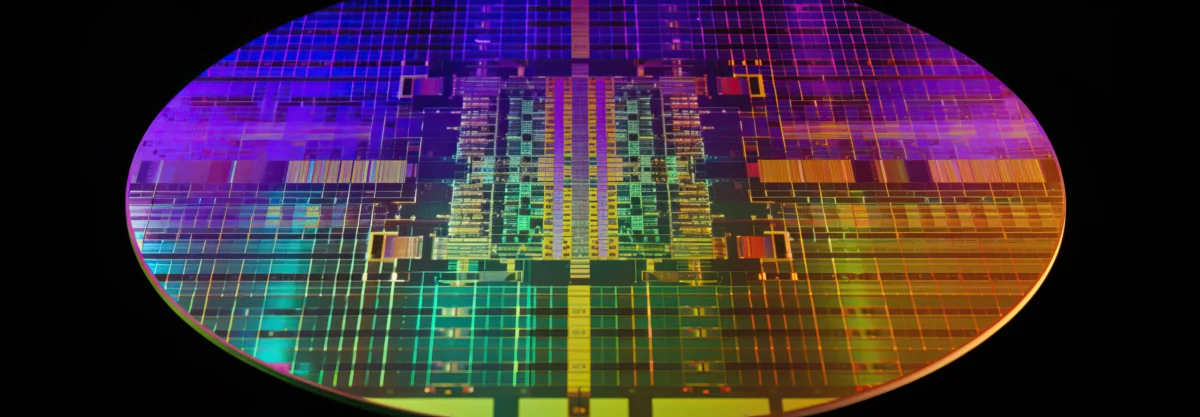

The global semiconductor industry is currently navigating a pivotal transition where the traditional laws of physics are increasingly colliding with the harsh realities of corporate economics. While the technical pursuit of device scaling continues toward the 2-nanometer (nm) threshold and beyond, the ability to actually manufacture these designs is becoming a privilege reserved for an elite tier of technology giants. As foundries like Taiwan Semiconductor Manufacturing Company (TSMC) reach near-total capacity for their most advanced nodes, a new market dynamic has emerged: one where economic power, rather than purely engineering ingenuity, dictates the roadmap of technological progress.
The New Hierarchy of Silicon Access
The race to the next generation of technology nodes—specifically the shift from FinFET to nanosheet transistors at 2nm—is driven by an insatiable demand for performance and energy efficiency. Nanosheets, or Gate-All-Around (GAA) transistors, offer significantly lower power consumption and reduced gate leakage compared to their predecessors. These attributes are essential for the burgeoning Artificial Intelligence (AI) data center market, where electrical overhead and thermal management are the primary inhibitors to growth.
However, the supply-demand imbalance at the leading edge has created a bottleneck. Industry sources indicate that TSMC, which currently controls the vast majority of the world’s advanced-node manufacturing capacity, is prioritizing high-volume orders from a "Big Three" of semiconductor consumers: Apple, Nvidia, and Broadcom. For mid-sized chipmakers and startups, this creates a significant barrier to entry. Even those with the capital to design 3nm or 2nm chips often find themselves waiting six to twelve months for a production slot, if one is available at all.
This capacity crunch is forcing a strategic pivot across the industry. While Intel Foundry and Samsung are aggressively ramping up their own advanced production capabilities to challenge TSMC’s dominance, the short-term reality remains one of scarcity. Consequently, the industry is witnessing a shift in focus from monolithic System-on-Chip (SoC) designs toward more flexible, modular architectures known as systems-in-package (SiP) utilizing chiplets.
A Chronology of Scaling and the Rise of Packaging
To understand the current crisis, one must look at the evolution of semiconductor manufacturing over the last decade. The transition from planar transistors to FinFET (Fin Field-Effect Transistors) around the 22nm and 16nm nodes marked the first major "gatekeeper" moment in the industry. At that time, many analysts predicted that only a handful of companies would ever be able to afford the design costs associated with FinFET. While that technology eventually became democratized through Electronic Design Automation (EDA) tools and increased foundry competition, the leap to 3nm and 2nm is proving to be even more exclusive.
The timeline of this evolution can be broken down into three distinct phases:
- The Monolithic Era (Pre-2018): Innovation was defined by cramming more transistors onto a single die. Scaling followed Moore’s Law relatively predictably, and capacity was generally sufficient for a broad range of players.
- The Capacity Crunch and AI Explosion (2019–2023): The rise of generative AI and high-performance computing (HPC) caused a massive spike in demand for advanced nodes. Leading-edge wafers (5nm and 3nm) became the most profitable and sought-after commodities in the world.
- The Disaggregation Era (2024–Present): With monolithic scaling reaching a point of diminishing returns—both physically and financially—the industry has turned to advanced packaging (2.5D and 3D) to maintain performance gains.
Rob Knoth, senior group director for strategy and new ventures at Cadence, notes that the industry has realized there is a "diminished return on investment for scaling everything." This realization has spurred the "boutique" flavor of advanced packaging, where different components of a system are manufactured on different nodes and then stitched together.
The Economic Barrier: Why Size Matters in the Foundry Queue
The financial requirements for entering the 2nm era are staggering. Estimates suggest that a single 3nm wafer can cost upwards of $20,000, and 2nm wafers are expected to command an even higher premium due to the requirement for high-numerical aperture (High-NA) extreme ultraviolet (EUV) lithography machines, which cost over $350 million each.
For smaller developers, the challenge is not just the price of the wafer, but the lack of transparency in the manufacturing process. Foundries typically do not share granular defectivity and yield data with smaller clients. This forces companies to employ highly specialized teams—often including multiple PhD-level experts—just to estimate reasonable pricing and negotiate with the fabs.
Pratyush Kamal, director for central engineering solutions at Siemens EDA, highlights the severity of the situation: "Nvidia has so much money, they’ll just buy all the capacity. Apple also has so much money, they’ll buy all the capacity at 2nm." This leaves smaller players in a position where they must either wait for capacity to open up or turn to alternative foundries like Samsung or Intel, which are fighting to attract customers with more flexible terms.
The Liability and Risk of Advanced Packaging
As companies move away from monolithic dies toward multi-die systems (chiplets), a new set of logistical and legal challenges arises. In a traditional SoC, if the chip fails, the manufacturer is clearly responsible. In a multi-die package where chiplets may come from different vendors, determining the root cause of a failure becomes a complex and expensive endeavor.
Nandan Nayampally, chief commercial officer at Baya Systems, points out that this uncertainty creates a "wall" for smaller design houses. Large packaging houses are often reluctant to take on projects involving multiple chiplet providers because the liability for a failed, expensive assembly is unclear. "Who’s underwriting that problem?" Nayampally asks. This risk management often leads packaging houses to favor large-volume customers who can absorb the cost of scrap and high-test overhead.
Furthermore, the "scrap" cost in advanced packaging is significantly higher. If a $1,000 AI processor is ruined during the final stages of 3D packaging because of a minor interconnect failure, the financial loss is far greater than a failure at the individual die level.
Strategic Alternatives: Innovation on the Trailing Edge
Despite the dominance of the tech giants, the semiconductor market is not entirely closed to smaller players. Instead, the "creative" startups and mid-sized firms are finding success through architectural optimization rather than raw node scaling.
One emerging strategy is to use older, more mature nodes (such as 7nm or 12nm) for non-critical components while reserving the leading edge only for the most vital processing units. This "mix-and-match" approach allows for cost-effective designs that can still compete on performance. Satish Radhakrishnan, head of GTM at Vinci, observes that optimized design can often achieve performance levels on older nodes that rival poorly optimized designs on newer nodes. "For smaller chip developers, getting product to market so customers can experience it is key to establishing a foothold," Radhakrishnan explains.
The role of EDA vendors—such as Synopsys, Cadence, and Siemens—is also critical in this democratization process. By automating the design and verification of complex multi-die systems, these tools lower the engineering overhead, allowing smaller teams to iterate more quickly. William Wang, CEO of ChipAgents, suggests that AI-driven automation in design and root-cause analysis can effectively "democratize" chip development, enabling smaller firms to remain viable even without privileged access to TSMC’s 2nm line.
Foundries and Their Packaging Flavors
The competition for advanced packaging business is just as fierce as the competition for wafer capacity. Each major foundry has developed its own proprietary "handshake" for multi-die integration:
- TSMC: Offers CoWoS (Chip on Wafer on Substrate) and InFO (Integrated Fan-Out), which have become the industry standard for high-end AI GPUs.
- Samsung: Promotes its I-Cube and X-Cube series, aiming to provide an integrated alternative for those priced out of TSMC.
- Intel Foundry: Utilizes EMIB (Embedded Multi-Die Interconnect Bridge) and Foveros 3D packaging, which Intel is now opening up to external customers.
- ASE/Amkor: These Outsourced Semiconductor Assembly and Test (OSAT) providers offer RDL (Redistribution Layer) fan-out versions to provide more modularity.
The choice of foundry is now often determined by which packaging technology best fits the architect’s power and thermal budget. However, as Esha Dubey of Synopsys notes, every time a foundry releases a new packaging technology, the EDA industry must revamp its assembly design kits (ADKs) and process design kits (PDKs), adding another layer of complexity for the designer.
Conclusion: A Two-Tiered Future
The semiconductor industry is entering an era where economic power has become a de facto design constraint. The roadmaps for 2nm and beyond are being shaped by a handful of mega-customers who can afford to pre-buy capacity, lock up supply chains, and absorb the extreme risks of low initial yields.
This has effectively split the market into two tiers. The first tier consists of the "Haves"—the trillion-dollar tech giants pushing the absolute limits of nanosheet technology and 3D stacking. The second tier consists of the "Innovators"—companies that must use architectural cleverness, chiplet disaggregation, and mature nodes to deliver performance at a fraction of the cost.
While the "Big Three" may rule the foundries today, history suggests that disruption is inevitable. Whether through the rise of new foundry players, the democratization of EDA tools, or a breakthrough in a mature-node architecture, the smaller players are far from out of the game. They are simply playing by a different, more cost-sensitive set of rules where the "dollar" is the ultimate design rule. In this new landscape, the role of the chip architect has evolved from a pure technologist into a systems-level strategist who must balance manufacturing reality, thermal management, and economic viability in every single gate.
