


For both smartphone manufacturers and consumers, battery autonomy is no longer the sole decisive factor when purchasing a new mobile device; instead, charging speed has rapidly ascended to become a critical specification. In an era where waiting more than a couple of hours for a smartphone to fully recharge feels like a relic of the past, the industry has aggressively accelerated its development in power delivery. By 2026, charging speeds of 33W or even 60W have largely been relegated to entry-level devices or adopted by brands that maintain a more conservative approach to power innovation. This dramatic shift underscores a fundamental change in user expectations and technological priorities within the fiercely competitive smartphone market.
The Genesis of the Speed Revolution: Meeting Modern Demands
The journey towards ultra-fast charging began years ago, spurred by increasing battery capacities and the growing demands placed on smartphones by resource-intensive applications and always-on connectivity. Early rapid charging solutions, often around 15W to 25W, were considered groundbreaking, significantly reducing the time users spent tethered to a wall outlet. However, as battery sizes expanded beyond 4,000 mAh and mobile processors became more powerful, these speeds quickly became insufficient. Consumers, accustomed to instant gratification in other areas of technology, began to demand quicker power replenishment. This demand created a fertile ground for innovation, particularly among Asian manufacturers who saw an opportunity to differentiate themselves in a crowded market.
The early 2020s marked a pivotal period, with companies like OPPO, Xiaomi, and Realme investing heavily in proprietary fast-charging technologies. These innovations moved beyond conventional USB Power Delivery standards, developing sophisticated protocols that could manage higher voltages and amperages safely. This involved advancements in battery chemistry, thermal management systems, and specialized charging circuitry within both the phone and the adapter. The goal was not just to charge quickly but to do so without compromising battery health or device safety, a concern that has been central to the public discourse surrounding these high-wattage solutions.
Current Frontiers: The 240W Benchmark

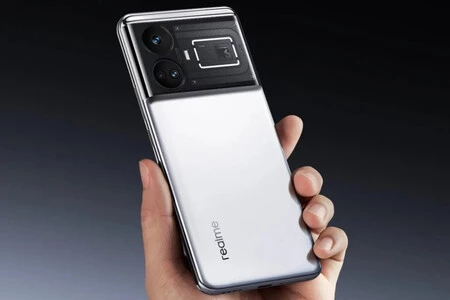
Today, the commercial zenith of rapid charging technology stands at an astonishing 240W. Devices such as the Realme GT 7 Pro and the OPPO Find X8 Pro exemplify this cutting-edge capability, leveraging advanced SuperVOOC technology to achieve a full 0 to 100% battery charge in less than ten minutes. This translates into unparalleled convenience, allowing users to top up their devices for a full day’s use in the time it takes to prepare a morning coffee. These models build upon the legacy of predecessors like the Realme GT5 and Realme GT3, which were instrumental in paving the way for these extreme speeds, demonstrating the feasibility and market appeal of such rapid power delivery.
While Realme did introduce the 240W GT3 to international markets a few years prior, the most advanced configurations of the GT 7 Pro and Find X8 Pro, featuring these record-breaking charging speeds, are currently exclusive to the Asian market. This strategic market segmentation means that consumers in regions like Europe typically receive versions with slightly lower, albeit still highly impressive, charging capabilities. The reasons behind this regional differentiation often involve factors such as regulatory hurdles, adapter compatibility, and market-specific demand analysis. Despite this, the existence of these 240W devices underscores the technological potential and the direction in which the industry is heading, setting new benchmarks for speed and convenience.
The 120W Powerhouses: Balancing Speed and Capacity
Stepping slightly below the 240W peak, the 120W segment represents a robust and increasingly common standard for flagship smartphones, particularly those designed for intense usage. This tier demonstrates a strategic balance between outright speed and the integration of massive battery capacities, catering to users who prioritize extended uptime without sacrificing quick replenishment.
The OnePlus 15 stands out in this category, combining its 120W charging prowess with a colossal 7,300 mAh battery. This formidable combination allows the device to achieve a full charge in approximately 45 minutes, while simultaneously offering an exceptional battery life that can extend up to four days of typical use. This synergy addresses a long-standing user dilemma: the desire for both longevity and rapid charging. Similarly, the Realme GT 8 Pro reinforces this trend, utilizing its 120W charging system to fully power an impressive 7,000 mAh battery in a mere 40 minutes. These devices highlight a maturing philosophy in smartphone design, where high-capacity batteries are no longer a trade-off for slower charging but rather an enhanced experience when paired with advanced power delivery. The widespread adoption of 120W solutions across various flagship models signifies its emergence as a powerful standard that offers both performance and practical benefits to a broad spectrum of users.
The 100W Standard: European Market Adoption and Broad Appeal
The 100W charging speed has emerged as a particularly popular and standardized figure for high-end smartphones in the European market. This threshold is often perceived as the sweet spot, delivering exceptionally fast charging times while simultaneously ensuring less long-term stress on the battery, a concern often raised by consumers regarding ultra-high wattage solutions. The balance struck at 100W has made it a favored choice for several leading manufacturers, providing a compelling blend of performance and perceived battery longevity.
Among the prominent devices embracing this standard, the Xiaomi 17 is notable for its ability to charge a substantial 7,000 mAh battery at 100W, ensuring rapid power-up for a device designed for demanding use. In the upper mid-range segment, the Xiaomi Redmi Note 15 Pro+ leverages 100W charging to energize its 6,500 mAh battery, making high-speed charging accessible to a wider audience. This demonstrates the trickle-down effect of advanced charging technology, moving beyond exclusive flagships.
The Honor Magic 8 Pro also features 100W wired charging, complemented by an impressive 80W wireless charging capability, to fully replenish its 6,270 mAh battery in approximately 42 minutes. This dual-charging flexibility caters to diverse user preferences, offering convenience whether at home or on the go. Not to be outdone, the Huawei Pura 80 Ultra integrates its proprietary SuperCharge technology at 100W, achieving a full charge for its battery in a precise 40 minutes. These examples collectively underscore the establishment of 100W as a robust and widely adopted benchmark, balancing raw speed with practical considerations for battery health and market suitability. The prevalence of this standard across a range of premium and high-performance devices highlights its role in shaping current consumer expectations for rapid power delivery.
Optimized Efficiency: The 80W Contender
While higher wattages often capture headlines, the 80W charging standard, as exemplified by the OPPO Find X9 Pro, deserves significant recognition for its optimized efficiency and impressive integration. Although 80W might seem modest when compared to the 240W titans, the Find X9 Pro makes a compelling case by pairing this speed with the largest battery capacity in this overview: a remarkable 7,500 mAh. Crucially, this immense power cell is housed within a conventional smartphone chassis, challenging the notion that larger batteries necessitate bulkier designs.
Thanks to its SuperVOOC 80W charging technology, the OPPO Find X9 Pro achieves a 50% battery recovery in just 30 minutes, offering a substantial power boost in a short period. A complete charging cycle, from empty to full, takes approximately an hour and a half. This performance underscores a key aspect of charging innovation: it’s not solely about the peak wattage, but also about the intelligent management of power delivery relative to battery size and thermal constraints. The Find X9 Pro’s approach demonstrates that even at slightly lower wattages, strategic engineering can deliver exceptional real-world user benefits, particularly for devices designed for multi-day usage without frequent charging. This model highlights a nuanced understanding of user needs, prioritizing a balanced experience of ample battery life and quick, albeit not record-breaking, replenishment.
Beyond the Horizon: The 300W and 320W Prototypes
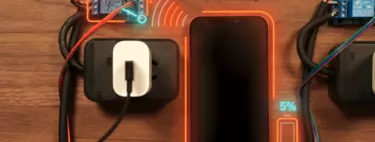
Even as 240W stands as the current commercial frontier, the future of smartphone charging is already being unveiled through groundbreaking technological demonstrations. Manufacturers like Realme and Xiaomi have showcased astonishing prototype charging technologies reaching 300W and even 320W. These innovations promise to push the boundaries of convenience even further, with claims of fully recharging a smartphone from 1% to 100% in under 5 minutes. Such speeds, if widely adopted, would fundamentally alter user interaction with their devices, virtually eliminating battery anxiety.
It’s important to note that when these demonstrations were initially made, the full potential of silicon-carbon batteries, which are now beginning to activate a new race for energy density, had not yet been fully realized in commercial products. These advanced battery chemistries are crucial for safely handling and efficiently storing the immense power delivered by such high-wattage chargers. While these ultra-fast charging capabilities have not yet been integrated into consumer models, their existence as functional prototypes indicates a clear direction for future development. It is highly probable that within the next few years, a new generation of smartphones will emerge, proudly claiming the crown for the fastest charging speeds, further solidifying rapid power delivery as a cornerstone of mobile technology. The ongoing research and development in this area suggest that the current benchmarks, impressive as they are, are merely stepping stones to even more instantaneous power replenishment.
Technical Underpinnings: How Does it Work?
The ability to deliver such high wattages safely and efficiently is a marvel of modern engineering, relying on a complex interplay of hardware and software. At its core, fast charging involves increasing either the voltage (V) or the current (A) – or both – to boost the total power (W = V x A) delivered to the battery. Early fast charging solutions often increased voltage, but this generated more heat and required efficient voltage conversion inside the phone. Modern ultra-fast charging, particularly systems like OPPO’s SuperVOOC or Xiaomi’s HyperCharge, primarily focuses on increasing the current by utilizing multiple charging pumps and often splitting the battery into two cells.
By dividing the battery into two smaller cells, each can be charged simultaneously at a lower voltage but higher current, effectively doubling the charging speed while maintaining thermal stability. This distributed approach significantly reduces the heat generated within each individual cell, prolonging battery life and enhancing safety. Sophisticated algorithms within the phone’s charging controller constantly monitor temperature, voltage, and current, dynamically adjusting power delivery to prevent overheating and overcharging. Gallium Nitride (GaN) chargers have also played a crucial role, offering smaller, more efficient, and cooler-running power adapters capable of handling these extreme wattages. These technological advancements ensure that while the charging process is incredibly fast, it is also meticulously controlled to protect the device and its internal components.
The Longevity Debate: Fast Charging and Battery Health
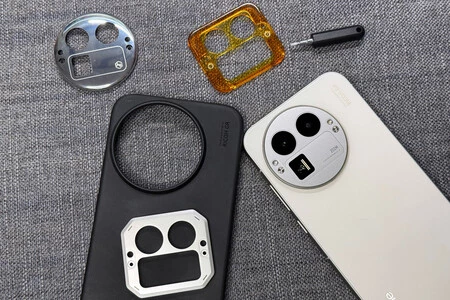
A common concern surrounding ultra-fast charging is its potential impact on long-term battery health. Conventional wisdom often suggested that rapid charging could accelerate battery degradation. However, manufacturers have invested heavily in addressing these concerns through sophisticated engineering. Modern fast-charging systems incorporate multiple layers of protection and intelligent algorithms designed to mitigate potential damage.
As mentioned earlier, techniques like dual-cell batteries allow for power to be distributed, reducing stress on individual cells. Additionally, smart charging algorithms learn user habits, optimizing charging cycles to preserve battery longevity. For instance, a phone might charge rapidly to 80% and then slow down significantly for the final 20% to reduce heat and strain. Studies, such as the one hinted at in the original article where 40 phones were "tortured" for two years, often conclude that while there might be a marginal difference in degradation compared to slow charging, the impact is far less significant than many initially feared, especially with properly implemented fast-charging technologies. Manufacturers are increasingly transparent about battery cycle counts and projected longevity, assuring consumers that their fast-charging devices are designed to maintain optimal performance over several years of typical use. The focus is on providing both speed and sustainability, ensuring that the convenience of rapid charging does not come at an unacceptable cost to device lifespan.
Market Dynamics and Consumer Impact
The relentless pursuit of faster charging speeds has profoundly reshaped market dynamics and consumer behavior. In a saturated smartphone market, where fundamental features like camera quality and processing power have reached high levels of sophistication, charging speed has become a key differentiator. Brands that lead in this area often gain a significant competitive edge, attracting users who value convenience and efficiency above all else. This focus on charging speed reflects a broader shift in consumer priorities, where the seamless integration of technology into busy lifestyles is paramount.
For consumers, ultra-fast charging means less anxiety about battery levels. The ability to grab a quick 15-minute charge before heading out the door can be a game-changer, eliminating the need to leave a phone plugged in overnight or carry a bulky power bank. This convenience impacts daily routines, travel, and even emergency preparedness. The "top-up" charging model, where users charge their phones in short bursts throughout the day rather than a single long session, has become increasingly prevalent, facilitated directly by these advancements. This paradigm shift has made fast charging a non-negotiable feature for many, influencing purchasing decisions as much as, if not more than, raw battery capacity itself.
The Role of Silicon-Carbon Batteries
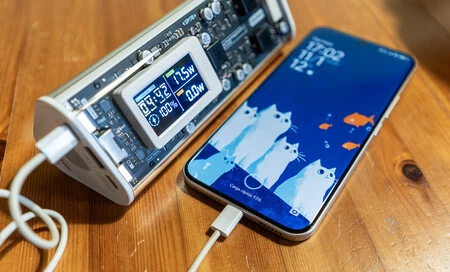
The mention of silicon-carbon batteries in the context of future charging speeds is critical. Traditionally, lithium-ion batteries have relied on graphite anodes. However, silicon has a significantly higher theoretical energy density than graphite, meaning it can store more lithium ions and thus more energy in the same volume. The challenge with silicon has been its tendency to expand and contract dramatically during charging and discharging cycles, leading to structural degradation.
Recent advancements in silicon-carbon composite anodes address this issue by combining silicon with carbon materials, creating a more stable and durable structure. These next-generation batteries not only offer increased energy density, allowing for larger capacities in smaller footprints, but also exhibit improved performance under high-current charging. This enhanced stability and higher energy density are crucial for safely integrating the 300W and 320W charging technologies currently in prototype stages. As silicon-carbon battery technology matures and becomes more cost-effective to produce, it will undoubtedly unlock new possibilities for both battery life and charging speeds, propelling the smartphone industry into an even more power-efficient future. This innovation is not just an incremental improvement but a foundational shift that will underpin the next generation of mobile power solutions.
The Road Ahead: Challenges and Innovations
While the future of fast charging looks incredibly promising, several challenges remain. Standardization is one such hurdle. With numerous proprietary charging protocols (e.g., SuperVOOC, Warp Charge, HyperCharge, SuperCharge), cross-compatibility remains limited, often requiring users to use specific chargers and cables to achieve maximum speeds. Industry-wide adoption of a universal high-wattage standard, similar to the evolution of USB Power Delivery, could simplify the ecosystem and enhance user experience.
Safety continues to be paramount. As wattages climb, ensuring thermal management and preventing thermal runaway becomes increasingly complex. Continuous innovation in battery chemistry, charging algorithms, and heat dissipation technologies is essential. Furthermore, the environmental impact of producing specialized high-wattage chargers and potentially shorter battery lifespans (even if minimal) is an area that will require increasing scrutiny and sustainable solutions.
Looking forward, the integration of wireless fast charging at comparable wired speeds is another frontier. While 80W wireless charging is already seen in some devices, matching the 200W+ wired speeds wirelessly presents significant engineering challenges related to heat and efficiency. The ongoing research into solid-state batteries and other novel battery technologies also promises to further revolutionize both energy storage and charging capabilities, potentially making today’s "ultra-fast" speeds seem modest in comparison. The relentless pursuit of instantaneous power will continue to drive innovation, defining the next era of smartphone technology.
In conclusion, the evolution of fast charging from a niche feature to a primary purchasing consideration reflects a profound transformation in the smartphone landscape. What began as a mere convenience has rapidly become a critical component of the modern mobile experience, enabling unprecedented flexibility and significantly enhancing user satisfaction. With current commercial speeds reaching 240W and prototypes hinting at 300W and beyond, supported by advancements in battery technology like silicon-carbon, the race for rapid power shows no signs of slowing down. As manufacturers continue to push the boundaries of what’s possible, consumers can look forward to an even more connected and untethered future, where battery anxiety becomes a distant memory.
