
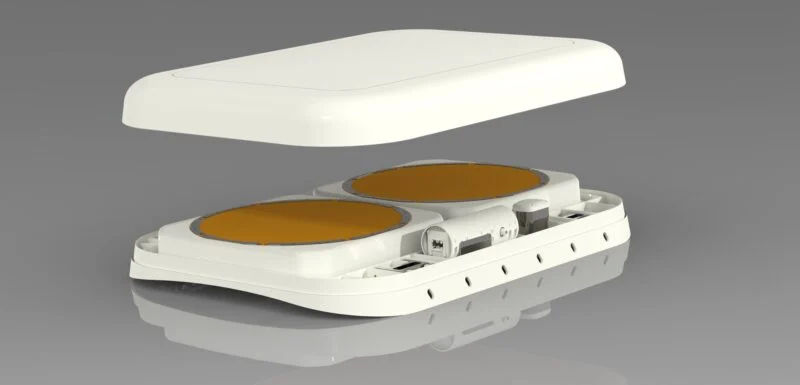

California-based satellite ground-systems technology leader ThinKom has officially announced the launch of the ThinAir Nexus, a cutting-edge, multi-orbit electronically steered antenna (ESA) specifically engineered for the rigorous demands of the commercial aviation sector. Unveiled on Monday, the Nexus system represents a significant leap in inflight connectivity (IFC) technology, offering a versatile solution designed to bridge the gap between various satellite constellations. By providing seamless compatibility across Geostationary Orbit (GEO), Medium Earth Orbit (MEO), and Low Earth Orbit (LEO) systems, the ThinAir Nexus addresses a critical need in the aviation industry: the ability for airlines to maintain high-speed, low-latency internet access regardless of their flight path or the specific satellite network available in a given region.
The introduction of the ThinAir Nexus comes at a pivotal moment for the aviation industry, as passengers increasingly demand a "home-like" internet experience while at 35,000 feet. The new ESA is built upon ThinKom’s patented Variable Inclination Continuous Transverse Stub (VICTS) technology, an open network architecture that has already demonstrated exceptional reliability in the field. According to the company, VICTS technology has accumulated more than 65 million hours of on-wing operating experience, providing a proven foundation for this next-generation hardware. The Nexus is specifically designed to be "space-optimized," featuring a smaller form factor than previous iterations, which ThinKom claims will allow it to compete directly with single-orbit ESA systems in terms of weight, drag, and ease of installation.
Technical Architecture and the VICTS Advantage
At the core of the ThinAir Nexus is the VICTS architecture, a proprietary technology that distinguishes ThinKom from other antenna manufacturers. Unlike traditional phased-array antennas that often struggle with heat dissipation and power consumption when scanning at low elevation angles, VICTS utilizes a unique mechanical-electronic hybrid approach. This allows the antenna to maintain high spectral efficiency and consistent performance across a wide range of look-angles.
The Nexus system is designed to be constellation-agnostic. This means it can communicate with existing GEO high-throughput satellites (HTS) and the rapidly expanding fleets of Non-Geostationary Orbit (NGSO) satellites. Currently, the system is slated for compatibility with major networks including SES Open Orbits, Hughes JUPITER In-Flight, and Telesat Lightspeed. Furthermore, the architecture is flexible enough to support various sovereign networks and emerging LEO constellations that are currently under development by global telecommunications entities.
To further enhance its versatility, the Nexus can be configured in two primary ways regarding its modem hardware. One option allows for the modem to be integrated directly onto the antenna assembly outside the aircraft’s fuselage. This configuration is particularly attractive to airlines looking to minimize the impact on the aircraft’s interior cabin space and simplify the "MODMAN" (Modem Manager) requirements. Alternatively, the system can support a multi-modem interior setup, providing redundant network paths and the ability to switch between providers in real-time, ensuring that the aircraft remains connected even when transitioning between different satellite jurisdictions.
A Chronology of ThinKom’s Evolution in Inflight Connectivity
The path to the ThinAir Nexus has been paved by over two decades of innovation in satellite communications. ThinKom’s journey began with a focus on high-efficiency antennas for government and military applications, where reliability under extreme conditions is paramount.
- 2000s: ThinKom develops the foundational VICTS technology, focusing on low-profile designs that minimize aerodynamic drag for mobile platforms.
- 2010s: The company enters the commercial aviation market. Its antennas become a staple for major IFC service providers, eventually powering the connectivity suites for hundreds of aircraft across global carriers.
- 2020-2022: As LEO constellations like SpaceX’s Starlink and Eutelsat OneWeb begin to reshape the industry, ThinKom initiates the development of a "universal" antenna capable of tracking satellites in multiple orbits simultaneously or near-simultaneously.
- 2023: ThinKom reaches the milestone of 65 million flight hours, solidifying its reputation for hardware that outlasts the traditional life cycle of consumer-grade electronics adapted for flight.
- 2024 (Present): The launch of the ThinAir Nexus marks the company’s move into the highly competitive ESA market, offering a solution that combines the reliability of its legacy products with the agility required for modern multi-orbit networks.
Supporting Data: The Economic and Operational Impact
The shift toward smaller, more efficient ESAs like the ThinAir Nexus is driven by clear economic incentives for airlines. Traditional "gimbaled" or mechanically steered antennas require a large radome (the protective dome over the antenna), which increases the aircraft’s aerodynamic profile.
Data from aerospace engineering studies suggest that for every additional pound of weight or square inch of drag, an aircraft’s fuel consumption increases incrementally over thousands of annual flight hours. The ThinAir Nexus, with its reduced footprint, aims to lower the "fuel penalty" associated with inflight Wi-Fi. Furthermore, the electronic steering capability eliminates the need for many moving parts found in traditional antennas, which significantly reduces the Mean Time Between Failures (MTBF). For an airline, fewer mechanical failures translate directly into lower maintenance costs and fewer "dark" flights where passengers are left without connectivity.
In terms of data throughput, the multi-orbit capability allows the system to tap into the high capacity of GEO satellites for streaming services while utilizing the low latency of LEO satellites for gaming, video conferencing, and real-time enterprise applications. This "best-of-both-worlds" approach is expected to increase average revenue per passenger (ARPU) for airlines that offer tiered or premium internet packages.
Official Responses and Executive Perspectives
ThinKom’s leadership has emphasized that the Nexus was developed in direct response to feedback from airline fleet managers who felt "locked in" to specific hardware and provider ecosystems. Jeff Sare, ThinKom’s Chief Commercial Officer, highlighted the importance of choice in an era of rapid technological flux.
"Airlines demand and deserve flexibility and reliability as they invest in inflight internet solutions," Sare stated during the unveiling. "Our new ThinAir Nexus solution delivers the most efficient and reliable multi-orbit, multi-constellation antenna to ever fly, now space-optimized for a smaller installation footprint."
Sare further elaborated that the Nexus was designed to give airlines "more options," allowing them the freedom to customize their network depending on their specific route structures and passenger demographics. He noted that the ability to switch or add networks via a simple modem swap—rather than a full hardware overhaul of the antenna—provides a level of future-proofing that was previously unavailable in the industry.
Industry analysts have reacted positively to the announcement, noting that ThinKom’s entry into the ESA space with a VICTS-based product could pressure other manufacturers to improve their thermal management and power efficiency. "ThinKom has a long-standing reputation for hardware that just works," noted one satellite industry consultant. "By bringing that reliability to a multi-orbit ESA, they are positioning themselves as a low-risk choice for airlines that are wary of the ‘bleeding edge’ of antenna technology."
Broader Implications for the Global Aviation Market
The release of the ThinAir Nexus is likely to accelerate the trend of "free-to-passenger" Wi-Fi. As hardware becomes more efficient and network costs decrease due to the abundance of LEO and MEO capacity, more airlines are expected to follow the lead of carriers like Delta and JetBlue in offering complimentary high-speed internet.
Furthermore, the Nexus plays a role in the broader geopolitical landscape of satellite communications. As various nations develop their own sovereign satellite constellations (such as those planned by the European Union and China), the ability for a single antenna to communicate with multiple diverse systems becomes a strategic asset. For international carriers flying through various sovereign airspaces, the Nexus offers a way to maintain regulatory compliance and connectivity without needing multiple sets of hardware.
The environmental impact of this technology should also not be overlooked. As the aviation industry faces increasing pressure to reach "Net Zero" carbon emissions, every technological advancement that reduces weight and drag contributes to the overall goal. The "space-optimized" design of the Nexus is a step toward making inflight connectivity a more sustainable component of modern air travel.
In conclusion, the ThinAir Nexus is more than just a new piece of hardware; it is a manifestation of the aviation industry’s shift toward an open, flexible, and high-performance future. By combining the proven reliability of VICTS technology with the agility of a multi-orbit ESA, ThinKom is providing airlines with the tools they need to meet the soaring expectations of the modern traveler while maintaining operational efficiency and financial viability. As the first units begin their integration and testing phases, the industry will be watching closely to see how this new "Nexus" of connectivity reshapes the competitive landscape of the skies.
