
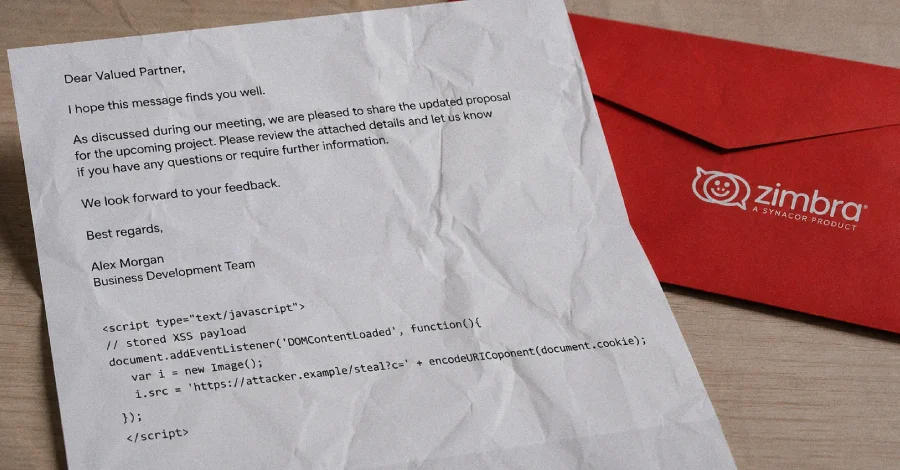

Zimbra, a widely utilized open-source collaboration suite, has issued an urgent advisory to its global customer base, imploring them to promptly apply updates designed to mitigate a critical security vulnerability. This flaw, affecting the Classic Web Client, has the potential for arbitrary code execution, posing a significant risk to user data and system integrity. The vulnerability, identified as a stored cross-site scripting (XSS) flaw, could enable threat actors to execute malicious scripts within a user’s session simply by crafting and delivering a specially designed email. While a specific Common Vulnerabilities and Exposures (CVE) identifier has not yet been assigned to this particular issue, its nature places it among the most dangerous types of web-based security vulnerabilities due to its persistence and potential for widespread impact.
Understanding the Critical Vulnerability: Stored XSS
At its core, the vulnerability stems from an instance of stored XSS, also known as persistent XSS. Unlike its reflected counterpart, where malicious scripts are executed immediately upon being echoed back from a server, stored XSS involves the permanent embedding of the malicious script on the target server. In this scenario, the dangerous code is not merely reflected but stored within the application’s database—for example, as part of an email’s content, a comment in a forum, or a user profile field. When any legitimate user subsequently accesses the affected content, their web browser inadvertently fetches and executes the attacker’s script. This makes it a highly insidious form of attack, as the compromise can be initiated without direct interaction from the victim beyond simply opening an email or viewing a page.
Zimbra’s official statement underscores the severity of the flaw: "The update fixes a security issue in the Classic Web Client where a specially crafted email could run malicious code when the email is opened." The company further elaborated on the potential ramifications, warning that "If exploited, it could allow access to mailbox information, session data, or account settings." Such access could grant attackers a foothold into sensitive user environments, potentially leading to unauthorized data exfiltration, account takeover, and further lateral movement within an organization’s network.
The Mechanics of Cross-Site Scripting (XSS)
Cross-site scripting (XSS) vulnerabilities are a pervasive class of security flaws that arise when a web application incorporates untrusted data into a web page without adequate validation or sanitization. This oversight provides an avenue for attackers to inject and execute malicious client-side scripts, typically JavaScript, directly into the web browsers of unsuspecting victims. The consequences of a successful XSS attack can be far-reaching, encompassing:
- Session Hijacking: Attackers can steal session cookies, allowing them to impersonate the victim and gain unauthorized access to their accounts without needing passwords.
- Credential Theft: Malicious scripts can create fake login forms or redirect users to phishing sites, tricking them into divulging usernames, passwords, and other sensitive information.
- Account Compromise: With stolen credentials or session data, attackers can take full control of a user’s account, altering settings, sending emails, or performing other unauthorized actions.
- Defacement: Scripts can alter the visual content of a webpage, leading to reputational damage.
- Malware Distribution: XSS can be used as a vector to inject scripts that download and install malware onto the victim’s machine.
- Client-side Redirection: Users can be silently redirected to malicious websites.
The persistence of stored XSS, as observed in this Zimbra vulnerability, amplifies these risks. Once the malicious email is stored on the Zimbra server, every user who opens or even previews that email becomes a potential target, significantly broadening the attack surface compared to reflected XSS, which typically requires a direct malicious link click.
Zimbra’s Official Response and the Path to Protection
The patch, contained within Zimbra Collaboration Suite version 10.1.19, was released on July 11, 2026. The urgency of Zimbra’s call to action reflects the critical nature of the vulnerability. Organizations and individual users employing Zimbra’s Classic Web Client are strongly advised to initiate the update process immediately. Given the potential for automated exploitation and the historical targeting of Zimbra’s platform, delaying the application of this patch could expose systems to unacceptable risks.
Zimbra has a substantial global footprint, serving a diverse range of clients from small businesses to large enterprises, government agencies, and educational institutions. This broad adoption makes any critical vulnerability in its core product a matter of significant concern for the wider cybersecurity community. The company’s blog post specifically highlights the need for administrators to prioritize this update to safeguard their environments.
A History of Zimbra Vulnerabilities: A Persistent Target
While Zimbra has not explicitly stated that this latest XSS vulnerability is currently being exploited in the wild, the platform has historically been a frequent target for threat actors leveraging XSS flaws. This pattern underscores the critical importance of timely patching and proactive security measures for Zimbra users.

The history of XSS vulnerabilities in Zimbra dates back several years, with notable instances including:
- December 2021 (Unassigned CVE): Attackers were observed weaponizing an undisclosed zero-day XSS vulnerability. This early exploitation demonstrated the appeal of Zimbra as a target for sophisticated threat groups seeking access to organizational email communications.
- October 2025 (CVE-2025-27915): A stored XSS flaw in the Classic Web Client, rated with a CVSS Score of 5.4 (Medium severity), was widely reported to have been exploited as a zero-day in targeted attacks. Initial reports suggested that the Brazilian military was among the victims. Although Zimbra, at the time, stated it found no conclusive evidence to corroborate these specific claims, the allegations themselves highlight the serious attention these vulnerabilities attract from both researchers and malicious actors. The perceived exploitation, regardless of definitive confirmation, amplified awareness of Zimbra’s exposure to such attacks.
- CVE-2023-37580: This vulnerability, also impacting Zimbra, allowed for similar malicious script injection, demonstrating a recurring theme of XSS weaknesses within the platform’s ecosystem. Exploitation of such flaws often leads to initial access for more extensive campaigns.
- CVE-2024-27443: This particular vulnerability gained notoriety due to its alleged exploitation by APT28, a highly sophisticated state-sponsored threat group linked to Russia. APT28’s involvement in leveraging email platform vulnerabilities, including those in Zimbra and MDaemon (as mentioned in the original source, related to CVE-2024-27443), signals the strategic value these flaws hold for intelligence gathering and cyber espionage operations. The fact that a group of this caliber actively exploits such vulnerabilities underscores the severe consequences of unpatched systems.
This recurring pattern of XSS vulnerabilities, some exploited as zero-days by advanced persistent threat (APT) groups, establishes a clear precedent. It indicates that Zimbra environments are continuously under scrutiny by adversaries seeking to exploit any potential weaknesses. The current unassigned XSS vulnerability, therefore, must be viewed within this historical context of persistent targeting.
Why Zimbra Remains an Attractive Target
Zimbra’s popularity stems from its robust feature set, offering email, contacts, calendar, and document sharing capabilities, often deployed in on-premise environments or by managed service providers. Its open-source nature, while fostering transparency and community development, also means that its codebase is publicly available for scrutiny by both benevolent researchers and malicious actors.
Organizations, particularly those in government, education, and critical infrastructure sectors, frequently rely on Zimbra for their internal and external communications. This makes a successful compromise of a Zimbra server a lucrative target for various threat actors:
- State-sponsored groups: Seeking intelligence, espionage, or disruption.
- Cybercriminals: Aiming for data theft (e.g., personal identifiable information, financial data), ransomware deployment, or BEC (Business Email Compromise) scams.
- Hacktivists: Targeting organizations for political or social reasons.
The widespread deployment and the sensitive nature of data processed through email systems make platforms like Zimbra high-value targets. A single exploited XSS vulnerability can potentially expose an entire organization’s communications and user data, making the impact catastrophic.
Implications for Organizations and the Broader Cybersecurity Landscape
The immediate implication of this new Zimbra vulnerability is the urgent need for all affected organizations to update their systems to version 10.1.19. Failure to do so leaves a critical door open for attackers. The consequences of successful exploitation extend beyond mere data theft:
- Reputational Damage: A public breach can severely damage an organization’s trust and standing.
- Financial Costs: Remediation efforts, legal fees, regulatory fines (e.g., GDPR, CCPA), and lost business can amount to significant financial burdens.
- Operational Disruption: Recovery from a cyberattack often involves downtime and disruption to essential services.
- Supply Chain Risk: If a compromised organization is part of a larger supply chain, the attack can ripple outwards, affecting partners and clients.
From a broader cybersecurity perspective, this incident highlights several enduring challenges. First, XSS remains a persistent threat despite decades of awareness and defensive techniques. Developers must consistently prioritize robust input validation and output encoding to mitigate these flaws. Second, the continuous targeting of widely used collaboration platforms underscores the critical role of software vendors in rapid vulnerability disclosure and patching, as well as the responsibility of end-users to apply these updates promptly.
Expert Perspectives and Proactive Security Measures
Cybersecurity experts consistently emphasize a multi-layered approach to security, recognizing that patching alone, while crucial, is often not sufficient. For organizations utilizing Zimbra or any email collaboration platform, the following measures are recommended:
- Prioritize Patch Management: Establish a rigorous patch management program to ensure all systems, especially internet-facing applications like email servers, are updated immediately upon release of security patches.
- Implement Web Application Firewalls (WAFs): WAFs can provide an additional layer of defense by filtering and monitoring HTTP traffic between a web application and the internet, potentially blocking XSS attempts even before a patch is applied.
- Enhanced Email Security Gateways: Utilize advanced email security solutions that can scan incoming emails for malicious content, including specially crafted XSS payloads, before they reach user inboxes.
- User Awareness Training: Educate employees about the dangers of phishing and social engineering. While XSS exploits might not always require user interaction beyond opening an email, awareness can help identify suspicious content and prevent other attack vectors.
- Principle of Least Privilege: Ensure users and applications operate with the minimum necessary permissions to perform their functions, limiting the scope of damage in case of a compromise.
- Regular Security Audits and Penetration Testing: Proactively identify vulnerabilities in systems and applications before attackers do.
- Incident Response Plan: Develop and regularly test a comprehensive incident response plan to effectively manage and mitigate the impact of a security breach.
- Multi-Factor Authentication (MFA): Implement MFA for all accounts, especially those with elevated privileges, to add a crucial layer of security against credential theft and session hijacking. Even if an XSS attack steals session cookies, MFA can make it harder for an attacker to fully compromise the account if the session expires quickly.
The recurring nature of XSS vulnerabilities in Zimbra and its persistent appeal to threat actors serves as a stark reminder of the ongoing cyber security battle. Organizations must remain vigilant, proactive, and responsive to vendor advisories to protect their digital assets and maintain the integrity of their communications infrastructure. As digital threats continue to evolve in sophistication and frequency, a robust and adaptive security posture is no longer merely an option but an absolute necessity.
