

The landscape of device charging has undergone a significant transformation, moving from a fragmented ecosystem of proprietary solutions to a concerted drive towards universal compatibility. At the forefront of this evolution stands USB Power Delivery (USB-PD), a robust and adaptable charging standard that is rapidly becoming the cornerstone for powering a vast array of electronic devices. Unlike many manufacturer-specific fast-charging technologies, USB-PD offers a unified approach, promising enhanced user convenience, reduced electronic waste, and a more efficient energy transfer paradigm across the tech industry.
Understanding the Foundations of USB-PD
The term "USB" in USB-PD refers to Universal Serial Bus, a ubiquitous interface that has long served as the backbone for connecting peripherals like keyboards, mice, and external drives to computers. Its evolution from a data transfer protocol to a powerful energy delivery system marks a pivotal shift. The "PD" component, an acronym for Power Delivery, precisely describes its core function: the intelligent and efficient distribution of electrical power.
At its essence, USB-PD is designed to deliver significantly more power than conventional USB charging methods, enabling devices to charge at accelerated rates. This capability is fundamentally tied to the USB-C connector, a reversible, compact, and versatile port that has rapidly gained traction across the electronics sector. The strategic adoption of USB-C as a universal physical connector has been bolstered by regulatory actions, notably in Europe. The European Union has mandated USB-C as the standard charging port for mobile phones and tablets by the end of 2024, extending this requirement to laptops by April 2026. This legislative push underscores the global commitment to standardization and its environmental and consumer benefits.
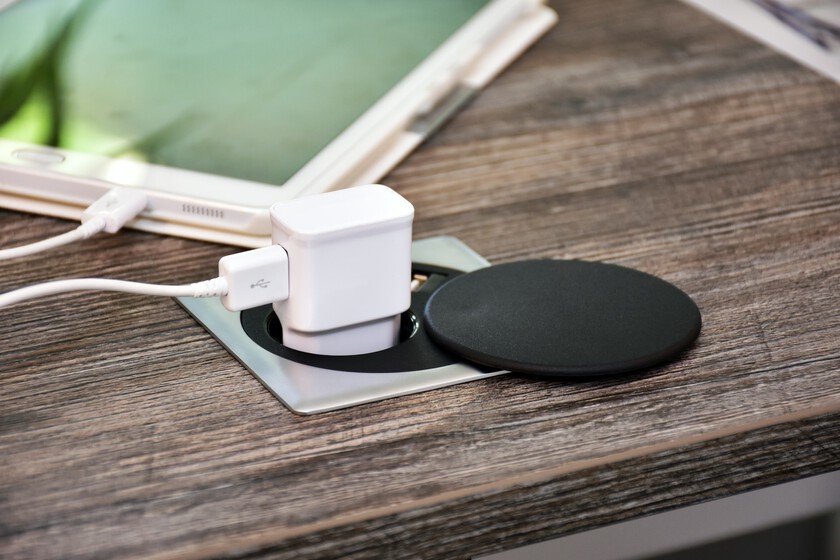
A key differentiator of USB-PD lies in its advanced power negotiation capabilities. A USB-PD compliant charger can deliver power up to an impressive 240 watts, a capacity sufficient to energize even power-hungry devices like high-performance laptops. However, this high maximum output is intelligently managed. The system operates on a principle of adaptive power delivery, where the charging cable and the connected device engage in a digital dialogue to ascertain the optimal power requirements. This intelligent negotiation ensures that a smartphone, for instance, will only receive the wattage it can safely and efficiently handle, preventing overcharging or potential damage, even when connected to a high-wattage charger. This dynamic adjustment of power flow epitomizes the "delivery" aspect of USB-PD, making it a sophisticated and safe charging solution.
The Genesis of a Standard: From Fragmentation to Unification
For years, the fast-charging landscape was a battleground of proprietary technologies. Companies like OPPO with its VOOC, Huawei with SuperCharge, Qualcomm with QuickCharge, MediaTek with Pump Express, and Xiaomi with HyperCharge, each developed their own charging protocols. While these solutions offered impressive charging speeds for their respective devices, they created a fragmented and often incompatible ecosystem. A charger optimized for an OPPO phone, for example, would likely only provide standard charging speeds to a Samsung device, or vice versa.
This proprietary approach led to significant challenges:
- Consumer Inconvenience: Users often needed multiple chargers and cables to achieve fast charging across different brands or even different device types from the same brand.
- Increased Electronic Waste: The obsolescence of chargers with every device upgrade contributed to a growing problem of e-waste, as perfectly functional chargers became incompatible with newer purchases. The European Commission estimated that discarded and unused chargers generate over 11,000 tonnes of e-waste annually in the EU alone, a figure that the universal charger initiative aims to drastically reduce.
- Market Inefficiency: Manufacturers had to invest resources in developing and marketing unique charging solutions, rather than collaborating on a shared, robust standard.
USB-PD emerged as a direct response to these issues, driven by the USB Implementers Forum (USB-IF), the organization responsible for maintaining and developing the USB standard. Its primary objective is standardization, aiming for a future where a single USB-PD compliant charger and USB-C cable can efficiently power a diverse range of devices—from smartphones and tablets to laptops and monitors—regardless of their manufacturer. This vision aligns perfectly with legislative efforts to foster sustainability and consumer choice.
Key Technical Advancements and Capabilities
The evolution of USB-PD has been marked by several significant technical milestones:
-
Bi-directional Power Transfer: A revolutionary feature introduced with USB-PD is the capability for power transfer in two directions. Previously, devices were typically either power sources (like chargers) or power sinks (like phones being charged). USB-PD breaks this limitation, allowing a device to both provide and receive power. In practical terms, this means a laptop with USB-PD can charge a smartphone, or even a pair of headphones, via a single USB-C cable. This eliminates the need for multiple dedicated chargers and power banks, enhancing portability and simplifying connectivity for users on the go.
-
Adaptive Voltage and Amperage Optimization: Early fast-charging technologies often focused on boosting either voltage or amperage to increase power. For instance, Qualcomm’s Quick Charge initially emphasized higher voltage, while BBK Electronics brands (OnePlus, OPPO, Realme) often prioritized higher amperage. USB-PD, however, seeks to combine the best aspects of both. The standard dynamically adjusts both voltage and amperage to achieve the optimal power delivery for any given device, ensuring both speed and safety.
- USB PD 1.0: The initial version supported various profiles, often at 12V or 20V with current options of 1.2A, 3A, or 5A, offering a maximum of 100W.
- USB PD 3.1 (Extended Power Range – EPR): A major revision in 2021 dramatically increased the maximum power output to 240W. This was critical for supporting more demanding devices like gaming laptops and professional workstations, which previously relied almost exclusively on proprietary barrel-jack chargers. The EPR mode introduced new fixed voltages (28V, 36V, 48V) alongside the existing 5V, 9V, 15V, and 20V, enabling higher power delivery through existing USB-C cables (provided they are EPR-compliant and contain an E-marker chip).
- USB PD 3.2: This version continues to refine the standard, maintaining the 240W EPR capability and focusing on enhancing interoperability and safety features.
-
Programmable Power Supply (PPS): Introduced within USB PD 3.0, PPS is a crucial enhancement that allows for granular control over voltage and current. Instead of fixed voltage steps, PPS enables the charger and device to communicate continuously and adjust power output in very small increments. This fine-tuned adjustment ensures that the device receives precisely the power it needs at any given moment, optimizing charging speed while minimizing heat generation and maximizing battery longevity. For example, if a charger can supply 25W (e.g., 5V at 5A) but the device only safely handles 18W (e.g., 5V at 3.6A), PPS ensures the charger delivers the most efficient and safest power, potentially 18W or slightly less, by adjusting voltage and amperage in real-time. This sophisticated communication prevents the device from simply drawing a lower, fixed power (like 15W from a 25W charger) and instead allows for a more optimized, rapid charge.

-
Integrated Safety Mechanisms: Safety is paramount in high-power charging. USB-PD incorporates intelligent safety protocols. If either the charger or the device detects a risk of overheating, the system can automatically negotiate a reduction in charging speed to prevent damage. This ensures a secure charging environment even with varying power demands and environmental conditions. The E-marker chip embedded in USB-C cables also plays a critical role, communicating the cable’s capabilities (e.g., maximum power and data speed) to both the source and sink devices, preventing the use of inadequate cables for high-power applications.
The Road to Hegemony: Adoption and Regulatory Push
The aspiration for USB-PD to become the hegemonic charging standard is increasingly becoming a reality, driven by both industry adoption and regulatory mandates.
One of the most significant drivers of USB-PD adoption in the Android ecosystem comes from Google itself. The Android Compatibility Definition Document (CDD) – a set of requirements that device manufacturers must adhere to for their devices to be certified with Google Mobile Services (GMS) – "strongly recommends" full compatibility with USB-PD for power and data exchange when supporting USB-C. While not an outright obligation, manufacturers choosing to forgo USB-PD support must provide a justification for this decision. This strong recommendation effectively pushes Android device makers towards integrating USB-PD, leading to its growing prevalence across the vast Android device landscape.
Beyond smartphones, USB-PD’s influence is expanding rapidly in the laptop market. The increase in maximum power output to 240W with USB PD 3.1 was a game-changer. This allowed a broader range of laptops, including many performance-oriented and even some gaming models, to be charged via USB-C. While the most extreme high-end gaming laptops might still rely on proprietary chargers for peak performance, USB-PD has become the standard for professional and mainstream laptops. Apple, a significant player in the laptop market, has fully embraced USB-PD for its MacBook Air and MacBook Pro lines, offering users the convenience of a single charger for their Apple devices.

The European Union’s directive on a common charger is arguably the most impactful external factor accelerating USB-PD’s dominance. By mandating USB-C as the universal port for various electronic devices, the EU effectively champions USB-PD as the underlying fast-charging protocol. This legislative action directly addresses the e-waste problem and enhances consumer convenience by reducing the need for multiple chargers. The phased implementation, starting with mobile phones and tablets by late 2024 and expanding to laptops by April 2026, ensures a comprehensive transition across consumer electronics. This move is expected to have a ripple effect globally, as manufacturers will likely standardize their products for the European market, benefiting consumers worldwide.
Implications and Future Outlook
The widespread adoption of USB-PD carries profound implications across several fronts:
-
Environmental Impact: The most immediate and tangible benefit is the significant reduction in electronic waste. By enabling the reuse of chargers across a multitude of devices and brands, USB-PD diminishes the constant cycle of buying and discarding proprietary charging bricks. This contributes to a more sustainable electronics industry.
-
Consumer Convenience and Cost Savings: For consumers, USB-PD translates to unparalleled convenience. The ability to use a single charger and cable for smartphones, tablets, laptops, and other gadgets simplifies travel, reduces cable clutter, and streamlines the charging experience. Over time, this also leads to cost savings, as consumers will not need to purchase new chargers with every device upgrade.

-
Industry Streamlining and Innovation: For manufacturers, the standardization offered by USB-PD can lead to more streamlined production processes and reduced R&D costs associated with developing proprietary charging solutions. It also fosters a more open ecosystem for accessory manufacturers, promoting competition and innovation in charger and cable design.
-
Challenges and Education: Despite its benefits, challenges remain. Consumers need to be educated on the nuances of USB-PD, particularly distinguishing between basic USB-C cables and those fully compliant with high-power USB-PD EPR specifications. Ensuring that both the charger and the cable are rated for the desired power output is crucial for optimal performance and safety. The market still contains many "USB-C" cables that are not USB-PD compliant or only support lower power profiles.
Looking ahead, USB-PD is poised to become the undisputed universal charging standard. Its continuous evolution, driven by the USB-IF and supported by regulatory bodies and major tech players, promises further refinements in efficiency, safety, and power capabilities. As technology continues to integrate and devices become more interconnected, the unifying power of USB-PD will be instrumental in creating a seamless, sustainable, and user-friendly electronic landscape. Its ability to intelligently adapt, transfer power bi-directionally, and deliver high wattage makes it not just a charging solution, but a foundational technology for the modern digital era.
