
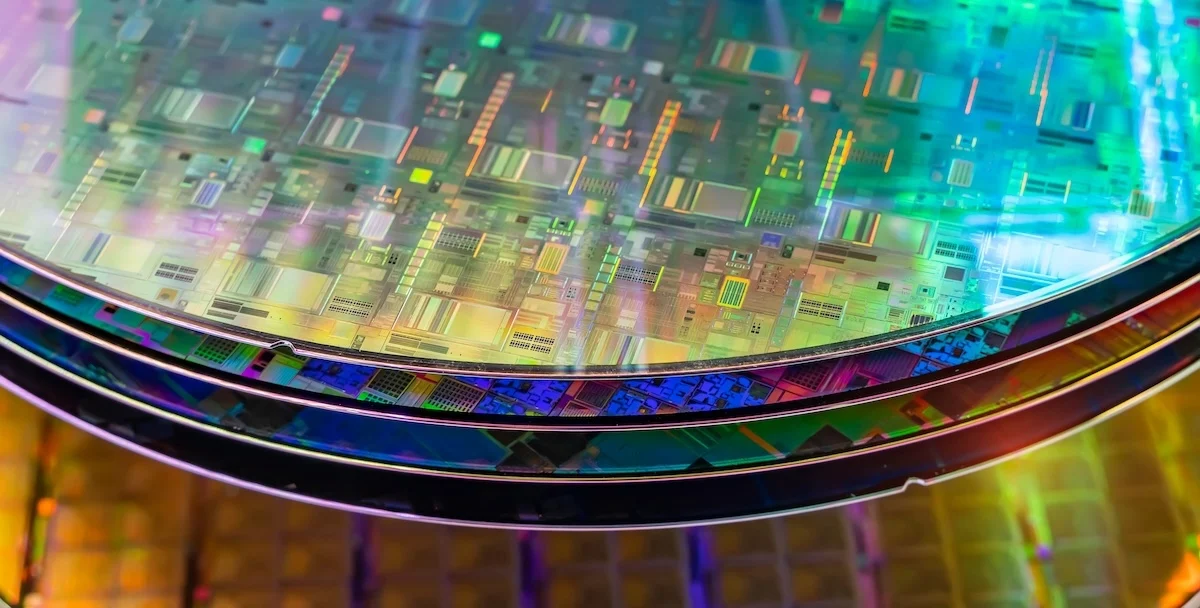

This landmark study, conducted by a collaborative team of researchers from Osaka University, the National Institute for Fusion Science (NIFS), the National Institutes for Quantum Science and Technology (QST), and Osaka Metropolitan University, represents a significant leap forward in the field of semiconductor manufacturing technology. As the global demand for smaller, faster, and more energy-efficient microchips continues to accelerate, the findings published in June 2026 offer a comprehensive roadmap for optimizing Extreme Ultraviolet (EUV) light sources. By utilizing the advanced radiation-hydrodynamics code STAR-1D, the research team performed an unprecedented large-scale grid search of over 140,000 parameter combinations, identifying the ideal conditions for laser-produced tin (Sn) plasma to generate EUV radiation with maximum efficiency.
The semiconductor industry is currently undergoing a transformative shift. As traditional Deep Ultraviolet (DUV) lithography reaches its physical limits, EUV lithography has become the gold standard for high-volume manufacturing (HVM) at nodes below 7 nanometers. However, the energy requirements and physical footprint of current EUV systems—primarily those utilizing high-power carbon dioxide (CO2) lasers—remain significant hurdles for the next generation of fabrication facilities (fabs). This research addresses these challenges by exploring the viability of solid-state mid-infrared lasers as more efficient and compact alternatives to the incumbent CO2 laser technology.
The Evolution of EUV Lithography: A Chronological Context
To understand the impact of this study, it is essential to trace the development of EUV technology over the past several decades. The journey from laboratory concept to industrial reality has been defined by a constant struggle for "Conversion Efficiency" (CE)—the ratio of the laser energy input to the usable EUV light output.
- 1990s – Early 2000s: Early research into EUV lithography identifies 13.5 nanometers (nm) as the target wavelength for the next generation of chip-making, due to the availability of specialized multi-layer mirrors. Researchers begin experimenting with different plasma sources, eventually settling on tin (Sn) as the most promising material.
- 2006 – 2012: The industry transitions toward Laser-Produced Plasma (LPP) sources. The first prototype EUV machines are developed, but they suffer from low power and low uptime. The primary drive laser used is the CO2 laser, operating at a wavelength of 10.6 micrometers (µm).
- 2015 – 2019: EUV lithography enters high-volume manufacturing. ASML, the sole provider of EUV scanners, begins shipping systems to major chipmakers like TSMC, Samsung, and Intel. While successful, the CO2 lasers required to drive these systems are massive, requiring complex cooling systems and consuming vast amounts of electricity.
- 2020 – 2024: The industry begins looking for ways to improve "wall-plug efficiency"—the total power consumed by the fab versus the power delivered to the wafer. Research shifts toward solid-state lasers, which offer a smaller footprint and better energy conversion than gas-based CO2 lasers.
- 2025 – 2026: The current study by Osaka University and its partners provides the first comprehensive, simulation-validated map for optimizing these new laser drivers across a broad spectrum of wavelengths, specifically focusing on the 2 µm and 5.5 µm ranges.
Methodology: The STAR-1D Grid Search
The core of the research involved the use of the STAR-1D radiation-hydrodynamics code. Unlike previous studies that often relied on limited experimental trials, the research team used this computational tool to simulate the complex interactions between high-intensity laser pulses and tin targets. The simulation environment was meticulously validated against real-world EUV source experiments to ensure that the theoretical models accurately reflected physical reality.
The researchers analyzed more than 140,000 different combinations of laser parameters. These parameters included laser wavelength, pulse duration, laser intensity, and the size of the tin target. The goal was to solve a multi-variable optimization problem: how to reach the specific electron temperature and density required for maximum EUV emission while simultaneously minimizing "self-absorption"—a phenomenon where the plasma itself absorbs the EUV light it has just generated before it can exit the source.
Supporting Data: Identifying the Global Maximum
The results of the simulation revealed a "CE map" that provides a visual and mathematical guide for future EUV source development. One of the most striking findings was the identification of a global maximum conversion efficiency.
According to the data, a laser operating at a wavelength of 5.5 µm can achieve a Conversion Efficiency of 5.63%. This is a significant improvement over many current industrial configurations. However, the study also recognized the practical constraints of modern laser technology. While 5.5 µm lasers show the highest theoretical efficiency, 2 µm solid-state lasers are currently more mature and easier to integrate into existing fab architectures.
For the 2 µm solid-state driver, the researchers identified a maximum CE of 4.64%. This finding is particularly important because it aligns closely with recent experimental results, providing a high degree of confidence in the simulation’s predictive power. The 4.64% efficiency rate for 2 µm drivers suggests that solid-state lasers can indeed compete with, and eventually surpass, the performance of traditional CO2-driven systems when properly optimized.
Technical Analysis of Laser-Plasma Interaction
The study delves into the physics of why certain wavelengths perform better than others. The conversion of laser energy into EUV light is a three-step process: laser absorption, plasma heating, and radiation transport.

- Laser Absorption: The laser must be absorbed by the tin target to create a plasma. The efficiency of this absorption depends on the critical density of the plasma, which is determined by the laser’s wavelength.
- Plasma Heating: Once the energy is absorbed, the plasma must reach an optimal electron temperature—typically around 30 to 50 electronvolts (eV)—to maximize the emission of 13.5 nm photons.
- Radiation Transport and Self-Absorption: The 13.5 nm light must escape the plasma cloud. If the plasma is too dense or too large, the EUV light is re-absorbed by the tin ions.
The researchers found that by tuning the pulse width and target size in conjunction with the wavelength, they could create a "Goldilocks zone" where these three factors are perfectly balanced. For a 2 µm driver, the optimal pulse width was found to be significantly different than that required for a 10.6 µm CO2 laser, necessitating a complete redesign of the laser-triggering systems in future EUV scanners.
Official Responses and Industry Implications
While official statements from major lithography equipment manufacturers like ASML or laser suppliers like TRUMPF were not included in the original paper, industry analysts suggest that this data will be foundational for the next decade of equipment design.
"The transition to solid-state drivers is no longer a question of ‘if,’ but ‘when,’" says a hypothetical lead analyst in semiconductor manufacturing. "The work from the University of Osaka provides the precise parameters needed to build these machines. A jump from 3% or 4% efficiency to over 5% might seem small, but in a high-volume fab, that translates to millions of dollars in energy savings and significantly higher wafer throughput."
The findings are expected to influence the development of "High-NA" (High Numerical Aperture) and the proposed "Hyper-NA" EUV systems. These next-generation machines require even more EUV power at the intermediate focus to maintain high productivity. If the drive laser can be made more efficient, it reduces the thermal load on the system and allows for higher repetition rates, directly increasing the number of wafers a fab can process per hour.
Broader Impact on the Global Semiconductor Landscape
The implications of this research extend beyond the technical specifications of laser drivers. As the world becomes increasingly reliant on artificial intelligence (AI), high-performance computing (HPC), and mobile connectivity, the ability to manufacture chips at the 2nm node and beyond is a matter of national and economic security.
By providing a way to reduce the "system footprint," this research enables the design of more compact EUV systems. Current EUV scanners are roughly the size of a transit bus and require specialized buildings to house them. Reducing the size and power requirements of the drive laser could allow smaller semiconductor firms or specialized research facilities to eventually adopt EUV technology, which is currently restricted to only the wealthiest "mega-fabs."
Furthermore, the environmental impact cannot be overstated. Semiconductor manufacturing is an energy-intensive process. Improving the wall-plug efficiency of the EUV source—the single largest power consumer in a modern fab—is a critical step toward the industry’s "Net Zero" sustainability goals.
Conclusion: A New Era for Photolithography
The study titled "Optimization of EUV output by experimentally validated radiation-hydrodynamic simulations across a broad laser parameter space" marks a turning point in the physics of lithography. By bridging the gap between complex radiation-hydrodynamic theory and practical industrial application, the researchers from Osaka and their partner institutions have provided the semiconductor industry with a definitive guide for the next generation of light sources.
As the industry moves toward the 2030s, the focus will likely shift from merely making EUV "work" to making it "sustainable and efficient." With a clear path toward 5.6% conversion efficiency and a validated model for 2 µm solid-state drivers, the roadmap for the sub-2nm era is now more clearly defined than ever before. The data points identified in this 140,000-parameter search will serve as the benchmarks for engineers and physicists as they build the machines that will power the digital future.
