


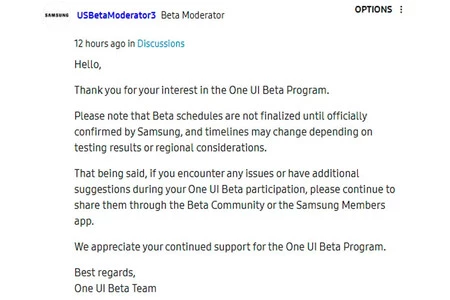
The eagerly awaited stable release of Samsung’s One UI 8.5, the company’s proprietary Android overlay, which was initially anticipated to commence its rollout yesterday, May 1st, has encountered an unexpected postponement. This delay has prompted an official statement from Samsung, delivered through a moderator on its community forums, clarifying the reasons behind the revised schedule. The announcement attributes the setback primarily to ongoing beta testing requirements and unspecified "regional considerations," leading to speculation that the launch could now occur on Monday, May 4th, a date more congruent with Samsung’s typical release patterns.
Chronology of Anticipation and Postponement
The lead-up to the One UI 8.5 release has been marked by a blend of fervent anticipation and intermittent information. Samsung’s One UI, known for its extensive customization options and feature-rich environment, represents a critical component of the user experience across its vast ecosystem of Galaxy devices. Each major iteration, or even a significant point release like 8.5, brings with it a promise of enhanced performance, refined aesthetics, and new functionalities that aim to keep Samsung devices at the forefront of innovation.
Initial excitement for One UI 8.5 began to build several weeks ago, fueled by various leaks and developer insights. Reports circulating within specialized Samsung communities and tech media outlets had pointed towards an imminent release. The specific date of May 1st was not merely a rumor but emerged from a seemingly credible source: an employee within Samsung itself, who reportedly conveyed this timeline to a prominent leaker known for accurate information regarding the company’s software developments. This internal confirmation elevated the expectation from mere speculation to a widely accepted impending event.
Further indications of the approaching release materialized in the days immediately preceding the anticipated May 1st launch. Beta users of One UI 8.5 began receiving system updates via Google Play, a common precursor to a stable software rollout. Such updates often serve to prepare the underlying system components for the incoming major software version, ensuring compatibility and laying the groundwork for a smooth transition. This development reinforced the belief among users and analysts alike that the May 1st date was firm and that the stable version of One UI 8.5 was indeed on the verge of public availability.
However, as May 1st dawned and progressed, the stable version of One UI 8.5 failed to materialize, specifically in Samsung’s home market of South Korea, which typically serves as the initial launchpad for major software updates. The absence of the update, coupled with the silence from official channels, quickly turned anticipation into disappointment among the user base.
It was against this backdrop that Samsung’s official clarification arrived. A moderator on Samsung’s community forum addressed the delay directly, stating that "beta program testing is not yet complete." This direct acknowledgement provided a tangible reason for the postponement, emphasizing the company’s commitment to delivering a polished and stable product rather than rushing an incomplete one. The moderator further added that "dates can change depending on testing results or regional considerations," introducing an element of flexibility and underscoring the dynamic nature of large-scale software rollouts.

Unpacking the Reasons for Postponement: Beta Testing and Regional Nuances
The reasons cited by Samsung for the One UI 8.5 delay—incomplete beta testing and regional considerations—are both common and critical factors in the complex world of software deployment.
The Imperative of Comprehensive Beta Testing:
Beta testing is an indispensable phase in the software development lifecycle, particularly for an operating system overlay as intricate and far-reaching as One UI. This phase involves a controlled release of pre-production software to a select group of users, often referred to as "beta testers," who actively use the software in real-world scenarios. Their feedback is crucial for identifying bugs, performance bottlenecks, compatibility issues, and user experience flaws that might have been overlooked during internal development.
For a company like Samsung, with a diverse portfolio of devices ranging from flagship smartphones to foldables and tablets, ensuring that a new One UI version performs flawlessly across all eligible models is a monumental task. Each device has unique hardware configurations, and the software must be optimized to leverage these specifications while maintaining a consistent user experience. Rushing an update without thoroughly completing the beta testing phase can lead to a multitude of problems:
- Widespread Bugs: Unresolved software glitches can manifest as app crashes, system freezes, battery drain issues, or critical functionality failures, severely degrading the user experience.
- Performance Degradation: Inadequate optimization can result in slower UI responsiveness, longer app loading times, and an overall sluggish feel, even on high-end devices.
- Security Vulnerabilities: Unpatched security flaws discovered during beta testing, if released to the public, could expose users to potential data breaches or malicious attacks.
- Negative Brand Perception: A buggy or unstable update can severely damage a company’s reputation, eroding user trust and loyalty, which can be challenging to rebuild.
Samsung’s decision to delay the launch based on incomplete beta testing signals a prioritization of quality and user satisfaction over adherence to an initial timeline. This approach, while potentially disappointing in the short term, is generally viewed positively by the tech community and users who prefer a stable and reliable software experience. It implies that the company is actively working to iron out remaining kinks to ensure that One UI 8.5 lives up to expectations without introducing new frustrations.
The Influence of Regional Considerations:
The mention of "regional considerations" by the Samsung moderator offers a second, equally plausible explanation for the delay. The most prominent and widely speculated "regional consideration" for a May 1st launch is International Workers’ Day, also known as Labour Day. This public holiday is celebrated in many countries around the world, including South Korea, where Samsung is headquartered.
Public holidays can significantly impact release schedules for several reasons:
- Reduced Workforce: Essential teams involved in software deployment, server monitoring, customer support, and emergency bug fixing may be operating with reduced staff or be entirely off duty. Launching a major update on a public holiday, especially one preceding a weekend (as May 1st, a Friday, did this year), would mean that critical personnel might not be readily available to address any unforeseen issues that could arise immediately post-launch.
- Logistical Challenges: The process of rolling out a major software update involves complex logistical coordination, including server load management, regional distribution, and potential collaboration with network carriers. Public holidays can disrupt these logistical chains.
- User Experience Considerations: While less direct, companies might also consider the user experience of receiving an update during a holiday. If an update introduces unexpected problems, users might find it difficult to get timely support, leading to increased frustration.
The speculation that the delay in South Korea might push the launch to Monday, May 4th, aligns well with both the "regional considerations" and Samsung’s historical preference for Monday releases. Mondays are often chosen for major software rollouts because they allow for a full work week to monitor the update’s performance, collect initial feedback, and quickly address any emergent issues with a full team on standby. This strategic timing minimizes risk and maximizes the ability to respond effectively to any post-launch challenges.
The Significance of One UI 8.5 for Samsung’s Ecosystem
One UI is more than just a visual skin; it’s a comprehensive interface that integrates deeply with Android, offering a distinct Samsung experience. Since its introduction, One UI has evolved significantly, moving from a sometimes-criticized heavy overlay (TouchWiz) to a more refined, user-centric, and feature-rich interface. Each major iteration aims to improve usability, enhance performance, and introduce innovative features that differentiate Samsung’s offerings in a highly competitive market.
While specific features of One UI 8.5 were not detailed in the original report, a ".5" update typically signifies a significant point release that builds upon the foundational features of the previous major version (e.g., One UI 8.0). These updates often bring:
- User Interface and Experience Enhancements: Refinements to animations, transitions, notification panel, quick settings, and overall visual consistency.
- Performance Optimizations: Improvements in system fluidity, app launch times, and battery efficiency through better resource management.
- New Features and Functionalities: This could include enhancements to existing Samsung applications, new camera modes, privacy and security improvements, or integration with new ecosystem services. Given the rapid advancements in AI, it’s also plausible that such an update would further integrate AI capabilities, building on the groundwork laid by Samsung’s Galaxy AI.
- Security Updates: Patches for newly discovered vulnerabilities, keeping devices secure against evolving threats.
One UI 8.5 is expected to build upon the latest iteration of Android, bringing Samsung’s unique flavor to Google’s foundational operating system. Its successful and stable rollout is crucial for Samsung to maintain its reputation for delivering cutting-edge technology and a premium user experience.
Broader Impact and Implications
The delay of One UI 8.5, while seemingly minor, carries several implications for various stakeholders:
For Samsung Users:
The immediate impact is disappointment for those eagerly awaiting new features and improvements. However, understanding that the delay is for quality assurance can temper this frustration. Users generally prefer a stable and bug-free experience over a rushed, problematic one. The expectation shifts from "when will it arrive?" to "when it does arrive, it will be better."
For Samsung as a Company:
This situation tests Samsung’s communication strategy and its ability to manage expectations. Transparent communication, as seen with the moderator’s statement, is key to maintaining user trust. While a delay might cause a temporary dip in enthusiasm, prioritizing quality ultimately reinforces Samsung’s brand image as a reliable and user-focused technology provider. It also highlights the inherent complexities and challenges involved in deploying software to hundreds of millions of devices globally.
For the Mobile Industry:
Samsung’s update cycles are closely watched within the mobile industry, given its dominant market position. Delays, while common, underscore the challenges faced by all OEMs in delivering timely and stable software updates. It reinforces the industry standard that comprehensive testing is non-negotiable for major releases.
The Question of International Rollout:
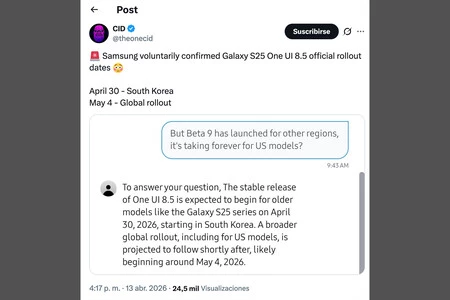
A significant question arising from the delay in South Korea is its potential impact on the international rollout schedule. The original report suggested an international release date of May 4th. If the South Korean launch is indeed pushed to May 4th, it raises questions about whether the international release will be synchronized or if it will experience a corresponding delay.
- Synchronized Release: A simultaneous global release would mean that the same factors affecting South Korea (e.g., final beta testing, regional holidays) would likely apply internationally, suggesting a delay beyond May 4th for all regions.
- Staggered Release: Samsung often employs a staggered rollout strategy, where updates are released in phases, starting with specific regions (like South Korea) before expanding globally. If the international May 4th date was independent or based on different regional considerations, it could theoretically remain. However, given that the beta testing issue is fundamental to the software itself, it is highly probable that the South Korean delay will have a cascading effect, pushing back the international schedule as well. Releasing a potentially less-tested version internationally while the home market waits for further refinements would be an unusual and risky strategy.
Therefore, while the original article expressed hope for the international May 4th date to hold, a more realistic assessment, based on the stated reasons for delay, suggests that a broader postponement is more likely.
Looking Ahead: What to Expect
As the situation unfolds, all eyes will be on Samsung’s official channels for further announcements. The tech community and eager users will be closely monitoring any developments, particularly as May 4th approaches.
Should the update indeed commence on Monday, May 4th, users can expect a phased rollout. Typically, these updates are not pushed to all eligible devices simultaneously. Instead, they are released in waves, targeting specific regions, carrier networks, or device models first, before gradually expanding availability. This controlled approach helps manage server load and allows for the early detection and mitigation of any unforeseen issues in a smaller segment of the user base.
For those with eligible Samsung Galaxy devices, the process of receiving One UI 8.5 will involve an over-the-air (OTA) update notification. Users will be able to check for the update manually through their device’s settings menu (Settings > Software update > Download and install). It is always advisable to ensure sufficient battery life and a stable Wi-Fi connection before initiating a major software update.
In conclusion, while the initial disappointment over the One UI 8.5 delay is understandable, Samsung’s official clarification underscores its commitment to delivering a high-quality, stable software experience. The decision to prioritize thorough beta testing and acknowledge regional factors is a responsible one, aiming to ensure that when One UI 8.5 finally arrives, it will live up to the high expectations of its users, offering the "interesting and useful changes" that have been so eagerly anticipated. The tech world now awaits Samsung’s next official communication, hoping for a confirmed new release date that brings this next evolution of One UI to Galaxy devices worldwide.
