
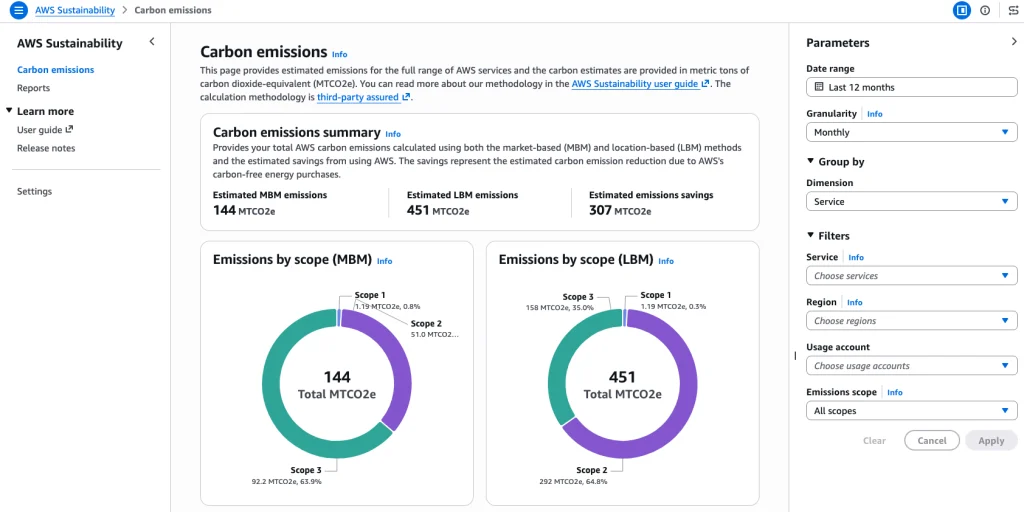

Amazon Web Services (AWS) has launched its new Sustainability Console, a standalone service designed to consolidate all AWS sustainability reporting and resources into a single, accessible platform. This strategic move aims to provide enterprises with unprecedented transparency and control over the environmental impact of their cloud workloads, reinforcing AWS’s commitment to global climate goals. The console builds upon the existing Customer Carbon Footprint Tool (CCFT) but introduces critical enhancements, most notably an independent permissions model and advanced reporting capabilities, addressing long-standing needs of sustainability and finance professionals.
The Evolving Landscape of Corporate Sustainability and Cloud Computing
The launch comes at a pivotal time when environmental, social, and governance (ESG) considerations are increasingly central to corporate strategy, investor decisions, and regulatory frameworks worldwide. Companies are under growing pressure from stakeholders, including shareholders, customers, and employees, to demonstrate tangible progress in reducing their carbon footprint. Cloud computing, while offering significant efficiency gains over traditional on-premises infrastructure, also presents a unique challenge: attributing and reporting the environmental impact of shared cloud resources.
Amazon, a signatory to The Climate Pledge, set an ambitious goal in 2019 to achieve net-zero carbon across its operations by 2040—a decade ahead of the Paris Agreement. This commitment deeply influences how AWS designs, builds, and operates its global data centers and services, emphasizing energy efficiency, renewable energy procurement, and water conservation. The AWS Sustainability Console extends this commitment by empowering customers to actively participate in measuring and mitigating their own environmental footprint stemming from cloud usage.
From Billing to Dedicated Sustainability Insights: A Necessary Evolution
Prior to this launch, customers could access their carbon footprint data through the Customer Carbon Footprint Tool (CCFT), which resided within the AWS Billing Console. While valuable, this setup presented a significant practical hurdle: accessing carbon data required billing-level permissions. This often meant that sustainability officers, environmental reporting teams, and other non-finance personnel either had to request sensitive financial access or rely on intermediaries to retrieve the necessary data. This created inefficiencies, potential security concerns, and delays in critical reporting cycles.
The new AWS Sustainability Console directly addresses this friction point by introducing its own distinct permissions model, entirely independent of the Billing Console. This separation ensures that sustainability professionals can gain direct, secure access to emissions data without needing concomitant access to confidential cost and billing information. This operational decoupling is a substantial improvement, streamlining workflows and enhancing data governance for organizations committed to robust ESG reporting.
Granular Data and Enhanced Reporting Capabilities
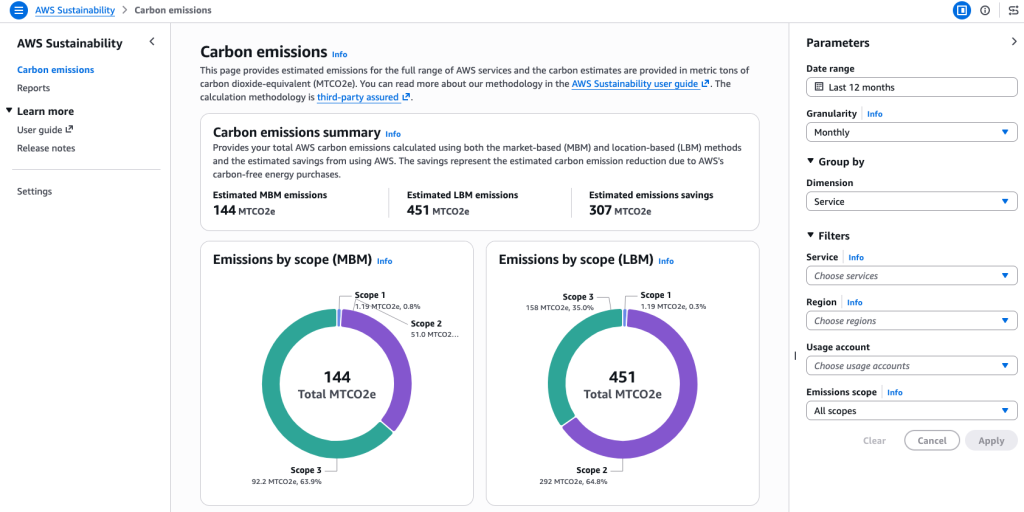
A core strength of the AWS Sustainability Console lies in its ability to provide comprehensive and granular emissions data. The console now includes Scope 1, Scope 2, and Scope 3 emissions attributed to a customer’s AWS usage. For those unfamiliar with the Greenhouse Gas (GHG) Protocol, these scopes represent different categories of emissions:
- Scope 1: Direct emissions from sources owned or controlled by AWS (e.g., fuel combustion in data centers).
- Scope 2: Indirect emissions from the generation of purchased electricity or heat consumed by AWS (reported using both Market-Based Method (MBM) and Location-Based Method (LBM)).
- Scope 3: Other indirect emissions that occur in AWS’s value chain, such as emissions from the manufacturing of servers and the construction of data centers.
The console offers a detailed breakdown of these emissions by AWS Region and by specific services, including widely used offerings such as Amazon CloudFront, Amazon Elastic Compute Cloud (Amazon EC2), and Amazon Simple Storage Service (Amazon S3). This level of detail allows organizations to identify "hotspots" of emissions within their cloud infrastructure, enabling more informed decisions about workload optimization, architectural choices, and regional deployments. For instance, understanding that a particular service or region contributes disproportionately to carbon emissions can prompt teams to explore more efficient configurations or migrate workloads to regions powered by a higher percentage of renewable energy.
Beyond visualization, the console significantly enhances reporting capabilities. Users can now download preset monthly and annual carbon emissions reports, covering both market-based method (MBM) and location-based method (LBM) data. MBM reflects emissions from electricity that companies have purposefully chosen (e.g., through renewable energy purchases), while LBM reflects the average emissions intensity of the grids where electricity consumption occurs. The ability to access both methods is crucial for compliance with various global reporting standards.
Furthermore, the console empowers users to build custom comma-separated values (CSV) reports. This flexibility allows organizations to select specific fields, define time granularity, and apply various filters, tailoring reports precisely to their internal requirements or external disclosure needs. This customization is invaluable for companies that need to align their reporting with specific industry standards or regulatory mandates.
A common challenge for large organizations is the misalignment between their fiscal year and the calendar year. The AWS Sustainability Console addresses this by allowing users to configure the console to match their organization’s specific reporting period. Once set, all data views and exports reflect the custom fiscal year and quarters, removing a significant friction point for finance and sustainability teams working in parallel on environmental disclosures.

Programmatic Access and Integration for Advanced Workflows
Recognizing the need for seamless integration into existing enterprise systems, AWS has also introduced a new API and support for AWS SDKs. This programmatic access allows organizations to pull emissions data directly into their own reporting pipelines, custom dashboards, or compliance workflows. This is particularly beneficial for large enterprises managing numerous AWS accounts, where manual data exports can be cumbersome. It also enables organizations to establish custom account groupings that may not align with their existing AWS Organizations structure, offering greater flexibility for internal carbon accounting.
The combination of a user-friendly visual console and robust programmatic access provides a powerful toolkit. While the console enables quick exploration and identification of emission hotspots, the API facilitates automated, repeatable reporting essential for large-scale operations and regulatory compliance. The underlying data and methodology for carbon footprint calculation remain consistent with those used by the CCFT, ensuring continuity and reliability. AWS has also made its methodology document publicly available, which has been independently verified by Apex, a third-party consultant, underscoring the rigor and transparency of its approach.
Amazon’s Broader Sustainability Commitment and Industry Context
The AWS Sustainability Console is a tangible manifestation of Amazon’s broader commitment to The Climate Pledge. By 2025, Amazon aims to power its operations with 100% renewable energy, having already reached 90% in 2021. This commitment translates directly into the operational choices of AWS, which continuously invests in energy-efficient infrastructure and large-scale renewable energy projects globally. These efforts directly reduce the Scope 2 emissions associated with AWS’s operations, thereby lowering the environmental footprint for all customers running workloads on the platform.
The increasing demand for sustainability reporting tools from cloud providers reflects a broader industry trend. As more companies migrate critical workloads to the cloud, the "shared responsibility model" for security is expanding to include sustainability. Cloud providers are responsible for the environmental impact of the underlying infrastructure, while customers are responsible for optimizing their workloads to run efficiently and sustainably. Tools like the AWS Sustainability Console empower customers to fulfill their part of this shared sustainability responsibility.
Globally, regulatory bodies are also tightening climate-related disclosure requirements. Examples include the European Union’s Corporate Sustainability Reporting Directive (CSRD) and the U.S. Securities and Exchange Commission’s (SEC) proposed climate disclosure rules. These regulations mandate more detailed and standardized reporting of emissions, including Scope 3, making comprehensive tools like the AWS Sustainability Console indispensable for compliance.
Implications for Businesses and the Future of Cloud Sustainability
The implications of the AWS Sustainability Console are far-reaching for businesses across all sectors.
- Enhanced Transparency and Accountability: Companies can now more easily track, report, and demonstrate their progress towards sustainability goals, boosting credibility with investors and consumers.
- Strategic Decision-Making: Granular data on emissions by service and region enables organizations to make more environmentally conscious architectural decisions, potentially optimizing costs and reducing their carbon footprint simultaneously.
- Streamlined Compliance: The console simplifies the often-complex process of gathering data for ESG reports and regulatory disclosures, saving time and resources for sustainability and finance teams.
- Competitive Advantage: Companies that can effectively measure and reduce their cloud carbon footprint will be better positioned to attract environmentally conscious talent, customers, and investors.
- Fostering a Culture of Sustainability: By making carbon data more accessible and understandable, the console can help embed sustainability considerations into the daily operations and decision-making processes of development and operations teams.
Looking ahead, AWS has stated that the Sustainability Console is designed to grow, with plans to continuously release new features and expand its capabilities in response to customer feedback and evolving sustainability requirements. This commitment signifies a broader industry shift where sustainability metrics are becoming as critical as performance and cost metrics in cloud management. As artificial intelligence and machine learning continue to advance, future iterations of such tools could offer predictive analytics for carbon emissions, intelligent recommendations for optimizing workloads for sustainability, and even real-time carbon intensity reporting for different grid regions.
Availability and Getting Started
The AWS Sustainability Console is available immediately at no additional cost to AWS customers. Users can access it directly from the AWS Management Console by searching for "sustainability." Importantly, historical data is available going back to January 2022, allowing organizations to immediately begin analyzing their past emissions trends and establish baselines for future improvements.
This launch represents a significant step forward in making cloud sustainability more measurable, manageable, and actionable for enterprises worldwide. By providing a dedicated, powerful, and accessible platform, AWS is not only supporting its own ambitious climate goals but also empowering its vast customer base to contribute meaningfully to a more sustainable future.
