
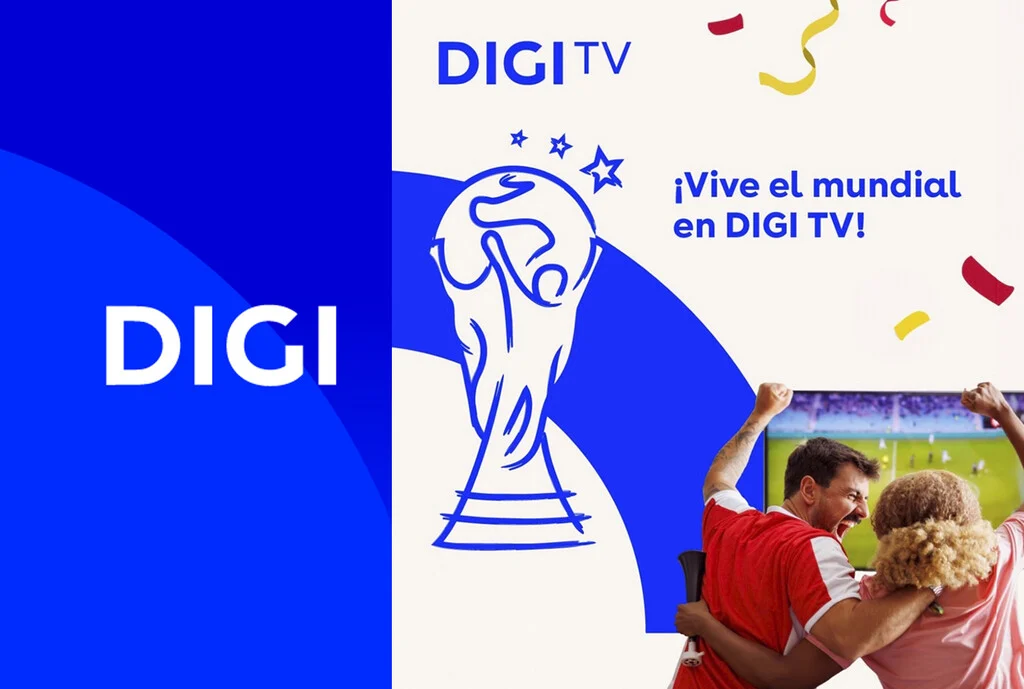

Despite facing aggressive "anti-Digi" tariffs from established competitors designed to stem its rapid expansion, the Romanian telecommunications operator, Digi, continues to showcase remarkable portability figures month after month, consistently outperforming much of its rivals in the highly competitive Spanish market. This impressive trajectory has propelled Digi to a significant milestone: it has ascended to become the third-largest residential broadband provider in Spain, a notable achievement that places it ahead of long-standing players like Vodafone. This ascendancy highlights a compelling narrative of disruptive growth, fueled primarily by a low-cost, high-value proposition that has resonated strongly with Spanish consumers. However, this success story is not without its strategic compromises, particularly concerning the lucrative and culturally significant realm of premium football broadcasting rights.
The top two positions in the Spanish broadband market remain firmly held by Movistar and Orange, two telecommunications giants whose business models are inherently structured around a premium offering. A cornerstone of this premium strategy is the extensive acquisition and exclusive broadcasting of top-tier football content, where events like the FIFA World Cup and major European and national leagues play a profoundly significant role in customer acquisition and retention. Indeed, Movistar and Orange stand as the sole operators currently offering comprehensive coverage of the World Cup to their subscribers, leveraging these exclusive rights as a powerful differentiator. In stark contrast, Digi’s current football offering is confined to LaLiga Hypermotion, the second division of Spanish football, a clear reflection of its distinct market positioning and financial priorities.
The Evolving Landscape of Football Broadcasting in Spain
The Spanish market has a long and complex history with football broadcasting rights, characterized by intense competition and multi-billion-euro deals. For decades, football has been an unparalleled driver of subscriber loyalty and ARPU (Average Revenue Per User) for telecommunications companies. Major players have historically invested colossal sums to secure exclusive rights to LaLiga, the UEFA Champions League, and international tournaments, viewing these as essential components of their bundled offers. This has created a tiered market where access to premium football content is synonymous with a premium subscription package, often including fiber broadband, mobile lines, and television services.
Movistar, through its parent company Telefónica, has long been a dominant force in this arena, frequently securing the lion’s share of broadcasting rights, including a significant portion of LaLiga and all UEFA Champions League matches. Orange has often partnered or competed directly, also investing heavily to provide a robust football offering to its premium customer base. This strategy allows them to command higher monthly fees and attract customers who prioritize comprehensive sports access above all else.
Vodafone’s Strategic Retreat and Subsequent Re-engagement
Adding another layer of complexity to this market dynamic is Vodafone’s journey with football content. Back in 2018, Vodafone made a strategic decision to withdraw from the bidding for premium football rights, citing the exorbitant costs and a belief that the return on investment no longer justified the outlay. This move marked a significant shift in its content strategy, aiming to focus on other entertainment options and price competitiveness. However, the enduring allure of football, particularly global events like the World Cup, has led Vodafone to adopt a more nuanced approach.
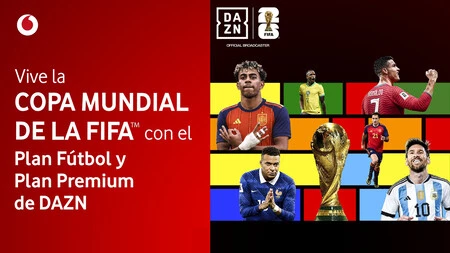
While still refraining from direct acquisition of broadcasting rights, Vodafone has strategically embraced partnerships to offer football content to its customers. Notably, it actively promotes the ability for its subscribers to contract DAZN through Vodafone TV, allowing them to watch all World Cup matches and other premium sports content. This partnership enables Vodafone customers to benefit from potentially advantageous conditions or simplified billing by integrating the DAZN subscription into their existing Vodafone mobile and internet bills. This represents a pragmatic solution for Vodafone, allowing it to cater to football enthusiasts without incurring the massive direct costs associated with rights acquisition. It’s a clear signal that even operators who have historically distanced themselves from premium football recognize the commercial imperative of providing access to major sporting events, even if through third-party platforms.
Digi’s Paradox: Extensive Sponsorship vs. Limited Broadcast Rights
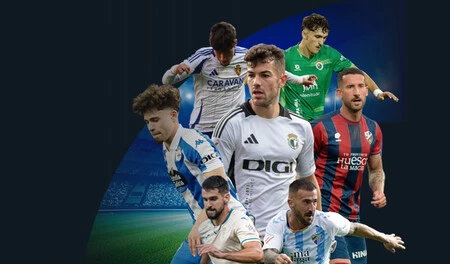
Digi’s approach to football presents a fascinating paradox. Since its inception, the operator, often dubbed the "queen of low cost," has shrewdly leveraged sports sponsorship as a core strategy to enhance brand recognition and establish a visible presence across Spain. The "Digi" logo prominently adorns the kits of numerous teams across both the Primera (top-tier) and Segunda (second-tier) divisions of Spanish football.
Currently, Digi serves as the main sponsor for several prominent clubs, including Rayo Vallecano, Real Oviedo, Cádiz CF, and Burgos CF. Beyond these primary sponsorships, the company also maintains official sponsorship agreements with other significant clubs such as Athletic Club, Deportivo Alavés, CA Osasuna, Real Valladolid, UD Las Palmas, and Deportivo de La Coruña. This extensive network of sponsorships clearly demonstrates Digi’s commitment to associating its brand with Spanish football culture, fostering local connections, and achieving broad visibility among millions of fans. This strategy is highly cost-effective for brand building when compared to the astronomical sums required for broadcasting rights.
However, this widespread brand presence through sponsorship contrasts sharply with its limited direct involvement in broadcasting premium football content. Digi’s direct engagement with "the king of sports" ends primarily with these sponsorship deals and the inclusion of LaLiga Hypermotion within its Digi TV Deportes package. While providing access to the second division is valuable for some fans, it starkly highlights the absence of LaLiga EA Sports (first division), the UEFA Champions League, or major international tournaments like the World Cup.
The Economic Imperative: High Costs vs. Low-Cost Model
The fundamental reason for Digi’s limited foray into premium football broadcasting lies at the core of its business model. The exorbitant costs associated with acquiring broadcasting rights for national and European top-tier football clash directly with Digi’s overarching strategy. Digi thrives on offering aggressive pricing and highly competitive tariffs, operating with very slim profit margins. This model is sustained by attracting a high volume of subscribers who prioritize affordability and essential connectivity services over premium content bundles. Consequently, Digi’s ARPU (Average Revenue Per User) is significantly lower than that of Movistar and Orange, whose premium subscribers contribute substantially more revenue per month.

Serghei Bulgac, CEO of the Digi Group, has openly acknowledged this economic reality. In past statements, he conceded that the massive investment required for acquiring rights to competitions like LaLiga or the Champions League can only be sustained by business models like those of Movistar or Orange, which are firmly anchored in the premium segment of the market. These companies build their value proposition around comprehensive entertainment packages, where exclusive sports content justifies higher subscription fees. For Digi, absorbing such costs would necessitate a fundamental shift in its pricing structure, directly undermining its core competitive advantage as a low-cost provider.
The World Cup 2026: A Missed Opportunity for Strategic Alliance
The FIFA World Cup represents a quadrennial global spectacle that captivates hundreds of millions of viewers worldwide, including a substantial audience in Spain. For telecommunications providers, it offers a unique opportunity to attract new subscribers and enhance loyalty among existing ones. The recent World Cup presented a perfect scenario for Digi to potentially expand its content offering through strategic alliances, a path previously hinted at by its CEO.
Bulgac had previously indicated that Digi was exploring opportunities to expand its existing alliances with streaming platforms, which are already in place in Romania, to other countries, including Spain. Such a partnership, particularly with a platform like DAZN which holds significant sports rights, could have provided Digi customers with access to the entire World Cup, thereby bridging a critical content gap without the prohibitive costs of direct rights acquisition. The World Cup was an ideal testing ground for such a strategy, allowing Digi to offer premium content via a third-party, integrated billing model, similar to what Vodafone and other operators like MásMóvil, Yoigo, R, and Telecable have successfully implemented with DAZN. These operators provide subscribers with the convenience of bundling their DAZN subscription with their mobile and internet bills, often with preferential rates.
However, despite these previous indications, Digi did not pursue such an alliance for the World Cup. Instead, its engagement was limited to a single Instagram post, merely reminding its followers that the matches broadcast on La 1 (the free-to-air public television channel, available via DTT) could be watched through Digi TV. This minimal effort underscores a conscious decision to remain outside the premium football broadcasting ecosystem, even when a seemingly viable partnership model was available. Digi effectively "missed the train" on a major global sporting event that garners immense public interest and significant commercial potential in Spain.
Broader Market Implications and Future Outlook
Digi’s strategic choice to prioritize aggressive pricing and broadband growth over premium content acquisition has significant implications for the Spanish telecommunications market. It reinforces a clear segmentation: on one side, premium operators like Movistar and Orange cater to customers willing to pay more for comprehensive content bundles, especially football; on the other, value-oriented operators like Digi attract those who prioritize cost-effectiveness for essential services.
This dynamic places pressure on all market players. Competitors are forced to react with "anti-Digi" tariffs to retain customers, while also potentially re-evaluating their own content strategies. For consumers, it means a clearer choice: pay a premium for all-inclusive entertainment or opt for highly competitive prices and acquire desired content (like DAZN) separately or through partner deals.
Looking ahead, the question remains whether Digi’s strategy can sustain its impressive growth indefinitely without eventually incorporating more premium content, or at least facilitating easier access to it. While its current model has proven highly successful, consumer expectations evolve. The potential for future alliances with streaming platforms, as previously mentioned by CEO Bulgac, remains a key area to watch. Such partnerships could enable Digi to offer a broader range of content, including top-tier sports, without deviating from its low-cost core. The FIFA World Cup 2030, or other major sporting events, could serve as future inflection points where Digi might re-evaluate its position and potentially forge those strategic alliances. Until then, Digi continues its unique path, dominating the market through value while consciously sidestepping the high-stakes gamble of premium sports broadcasting rights.
Ultimately, Digi’s journey exemplifies the complex interplay between pricing strategy, content acquisition costs, and market positioning in the fiercely competitive telecommunications sector. Its success demonstrates that a robust low-cost model can disrupt established players, but its deliberate absence from the most coveted premium content highlights the inherent trade-offs in achieving that success.
